
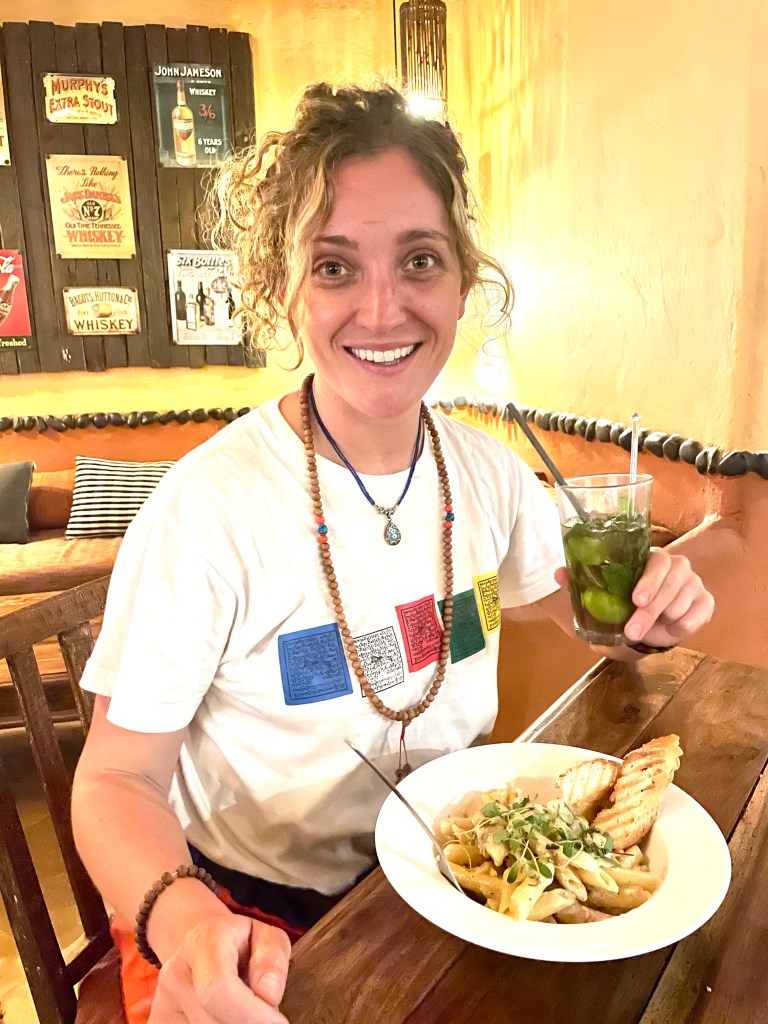
The hustle and bustle of Kathmandu was a bit overstimulating at first, but our eyes and bellies were eager to indulge in all the morsels we had been dreaming about on the trail. Arriving in KTM late, after waiting for a delayed flight in the hot Tumlingtar airport, we hit the Road House for ice cold mojitos, nachos, pasta, and dessert.

We had 4 unplanned days back in Kathmandu, before heading back to the trail, so we asked our friend Gombu for his advice on the top sites to visit. Even though we missed the sweet pace of the trail, the natural beauty of the mountains and jungle, and simplicity of country life, we were having fun together no matter the circumstance. So we set off to explore the Kathmandu we hadn’t had time for previously.
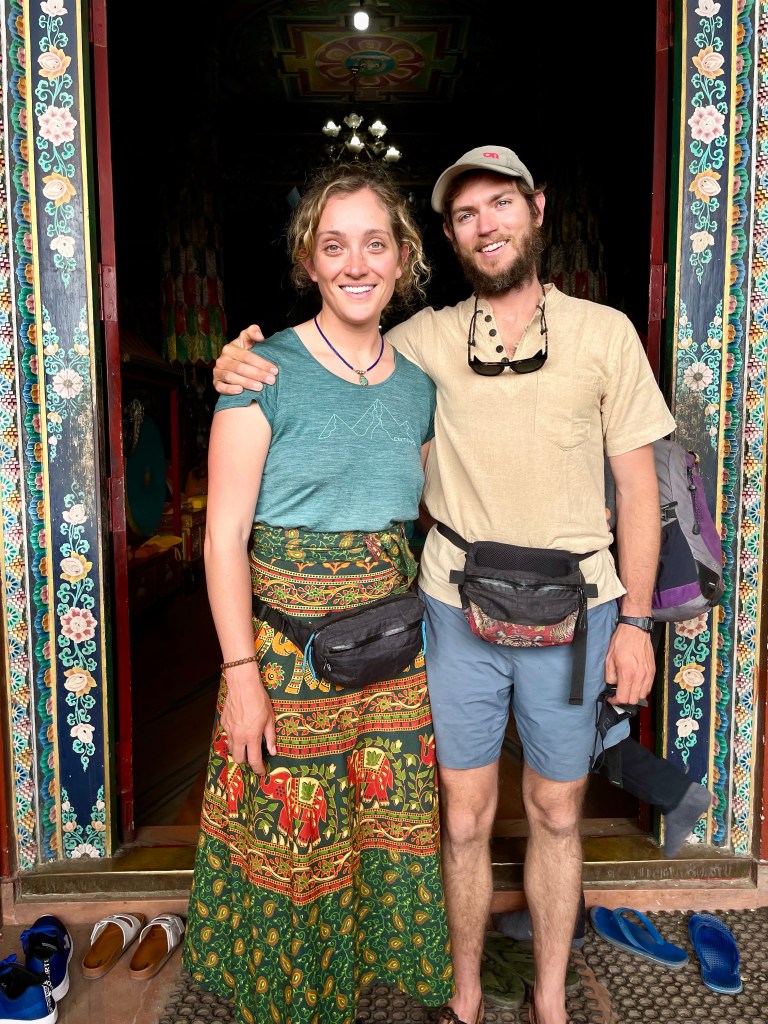
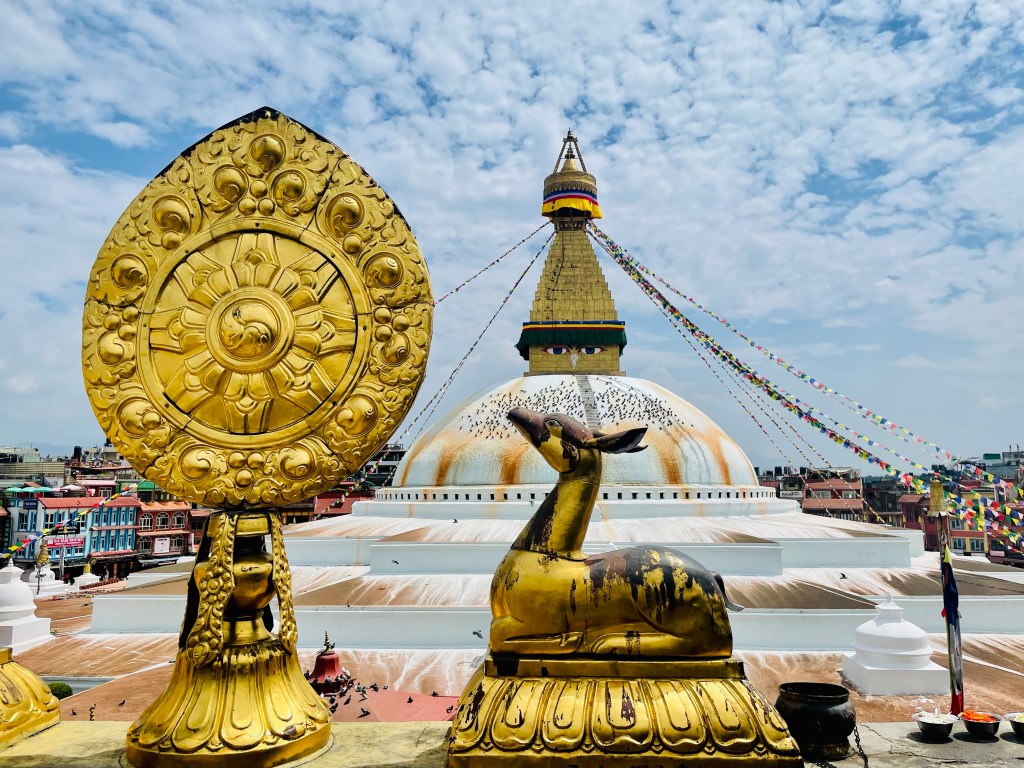
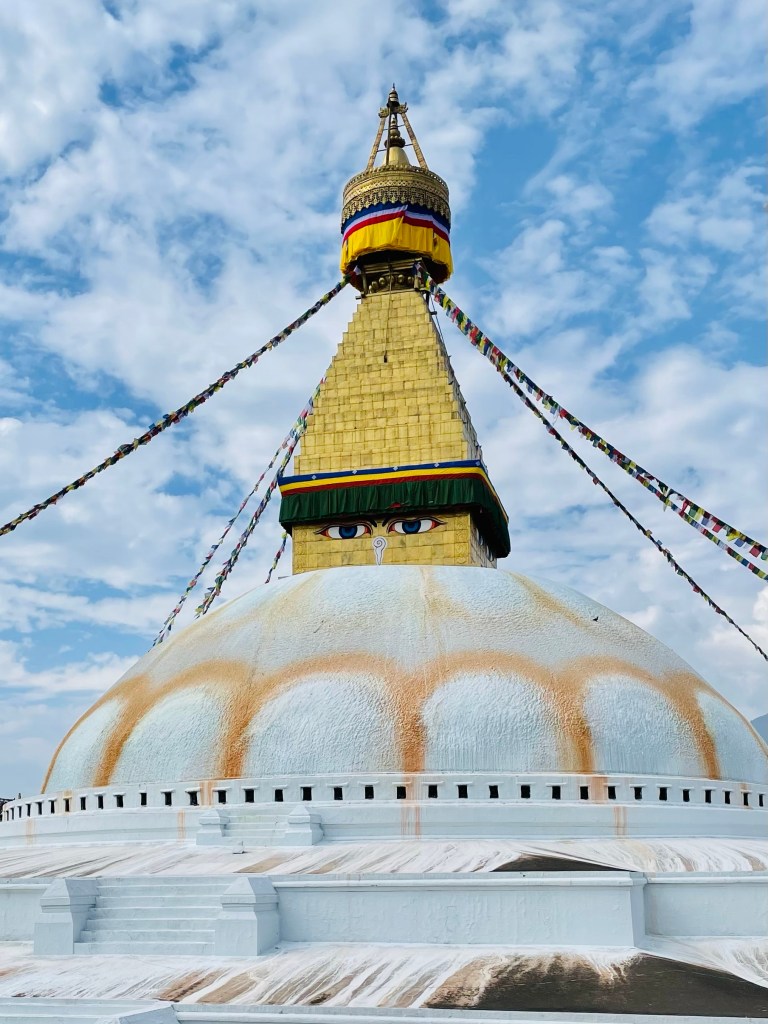
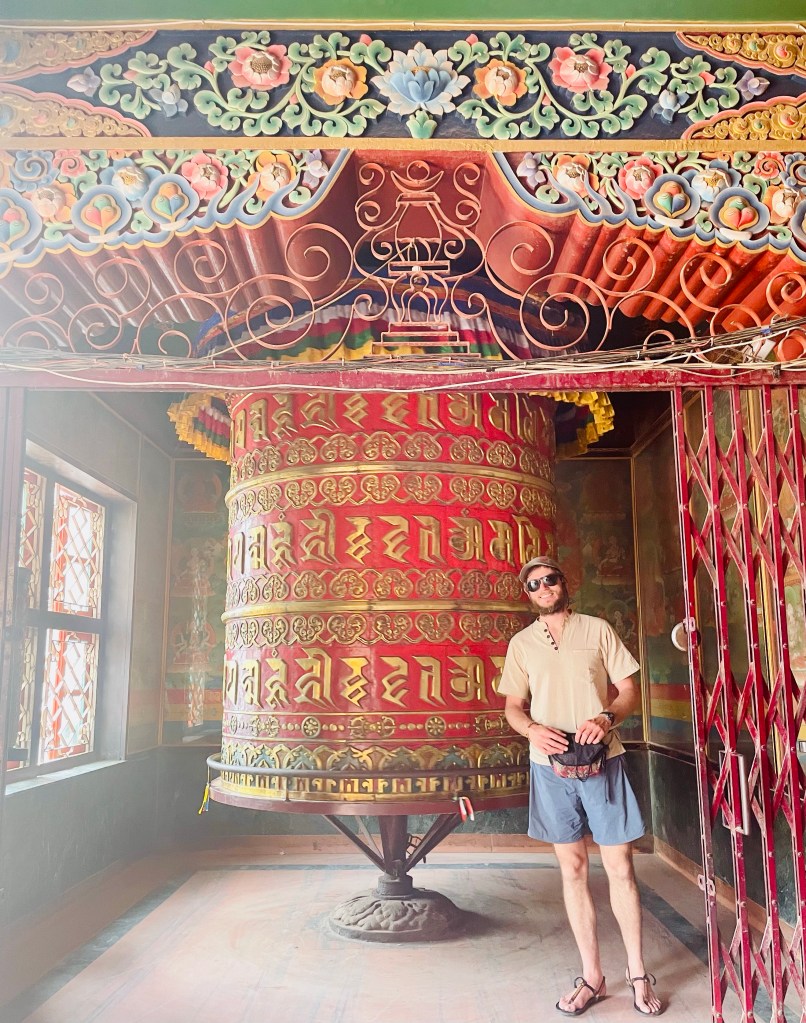
We caught a taxi from Thamel to the Boudhanath Stupa, a famous Buddhist temple and giant Stupa. It was built some time in the 14th century and is one of the largest temples in Nepal. Once inside, there were store fronts built around the temple that looked like an old movie set. We were quickly greeted by a young boy named Depak who initially said he just wanted to practice English, but it soon became apparent that he was trying to sell us an expensive mandala. This hustle is a common trap for foreigners, luckily we had been forewarned. Mandala’s are beautiful works of art that at times are painted with a single yak hair taking over a month to make. Depak was a great salesman and friendly kid, but we had to explain we weren’t in the market to spend 100’s of dollars on a Mandala. He was quite the tour guide though and we appreciated what he could teach us about the temple.
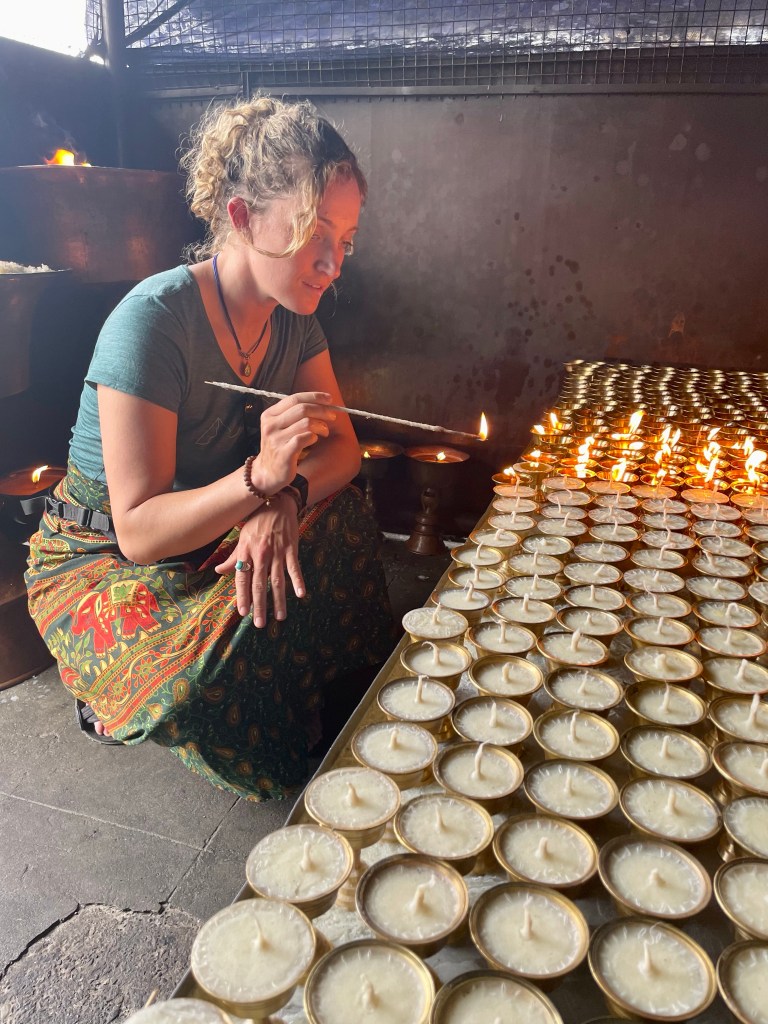
Butter lamps are an important symbol of many Buddhist beliefs. They are found in all the monasteries and homes of Buddhist followers that we have met. One valuable meaning behind the lamp is that by creating more light one can dispel darkness and ignorance.
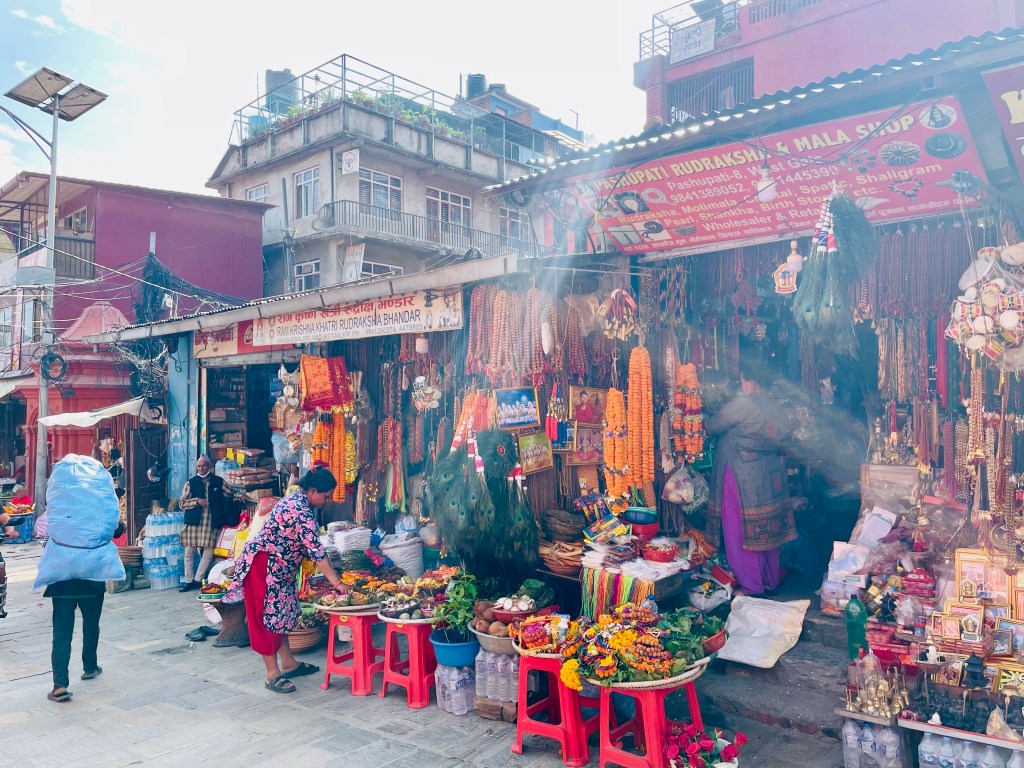
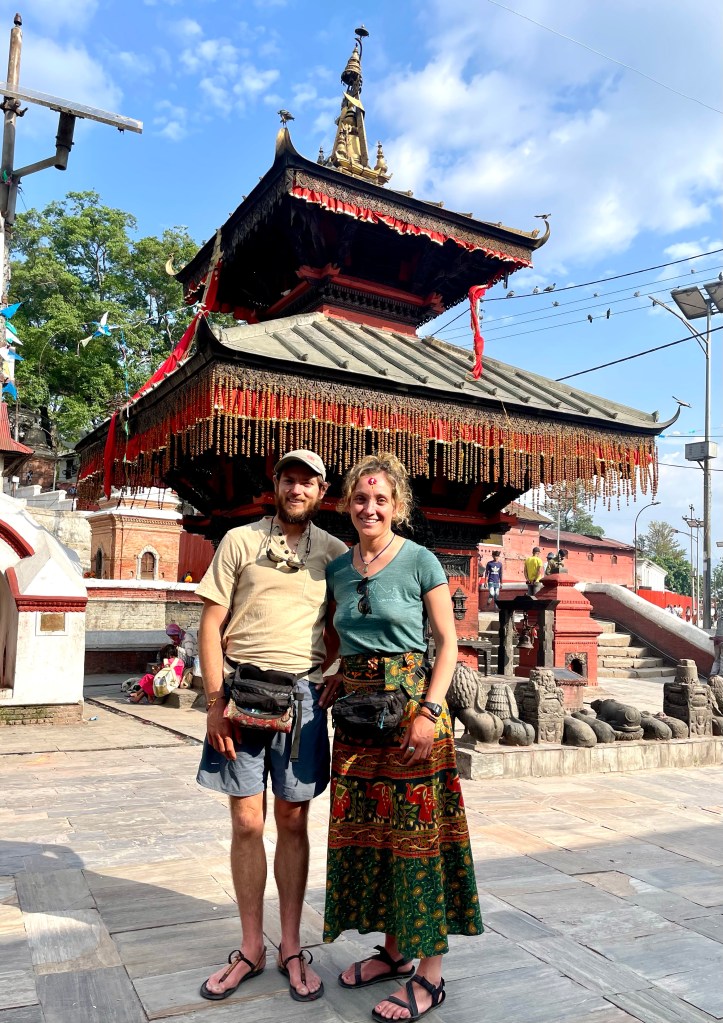
After exploring the Boudhanath Stupa we walked to the Pashupatinath Temple. As we neared the temple the city began to change around us. The pagoda architecture and stores clearly had a different feel as we moved from the largely Buddhist part of the city towards the famous Hindu shrine. This is one of the oldest and largest Hindu temples in Kathmandu and a famous world heritage site. Pashupatinath is a giant complex consisting of hundreds of temples situated along the sacred Bagmati river.

When we arrived the air was smokey from the ongoing cremations. The Pashupatinath Temple is open 24 hours and is the one place in Nepal where Hindu people come when they die. We met a Nepali man who gave us a tour explained the different platforms for regular people, wealthy, and royalty. Each site is more holy, and more expensive, as it nears closer to Shiva’s temple. If someone is homeless or has no money they are still provided a platform and all costs are covered. He explained the process and earthly elements involved. The washing of the body in waters of the sacred Bagmati, the fire, then the earth, and how one of the family members (historically the oldest male child) would take the last bit of ashes, walk into the river and tuck it into the river sediment.
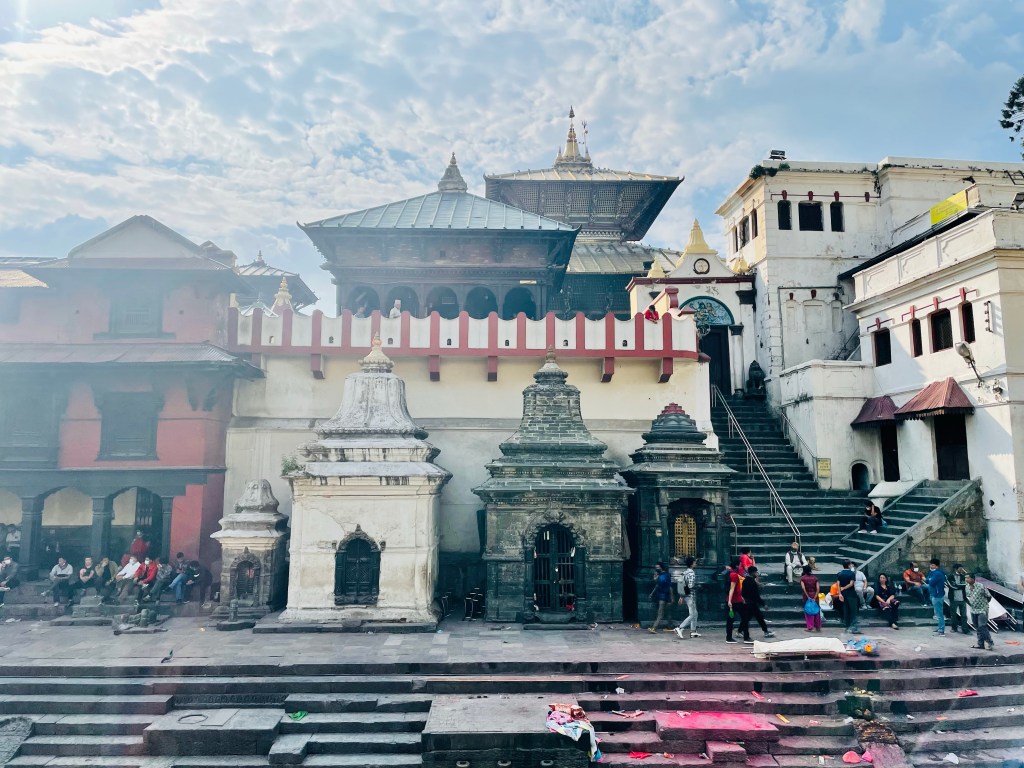
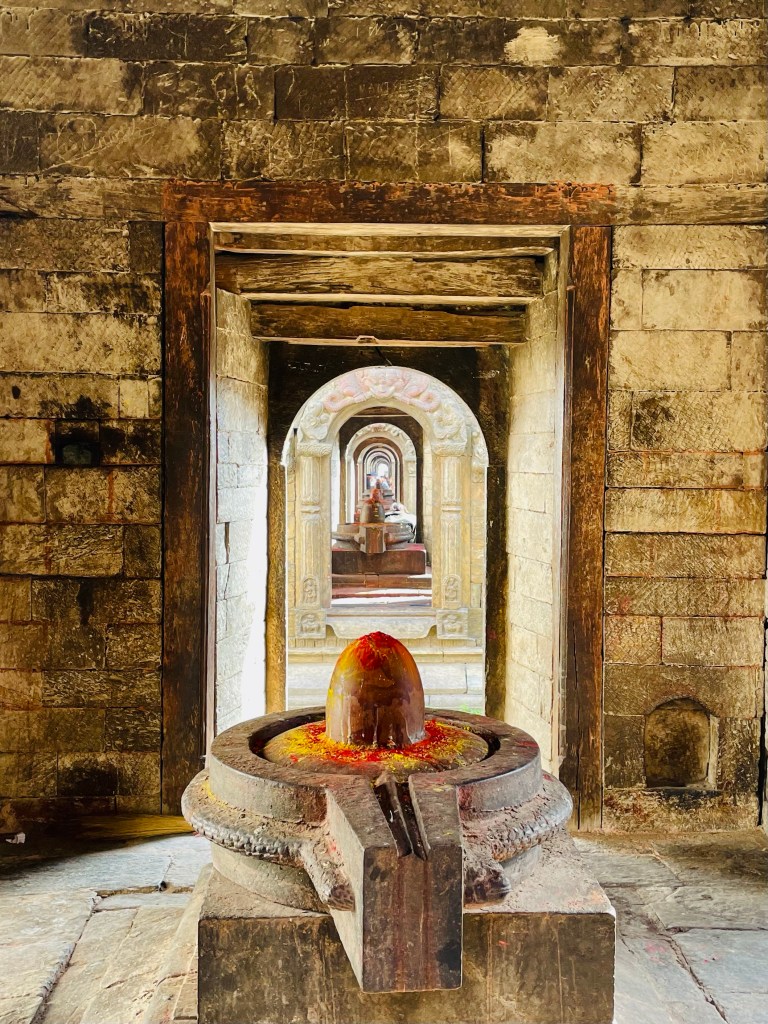
Pashupati comes from the meaning ‘Lord of animals’ because Shiva was the protector of animals, hence why his image is often depicted with the 10 snakes. The main shrine at the center is the head of Shiva and one of the most holy shrines of them all. The story goes that one of Shiva’s reincarnation’s was an antelope, his horn was discovered in a nearby pasture. A herdsman noticed his cow would shower the dirt with milk in one spot leading the herdsman to dig down finding this previously sacred horn. This horn is the sacred linga to Hindu followers and now resides in the primary temple at the center of Pashupatinath.
Our guide told us stories about human sacrifice that previously occurred once a year. One of the wildest stories we heard is that they used to take the tip of the thumb of the last sacrificed person and put it in soup. Then the entire community would eat the soup, blindfolded, and whomever got the thumb would be the next sacrifice. Nowadays they use animals, frequently goats.
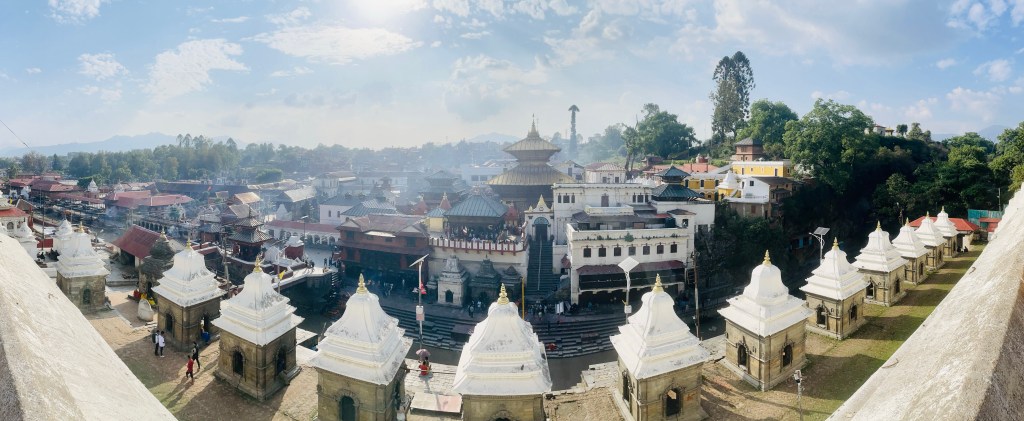
It is unknown exactly how old the original temple is. It was rebuilt after Muslims destroyed the complex in 11th century A.D.. Due to this attack and still to this day no one other than Hindu followers are allowed in the large Shiva temple at the center of the complex.

Around Hindu temples there are often Sadhus, aka Hindu Saints, who devote their lives to a spiritual path of meditation and purity. They take a vow never to work and must ask for money. They are frequently seen around Hindu temples decorated extravagantly with face paint and offer to take pictures with you in exchange for rupees.
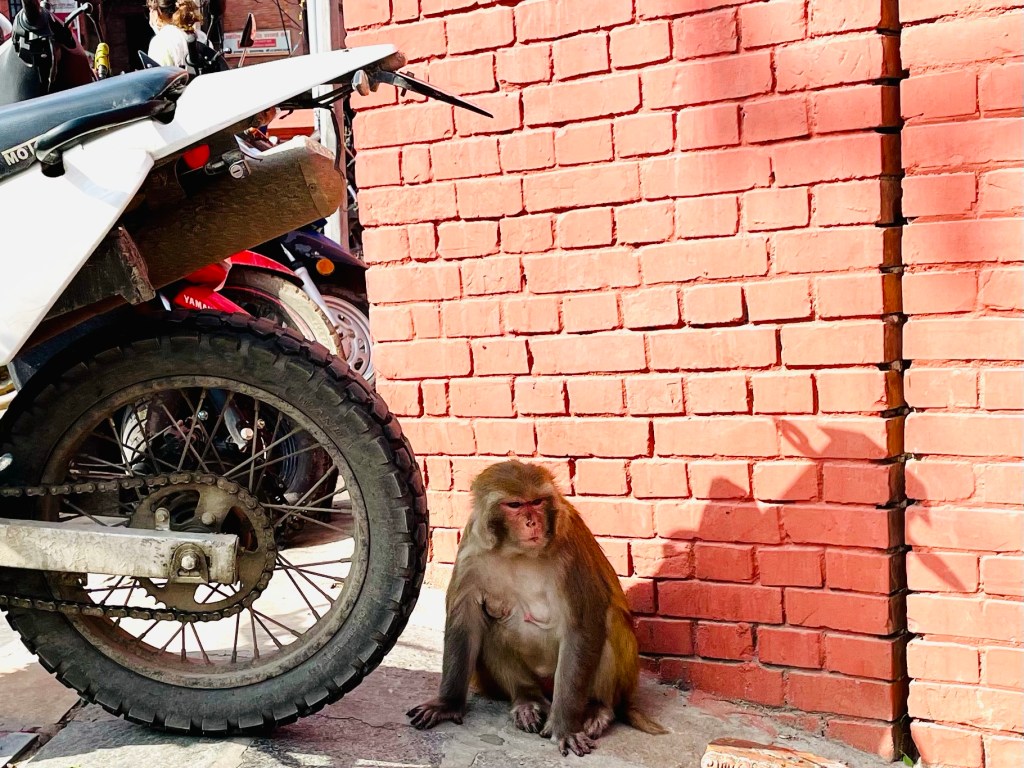
There is also a famous TikTok monkey at this temple. It initially reached out and blessed someone which led to its fame. We did not visit it, but we’ve heard it has become more aggressive over time. Hmmm, wonder why? https://youtu.be/uy7erkOT3Xs
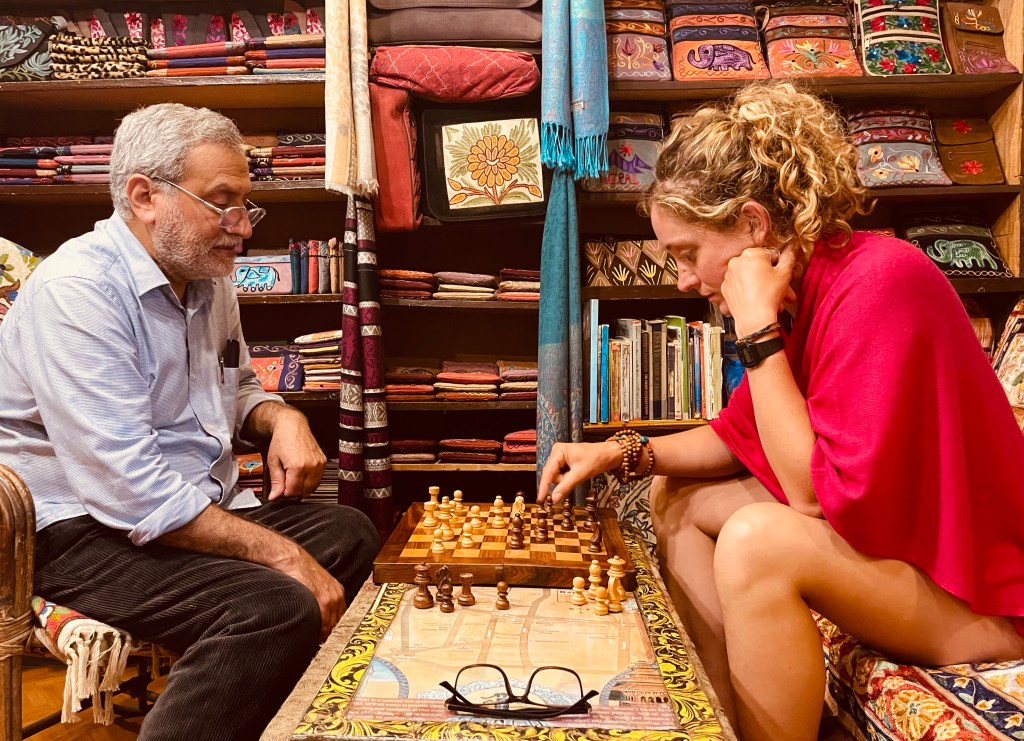
And of course no stop back in Kathmandu would be complete without a stop at Rug Up Originals to visit our friends Quayoom and Yusuf. They have become our Kathmandu gurus, sharing advice and providing us with compliments and encouragement for life and the trails ahead.
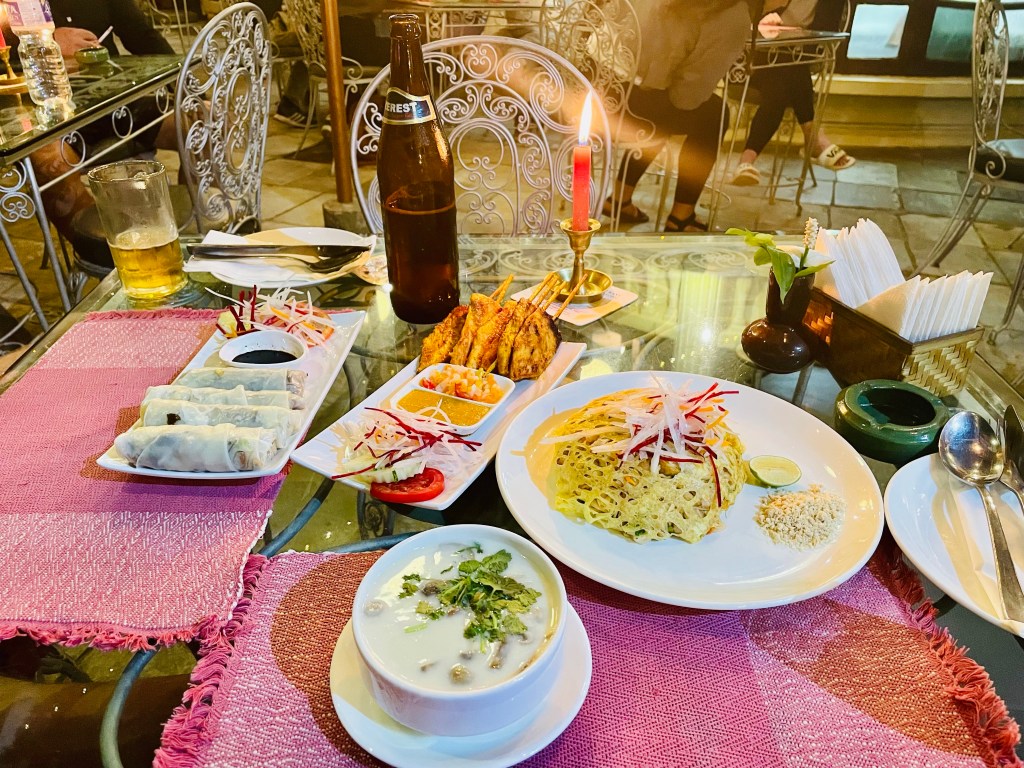
We enjoyed our last meal in the city at Yin Yang and got ready for our next section in Langtang where we would hike for the next 2 weeks. The plan is to hike until we reached our time frame for renewing our visas, head back to Kathmandu, then back out to the trail again.
 On Tour with Tom and Sarah
Tommy is starting to look like honest abe over there! Let make butter candles when you get back!!
LikeLike
Glad to know you are doing well. Love the posts but we miss you guys🥰 Stay safe, we expect lots of pictures and stories when you get back. 😘
LikeLike