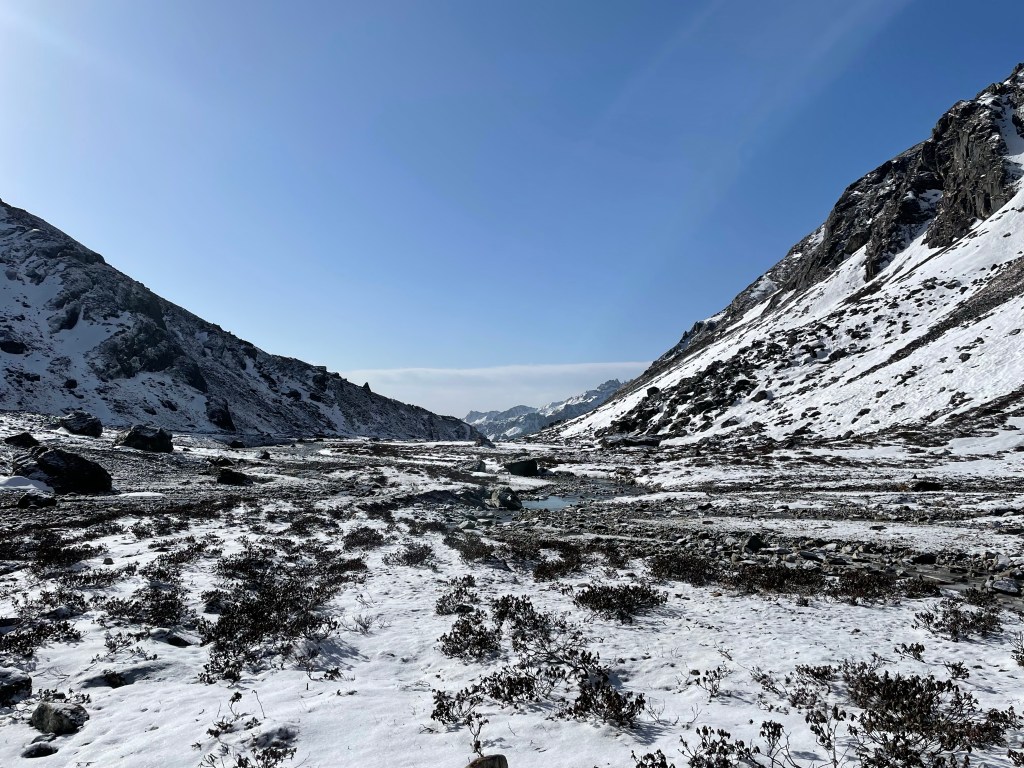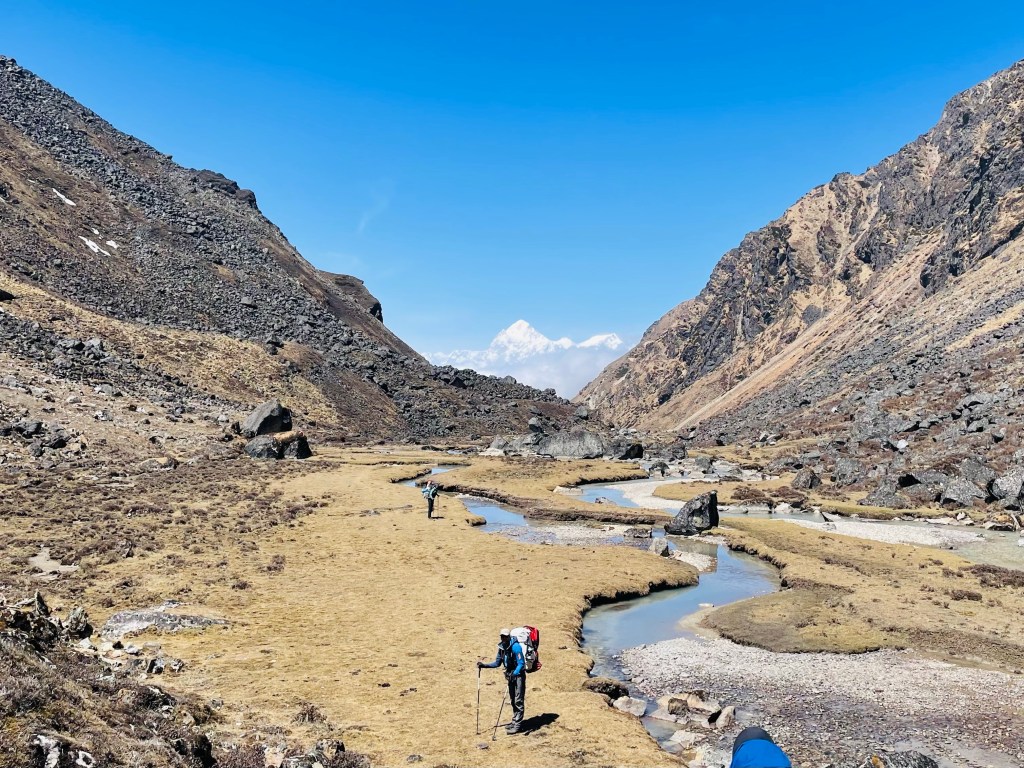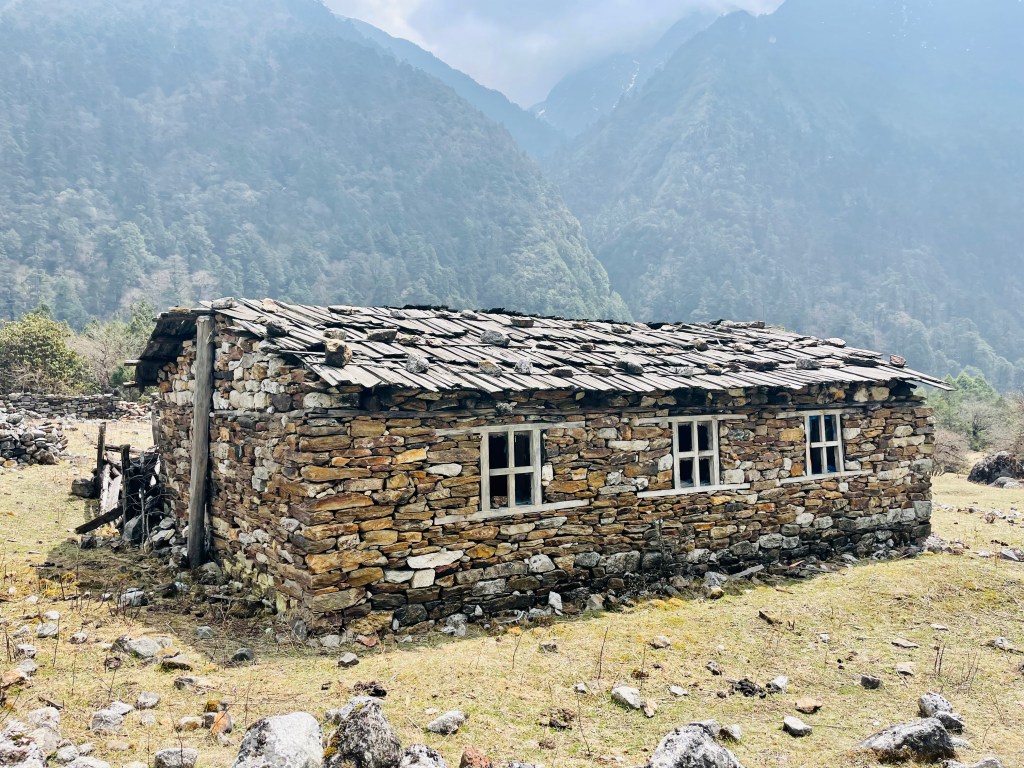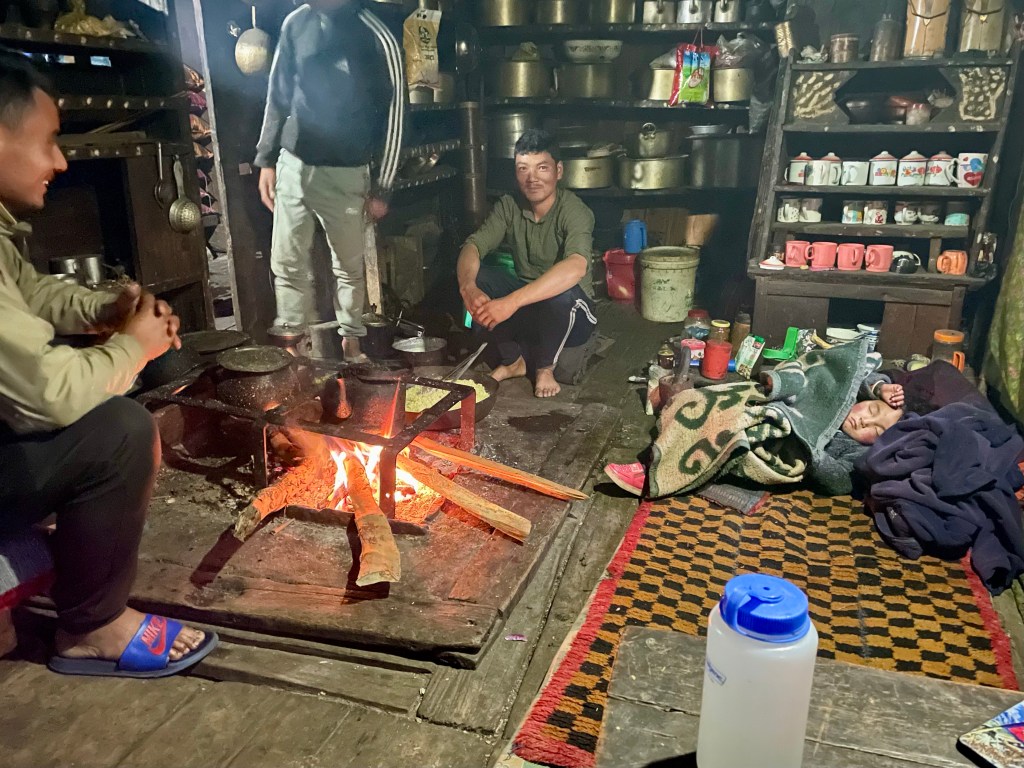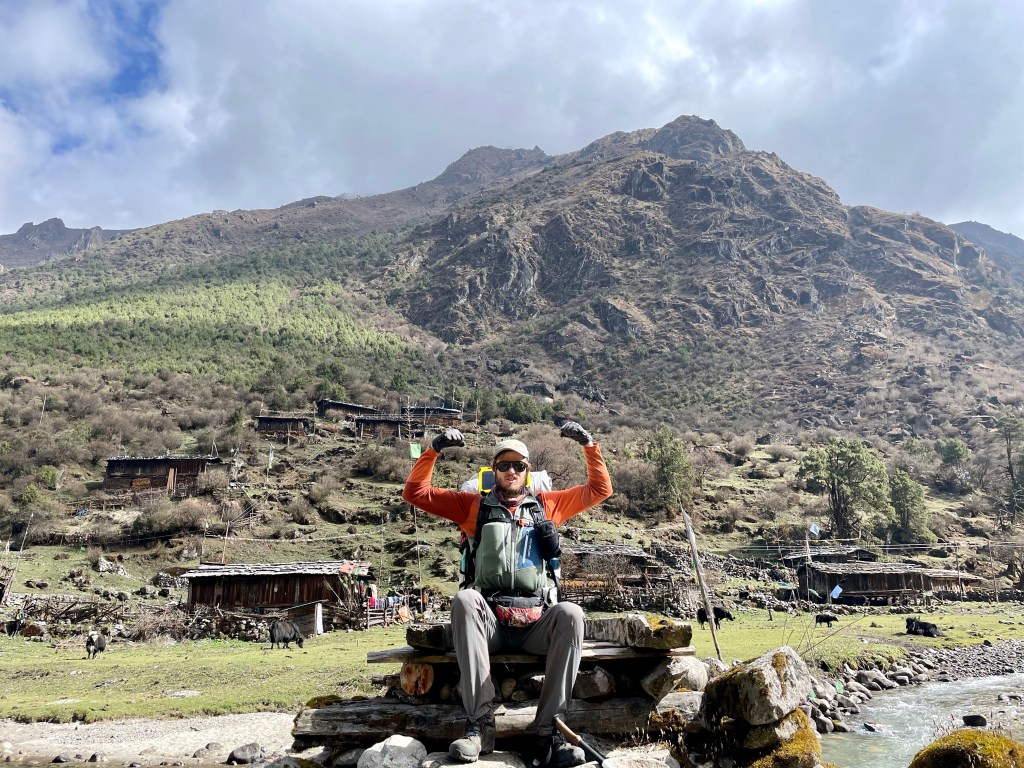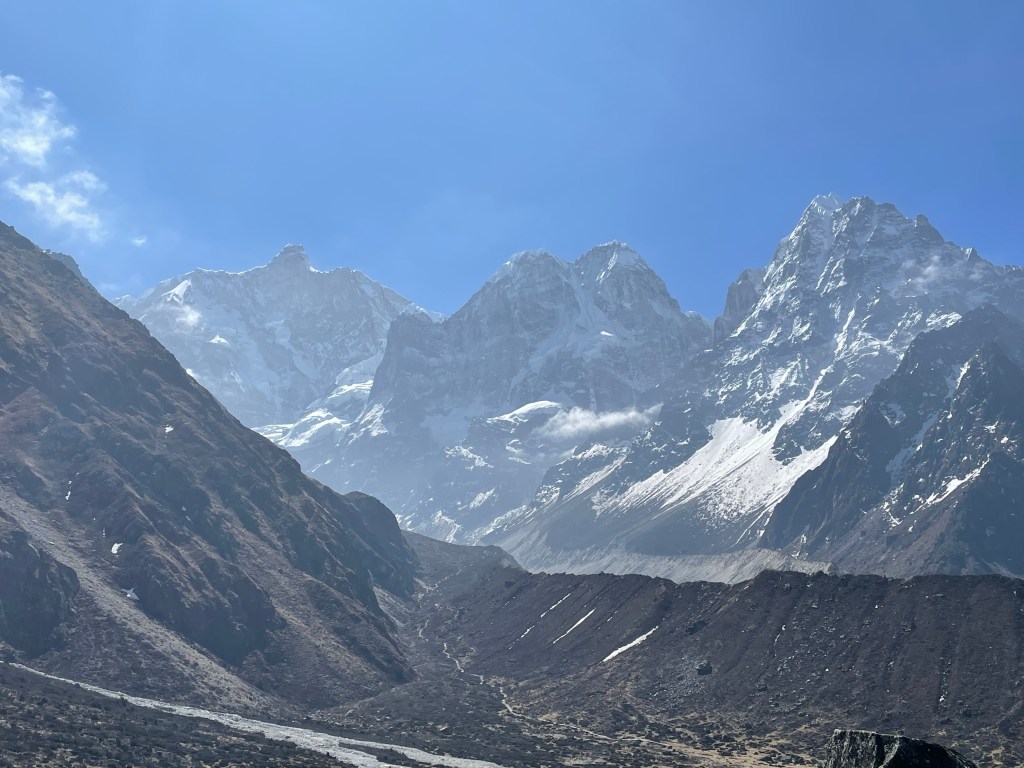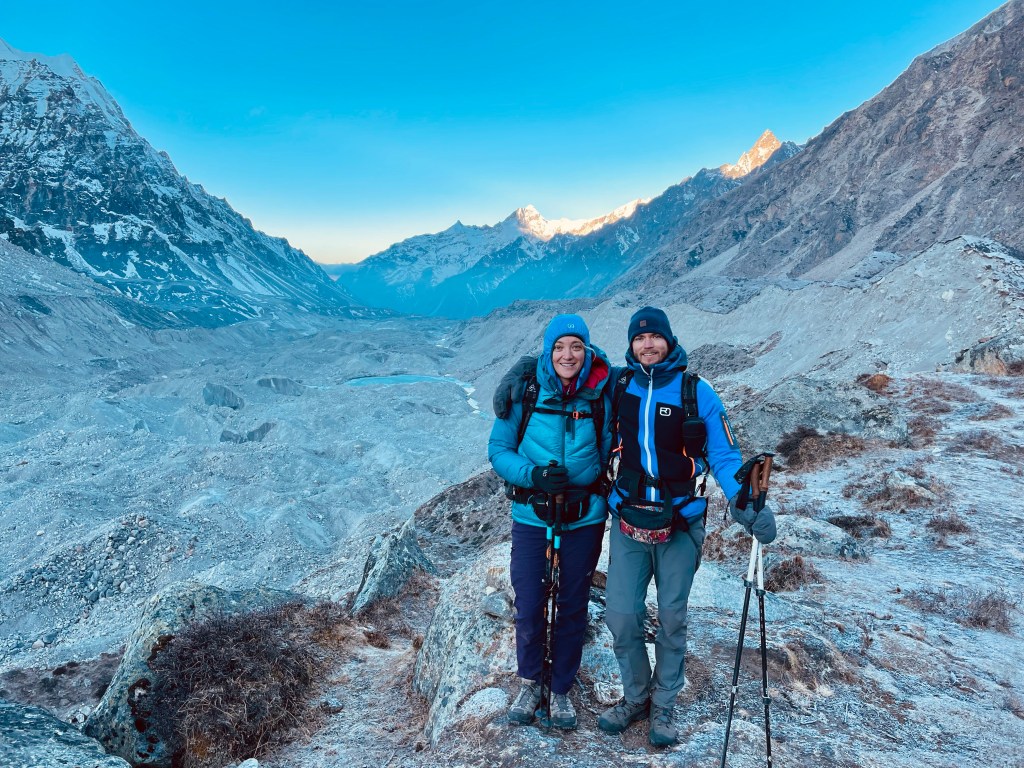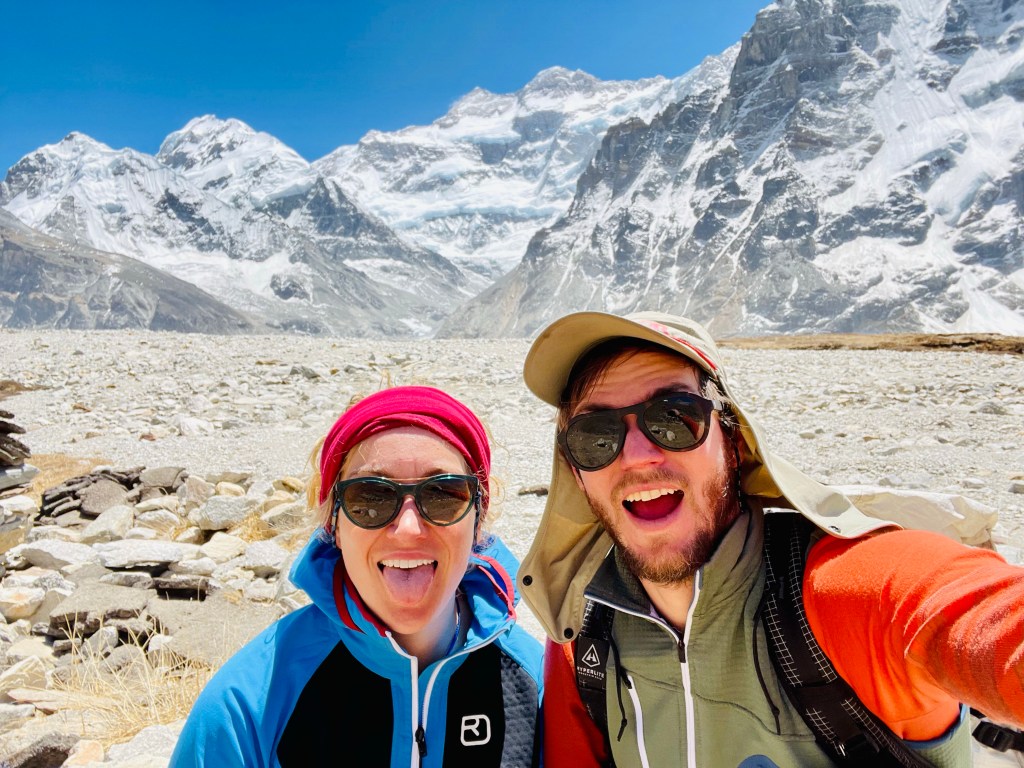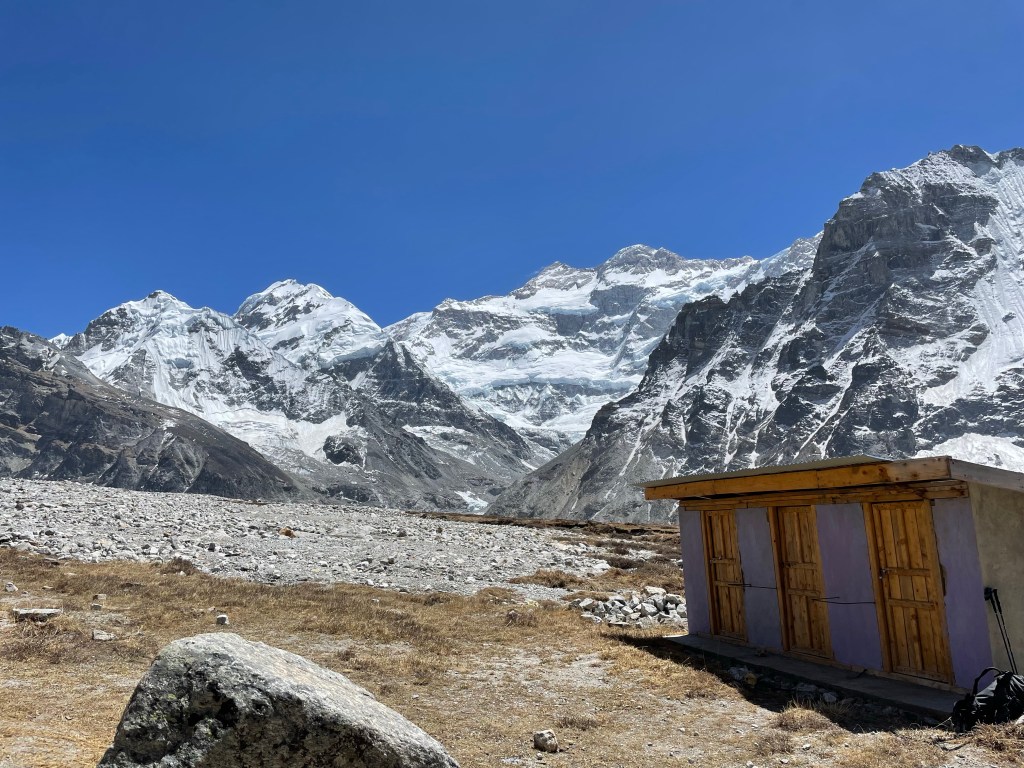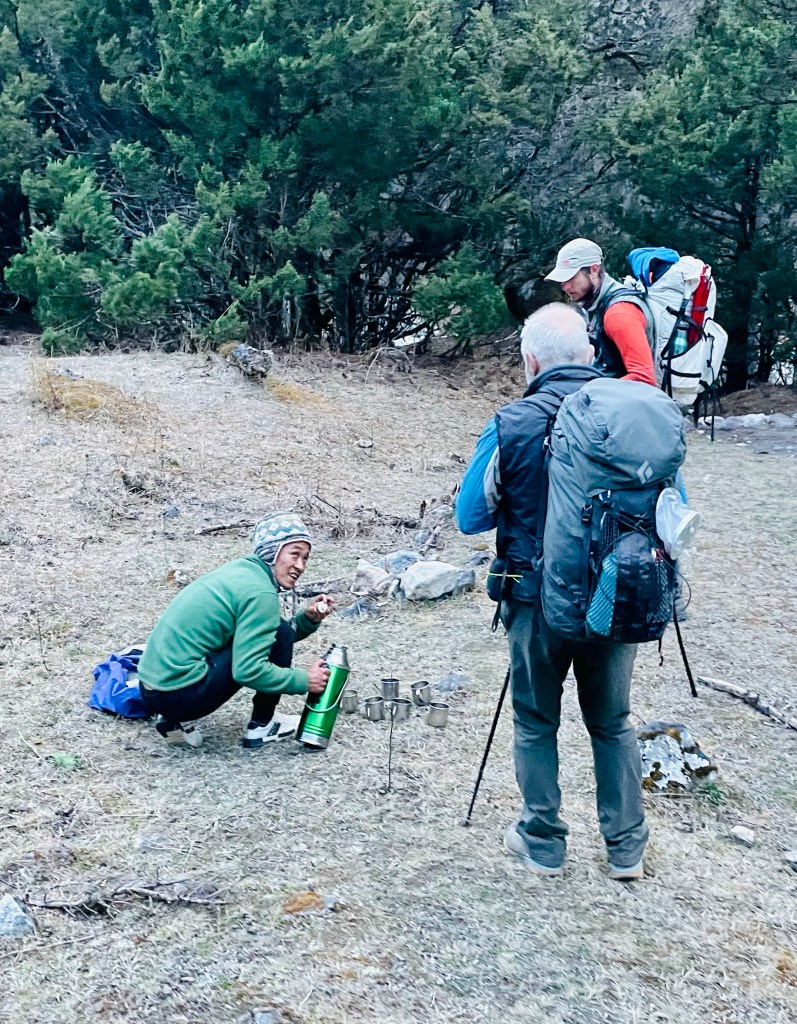
Thudam > Hongon

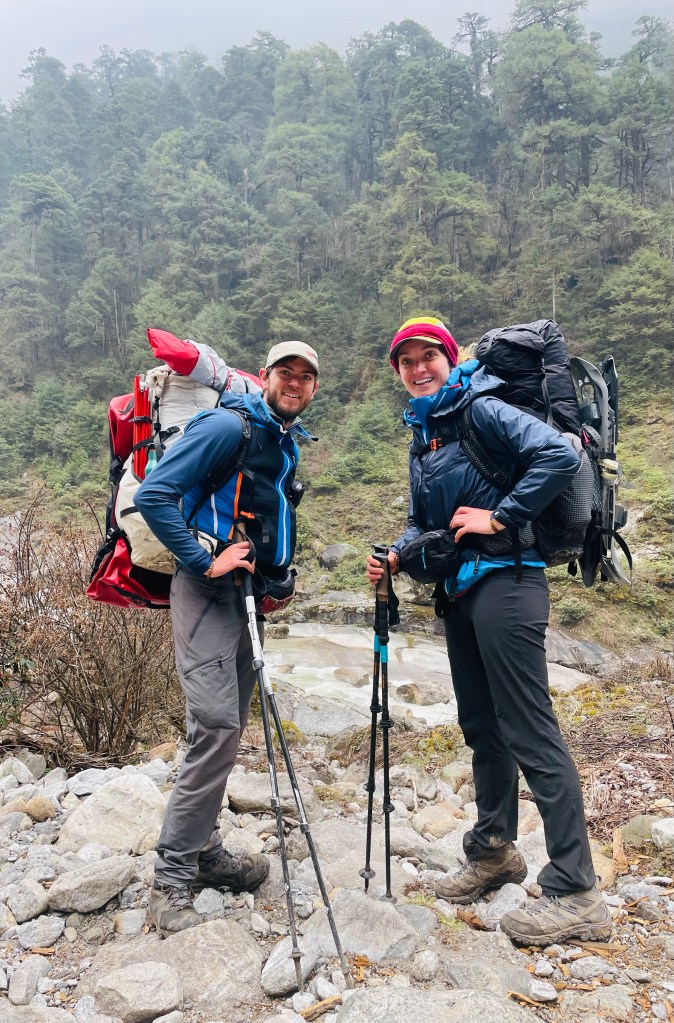
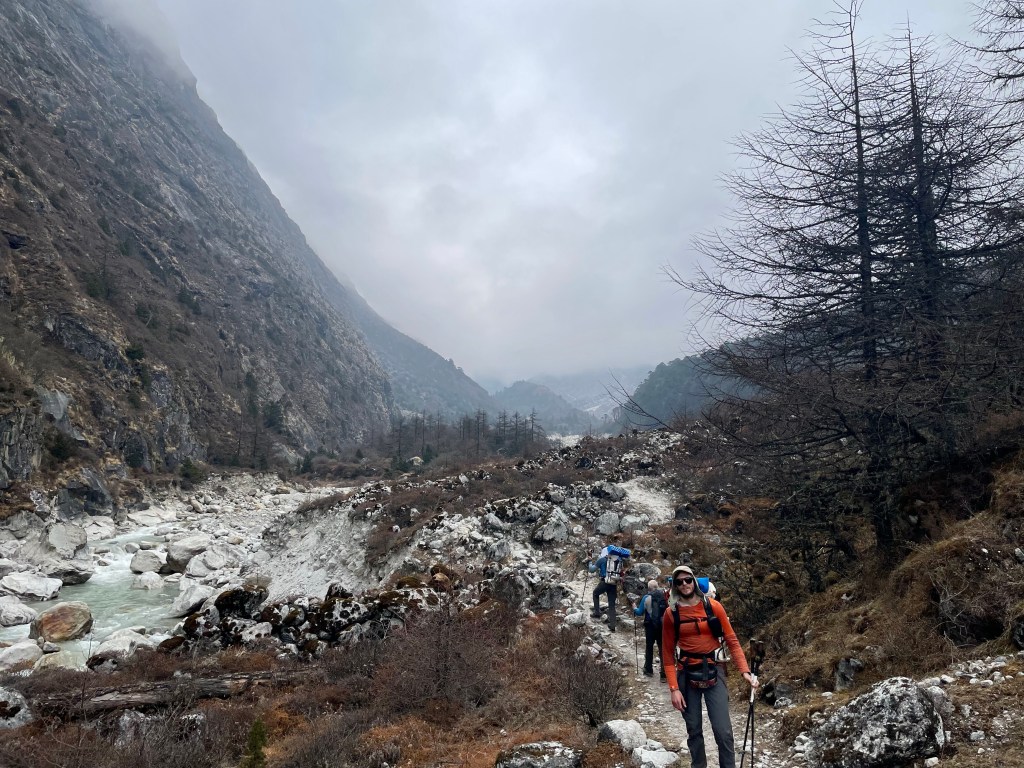
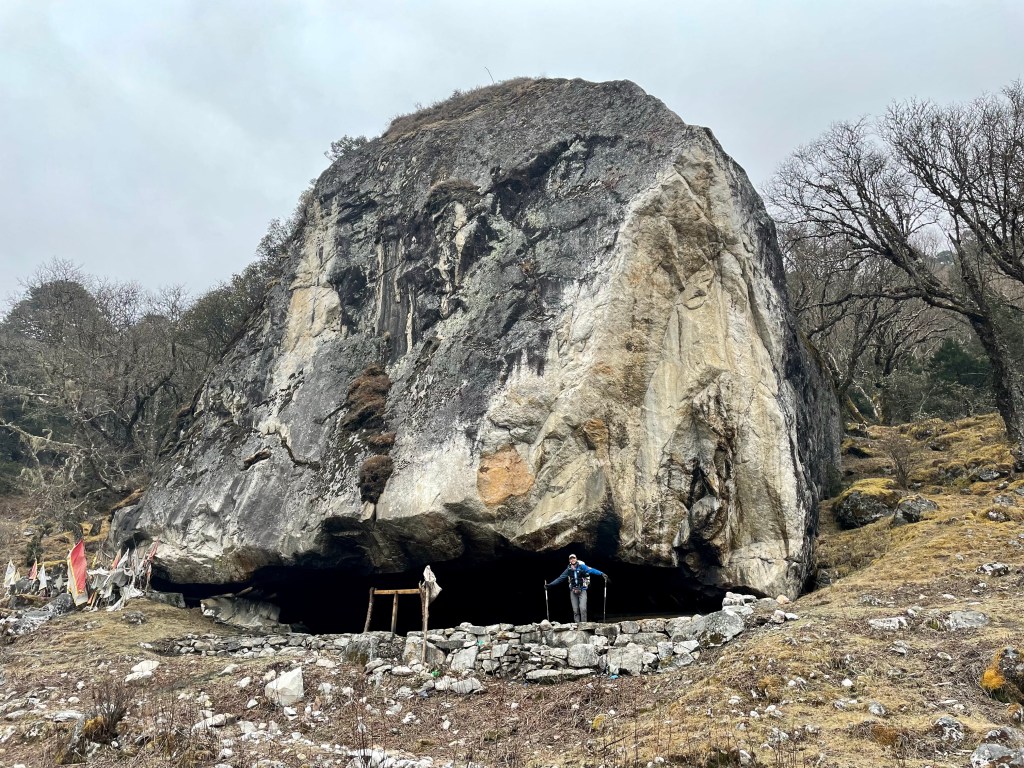
Thudam was an unexpected treat. We had 2 porters tag along to Hongon that Phurba had introduced us to. One of them owned a house at the kharka we were planning to camp at before Chyamtang. Throughout the morning they urged us to move quicker to beat the rain. We had our slickers and didn’t mind if it rained so we urged them to hike ahead if they wanted to. The clouds clinging to the valley were clearly going to open up soon enough.

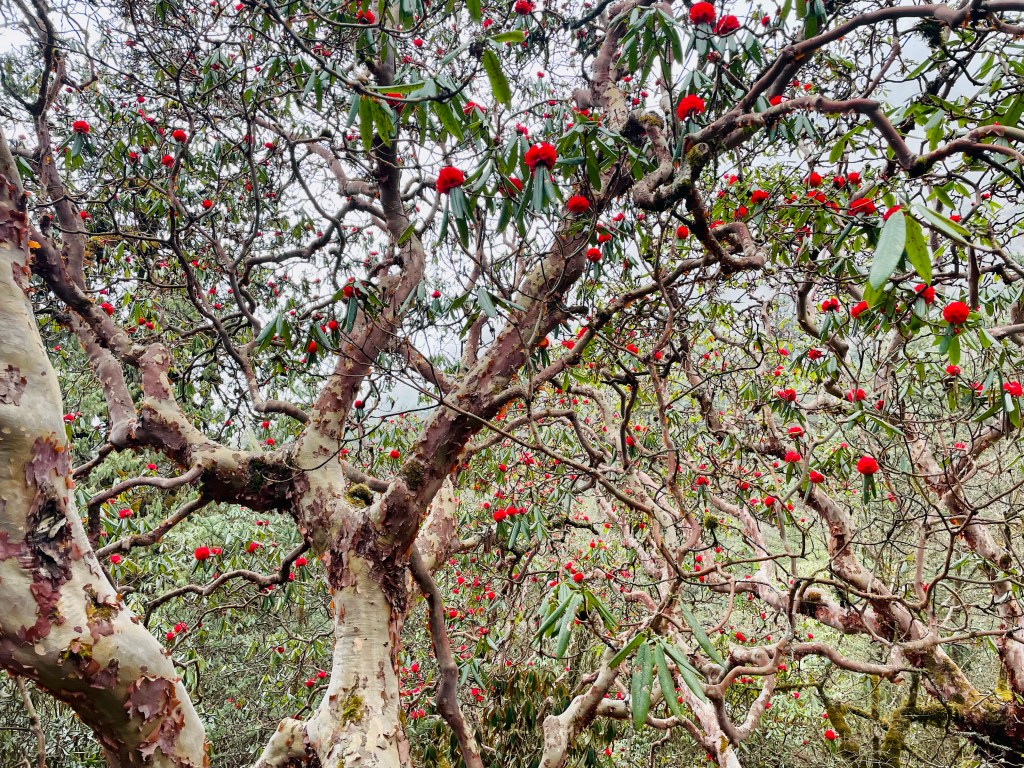
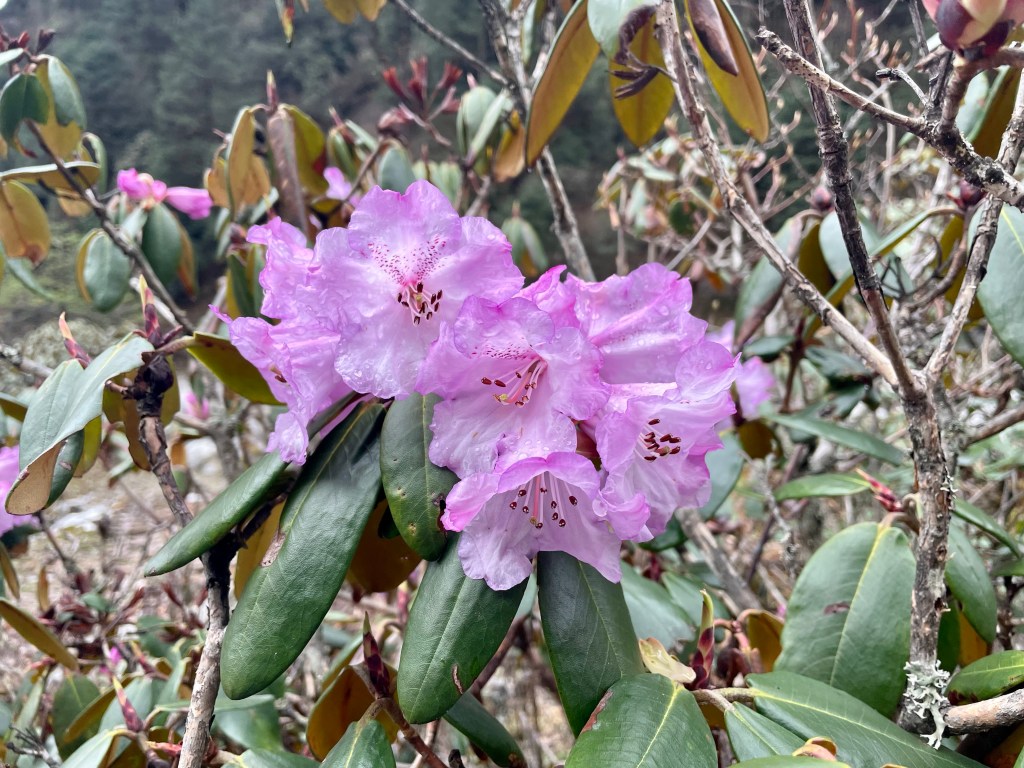
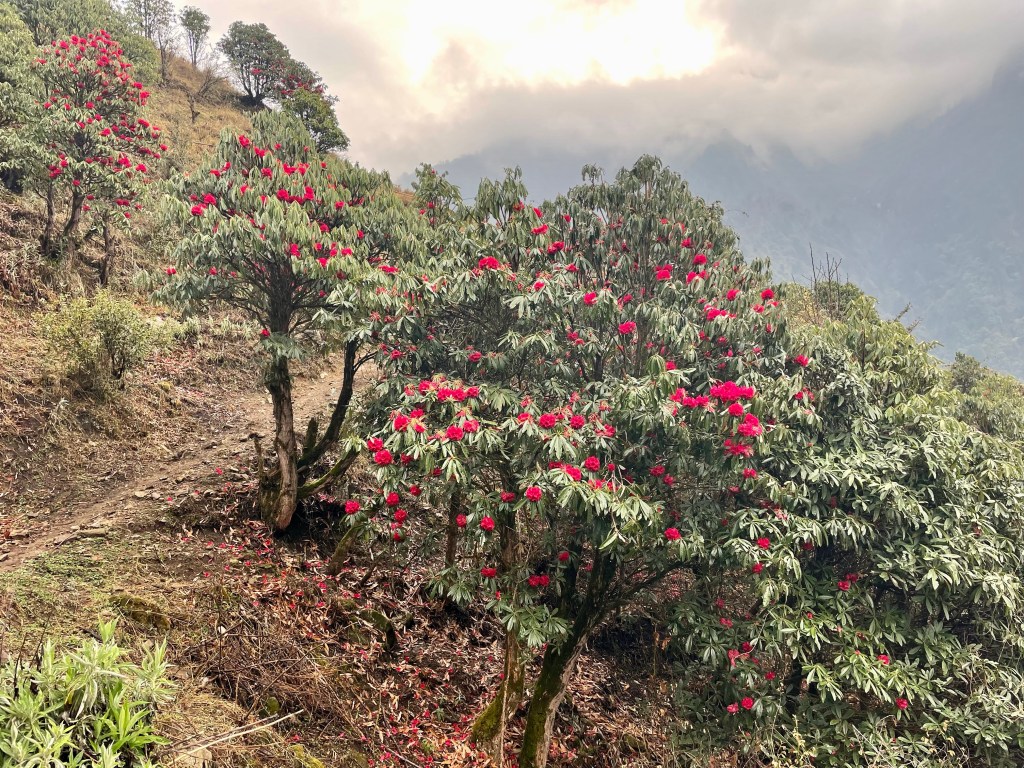
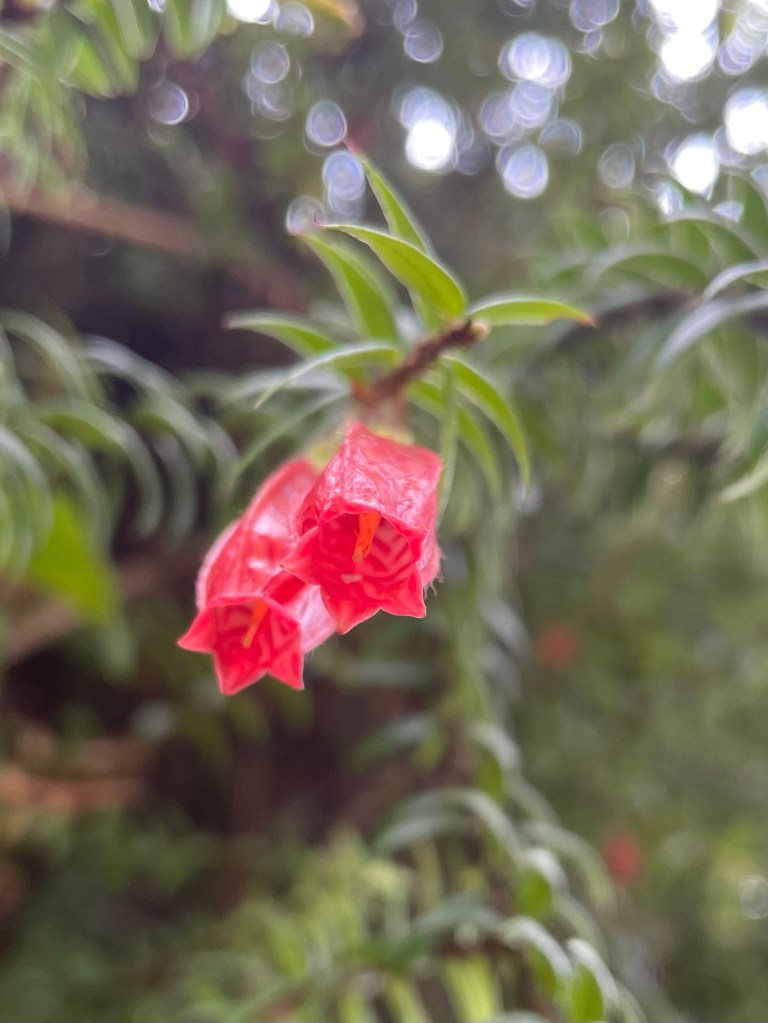
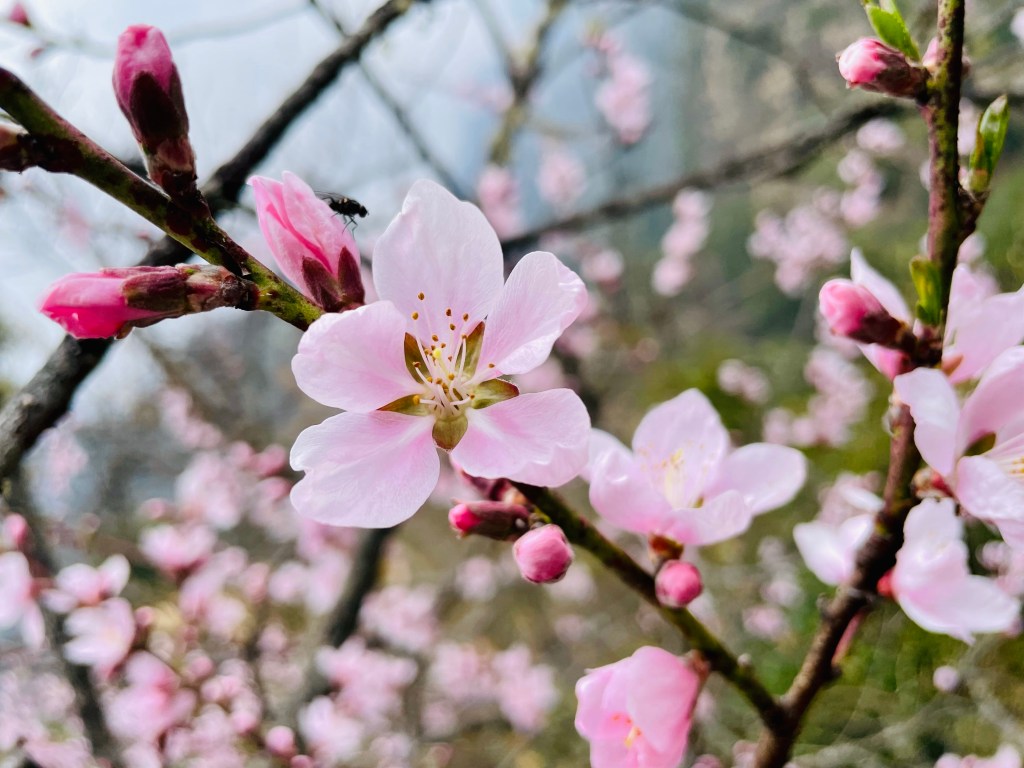
Rhododendrons popping on the hillsides as we left Thudam

Our teammate, Tony, was planning to head back down earlier than planned with the other porters to Taplejung, but the pass had been too high and snowy. We lucked out and got to spend an extra 3 days with him because he was forced to stick around until there was an easier place to catch a jeep out. We were glad to have a few more days of Tony’s easy going presence on the trail. Sarah and Tony certainly share a similar curiosity in botany. Tony, being a talented artist, has an eye for beauty and a love for color.
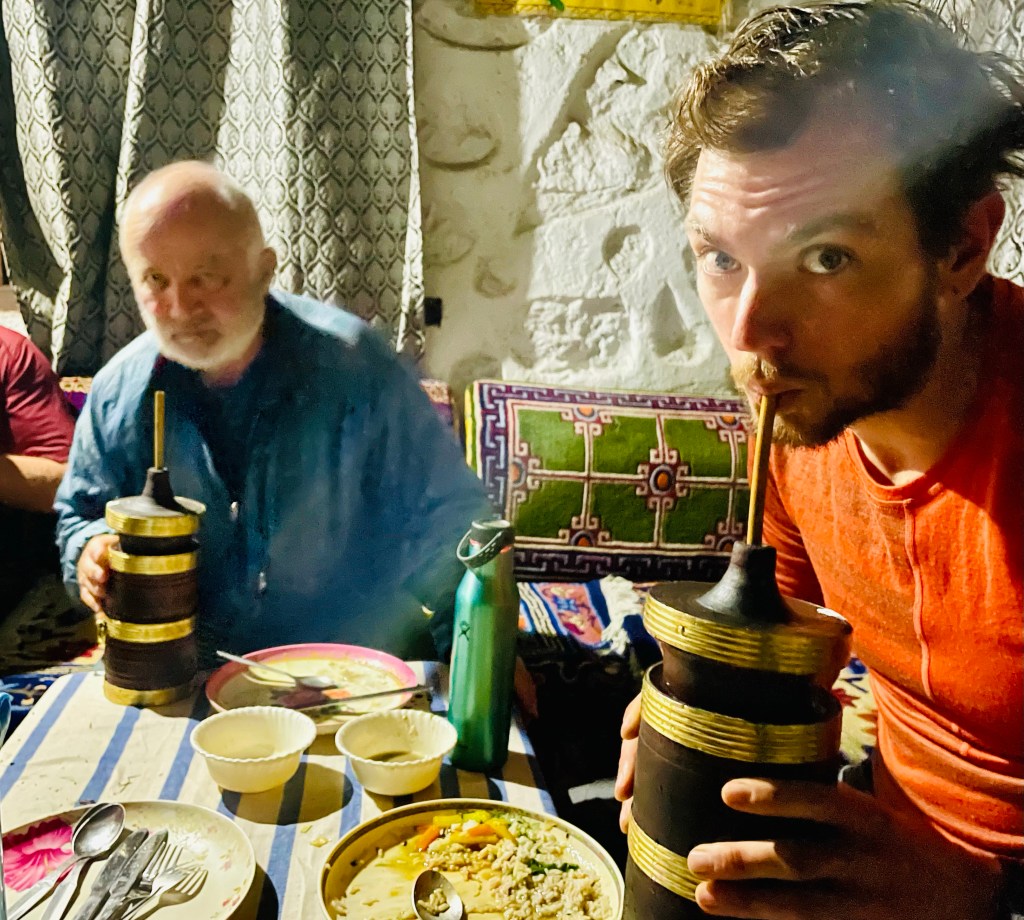
We will miss our Tongba buddy Tony

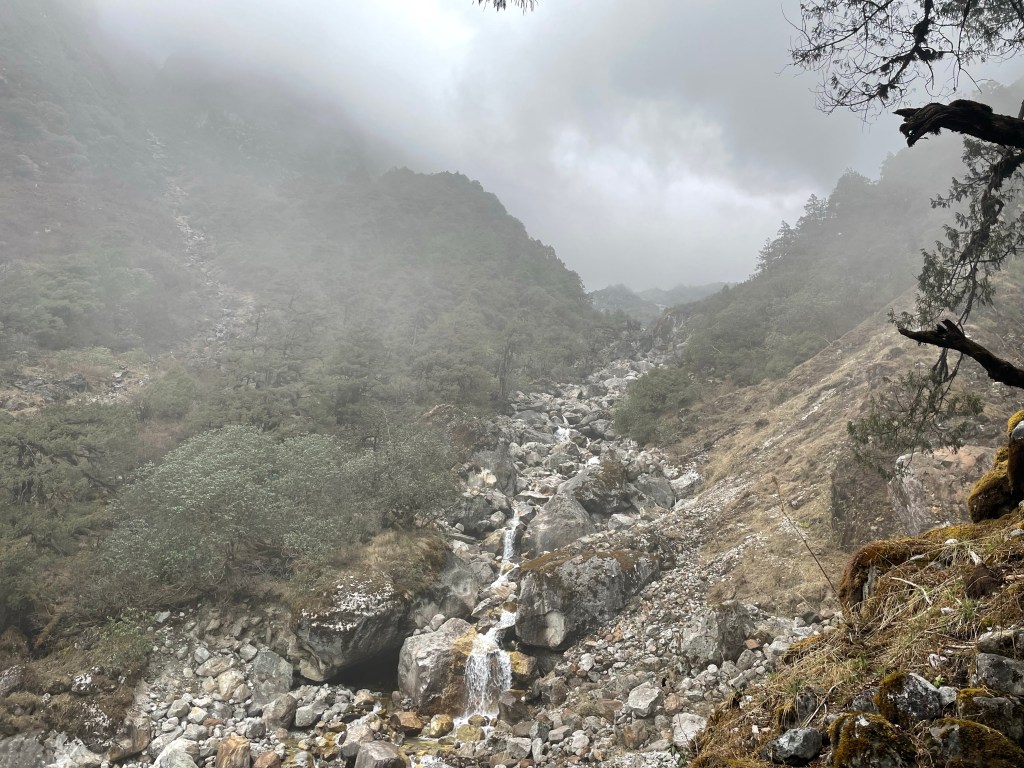
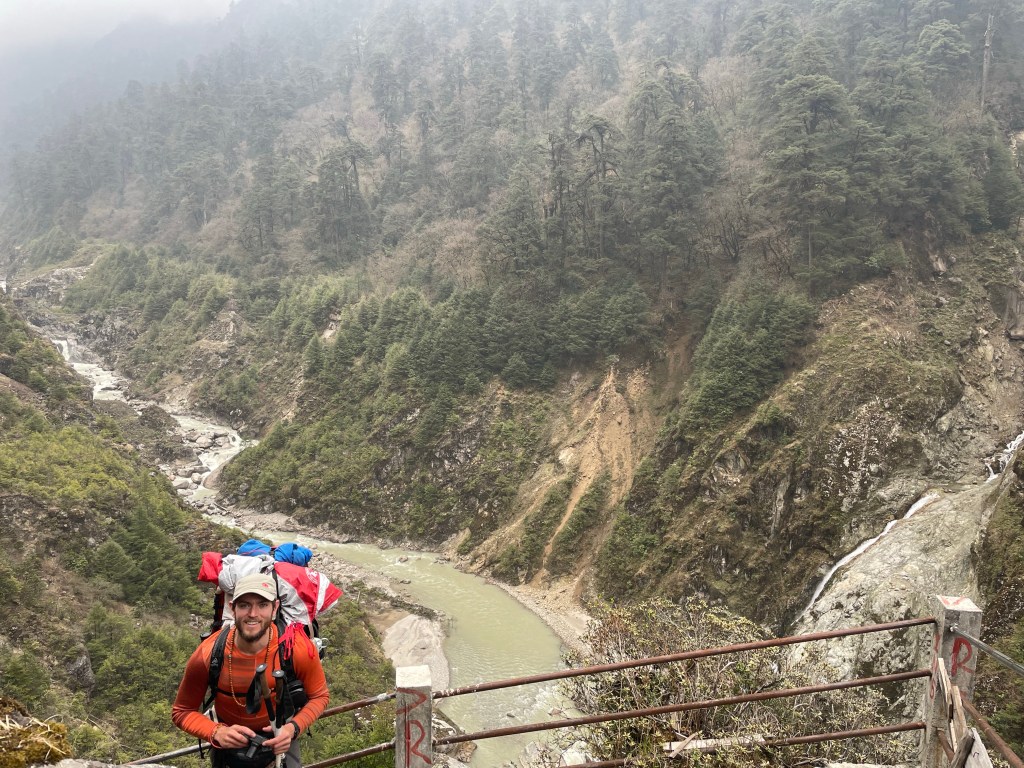
As we parted ways with the river our trail steeply switchbacked a 1,000 feet up the mountain side. The map for the day made the trail appear easier since we would descend several thousand feet lower for camp. This is what we like to call ‘Himalaya down’ because in reality, we ended up hiking 3,400 feet of ascent and 9,000 feet of descent over 8 miles. Even for the guys who have hiked many trails all over Nepal, these trails were of the likes no one had ever experienced. Sections of steep trail would often require hands to climb over slippery rocks, roots, and logs that were slathered in wet mud. Knowing that Yaks go up and down these trails blew our minds constantly. Well, at least until we walked by a large blue tarp wrapped around a mysterious dense soft object. Which Tom, may or may not, have hit out of curiosity did we realize Yaks do indeed have some trouble on the trail. (Turns out under the tarp was a dead yak that Tom did punch)

The river that we had camped next to and continued hiking along all morning.

The sky finally opened up. Thunder and torrential downpours turned the trail into a slip’n’slide. Now we understood why the porters were urging us to keep moving. The sticks of bamboo turned into grind rails for our boots, Tom took some slides covering himself in the trail. Then the worst part about the rain? It brings out the leeches. Every once and a while you feel their little suckers crawling up your hands and arms. Luckily we caught them all before they had latched on. We got to the Kharka in the early evening making it to Sonam’s, one of the porters, hut. There were 10 or so people huddled in around the fire, but the smoke consumed the room and was burning our eyes and irritating our throats. We took advantage of a lull in the rain and 4 of us set our tents up in the flattest spot we could find, which was kind of a joke. They laid out some bamboo lattice to help with the mud. We were soaked to the bone so we quickly stripped down to our britches and checked each other for leeches. It was by far the worst camping spot we have had, but food and sleep were welcome. We were lulled to sleep by a blend of Nepali folk songs and hymns, followed by the locals speaking in tongues. We had to ask and learned that the family was Christian.
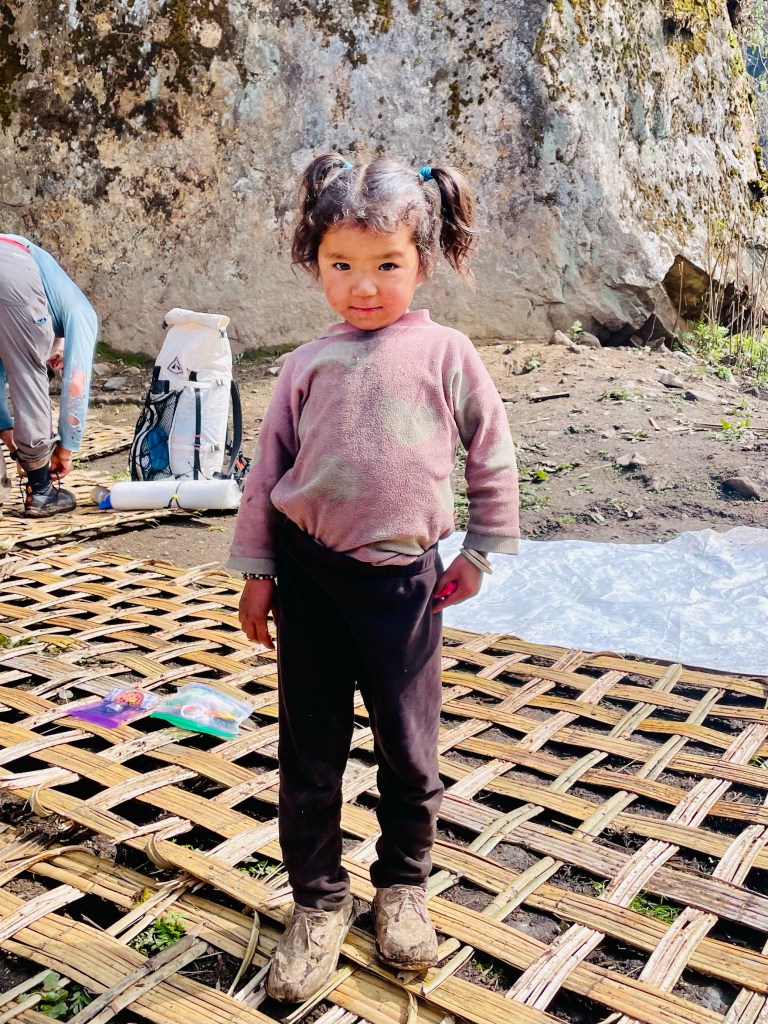
Sonam’s daughter who helped us set up the tents

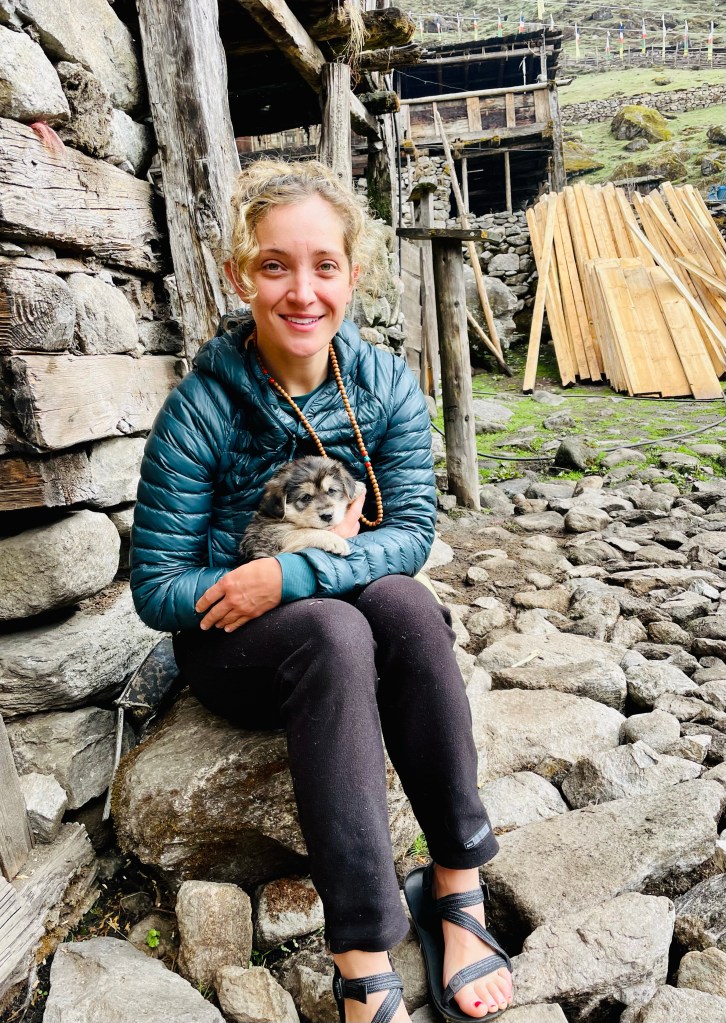
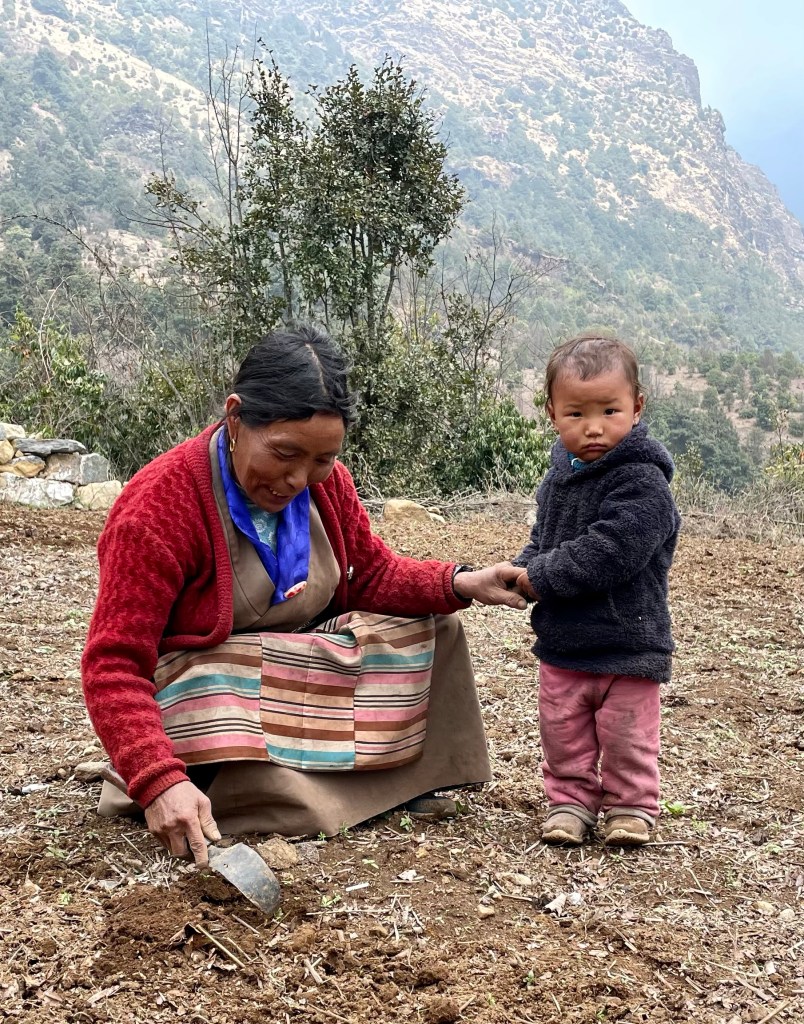
Sarah woke in the middle of the night with nausea. She tried to manage until it was unbearable, or Tom’s bloated gassiness pushed her over the edge. Either way, she was not in good shape and last night’s dinner was rearing it’s ugly head and she was vomiting profusely. We had only eaten our own food so we knew it wasn’t from the local cuisine, but perhaps she picked something up playing with the little kids in Thudam. One little boy insisted on holding her hand while he ate dinner. We had another long day of hiking steep trails, so we were unsure about Sarah continuing on. After some electrolytes and good ole Ondansatron she felt up to the task. We found a porter to carry her bag that was a solid 45lbs. Then we had the pleasure of putting on all of our soaking wet clothes and boots before we were off. Just after saying our farewells, Sarah’s eye caught sight of a freshly decapitated goat head, dripping with blood, that one of the men walked by with for their New Year’s celebration (different than our New Year’s of course).
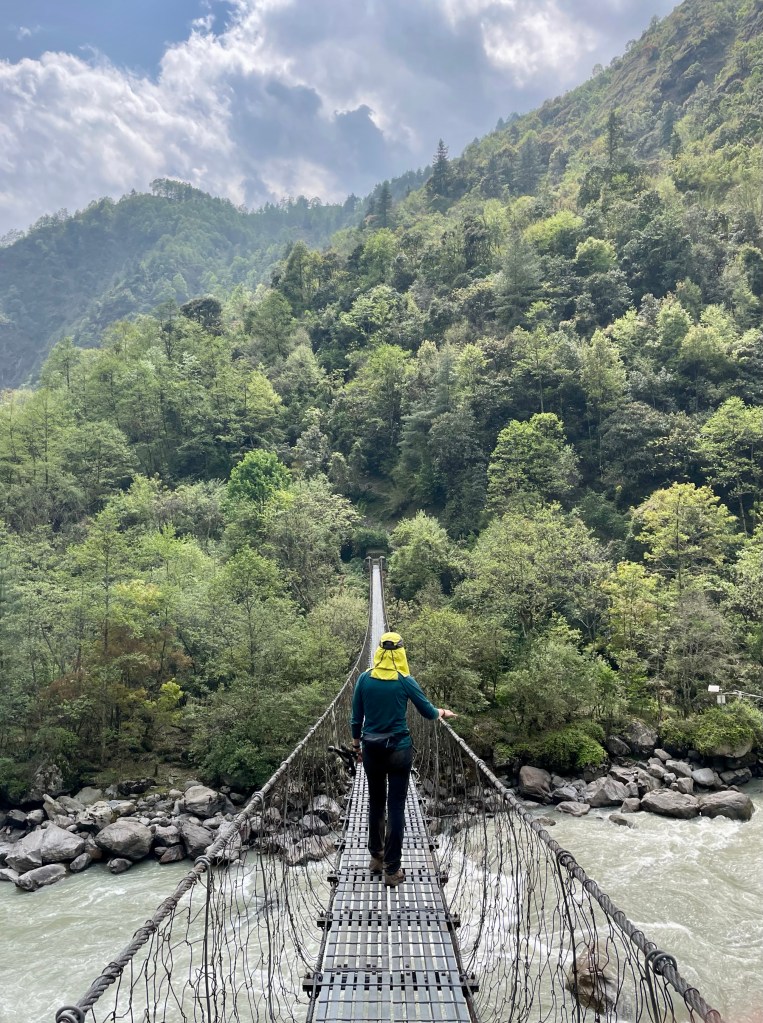
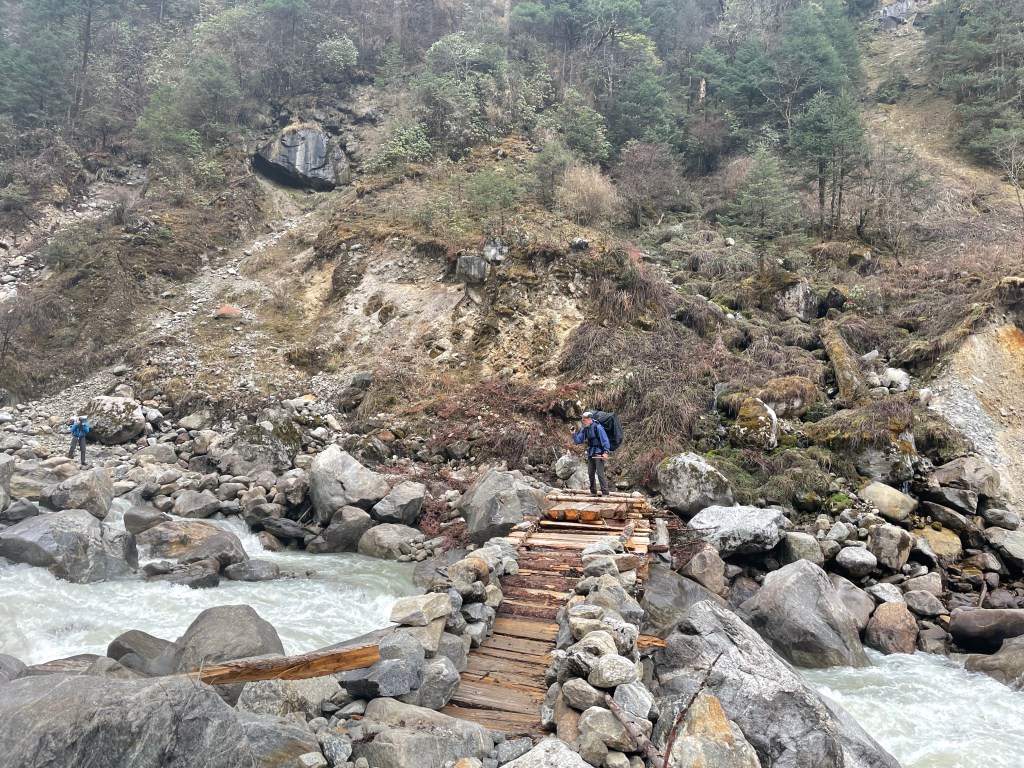
Sarah crossing the bridge before the final hike up to Chyamtang

Sarah was a warrior of the jungle on this particular day. No one else in our group could have pushed through such a difficult hike while simultaneously unable to keep anything down for longer than 5 minutes. She had the determination not to stay at the hell Kharka for any longer than absolutely necessary even it meant puking on the trail for 6 1/2 hours.

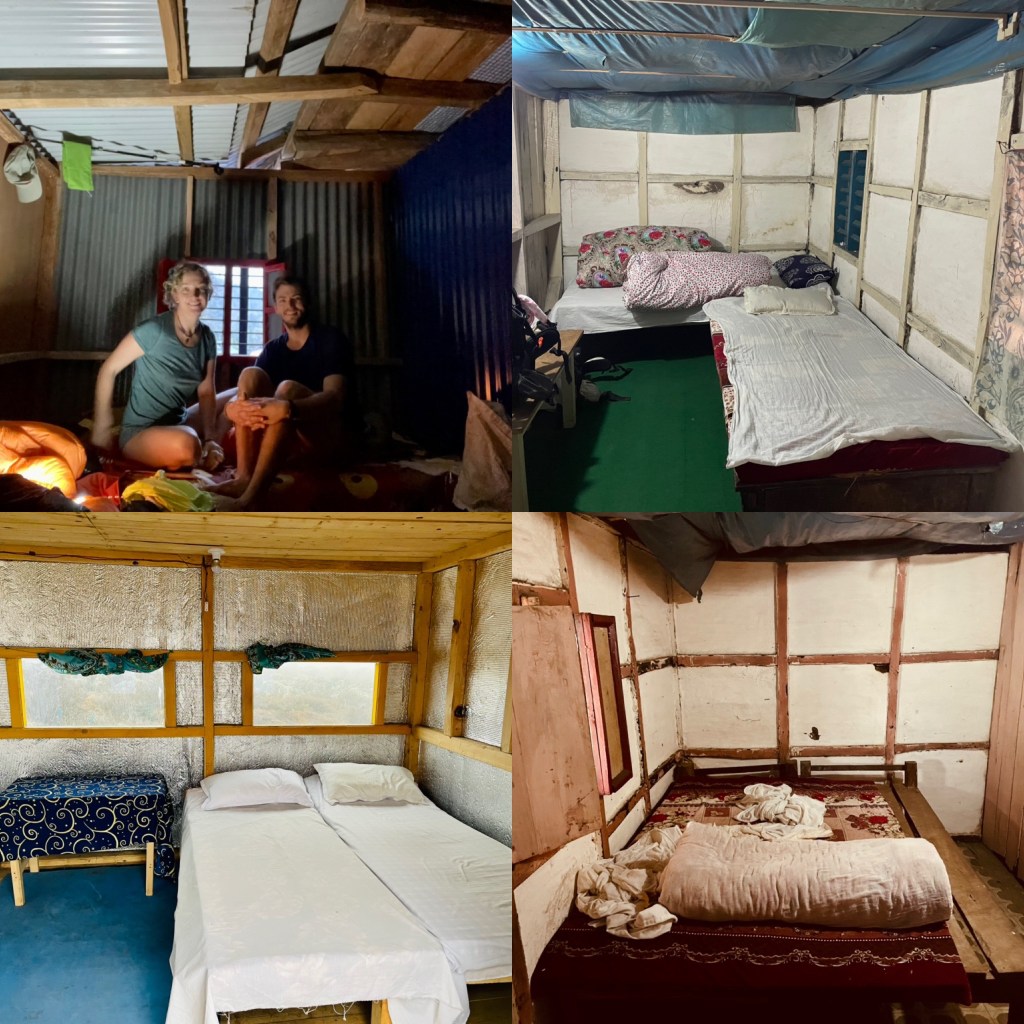
The afternoon rain arrived just as we were getting into Chyamtang looking for a tea house. We knew the porters had led us to their friends as we saw the cross on the side of the blue building. Sadly the upgrade from the Kharka to tea house was marginal. We entered rooms with cigarette butts littering the floor, moldy cardboard covered walls, a leaky roof, and a 3” spider, but at least we weren’t sopping wet in the tent. Minutes after our arrival marble size hail thrashed down on the the metal roof. Even then, Sarah was so exhausted she had no problem laying down and falling asleep. The odd little tea house still had some delicious dal bhat and Sarah savored some sprite and ra-ra soup.
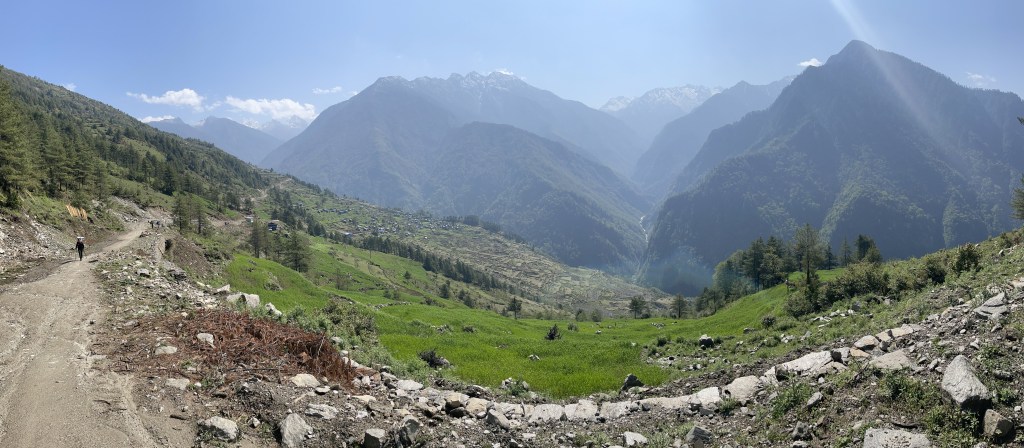
Looking back towards Chyamtang
Village of Lingham

We started up the road to nearby Lingham. Sarah was not fully recovered but was in a much improved condition. The sun was out and it was hot, but the frequent stream crossings helped ease the sweat. In Lingham, the local police checked our permits and took some pictures with us. We were hiking on the main route between several villages so we got to see a lot of local traffic. We were hiking for a while with a group of female paramedics going to a seminar, a few others heading to a wedding, and a large group working on the trail. As we came across the makeshift trail crew a nice waterfall fell onto the trail, so we stripped down and enjoyed a trail shower. Some older gals, who were taking a break and smoking on the trail, were laughing at us and hiding their faces from the show. Matt started razzing them until one grabbed his trekking pole and started prodding him with it. Lots of laughter and joking ensued in our broken Nepali. We expressed our gratitude for all the hard work they do for the trail we were hiking.
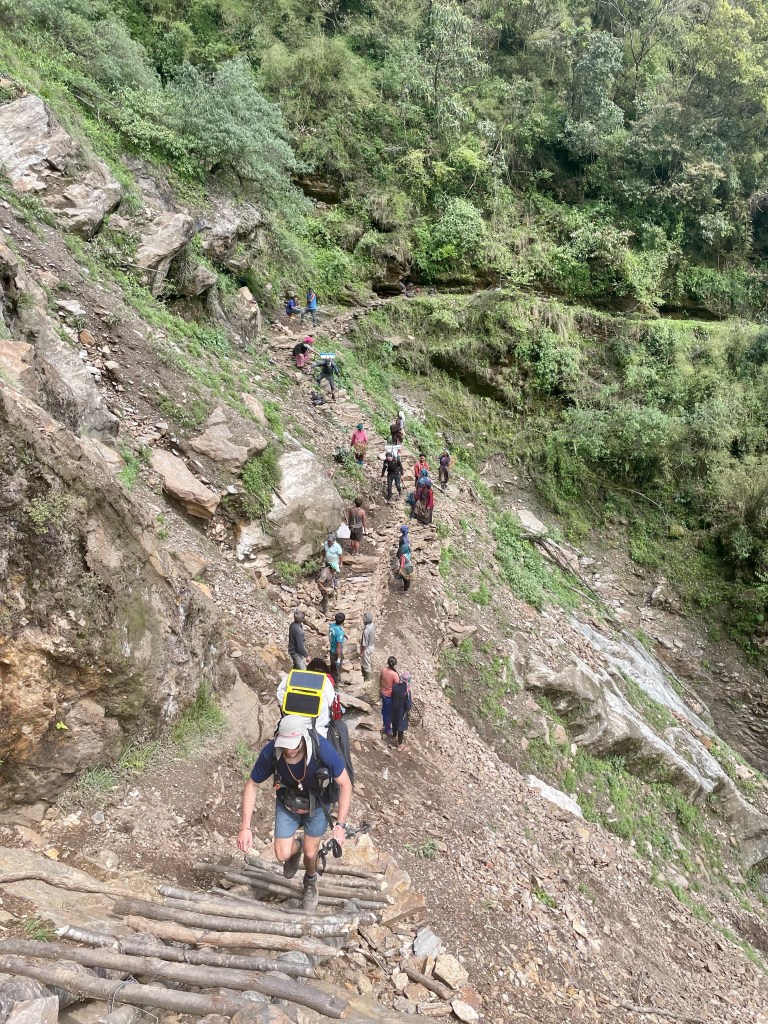
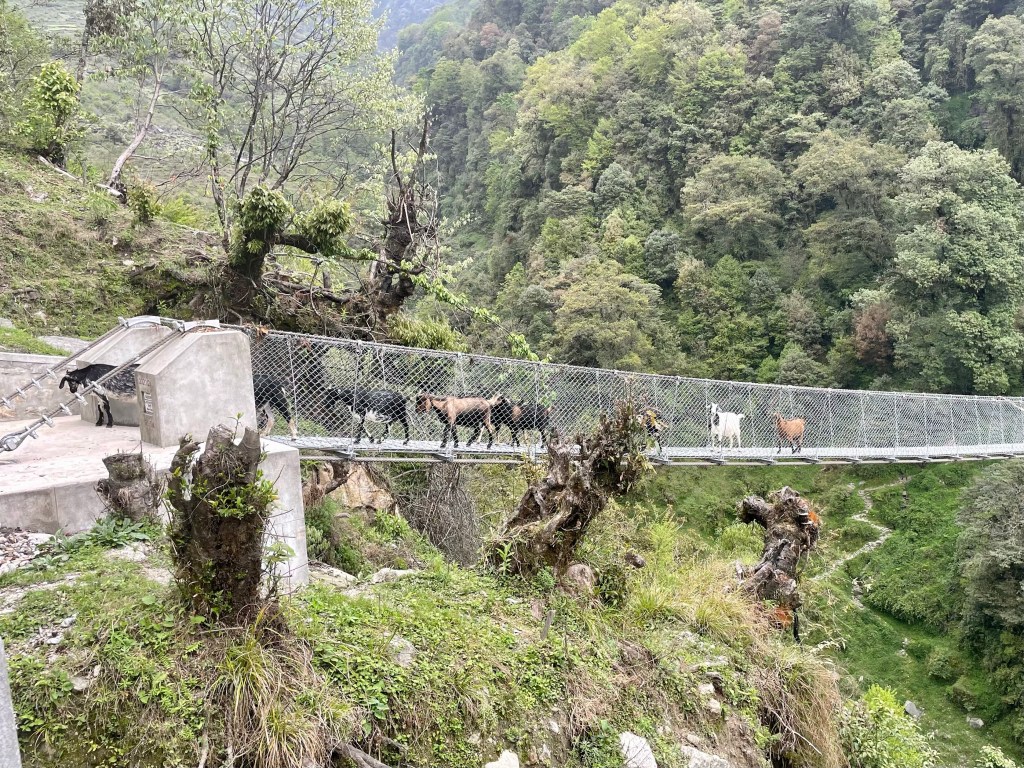
Hiking out the newly built trail section
The goat brigade following us over the bridge
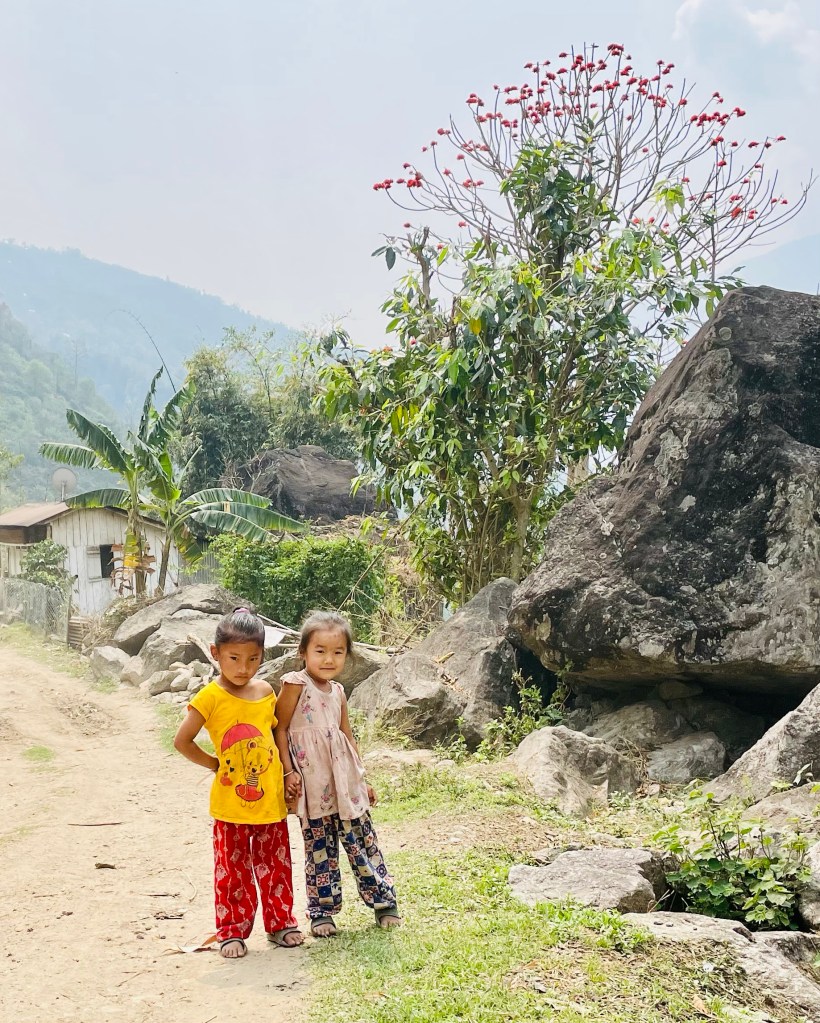
Little babes on our way into Hongon

Once we reached Hongon we told the porters we wanted to choose our own guest house. So we found some kids playing in town and asked them where to go. A little 4 or 5 year old named Tenzing led us a couple hundred feet up a stone staircase to the tippy top of town. It was a new lodge without any rooms available yet so we went just down the hill to a cute pink lodge overlooking the town. The tea house was clean and full of sweet curious children.
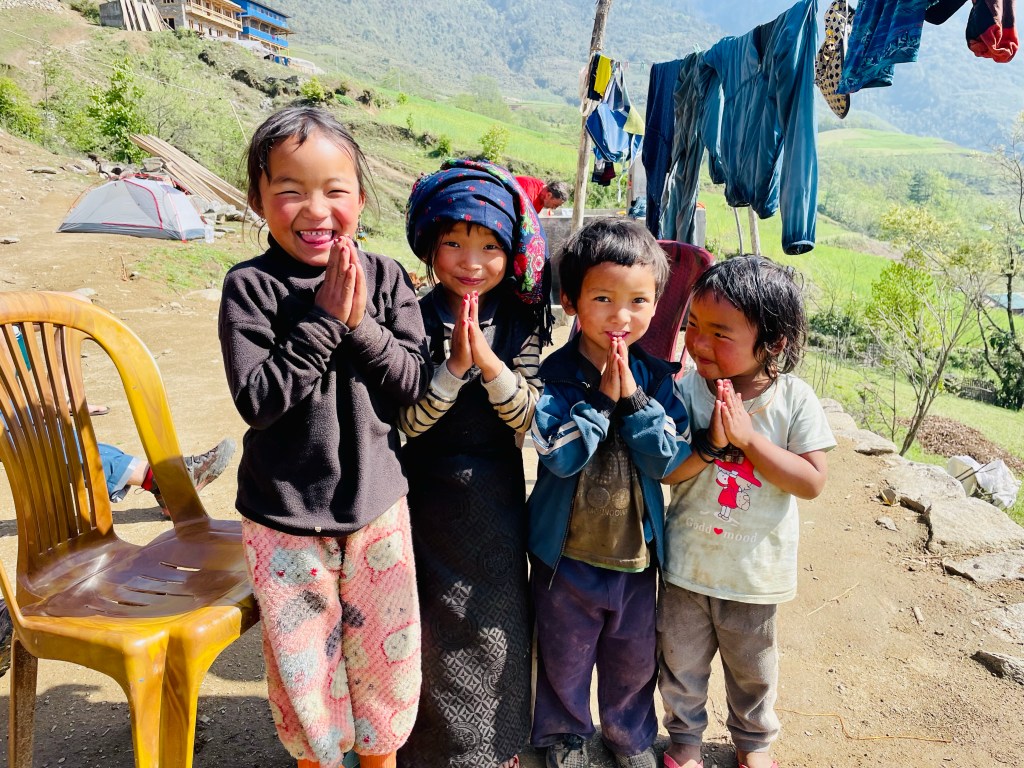
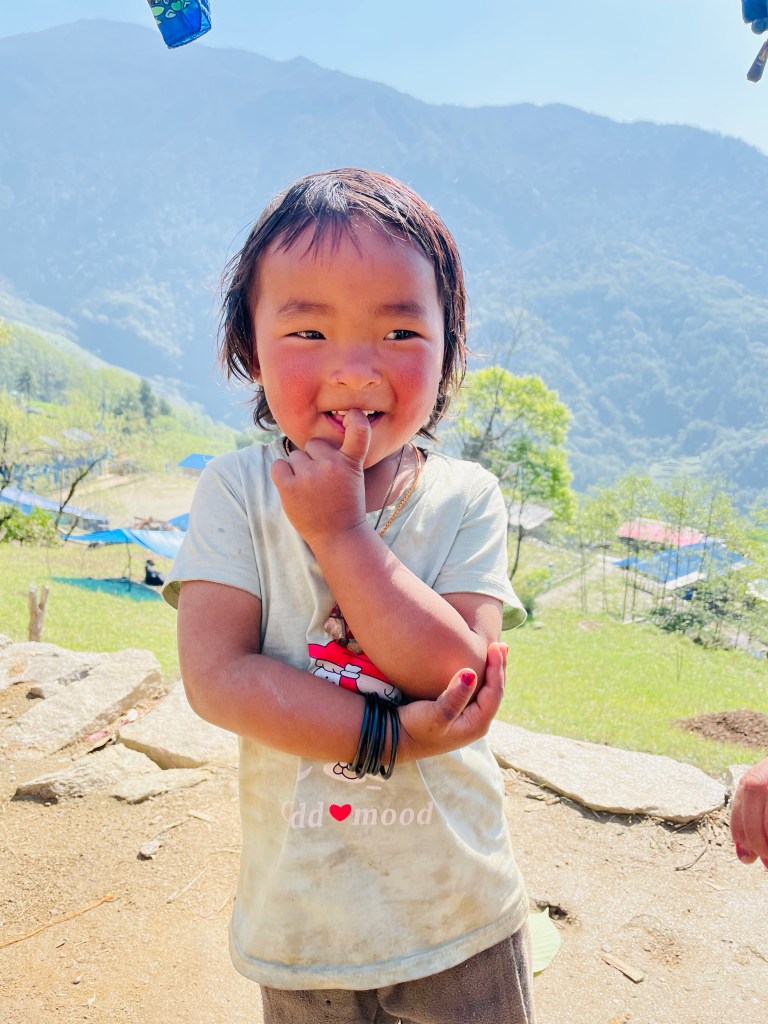
The sweetest munchkins
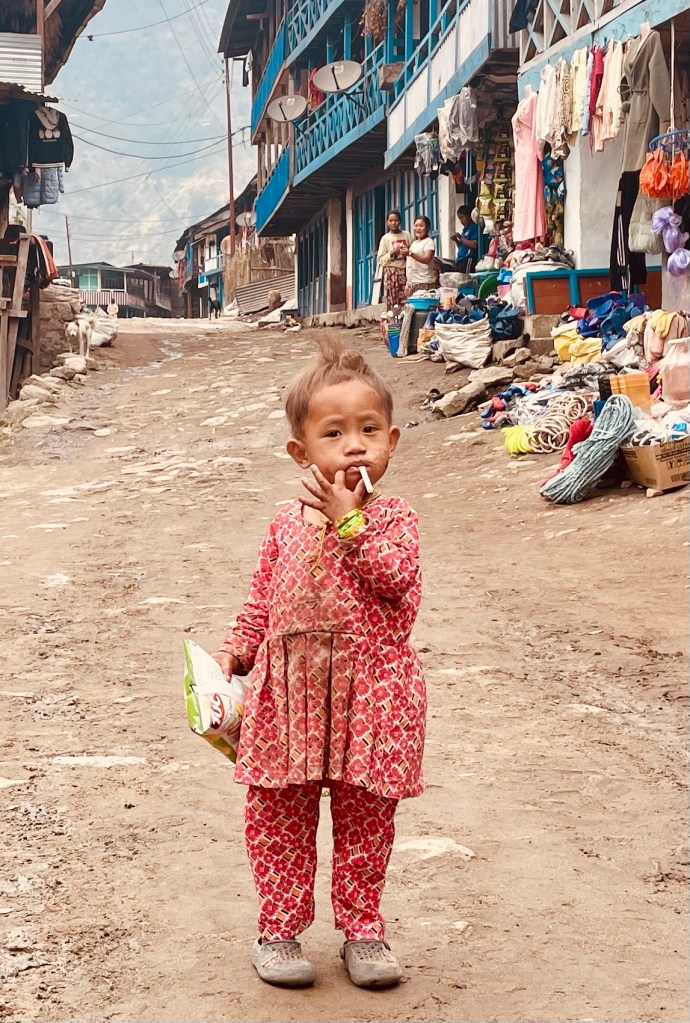
This little girl was the best.

The day we arrived in Hongon was also Tom’s 32nd birthday! He received a homemade water color card describing how superb he is in addition to a full size snickers bar Sarah had been saving since Ghunsa.

Matisse must have seen us roll into town and stopped in the night we arrived. He was bearing some potential bad news. There had been 2 groups ahead of us hiking our next intended section that had to turn around. We had got a similar, but difficult to interpret, message from Nima Lama (guest house owner) when we had arrived. A Nepali who is doing the GHT on a mountain bike had turned around because of too much snow and told her to warn others. Then a British couple we had met early in the trip hiking the first section of the GHT to Makalu had also turned around. We had snow shoes from the previous section so felt we had a better chance. We were so excited to take them off of our packs and send them down with Tony, but we decided to keep them. Matisse bought Tony’s snow shoes and planned to leave the next day while we rested. Either way, we knew we were on for an adventure on the next segment.
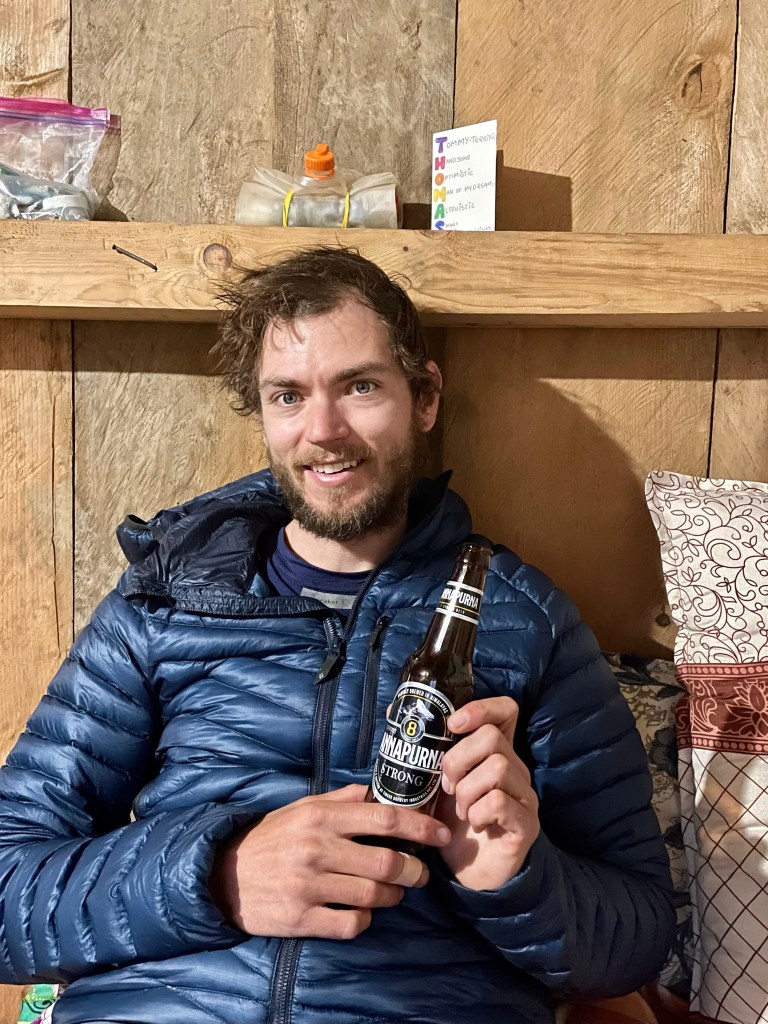
Birthday boy enjoying his birthday beer

We enjoyed a rest day at Hongon and had a chance to wash our clothes by hand in the cool water tap at the tea house. The owners were even nice enough to let us dirty trekkers shower in it. The water tap was in the middle of their yard and there was no privacy so we each soaped up in our undies and had quite an audience. Then we dried out in the warm sun with the rest of our clothes hanging on the line.
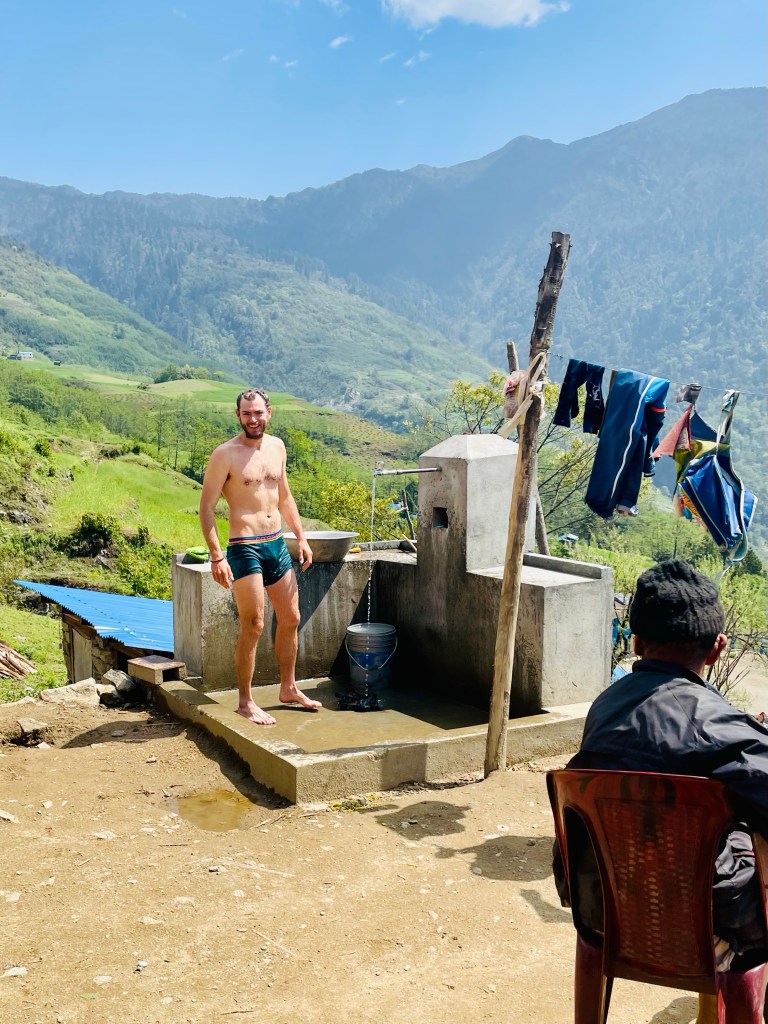
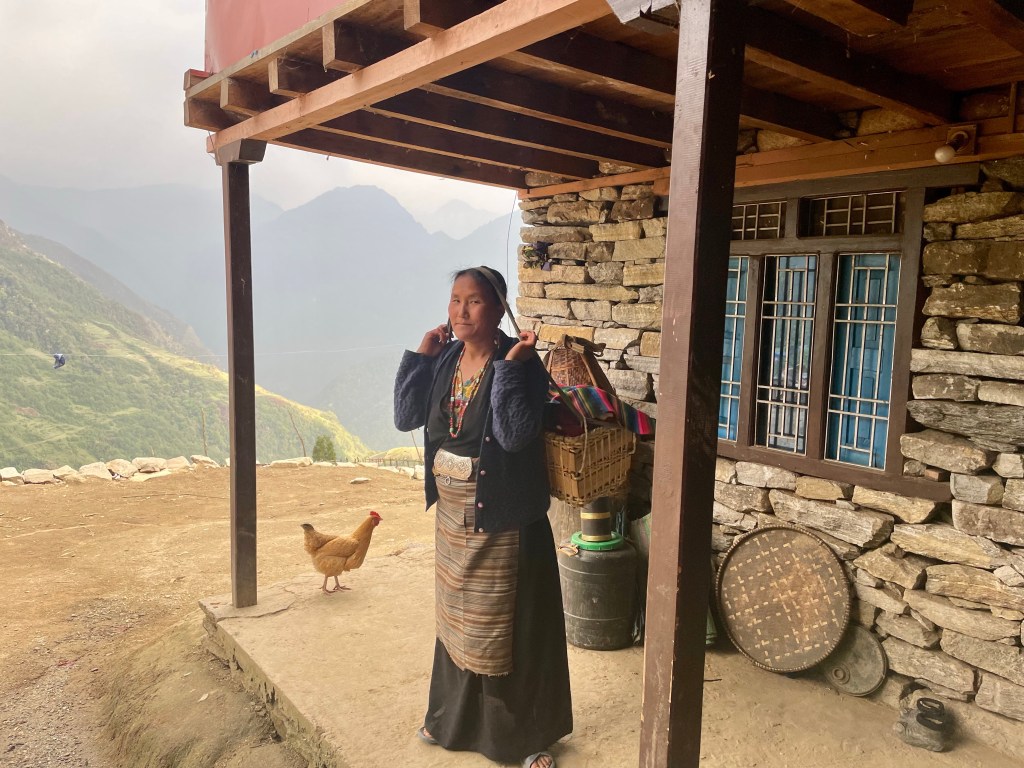
The owner’s father was entertained and watched Tom the entire time he showered. He was a gentlemen and went inside when Sarah took her shower.
Nima Lama showing us how she carries their baby around when the baby is sleeping

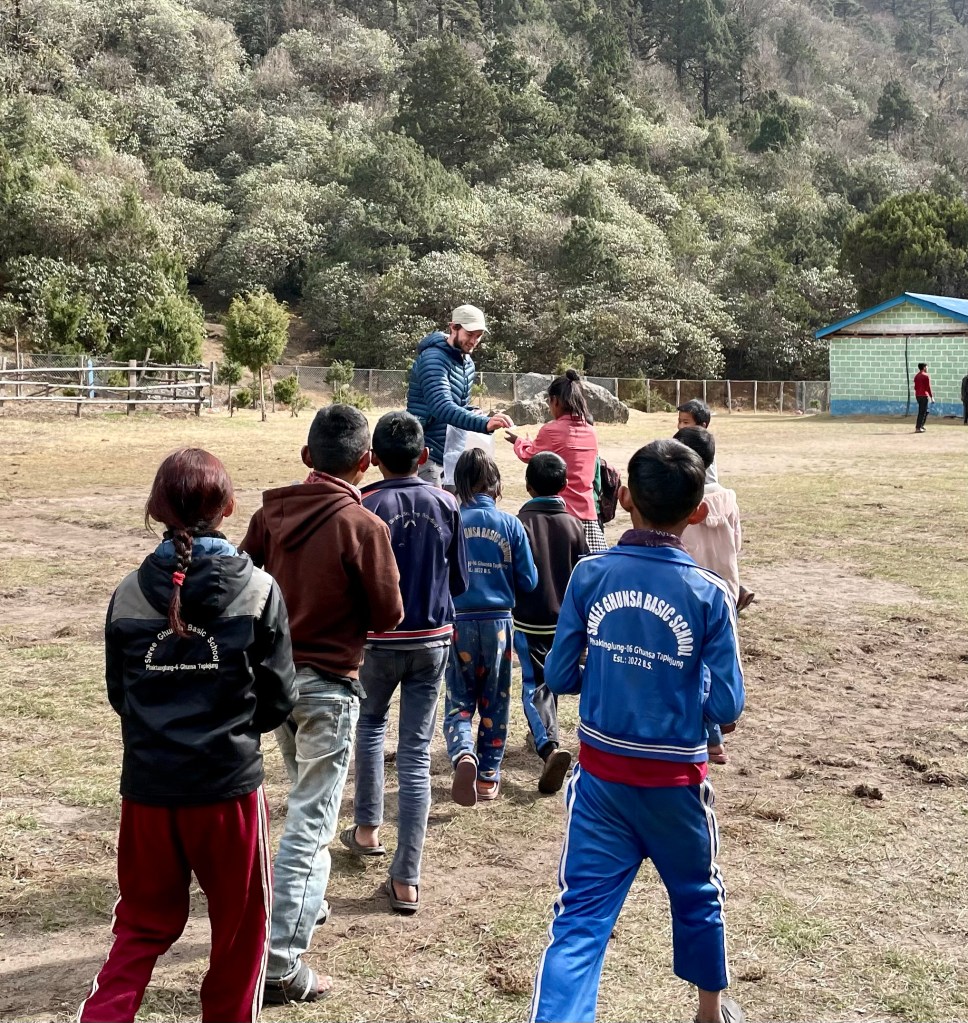
Matt had asked the guest house owner if he knew a barber for a cut and shave. He yelled down the hill and a few minutes later a spiffy looking teenager showed up with scissors. Matt was looking for a close shave but Mike took him up on a haircut and he trimmed up Tony’s beard. Quite impressive what he could pull with a pair of dull scissors. Our favorite part was hanging with the families 4 daughters and their friends. Tony shared his markers and they all got to color, proudly showing off their drawings at the end. Their family really made our rest day feel easy, allowing us to feel totally comfortable doing all we needed to clean up and refresh.
Ghunsa > Thudam

After 3 very restful days with the Dzonga family, in Ghunsa, we were back on the trail heading west. This felt like the beginning of the true GHT as our previous section up until now was on a fairly popular trekking route. The next 2 passes, Nango La and Lumba Sumba, are areas seldom travelled by trekkers.

We stopped by the local school in Ghunsa to give out pencils and stickers we had brought to share. The kids were so excited!
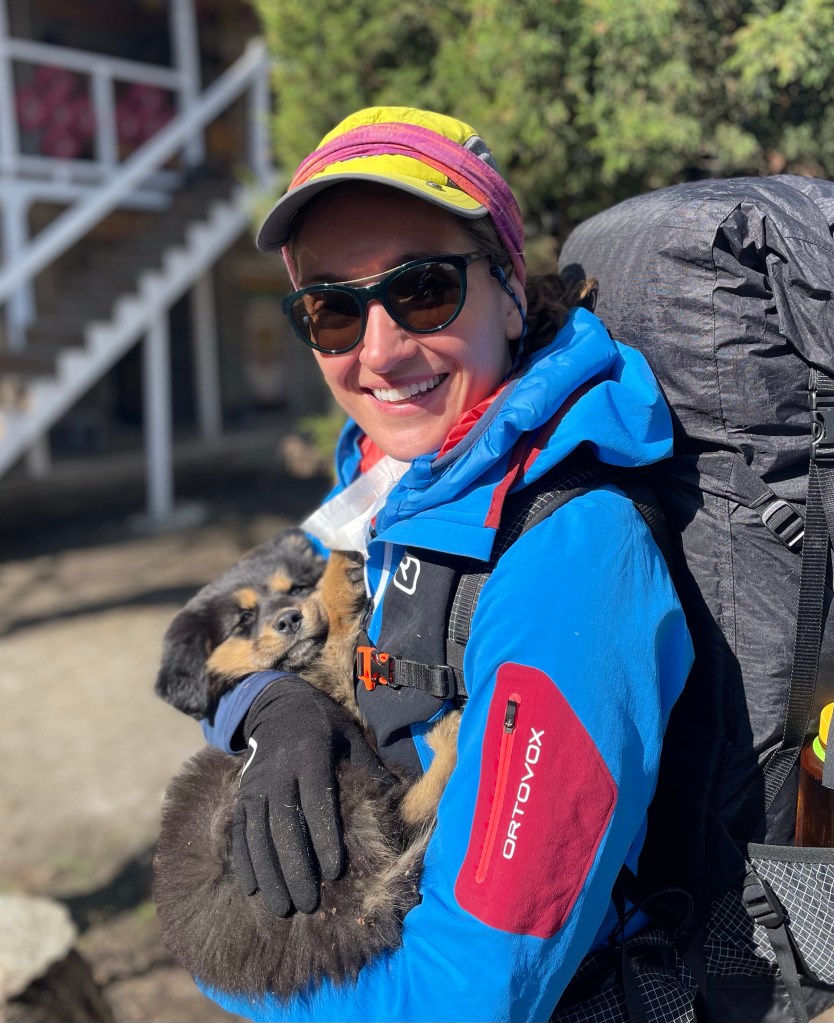
We’ve been in puppy heaven
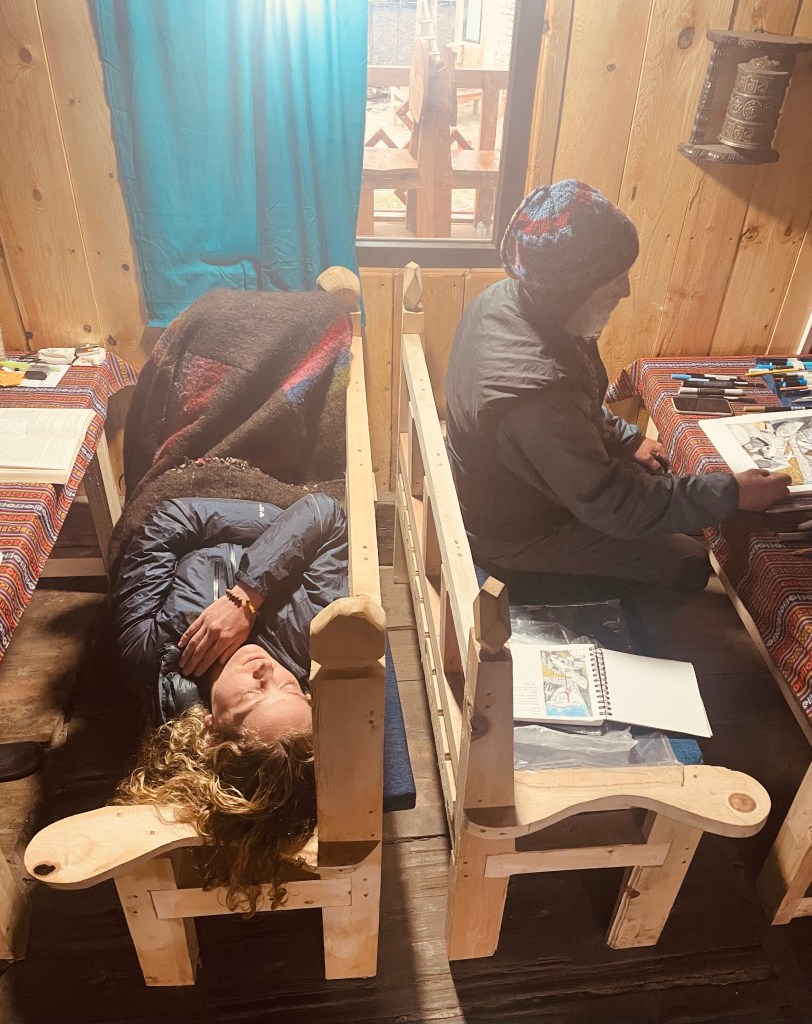
Classic rest day: naps & art
Tsiring and Mama giving us a true Nepali farewell, blessing us each with khadas (traditionally white silk scarves). The khadas are a symbol of respect often given on departure for a safe journey.

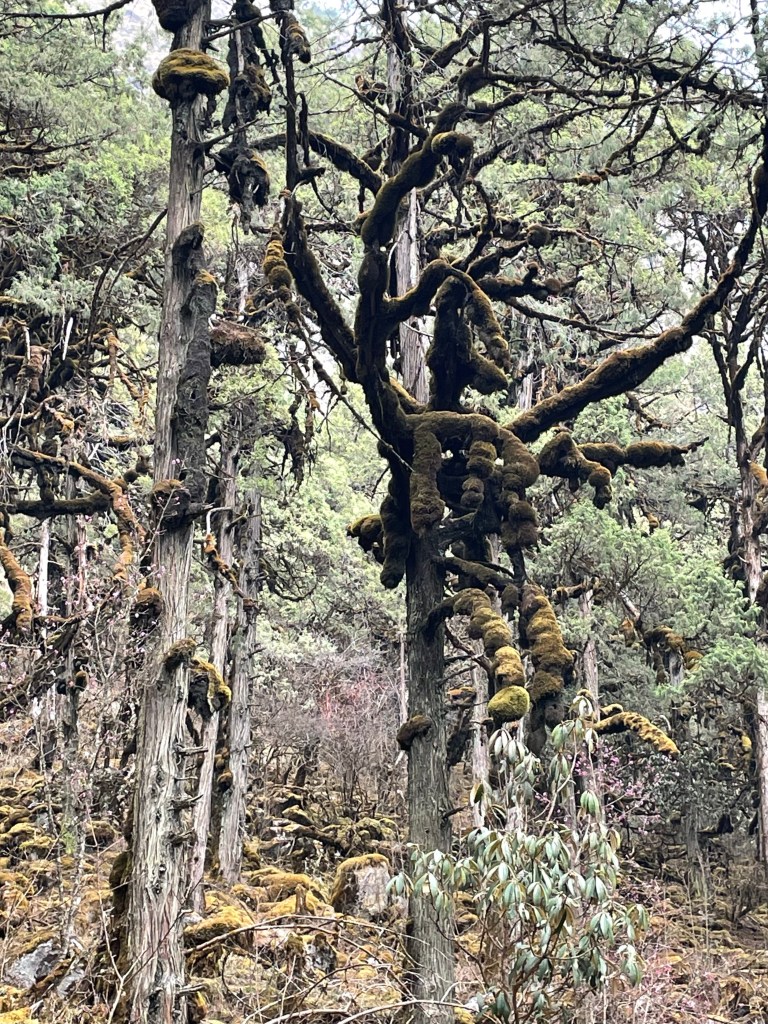
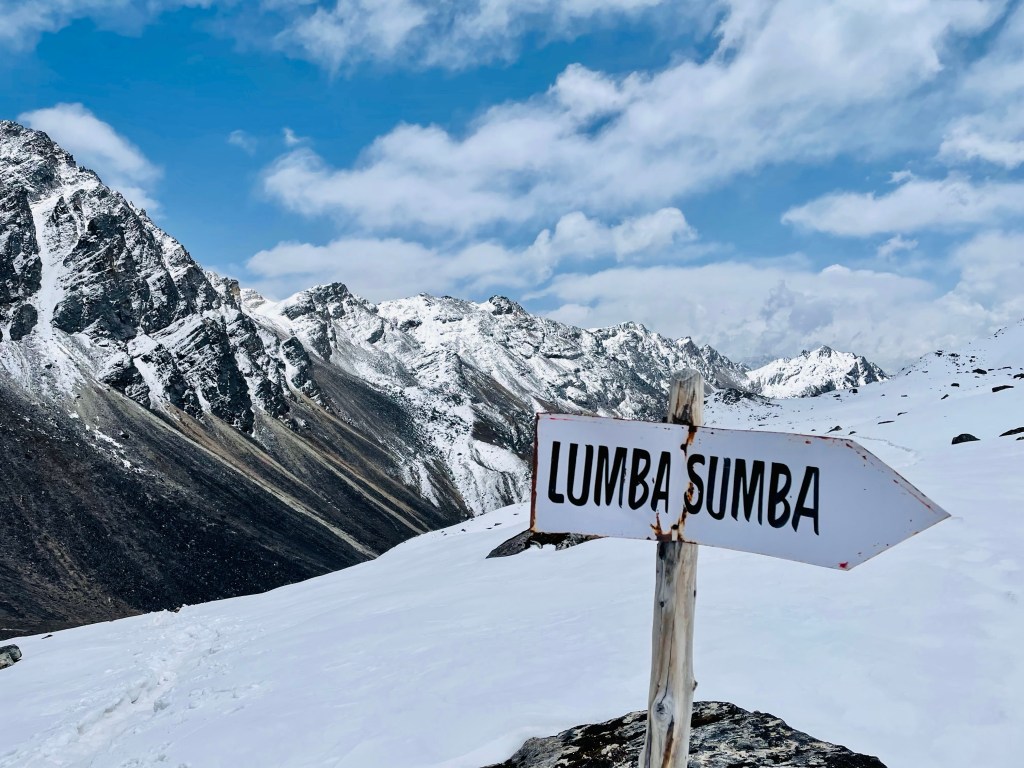
We turned off from our previous trail at the sign for Lumba Sumba and quickly began climbing up the valley. The cedar and juniper trees were covered with novelty size mosses and the air was filled with the sweet floral smell of blooming Daphne (an evergreen Himalaya shrub).

Daphne bholua

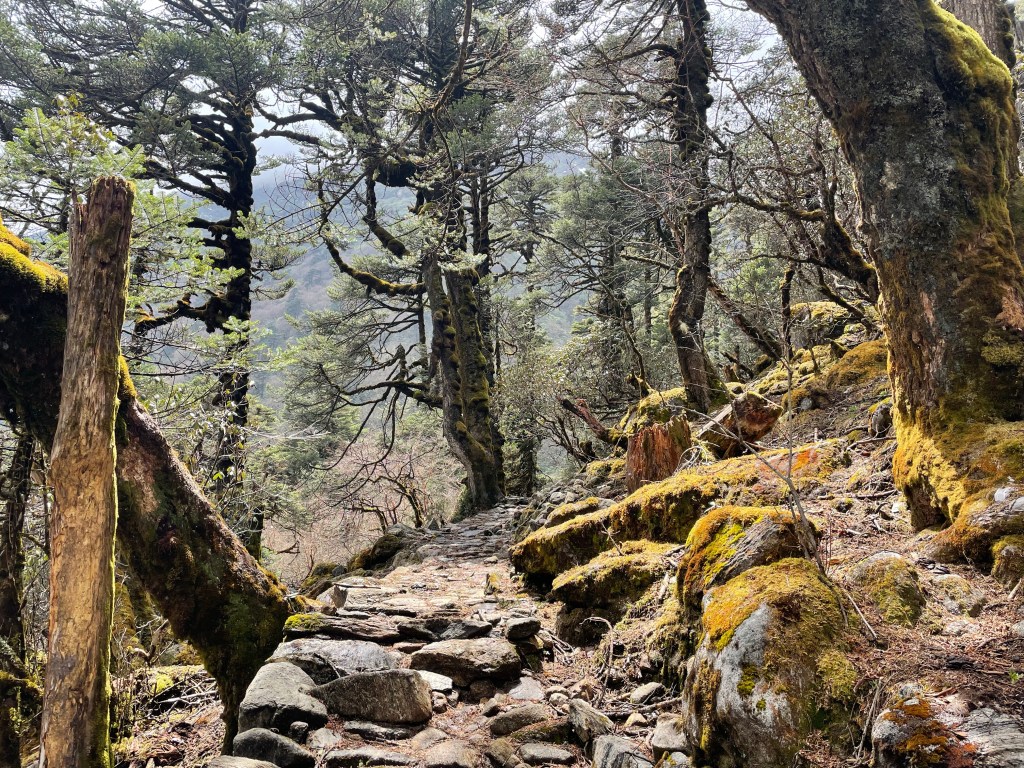
Within the first 30 minutes we had to bushwhack around a large down tree and the trail thinned from there. It was clear we had left the trekking highway for the local’s country roads. The trail was stunning even though we were in the clouds. We wandered through giant Rhododendrons of the likes we had not yet seen. They must have been hundreds of years old.

Rhododendron crawling out of several foot wide trunks over the valley floor
Heading up towards Nango La camp

It was a steep 3,000 foot climb over about 4 miles to our first Kharka (pasture). The majority of the campsites are at seasonal yak kharkas because they are typically the only flat grassy areas in the mountains. It felt good to be in our first camp with our own food that we had planned so much for. Since we arrived early in the day, we played some frisbee and Sarah started a fire.

Sarah putting her Girl Scout skills to the test with the damp wood at Nango La camp. She did it with one flick of the lighter!
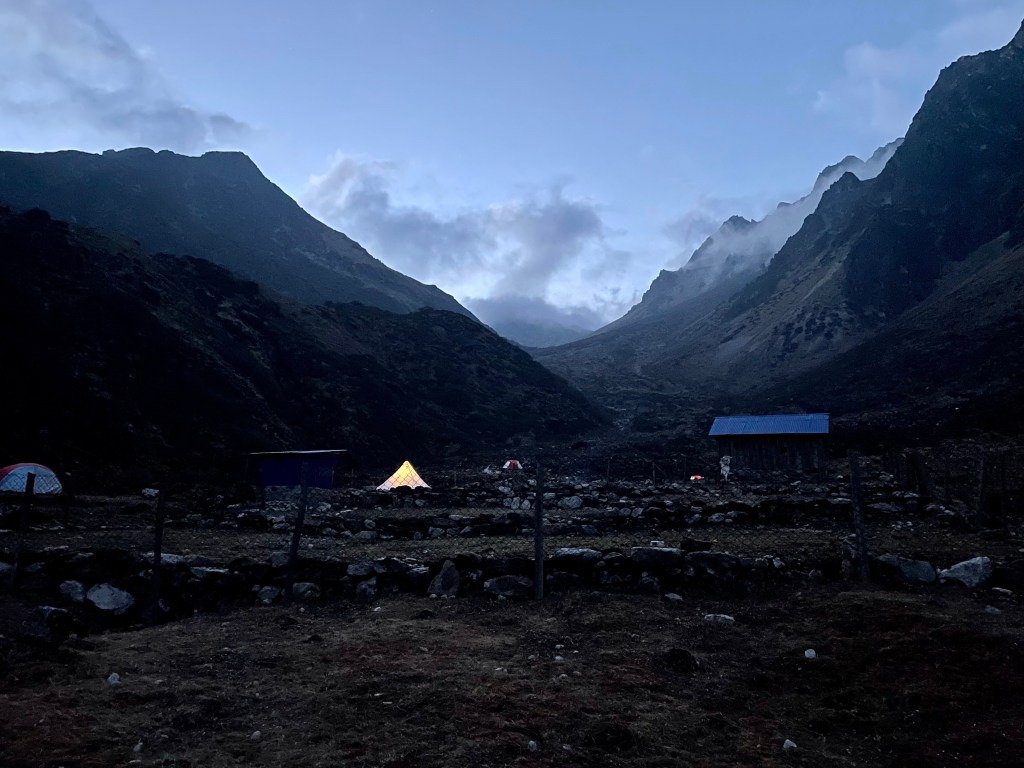
Our group’s tents spread out among the kharka and the typical blue roof shed built by the conservation area for herder’s

When we awoke, the clouds had cleared and we had nice views of the mountains enabling us to see across the Ghunsa Khola valley where we had been the week before.

View back across the valley

We ventured over our first pass, Nango La, around 15,600 ft and we placed our khadas there. People place khadas over passes, on bridges, and at sacred places; it is part of the ritual to let it go. Then we post holed and glisaded our way down the pass.

Nango La Pass

The rest of the trail followed the river and took us through more beautiful rhododendrons up and down steep wet boulders. All the paths either go up-up-up or down-down-down. The trails are rather technical but continue to amaze us with absolutely stunning flora and mountains.

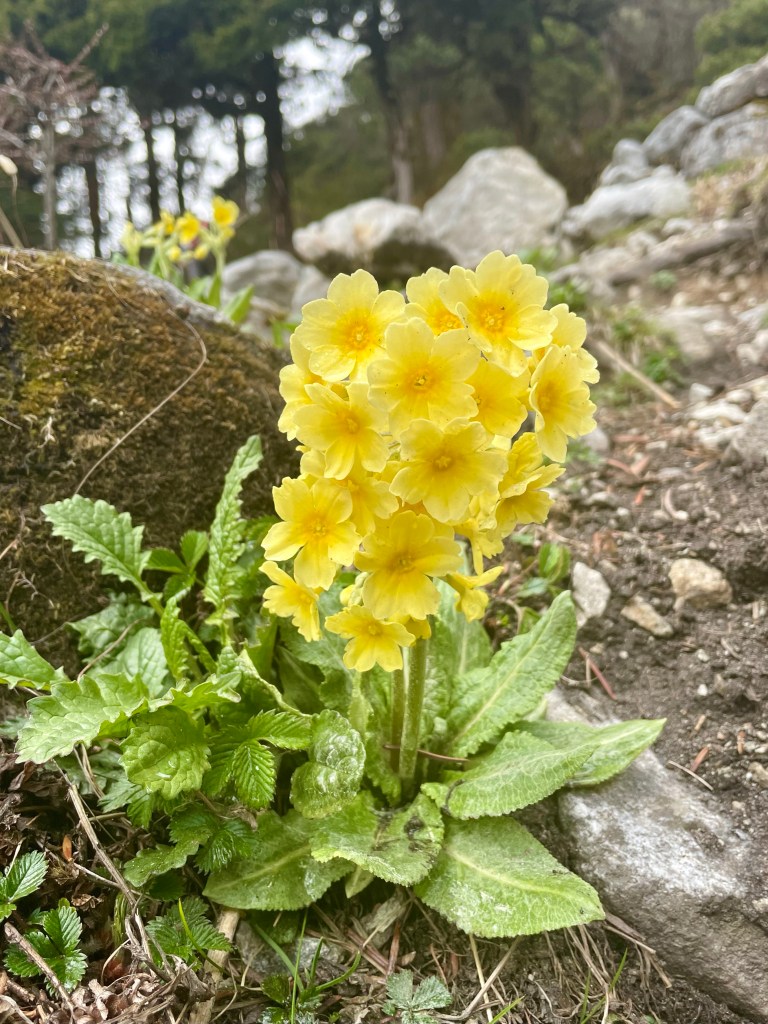
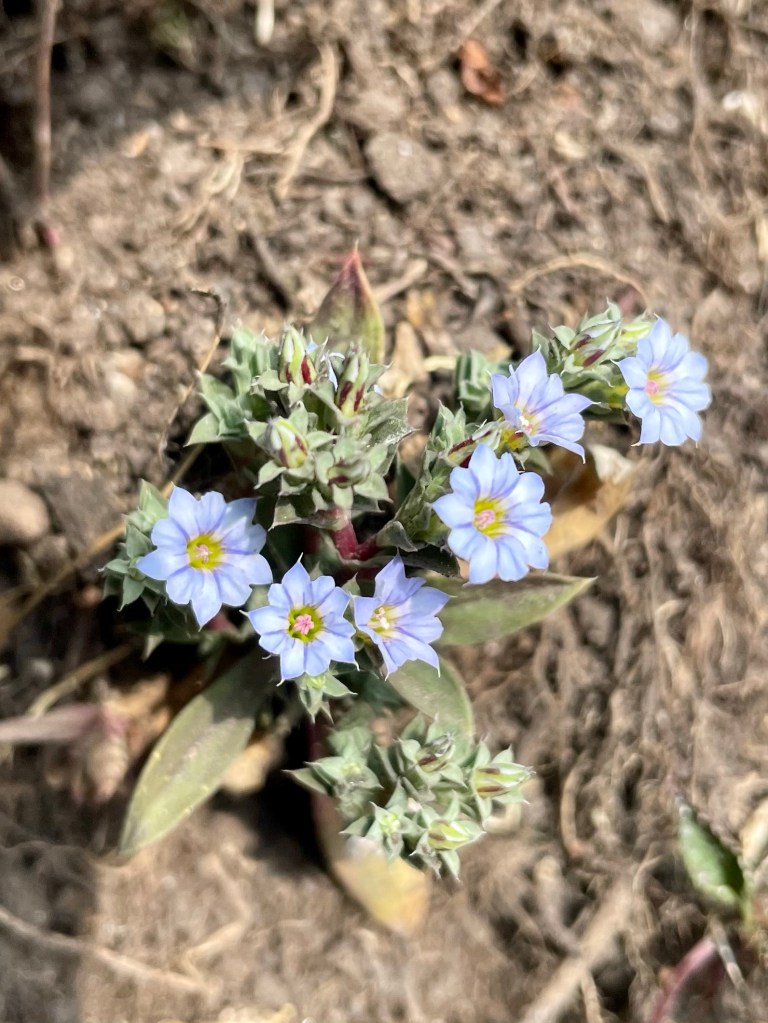
Himalaya primroses beginning to bloom

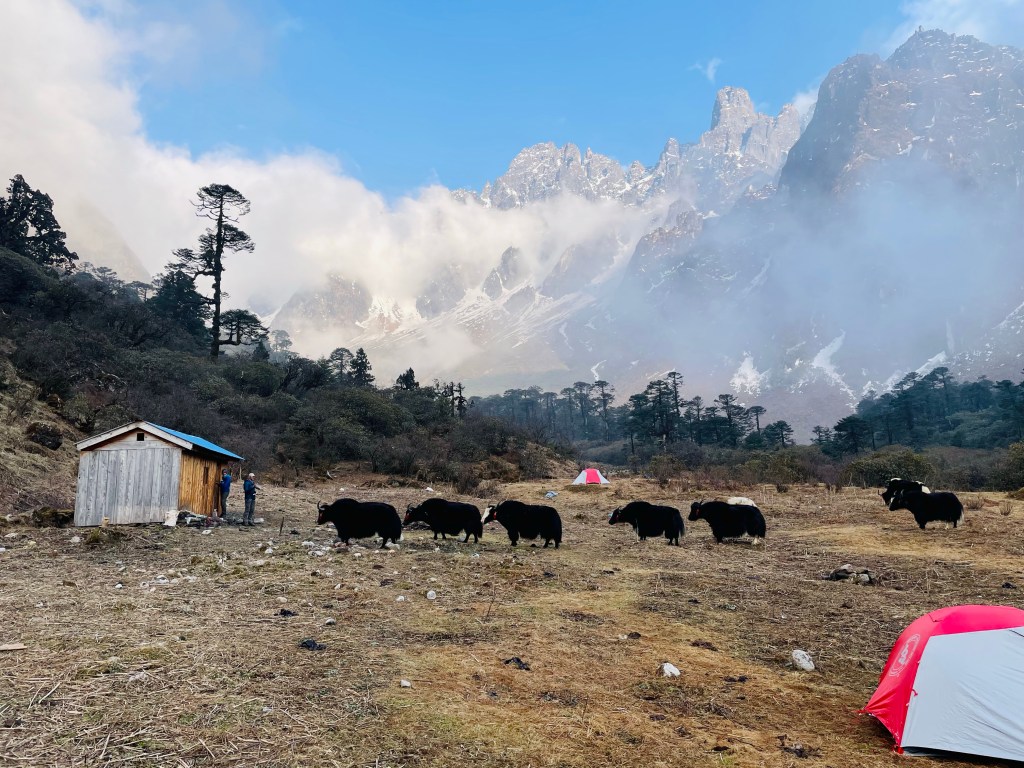
Today we celebrated Sarah’s 33rd birthday! After a solid day of hiking over the pass we got to another kharka to set up camp for the evening. Shortly after we finished with our tents a herd of large bull yaks came through. Initially the herd continued through towards the river but the last one stopped dead in its tracks and stared. It appeared to be territorial behavior. As he stood grunting, bucking his head, and giving us the mean mug the rest of the herd moved back in solidarity. It became pretty clear that this was their usual resting place and we were intruding. Tom and Matt headed into the kharka’s shed to make sure the drop from the porter was there. In the process Matt nearly got run down by a yak who was charging straight for him. Luckily Tanner saw it happening and shouted, “Matt! Look out!” Fortunately Matt made it into the structure and was spared.

Tom quickly learned to speak yak herder, hooting and hollering while waving a trekking pole with Matt, and was able to create some space between our tents and the yaks. Coming to Sarah’s rescue multiple times, Tom yelled like a crazed lunatic in the streets every 10 minutes to push them back. It became clear that the yaks wanted to be part of Sarah’s birthday party and they weren’t going to be leaving anytime soon.

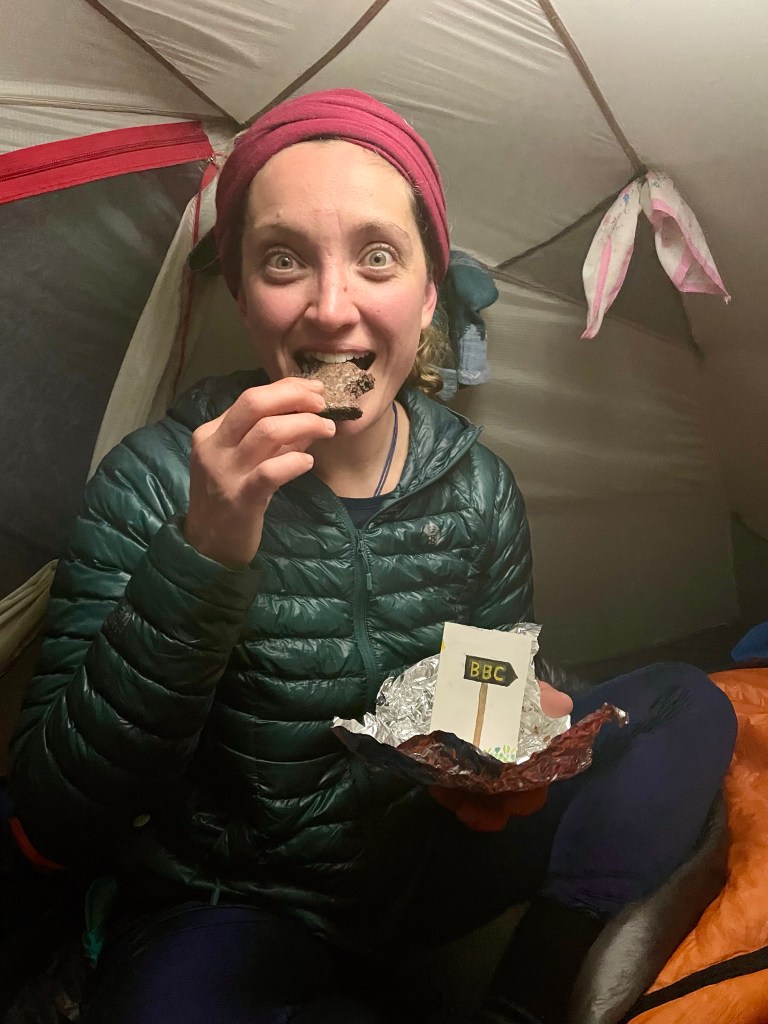
BBC: Brownie Birthday Cake

After being closely approached by the yaks too many times while trying to enjoy the view, we got in our tent early and played cards. Tom brought out Sarah’s very own sweet custom watercolor card and a piece of brownie birthday cake (BBC) gifted by Tsiring. Sarah always loves chocolate cake on her birthday. She even got to make a birthday wish, blowing out our mini lighter over the brownie. Then it poured rain all night and we felt lucky to be nice and dry in our tent.

The male yaks giving us a morning display of their testosterone.

The following day we hiked for 11.5 hours, going 8.5 miles with over 10,000 ft of elevation change. We arrived in Olanchun Gola at night with our headlamps leading the way across rock slides and shadows. The village was already tucked in for the evening so we walked through quietly saying “Namaste” until we saw one of the locals. We asked in our broken Nepalese where to find a guest house and we were kindly escorted. We are so grateful for all the kind Nepali people who have helped us along the way.

We got them snowshoes on our backs
In the morning we watched as a husband and wife were trimming their hand loomed rug.
Underneath the porch where they were making the rug, these sweet little puppies were snuggling.
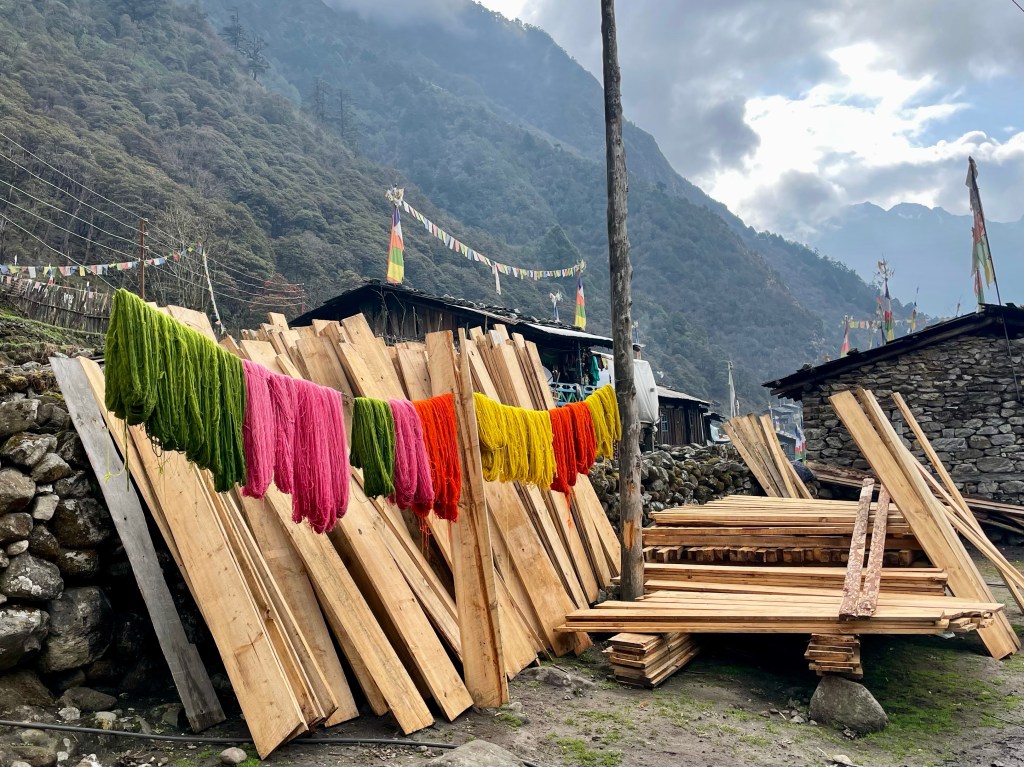
Drying out dyed blue sheep wool
Sarah in puppy paradise

We explored the village of Olanchun Gola the following day and rested our legs. We had to stop with boarder patrol so they could check our permits. They were so kind they even made us tea (a spicy black tea with ginger, black pepper, and other herbs) and we spent a good half an hour just chatting and enjoying their company.

Views from border patrol
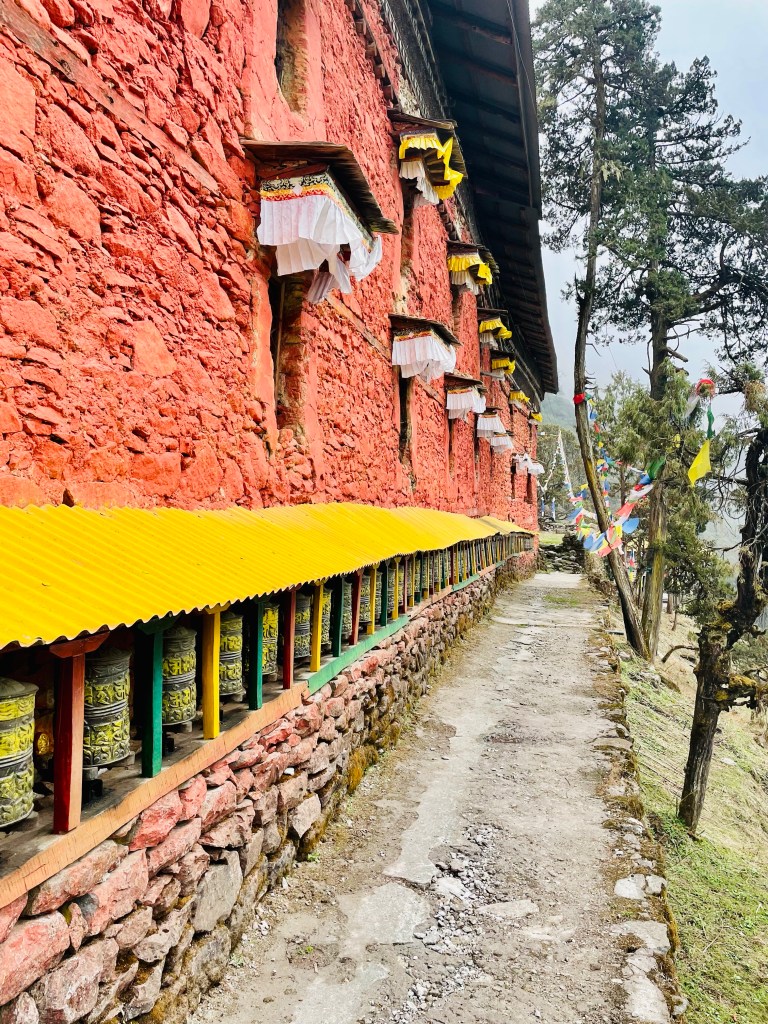
Olanchun Gola Gompa

Then we hiked up hundreds of steps to the top of the village to visit the Gompa, spinning the prayer wheels along the way (always spin clockwise). We only got to see the outside of the Gompa because the 2 monks were busy eating lunch and we had lunch waiting as well.

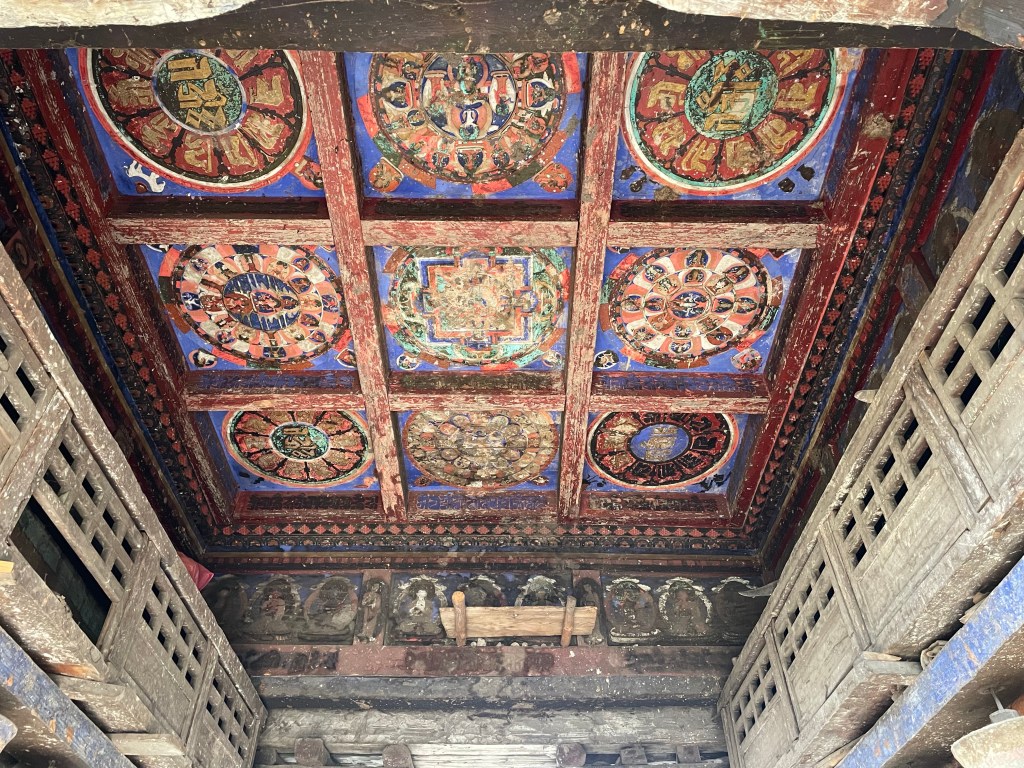
Mandalas found on the ceilings in prayer wheel entryways
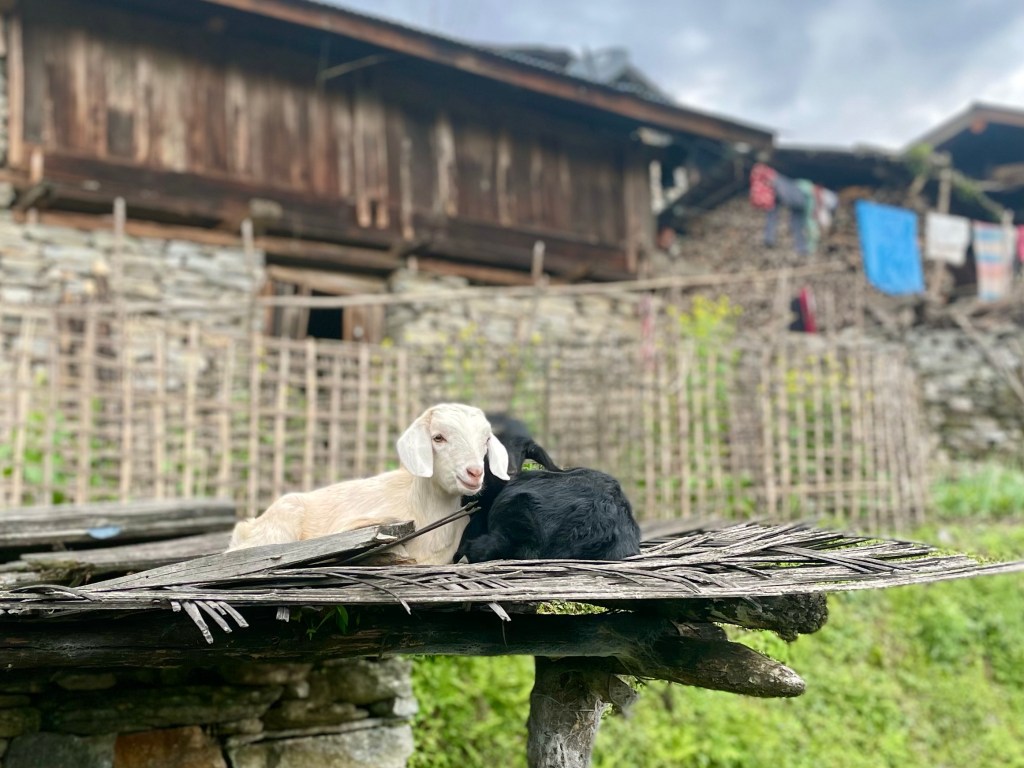
A baby goat enjoying head butting Sarah’s hand

That afternoon Matisse, a German friend we made in Ghunsa who is also hiking the GHT, caught up to us. It was nice to have a friend on the trail with us to share stories. He ended up being the only foreigner we would see for weeks.

Pink and purple rhododendrons starting to bloom

We left early and embarked up a “road” along the river joined by a pup we named Sumba. ‘Road’ in these parts is a generous term as it usually disappears into the river and one often ends up hiking on side trail for much of it. Our day of hiking quickly turned into fowl weather gear in the late morning then back to sun in time for us to break for lunch. As we climbed up the valley towards pass camp hail and white out conditions dominated. We continued in the late afternoon as the trail dwindled to a network of yak paths. We were guided by GPS tracks and instinct.

Beautiful stone path during the sun break

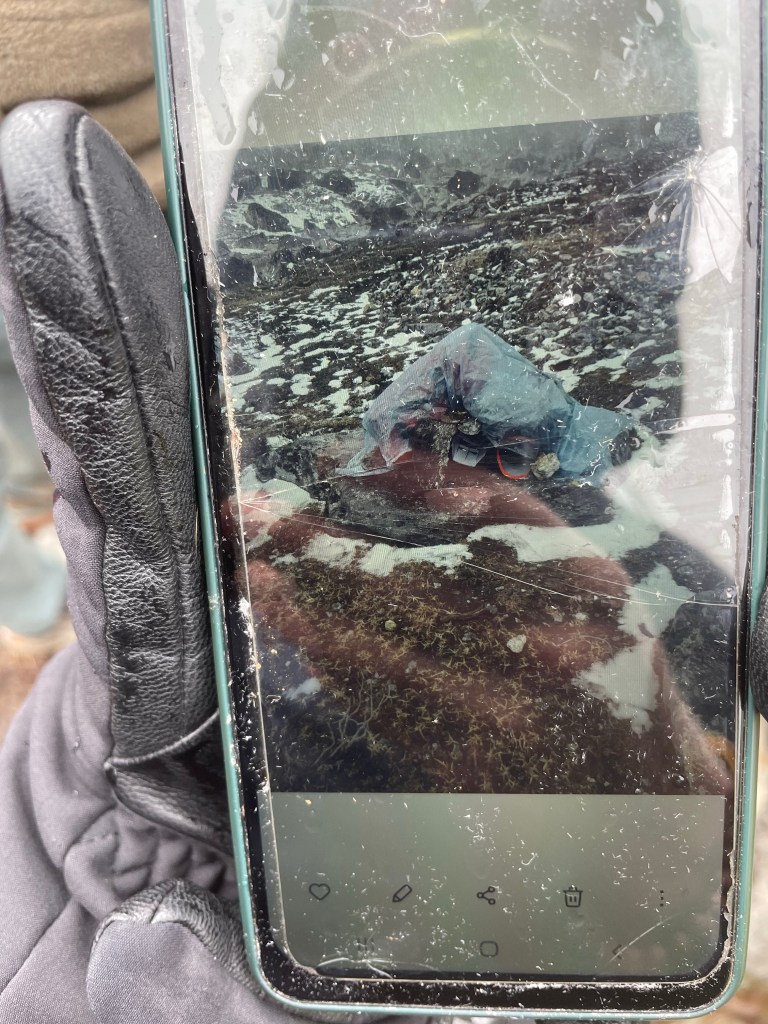
The porters had dropped off some of the group members gear in advance and had provided us a picture to find it. There was also some concern that the place on the map we showed them was not the place they went. We got to a large flat area that was labeled as Pass Camp on the map. The group was exhausted and it was getting late but we only had one tent. Two group members were going to camp in this spot, but it seemed the porters had chosen the camp 1,000+ feet higher. We were the only two with a tent. We passed off the tent to the 2 other teammates to sleep in while the other 4 of us continued on. At this point it was dark, in a white out and snowing, as we made our way up and over the tenuous ridge. After an hour and a half of trail finding, side stepping, and positive vibes we miraculously found our stuff and were able to make dinner, get warm, and sleep in tents. It was a close call and we felt lucky to end up on the right side. Our night was a little more cozy than usual since we slept in our teammates 2 person tent instead of our luxurious 3 person tent.

This was the picture the porters gave us in the rainstorm so we could locate our gear
Morning views after our adventurous night
Hello again 17,000 ft.

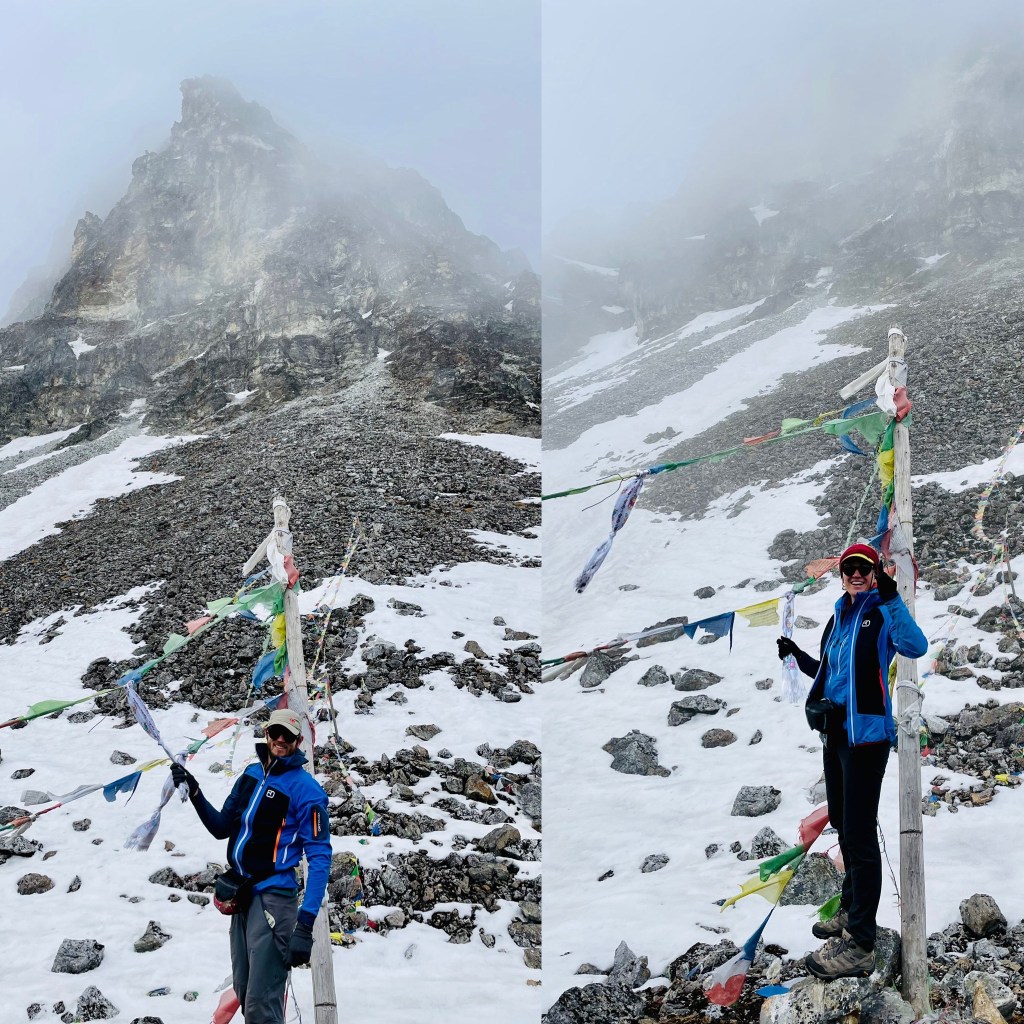
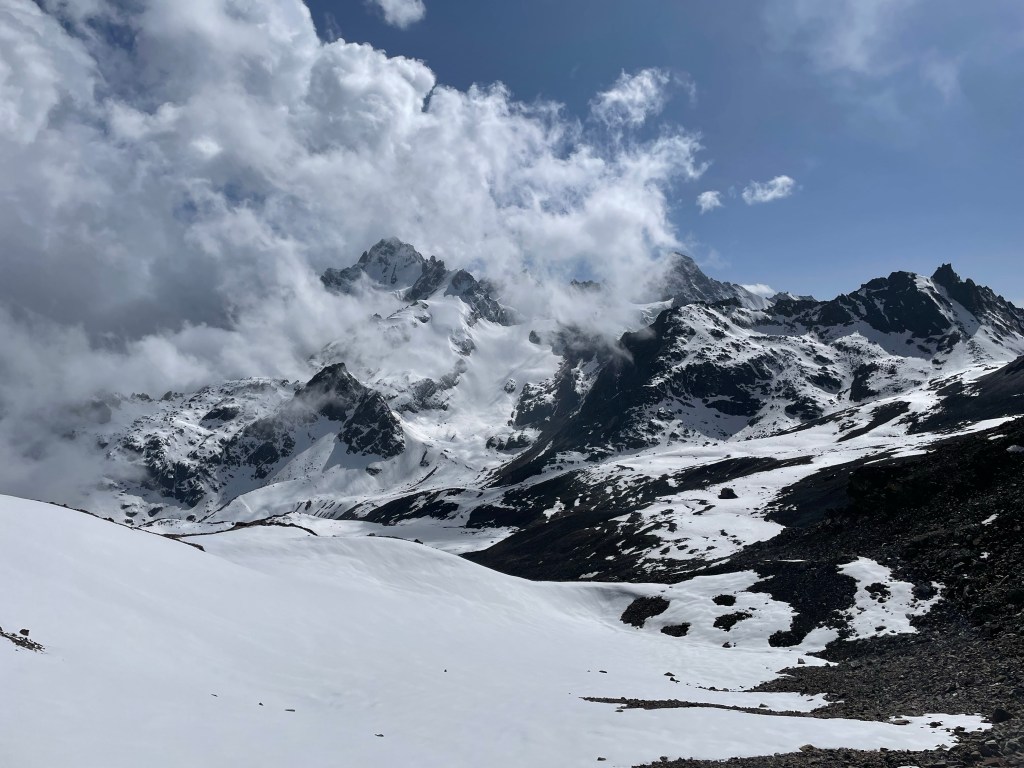
The pass was steep and our packs were heavy. As a group, we decided to all bring snowshoes after hearing about previous GHT hikers struggling through deep snow for hours, wasting precious energy at altitude. We were thrilled to get the snowshoes off our packs and on our feet. The weather was on point all day with the sun shining and tolerable temperatures. Prayer flags were hung on the pass and we continued down a mix between rocky trail and snow shoeing to a reasonable kharka.

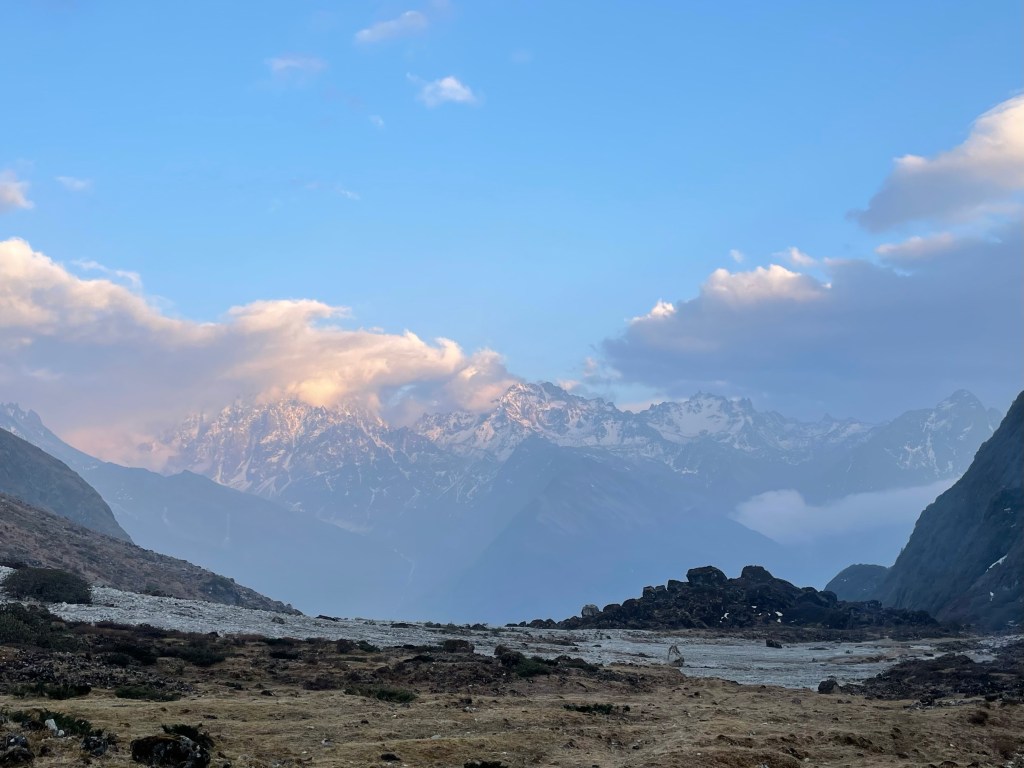
Our first views of Makalu coming down from Lumba Sumba pass to Thudam

We were greeted by our 3 friendly porters an hour outside of Thudam. They had carried our food for the next section after we departed from Ghunsa. Thudam is a remote little village without any tea houses. The porters had made friends with a local family helping them out in order to have shelter and food. It’s beautiful to see how villages will invite strangers into their homes and take care of them. Thudam felt like it was out of story book. A small small village, houses made out of wood and rocks (some don’t even use a single nail), with a perfect flat kharka across the river for us to set up camp.

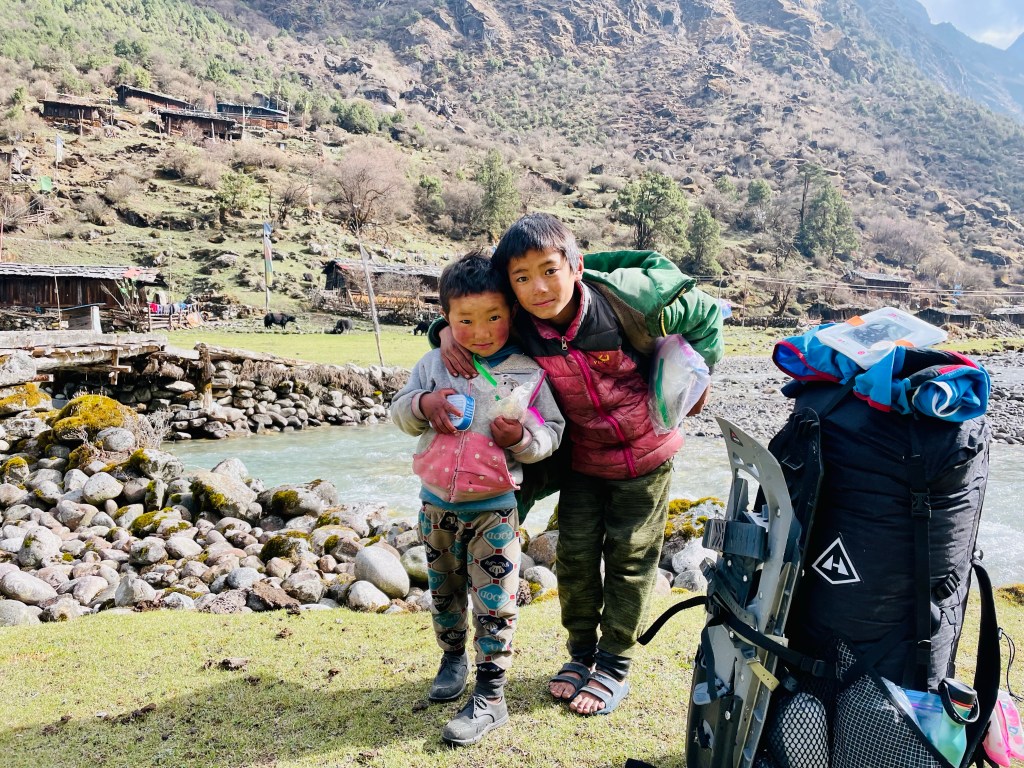
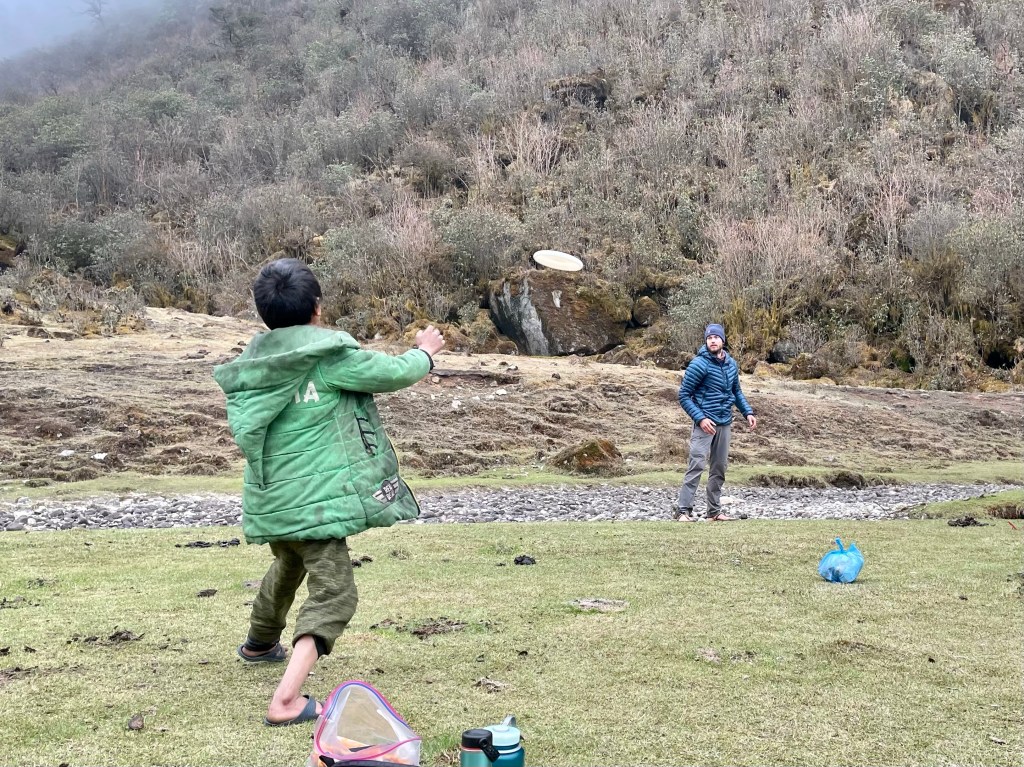
Two curious young boys came over to us and we showed them how we set up our tent and then let them help us. We taught them how to play frisbee and were really impressed at how quickly they were able catch on. Even when we can’t always communicate well with language, playing a game seems to break those barriers leaving us all with smiles and laughter.

Tom spinning that frisbee like a pro
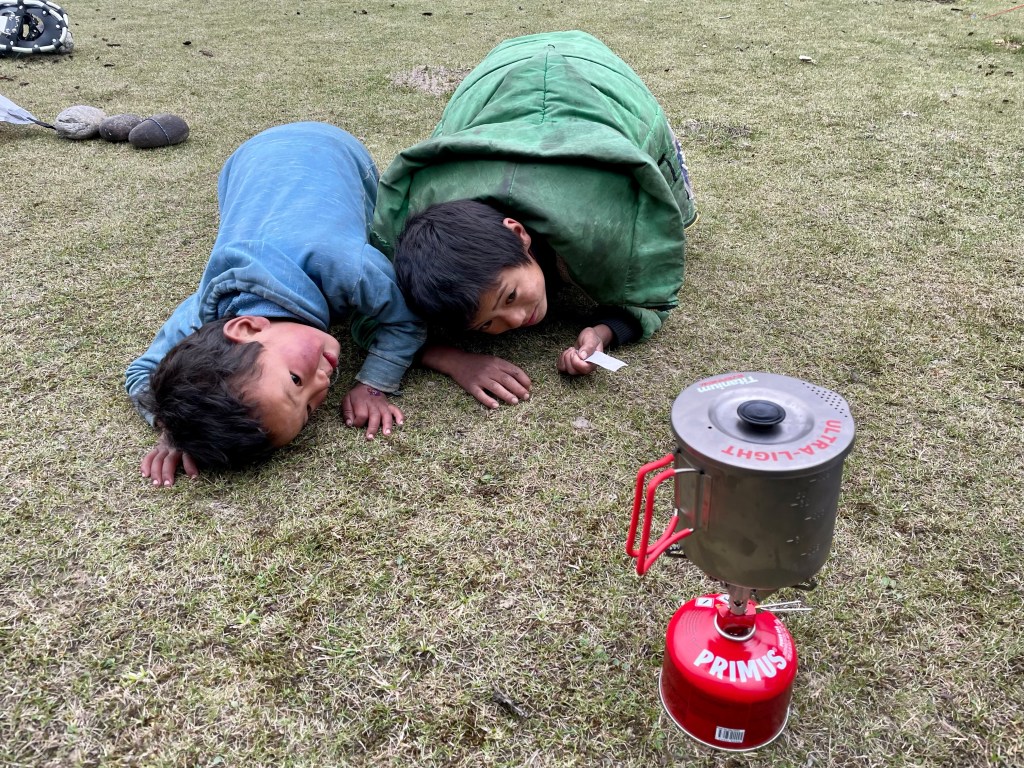
Little pyros, completely fascinated
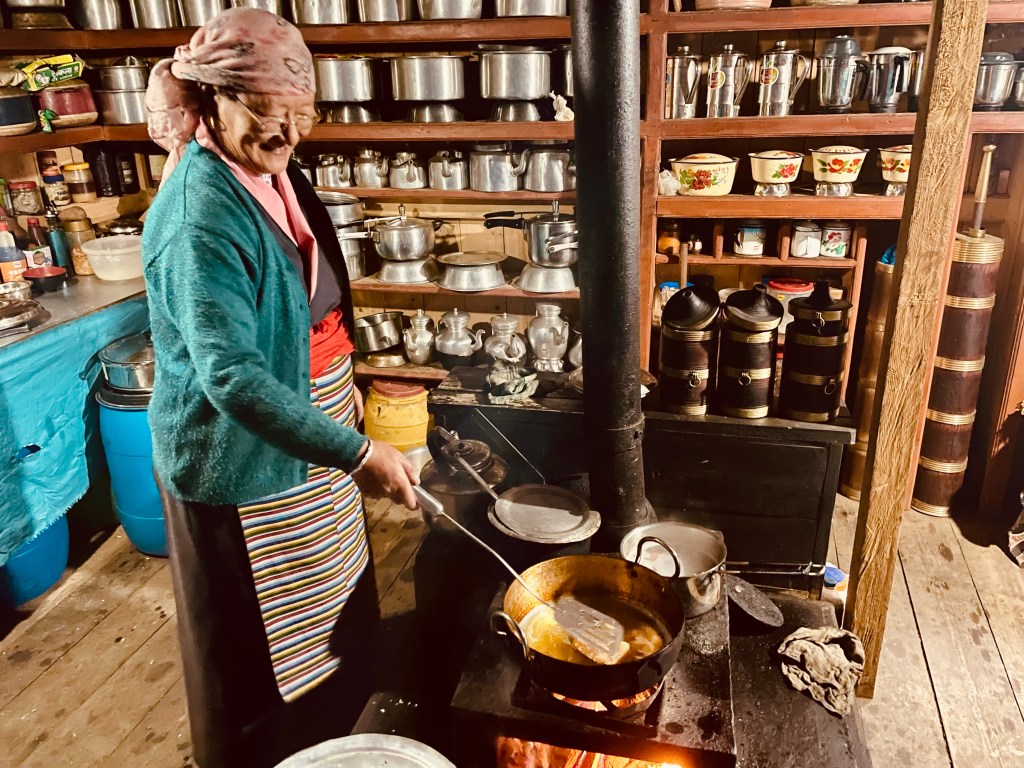
The sweet and simple kitchen of a Thudam home.
Part way through dinner we looked up and saw yak carcasses drying above us.
Our last moments of Thudam before we hit the trail.

Ghunsa > KBC > Ghunsa

Ghunsa which means “winter land” is at the bottom of the valley leading to Kanchenjunga Basecamp. It was dubbed Ghunsa because the original settlement in Khambachen, up higher in the valley, was too cold and received too little sun. Families initially migrated to this area from Tibet over the high mountain passes. They traditionally would move between Ghunsa and Khambachen seasonally, but now some go even lower to a village we hiked through called Phale.

Hiking to Khambachen with the Ghunsa Kohla on the left

Hiking up the river we found several Limbu shrines and sacred rocks. The route is part of a pilgrimage to the holy mountain, Jaanu, a stunning 7,000 meter peak composed of a beautiful gold tinged potassium feldspar granite. Tsiring told us that most years several 100 people visit Khambachen to see Jaanu.

One of the Limbu holy boulders along the trail

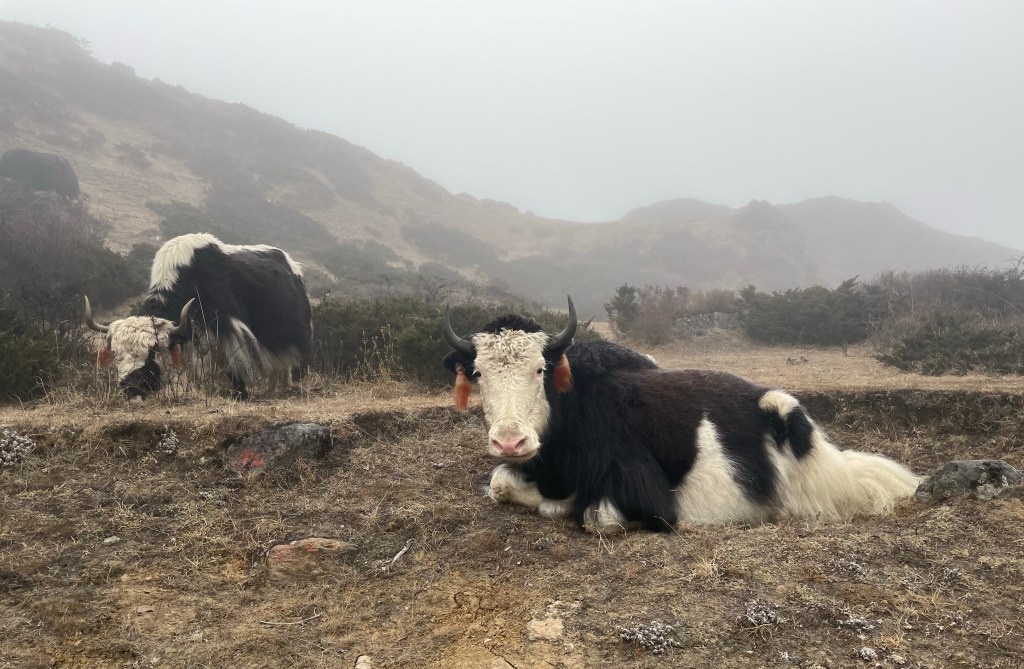
We climbed endlessly up rock stairs over a terminal moraine for the final portion of the day. We have both hiked over moraines in WA, but nothing like the moraines here that take several hours to get over. We were in the clouds as we crossed the bridge over the river to Khambachen. As we followed the trail through boulders and pasture we could hear the clanging of bells. Then out of the mist we saw our first Yaks! Having heard so much about them it was exciting to see these majestic mountain dwelling cattle and their huge horns and long fur. The females are called Naks and have horns as well, which took us a little while to learn. Although they are owned by a herder; bought, sold and traded, there is something wild in their presence. Trekkers have been gored so we keep our distance. Yaks shake their heads when they get irritated which is a good sign to give them space.

The endless stairs over the moraine
The red tassels are a blessing and help to identify the yaks between herders

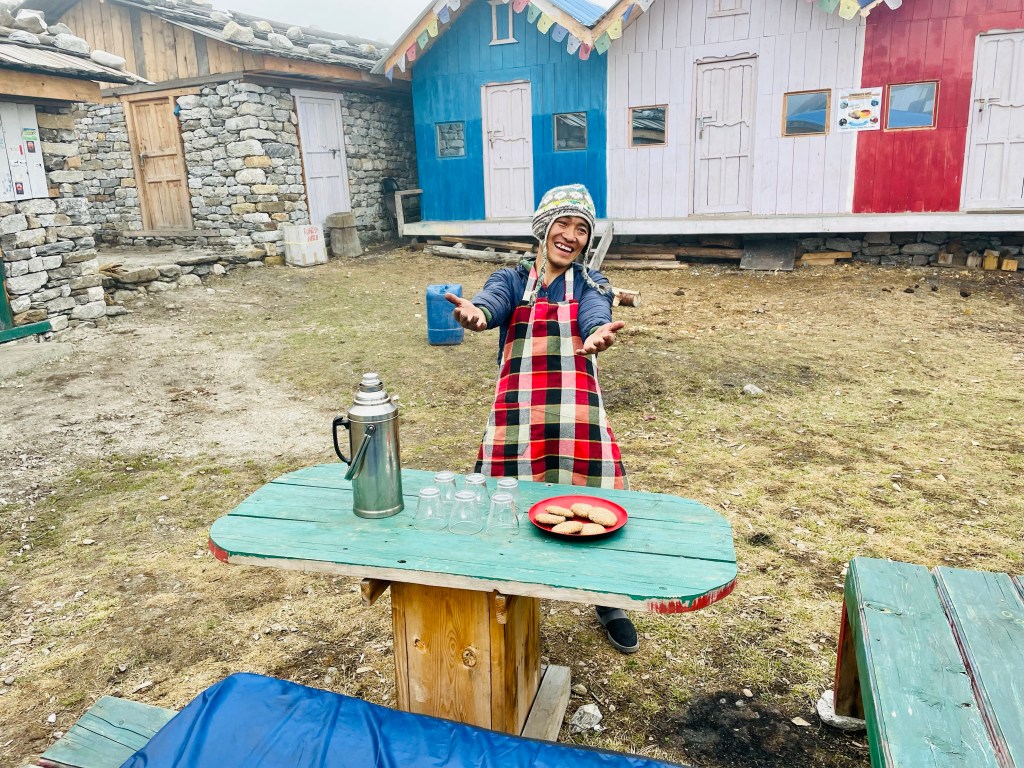
We arrived to Khambachen with another warm welcome from Tsiring. He had passed us on the trail earlier to open the guest house for us. His brother typically runs it but was in Kathmandu with his wife who was expecting. He went ahead and had hot tea and some homemade cookies ready and waiting for us.

The generosity and hospitality from this guy is endless

The plan was for a rest day and acclimatization hike in Khambachen, which is around 13,500 feet. Sarah had a headache initially at 11,200 feet in Ghunsa. This seems to be the most common symptom when pushing to new altitudes, especially when you stop moving for the day and start to rest. We would be reaching an altitude of 17,000 feet when we visit KBC (Kanchenjunga Basecamp) in 3 days, so taking time on the acclimatization process is crucial at this point. Matt has helped nearly 500 clients through the acclimatization process, and the goal is to not have to take Diamox or any other high altitude meds unless absolutely necessary.

The view from Khambachen in the morning. Jaanu on the left with the head and 2 broad shoulders.
The acclimatization hike we took to 14,000 feet went up past the Gompa and a new research center for Snow Leopard
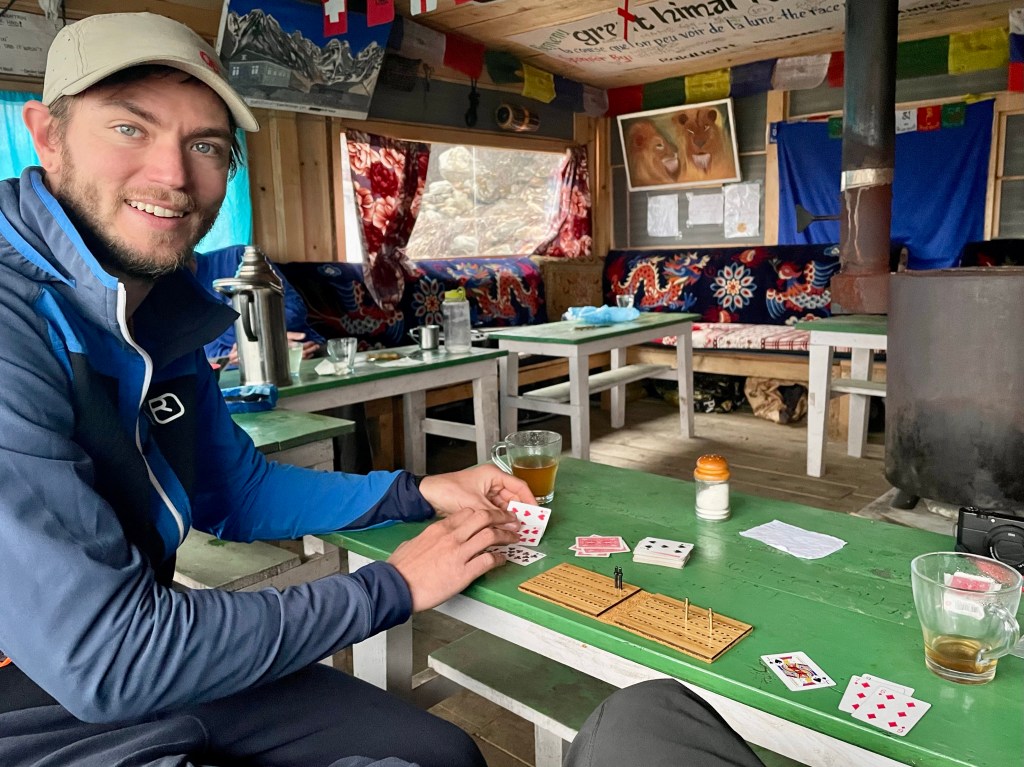
Typical rest day activities include cards and a lot of tea

The following day we did the hike to Lonak, the last stop before KBC. We were hiking up 2,200’ along the Ghunsa Khola again, hugging the river between landslides until reaching green pastureland. As we arrived to higher ground, the clouds moved in, but not enough to keep us from seeing our first blue sheep.

Blue sheep roam the mountainsides much like mountain goat and bighorn in the US
Our first snow on the trail!
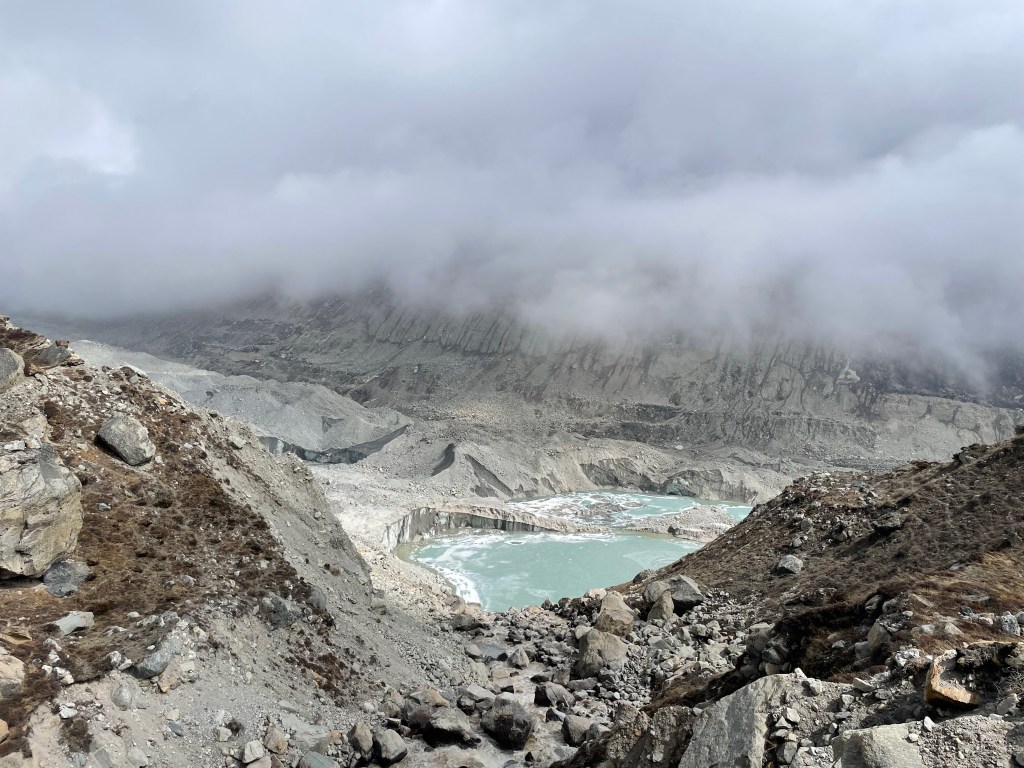
Our first glimpse of the glacier that feeds out of Kanchenjunga on our way to Lonak

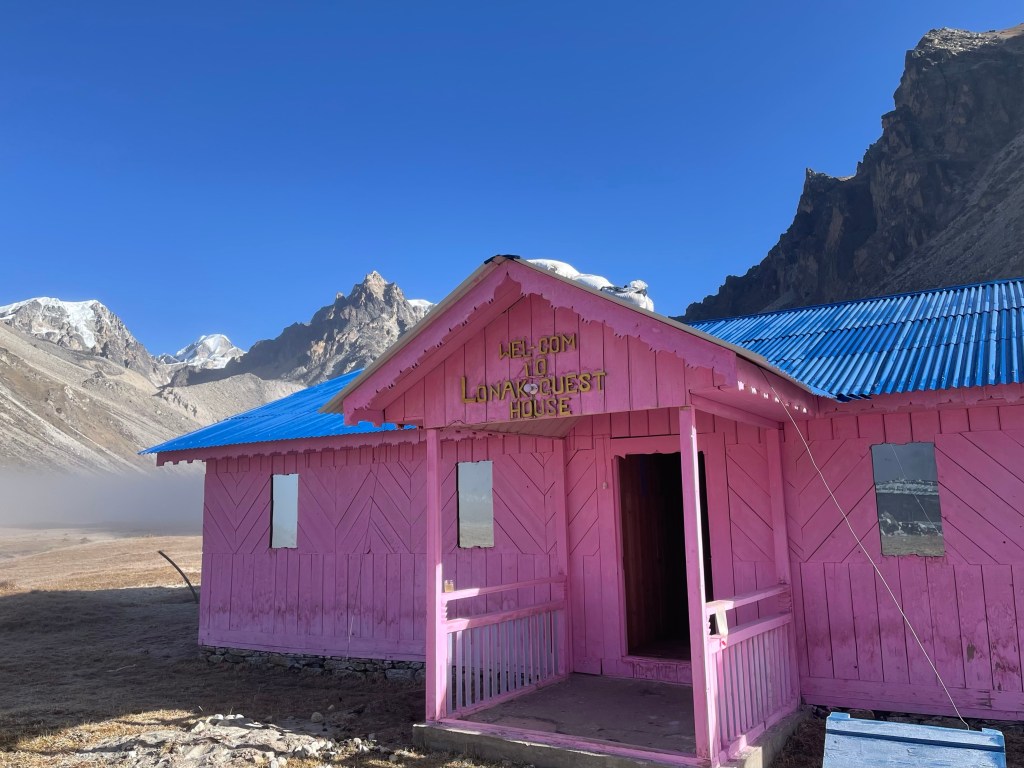
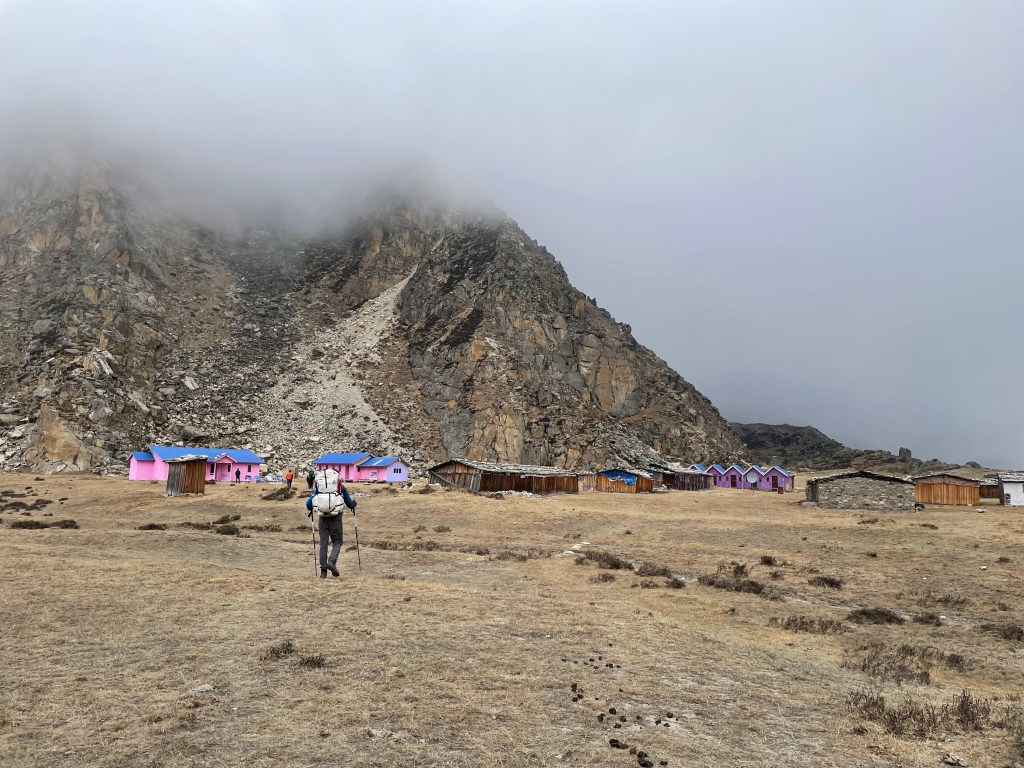
We arrived to the Lonak guest house in the clouds in the late afternoon. Due to the altitude it felt like a very long day. At this point we were both breaking our altitude record every step we took. We quickly set up our tents and went into the warm dining room where the fire was going. 2 Australian mates were enjoying their post hike chowmein. We had met them our first night in Khambachen and it was fun to hear about their experience at KBC. While chatting Mike and the guest house owner ran in to tell us they heard snow leopard. We ran outside to the complete white out. As we sat on the grass, blinded by the clouds we turned our ears in all directions. After several minutes we heard the wining of hungry kids crying to their mama carry over the glacial outwash. They continued off and on for a while.
The bright pink paint job is appreciated when you arrive in the clouds
Lonak and surrounding landscape. We heard a snow Leapord coming from the mountain directly behind the guest house. They believed it to be an old leopard unable to hunt well anymore. It had a much deeper and louder screech, and could be heard in the dining hall.

Lonak is another small settlement that was originally just a spot with good pasture for grazing yak. Now that trekkers visit there is a guest house to host for a few months out of the year. The Lonak Guest House is run by Tsiring’s cousin Syrdup (We are likely spelling many of these names wrong). Him and his wife stay there for 2 months during the spring and fall trekking season bringing up supplies by horse.

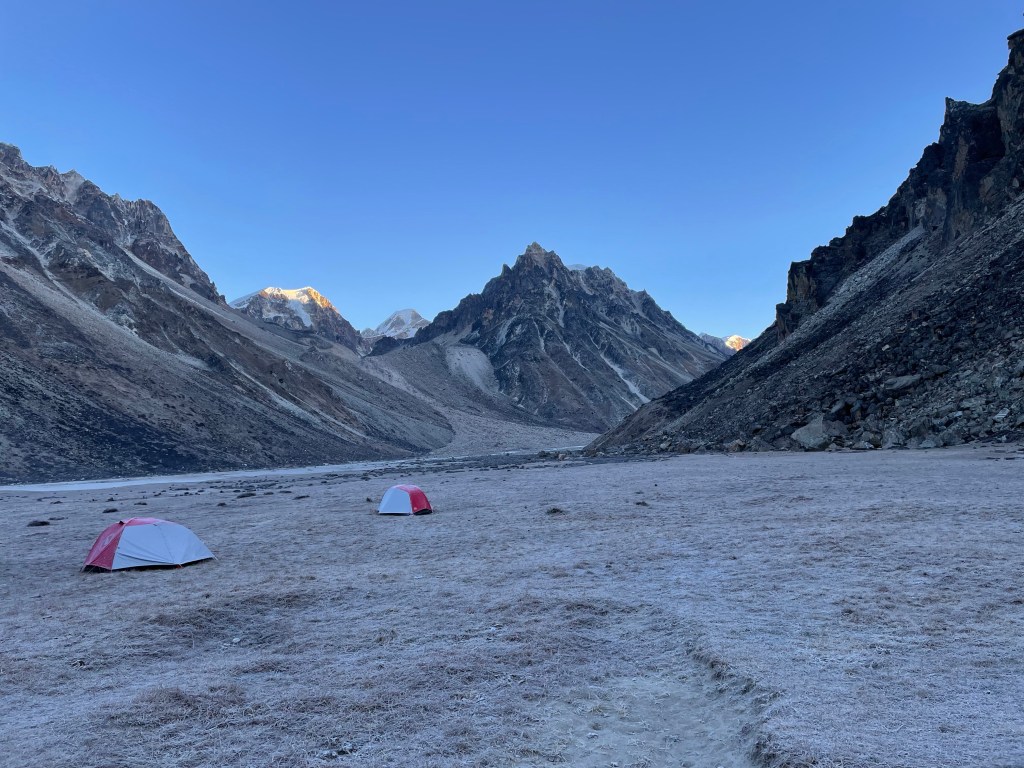
We had decided to bring our tents up since this was a colder camp and we wanted to be sure our gear was warm enough before the trip headed off to more remote sections.
Cold and early 5 am start to KBC

The 10+ mile hike was one of the more challenging hikes being that most of it was above 16,000 feet and reached over 17,000. During a water break at a stream we both developed an intense headache. Neither of us had any symptoms of ataxia or changes to our vision, but the rest of the way to KBC and back it lingered, coming in waves.

Much of the hike followed along the top of the northern moraine of the Kanchenjunga glacier opposite to Wedge peak and other steep mountain faces.

Parts of the trail were disrupted by landslides and we had to carefully make our way across steep terrain surrounded by rock fall. We finally made it to Kanchenjunga’s North base camp and had clear views of the 8,000 meter peak, the third highest in the world. This Basecamp is no longer used by climbers since the southern route is the safest and only one being issued permits now.

We were excited to finally reach the official beginning of the GHT and see our first 8,000 meter peak!

Kanchenjunga means “5 treasures of the snow.” It has 4 ridges and glaciers that spread from the center of the peak. It’s Geology is also unique in that it is the highest granitic formation on earth. Both Everest and K2 composed of sedimentary and metamorphic layers overlying the granite. It was first climbed by Joe Brown in 1955 on an English Expedition. Check out “The Hard Years” Joe Brown’s memoir for an old school climbing read. Love his blue collar climbing life and respectful approach to the mountains. Him and his partner George Band stopped just short of the summit out of respect for the Chogyal people of Sikkim, the country to the East that shares Kanchenjunga with Nepal. It is a tradition that has held on ever since.
Kanchenjunga from the North Basecamp, also known as Pangpema by locals.

We hiked back to Lonak in the clouds starved for dinner and warmth. The headaches began to dissipate as we reached below 16,000 feet luckily. The group was tired but excited to finally be moving westward on our journey.
Our friend Tsiring knew we were returning and met us an hour before Ghunsa with hot tea, sandwiches and cookies.

We were slow on our 14 mile hike back down to Ghunsa, so Tsiring, instead of being board waiting, brought us a picnic. We enjoyed his delicious veggie sandwiches by the trail as the sun set.. Then he ran past us as we hiked in the rain and dark to make dinner and start the fire. If you ever wish to visit the Kanchenjunga region you must stay with the Dzonga family guest houses. They are a shining example of true Nepali hospitality.

Suketar > Ghunsa

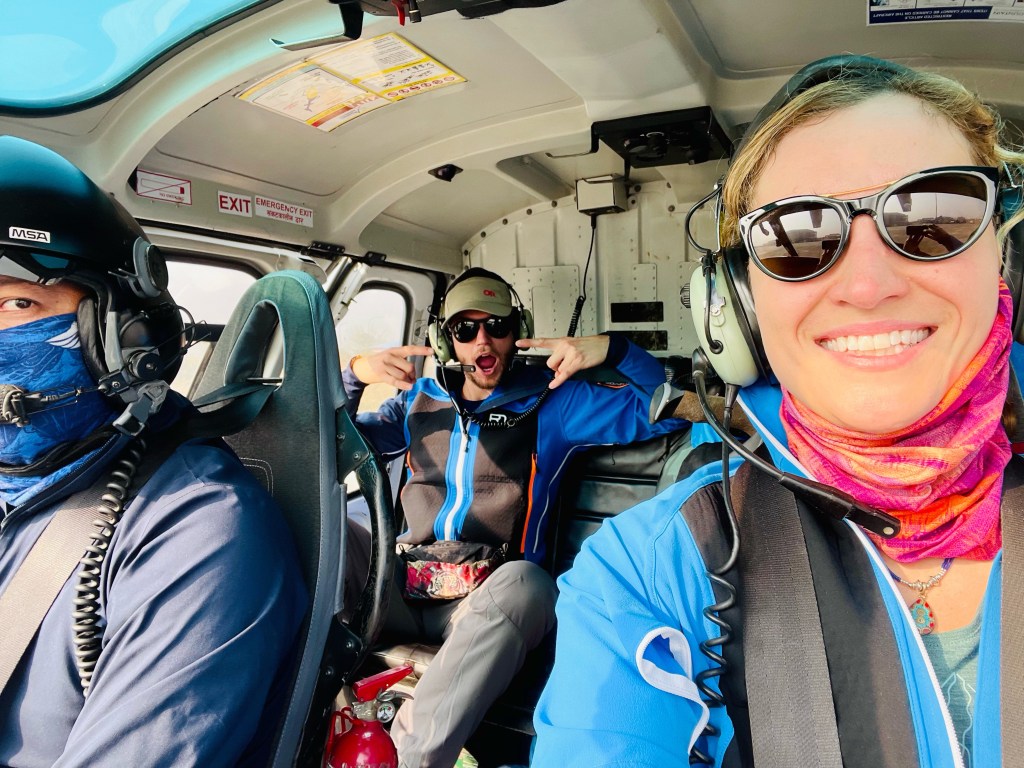
To start the trail we flew in to a tiny airstrip in the village of Suketar. We flew ahead of the other 4 team members after successfully avoiding a few KTM airport snafus. The first when they tried to take all of our fuel canisters we needed for cooking on the trail. The second being when the helicopter company we were flying with didn’t know about us needing 2 helos to fly out that day. Luckily, we arrived around 10 am with all of our gear safely and were greeted by our friendly porter crew led by Phurba Sherpa (surname). We had 7 porters joining us for the first leg to Ghunsa to help carry the 11 days of food each and snow shoes for the section from Ghunsa to Langmale.

It was just the 2 of us in one Helicopter with all the gear and the other 4 in the 2nd Heli.
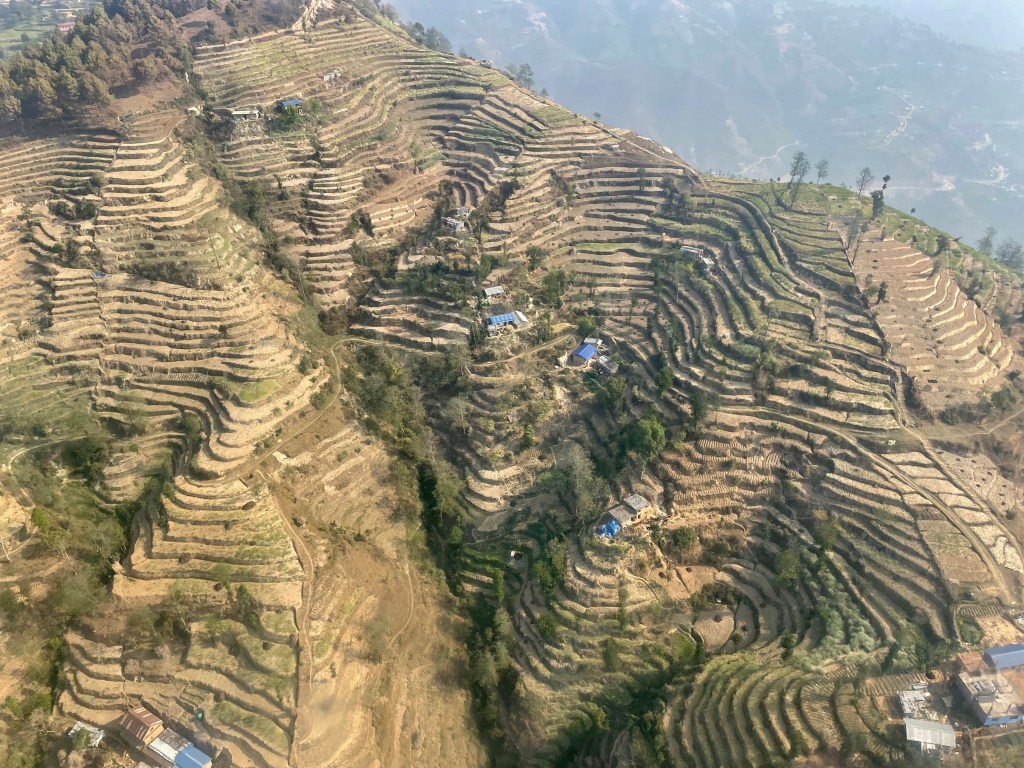
The views were mostly obscured by the seasonal haze but we were able to see miles of terraces and the tips of a few snow covered peaks.

After 8 days we made it from Suketar to Ghunsa, hiking as low as 3,000 ft and up to 11,228 ft. We took an extra rest day in Gyabla because one of our teammates was ill. The Nepali belly bug has hit 3 out of 6 of us so far. Matt says we’ll all get it as least once.

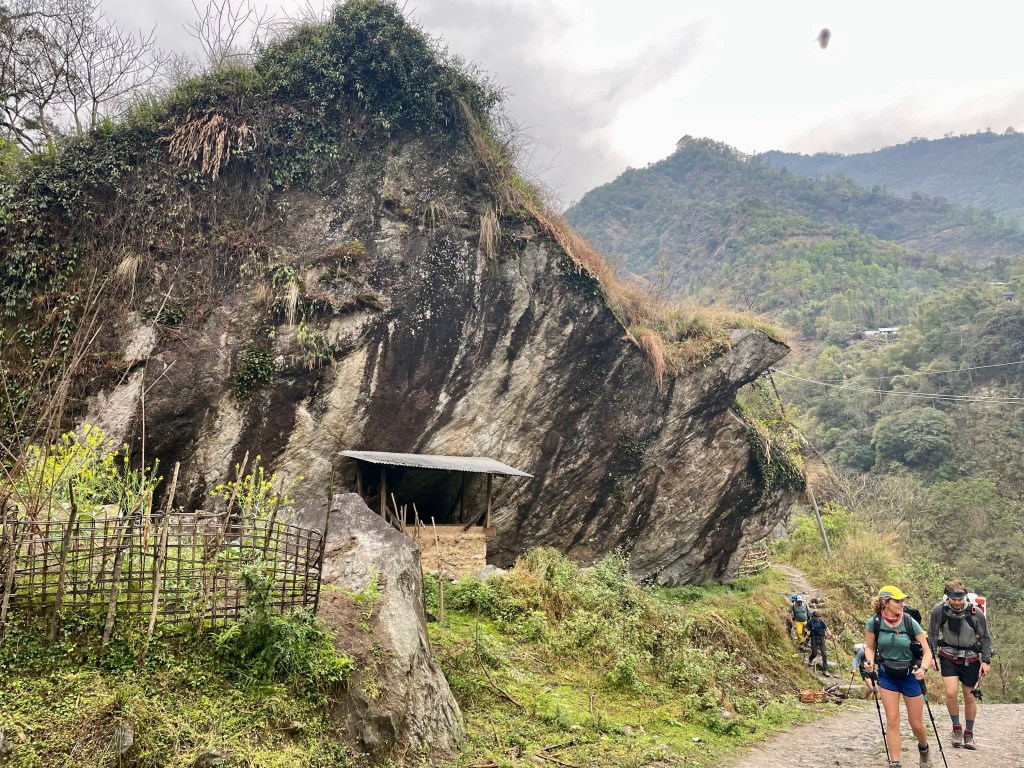
The first day of hiking was nearly all downhill through rural tropical farmlands.
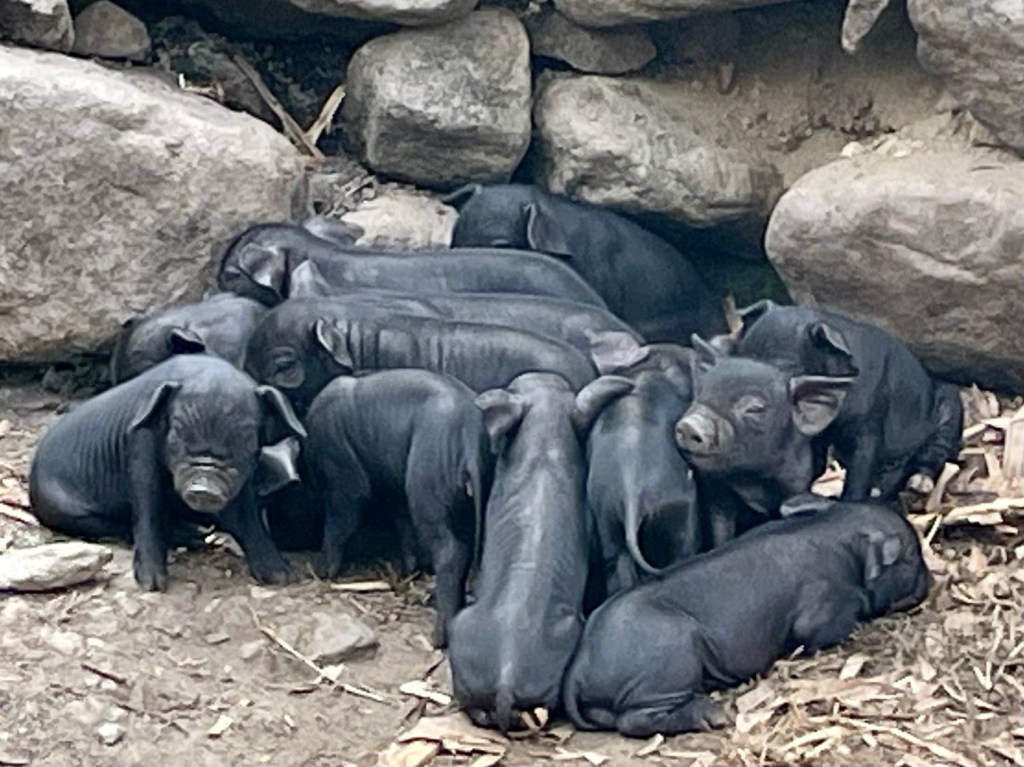
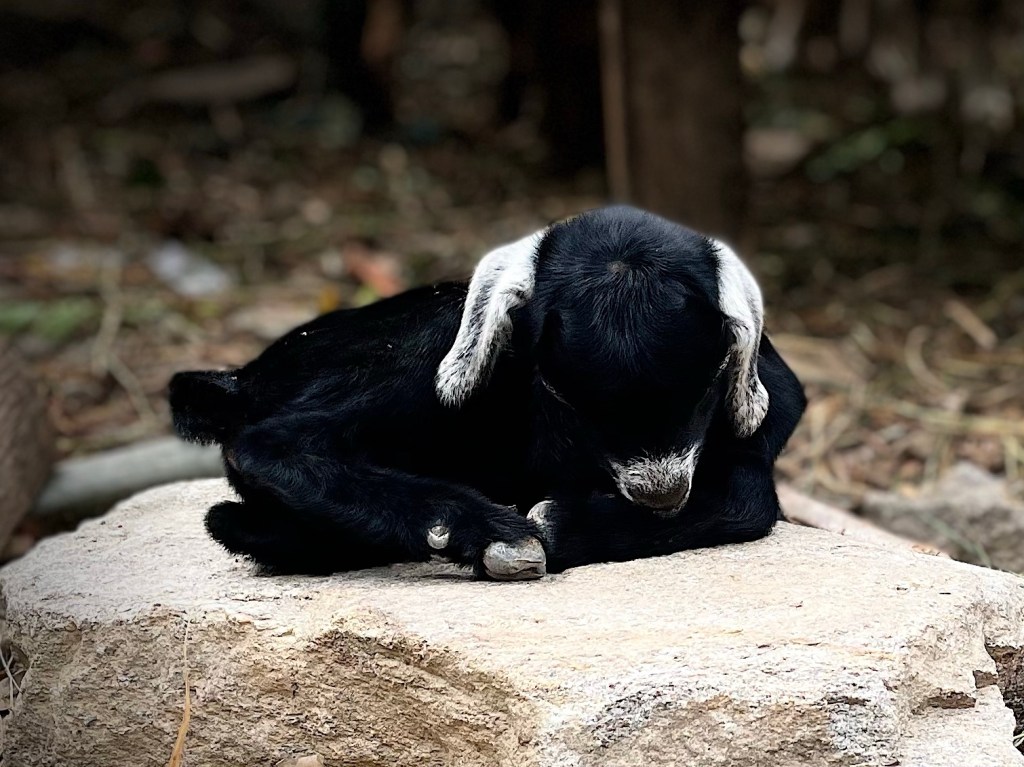
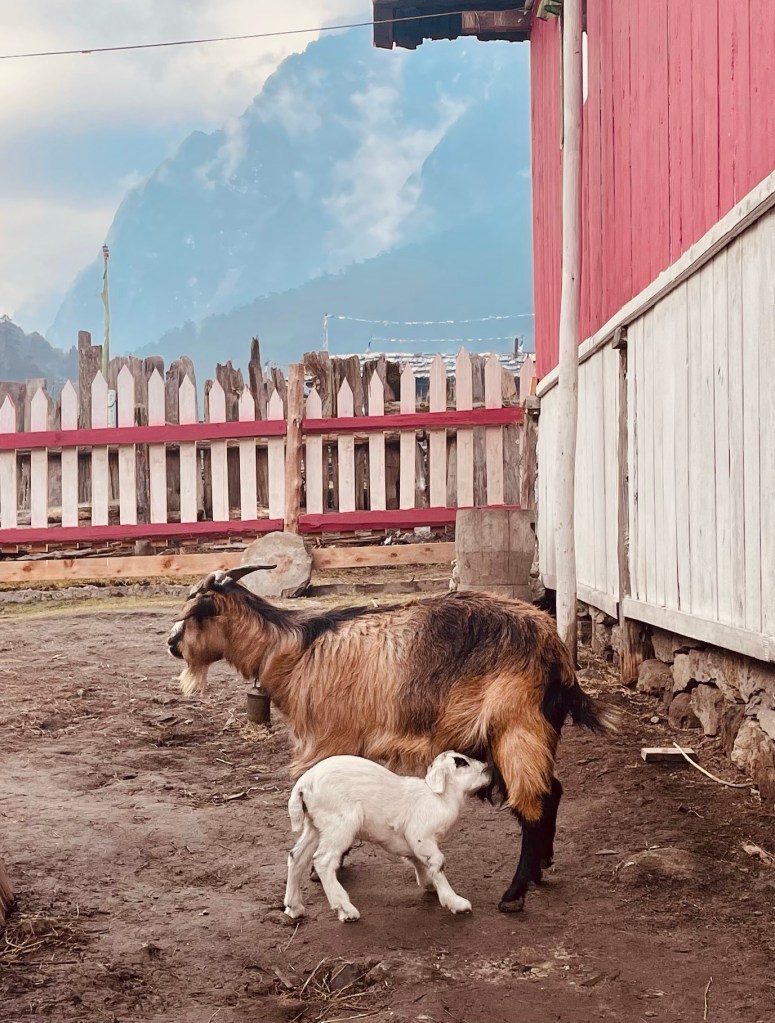
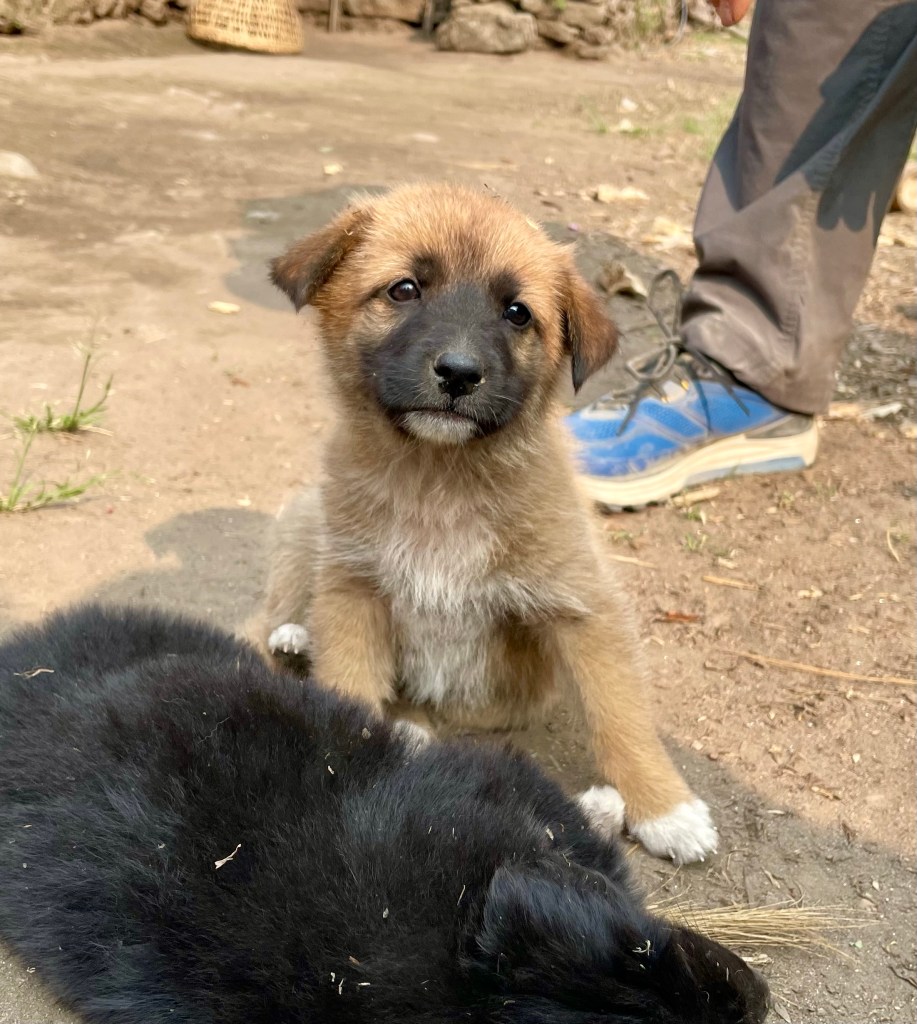
Being spring, all the babies are making their arrivals: piglets, goat kids, littles chicks, and Tibetan mastiff puppies.
Another cute Tibetan pup in Sukuthum
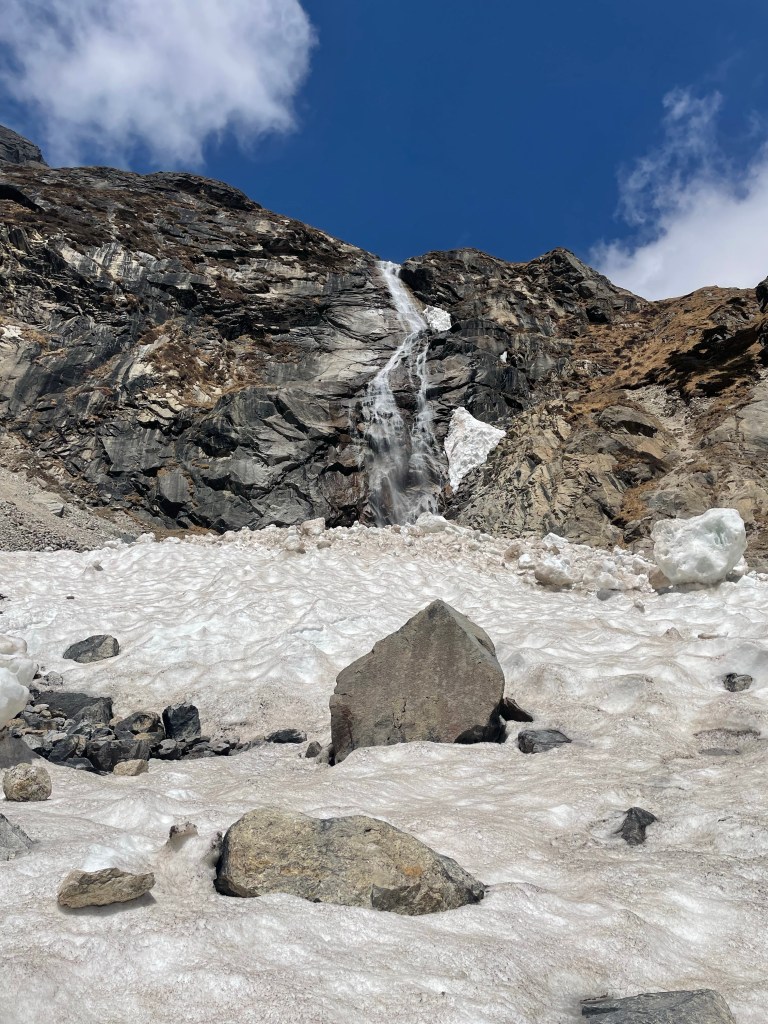
The forests are lush with cardamom, alder, banana trees, various types of bamboo, and rhododendrons bursting with red and magenta flowers. As the mountain sides began to steepen we saw more and more waterfalls falling through the forest and rock.
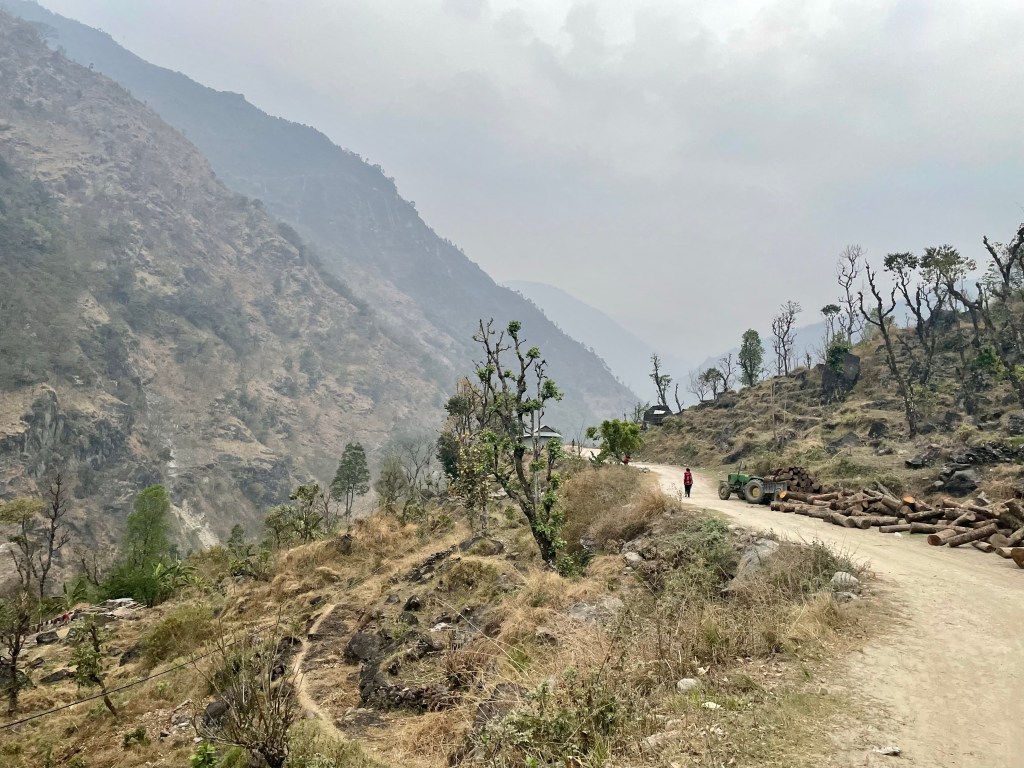
Some of the route has been on new roads that constantly go up and down, dusty and glittering from the mica schist.
Others are ancient trade routes turned to trekking trails that perch themselves on cliff edges with the glacier turquoise and white river flowing below.

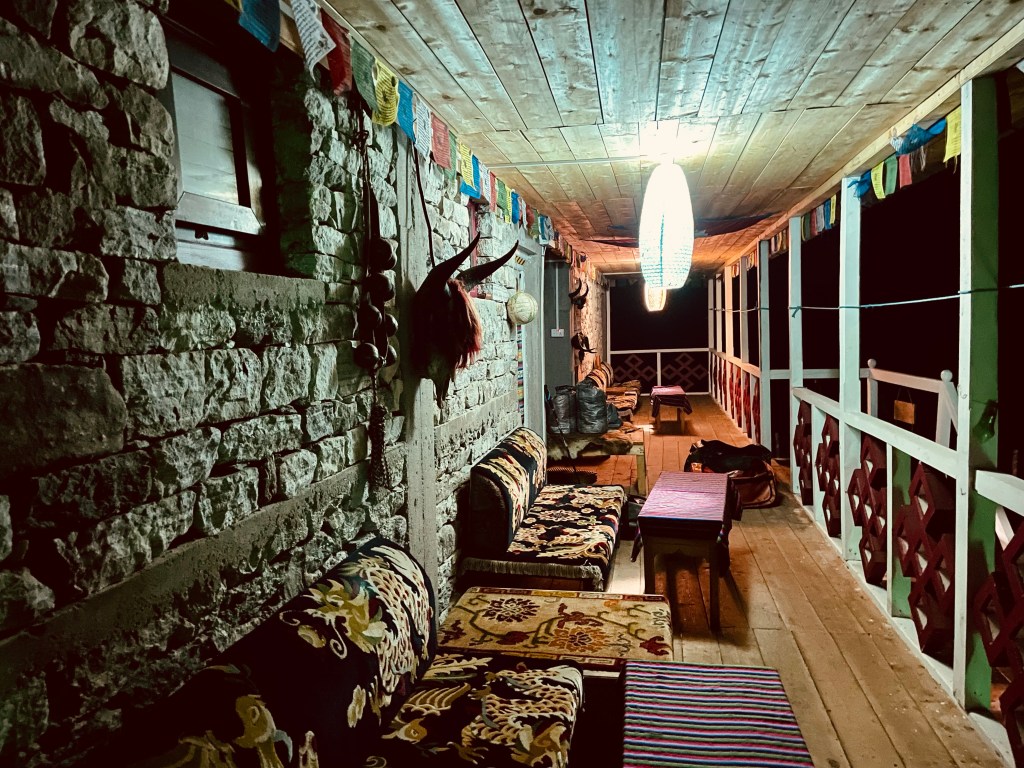
We have been staying at tea houses this section. The rooms are quite simple, some better than others. They are usually a compilation of corrugated metal & plastic, tarps, and sometimes plywood.

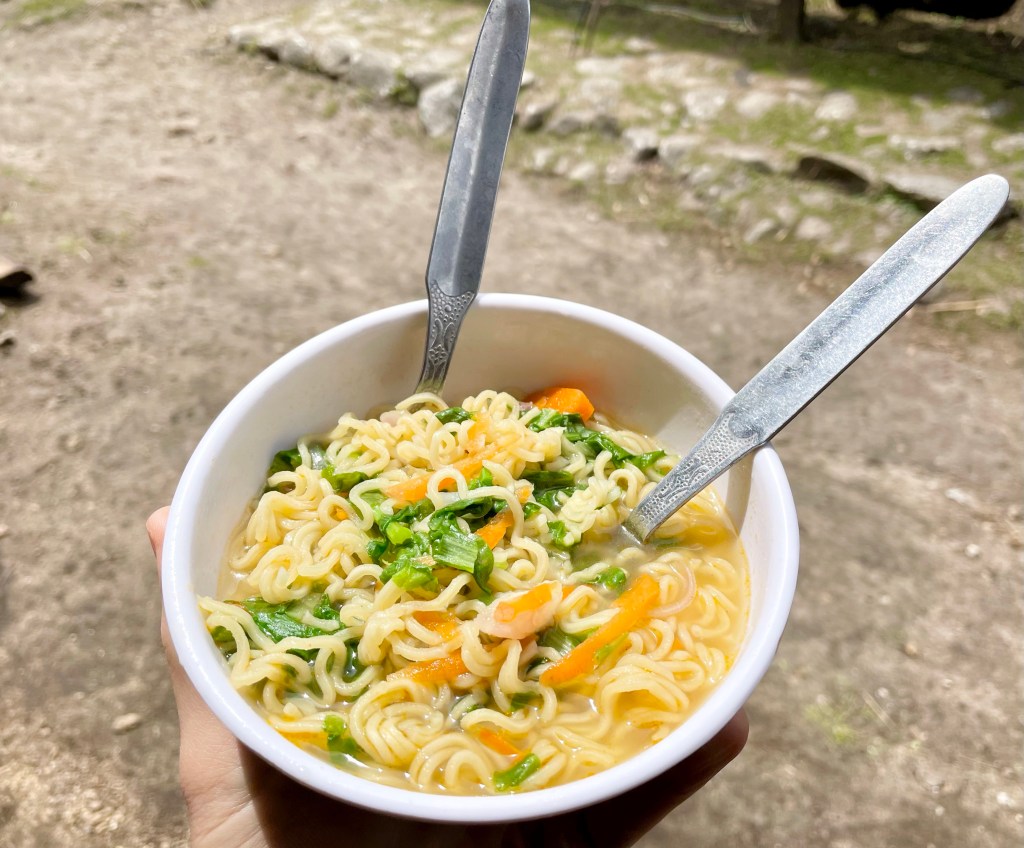
For dinner the choices are usually dal bhat or some sort of noodles like chow mein or ra-ra.
Ra-Ra Soup
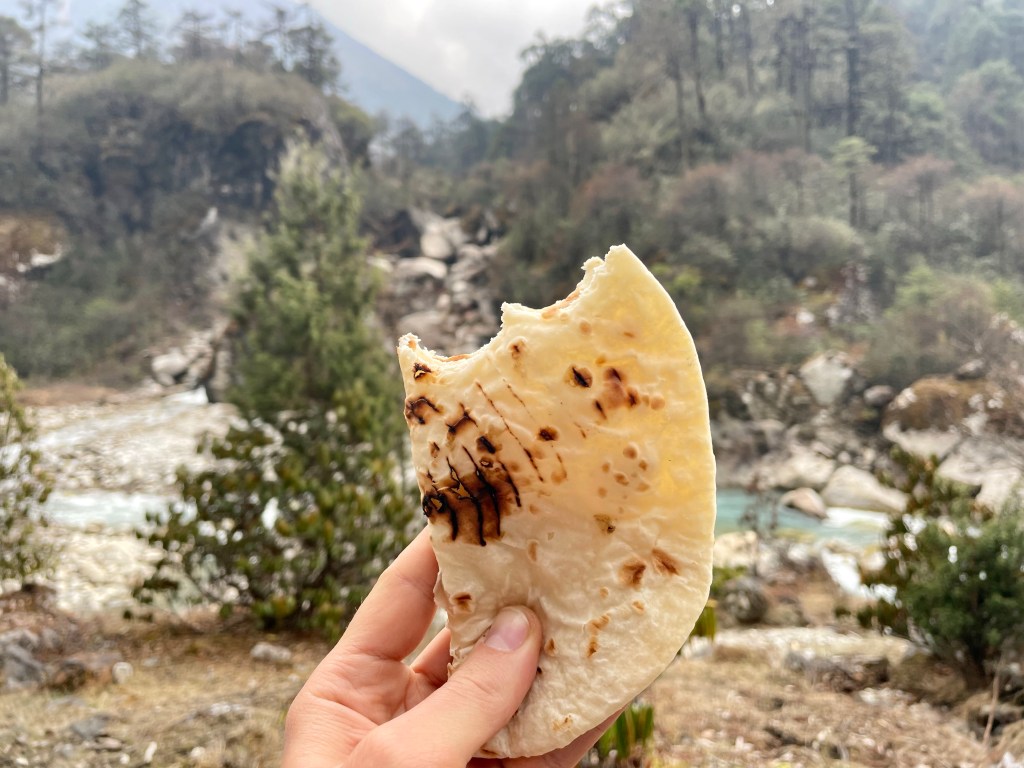
For lunch we usually get a couple hard boiled eggs and chapati (flat bread) to take on the trail.

In the evenings we play cards, journal, or paint with our mini watercolor sets. Some of the tea houses have a wood stove which burn mostly dried patties of yak dung, Himalayan Birch, and other types of scavenged wood.

Phurba and his friends speared some frogs with bamboo sticks and fried it with garlic and salt for us in Amjilosa. The porters have been a friendly crew inviting us to play volleyball and singing us traditional folk songs in Sukuthum.

Our teammate Mike is good friends with the Dzonga family, who own a beautiful new tea house in Ghunsa and another in Khambachen up the way. When we arrived, Tsiring made us carrot cake with frosting to congratulate our arrival.

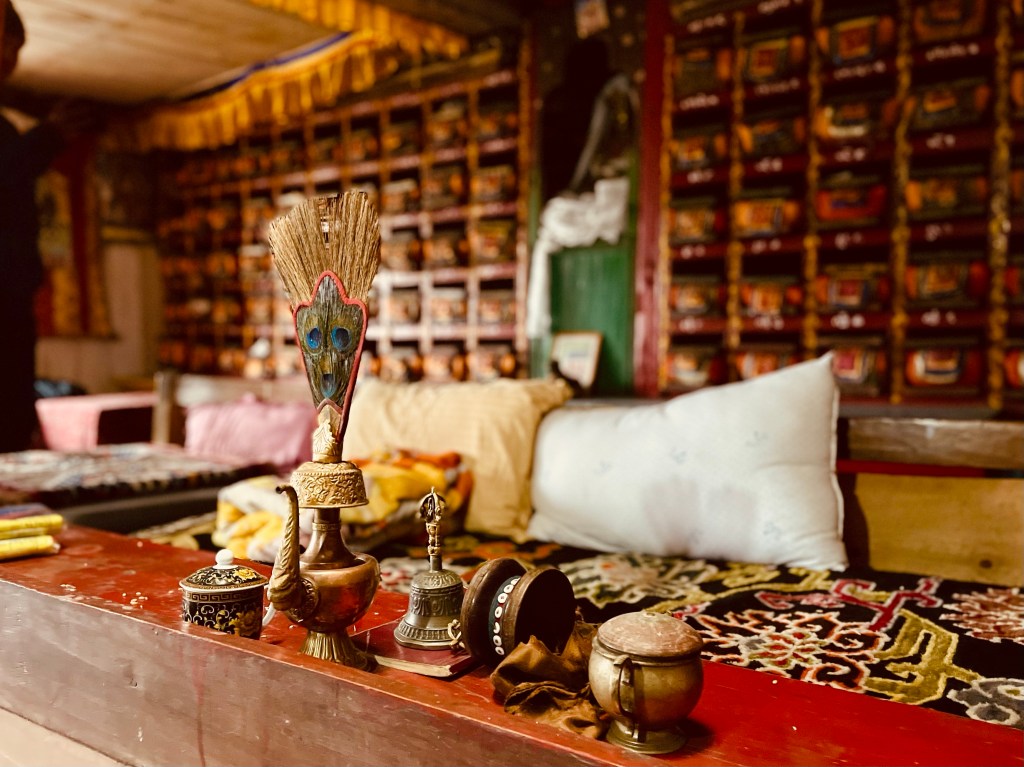
Tsiring’s father, Pema, is a Lama and took us to one of the oldest Gompa’s (Monastery) in Nepal. There he performed a Puja, a prayer ceremony, to protect us on our journey and provide a safe return from the mountains. One of those experiences so powerful it brings you to tears.

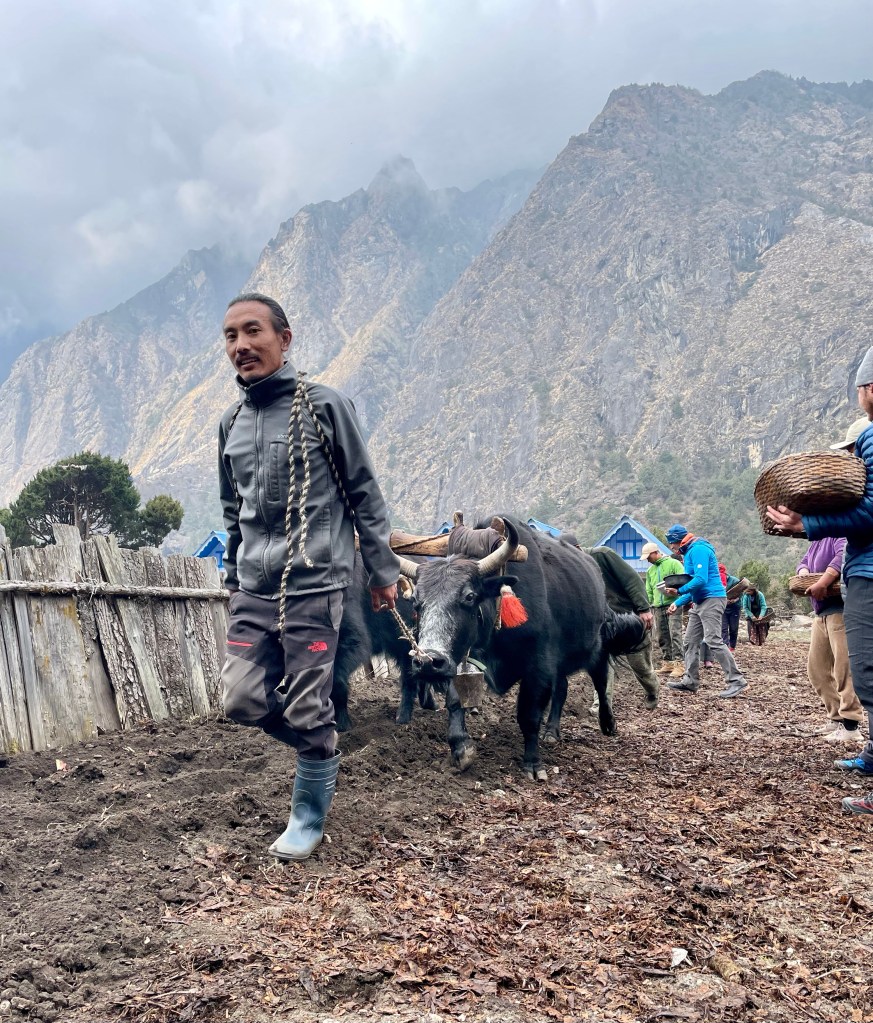
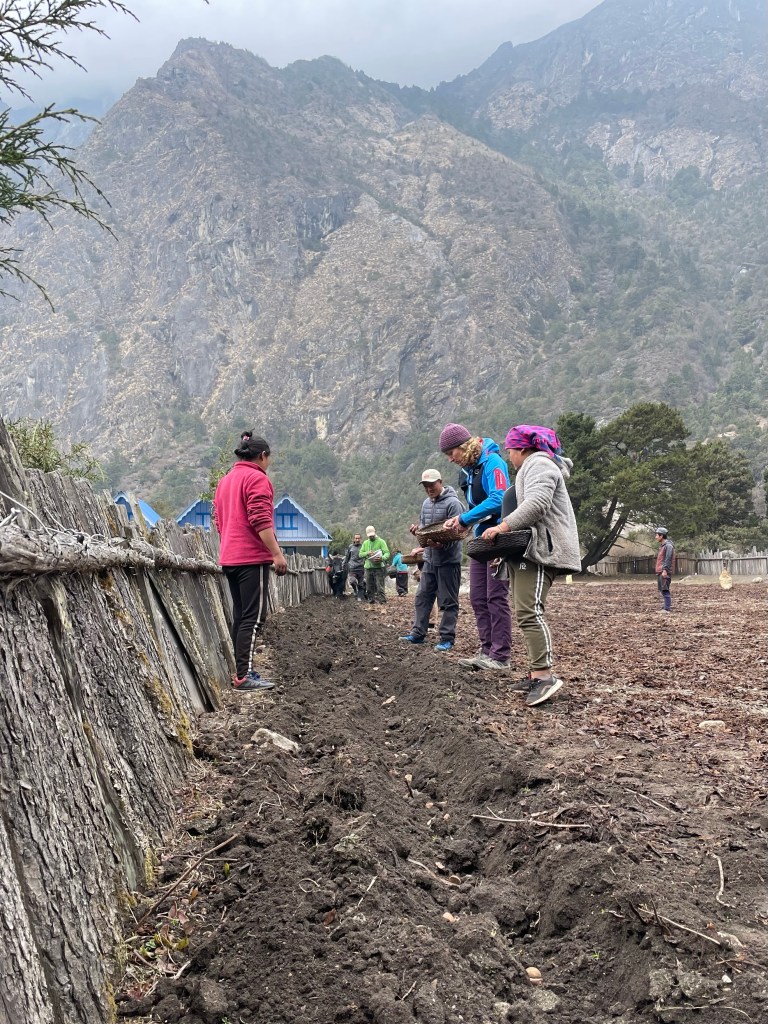
When we arrived in Ghunsa it was the beginning of the potato planting season. This is their primary crop and what they use to barter for other food such as rice, beans and other grains.

It was special to see how neighbors come together to help each other in one another’s fields. Lending a hand spreading compost first, then their dzokyos (cow/yak breed) to pull the plow, and families in the fields with little kids planting the potatoes behind the plow.

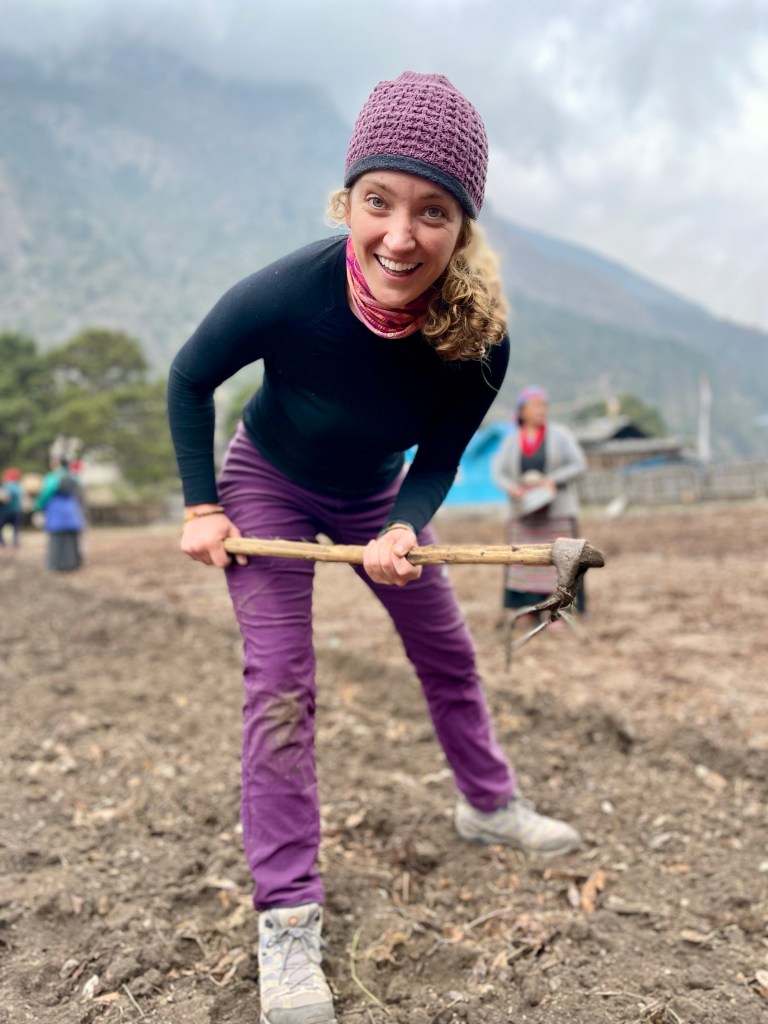
We were recruited by some locals as we walked by to help plant their potato field.
These kiddos were adorable even if they thought it was hilarious to throw rocks at us

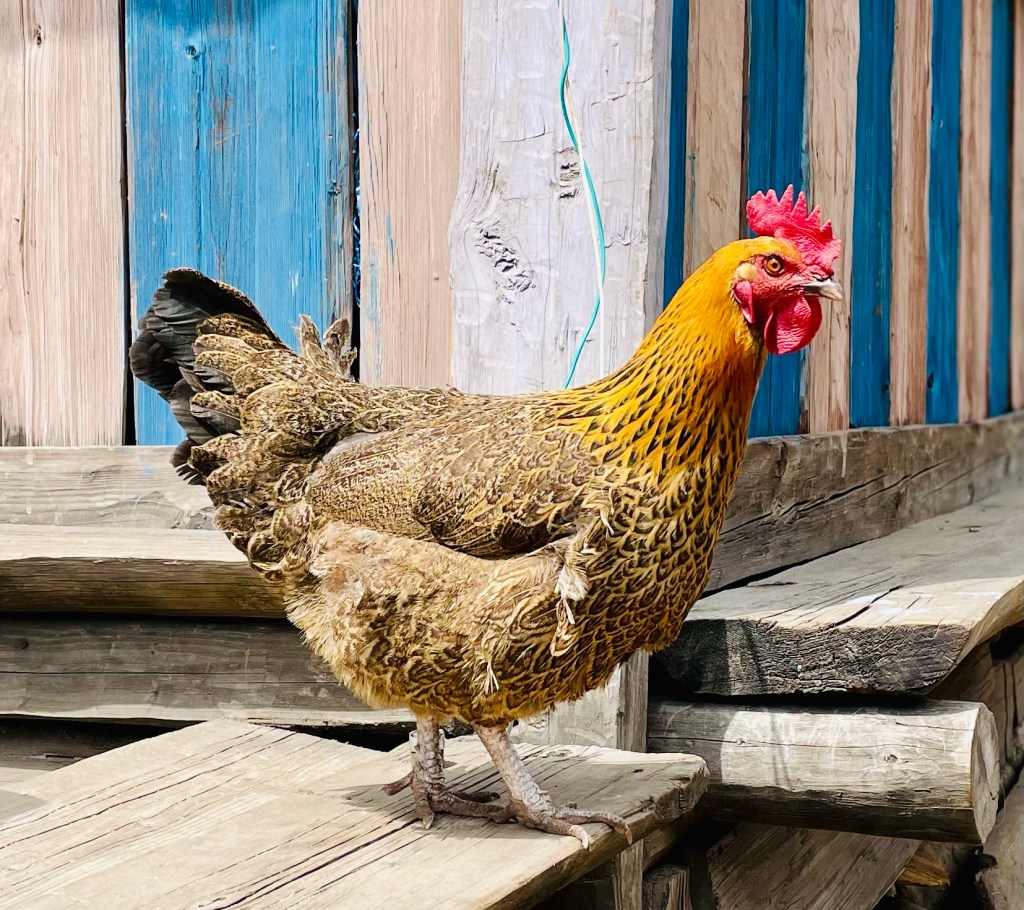
In the mornings you can always hear a rooster and smell the burning of dried juniper. Juniper is commonly burned as a morning puja.

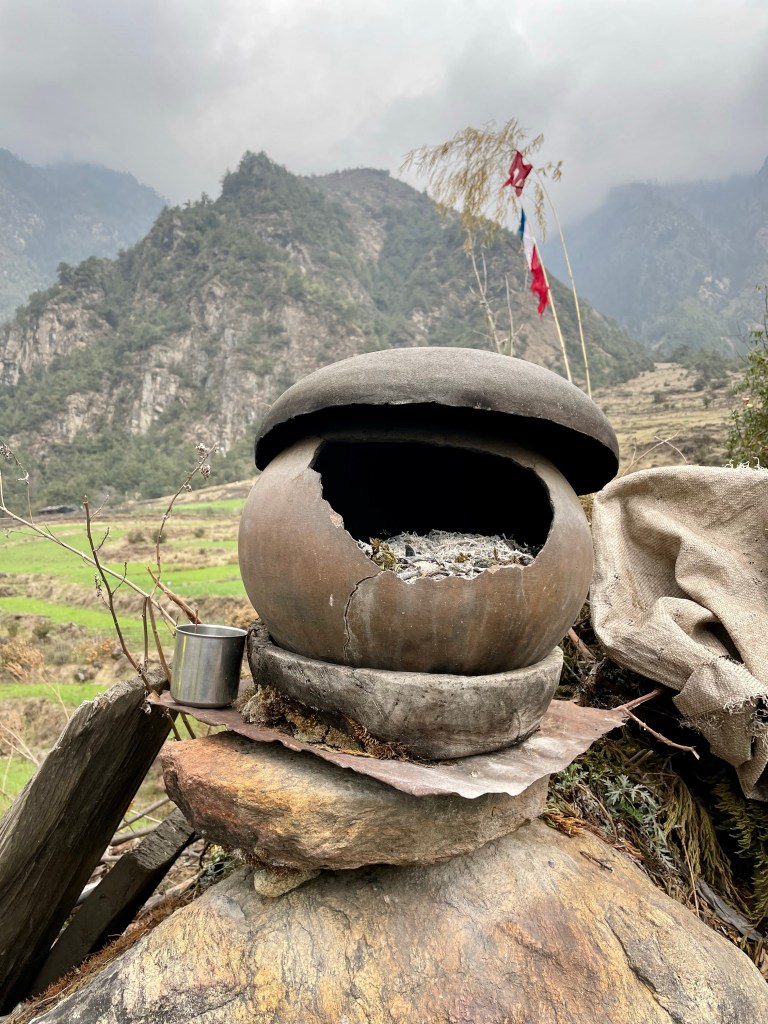
Alter for burning juniper

We’ve enjoyed the Tibetan breads most for breakfasts, usually with a veggie omelette, hard boiled eggs, or an oat or sampa porridge. Always with tea of course, we have been enjoying the classic Tokla brand Himalaya black tea served most places.

Tibetan bread
Mama is making us Tibetan bread. She also makes the best tea ever!

The weather has been tolerable so far with some hot days and others overcast. We seem to avoid the late afternoon rain by hiking early in the day. The weather pattern has been consistent and predictable.

Ghunsa tea house

We passed 10,000 ft in elevation and Tom was naturally unscathed. Sarah however, started to feel the altitude. The experience oscillates from a mild achey head pressure to a lighted headed dreamlike euphoria. It’s similar to holding your breath for as long as you can. You also get short of breath far more easily. We also learned you pee more as your body is acclimating and it’s not uncommon to get a headache in the evening. Propping up your head is helpful.

To help our bodies acclimate we go slow like turtles, keeping our heart rate in zone one, and take breaks every hour for water and snacks. When we reach new altitudes we take a rest day.

Magical Phale, a village built amongst the boulders and ancient Juniper

All in all, Nepal reveals itself to be more and more beautiful, the people have all been kind and thoughtful, and the experience more magical than we ever dreamed of.

Kathmandu

Rooftop scene of the Tibet Guest House. There is whole world among the rooftops of Kathmandu

32 hours after our start at Sea-Tac Airport, we arrived at the Tibet Guest House in Kathmandu on March, 17th. We were just as excited as we were exhausted. It was morning when we arrived in Nepal so we did everything we could to stay up until a reasonable bed time. To our luck we arrived on Happy Holi, the celebration of color and happiness. The streets were filled with people covered in bright colored pigments, faces of yellow, red, green and purple. It was in their hair and gracing the streets. We didn’t get painted but we did get ambushed by little kids who would pop little plastic baggies full of air on your back to cause a scare. We each got popped several times, being the obvious targets on the streets that day.

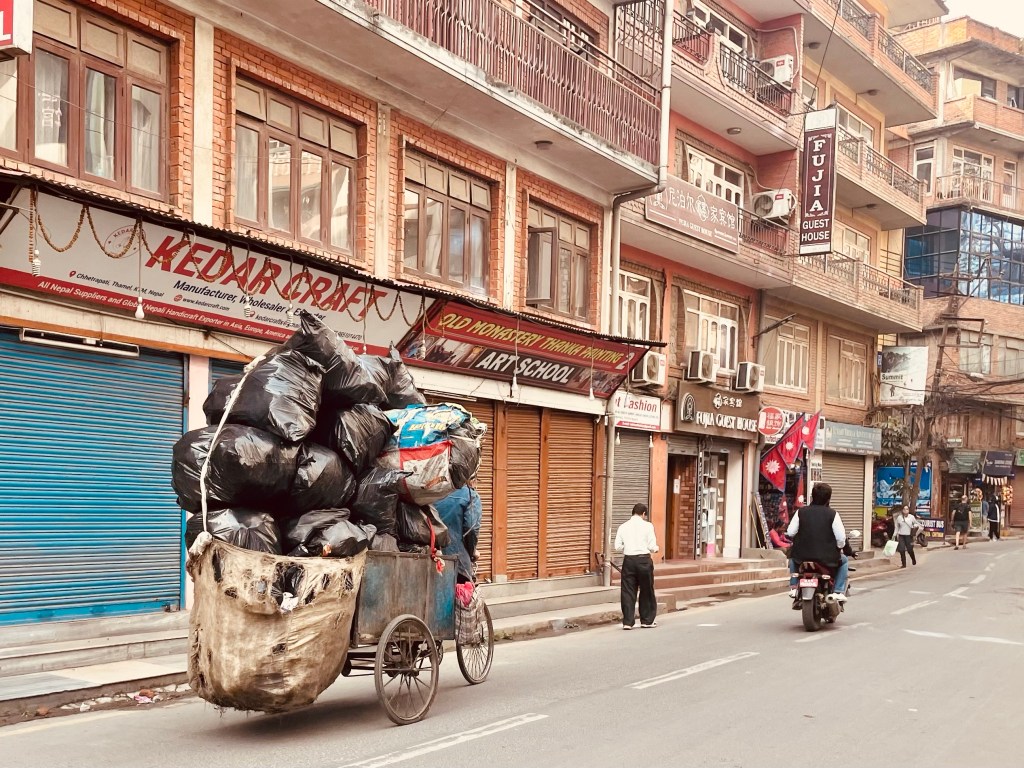
Notice the color splattered guys on the right as well as the iconic rats nest of electrical wires seen all over in Kathmandu

Kathmandu is rather quiet post covid with very few foreigners around according to our friends who are familiar with the area. Although, since we first arrived 4 days ago the number of tourists have noticeably increased. Many of the locals are eager for the season to start as the past few years have been hard on business with no help from the government.

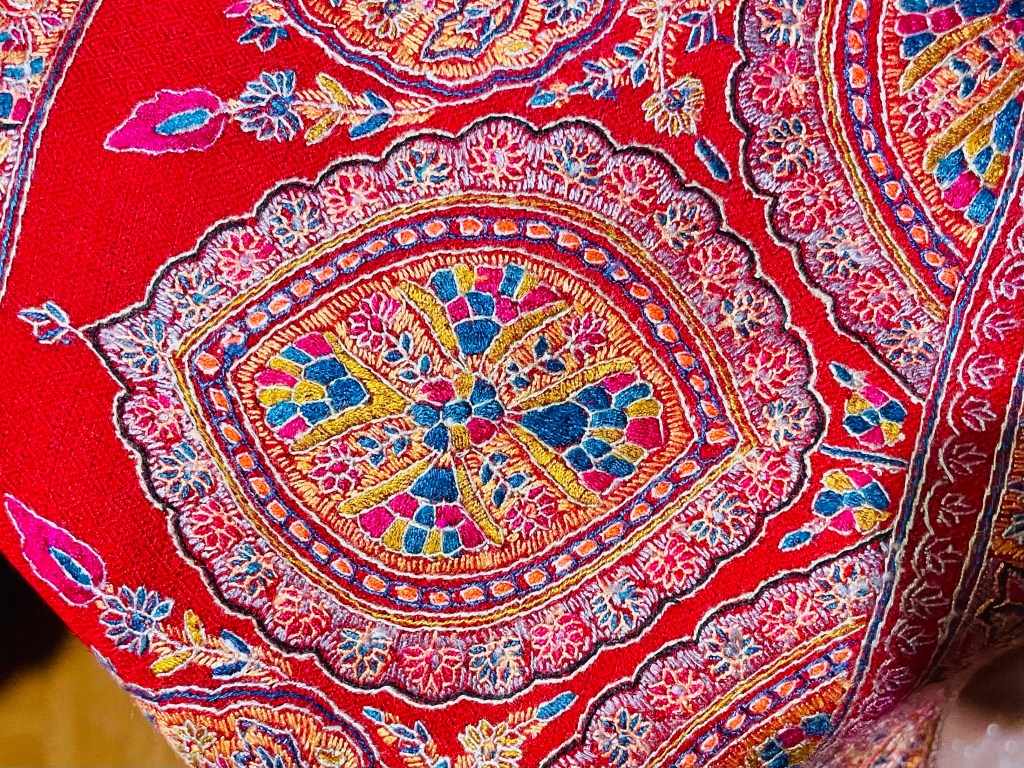
Two brothers from Kashmir that own Rug Up Originals showing us their beautiful artisan rugs and pashmina

In Thamel, the neighborhood where the guest house is, the streets are lined with shops and restaurants. Majority of our time has been spent roaming the chaotic streets bartering and shopping for supplies for the trip. As well as some fun gifts. Matt has been coming to this area for 25 years and has a network of friends in local shops that are a wonderful resource for anything from custom linen, silk, rugs, jewelry and cashmere, as well as extra gear and supplies for the trip.

One never quite knows what will come barreling past in these streets
These hand sewn pashmina take 2 years to make
More pashmina.. because

The food has been really good and incredibly affordable. As a foreigner though, there is limited amount of places that are safe to eat in the area. Maybe on our return we may be able to branch out a little more with less worry having to be ready for a long trek.

The Indian food is 👌

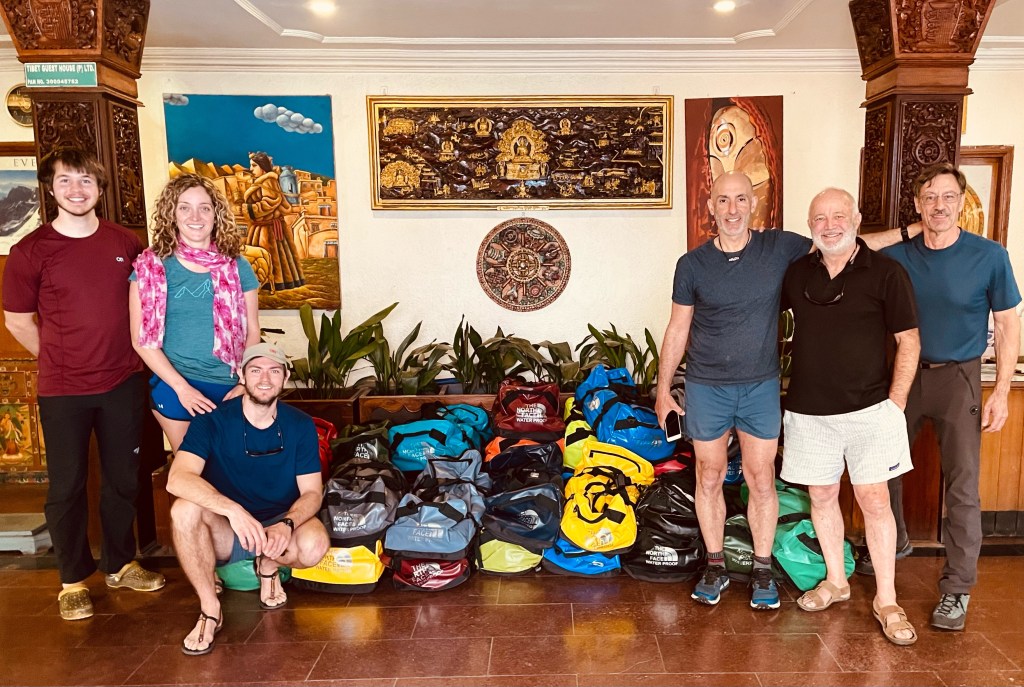
Having finished the last task of acquiring 32 bags, 55 fuel canisters, and organizing our food amongst them we are ready to hit the trail. These bags will be portered or flown in with cargo to 8 different locations throughout the trip. We will be flying out at 8 am tomorrow morning by helicopter to Taplejung. From there we will begin our journey to the eastern border of Nepal where we will start the trail across the country. Kathmandu has been good to us, but we are eager to get out of the city and into the mountains.

On the left: The young greenhorns. On the right: The three wise men

The Pre-Trip Trip

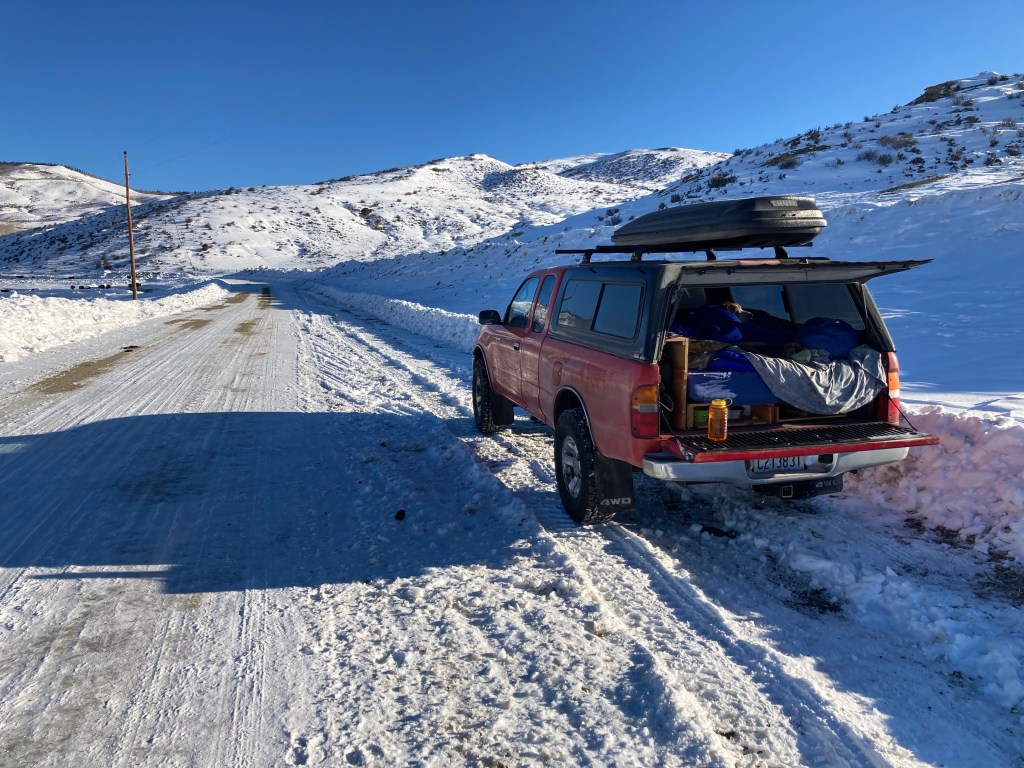
Back to truck life

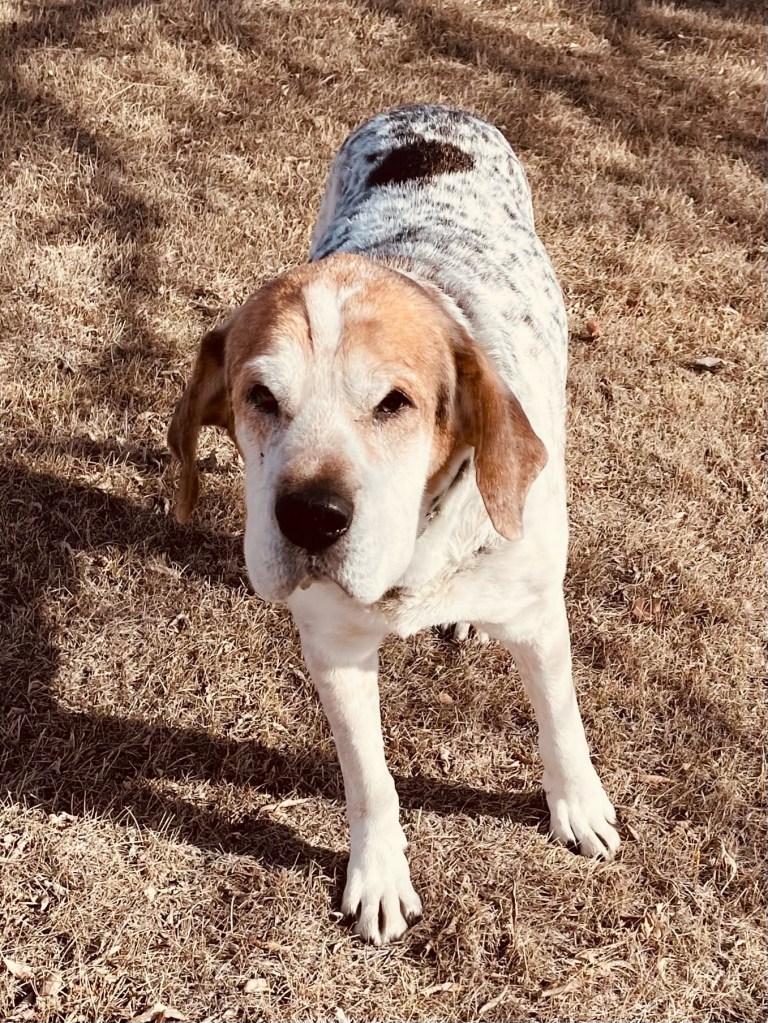
In order to get a little time at some elevation (we live at sea level) and to re-familiarize ourselves with some of our gear we took a trip to Colorado. This was actually out of necessity to take our dog Jackson to start his summer vacation with friends and family. Thanks Tim and Hannah, Beano and Michelle, and mom and dad!!! Jackson is so lucky to have you.

Jackson hound

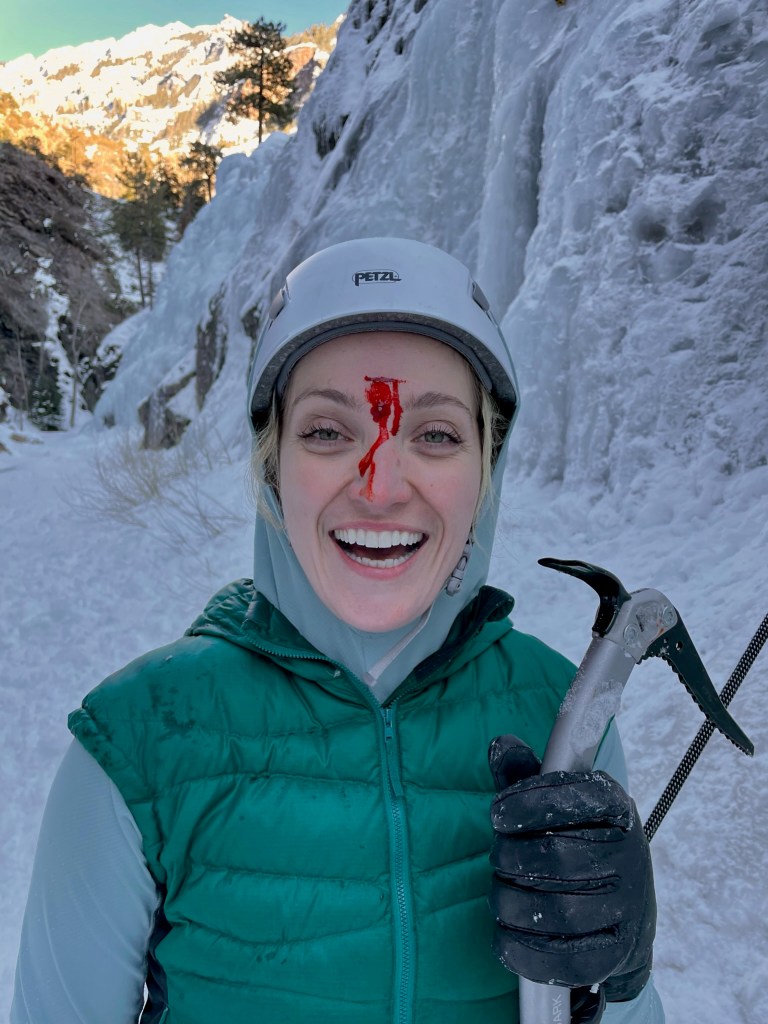
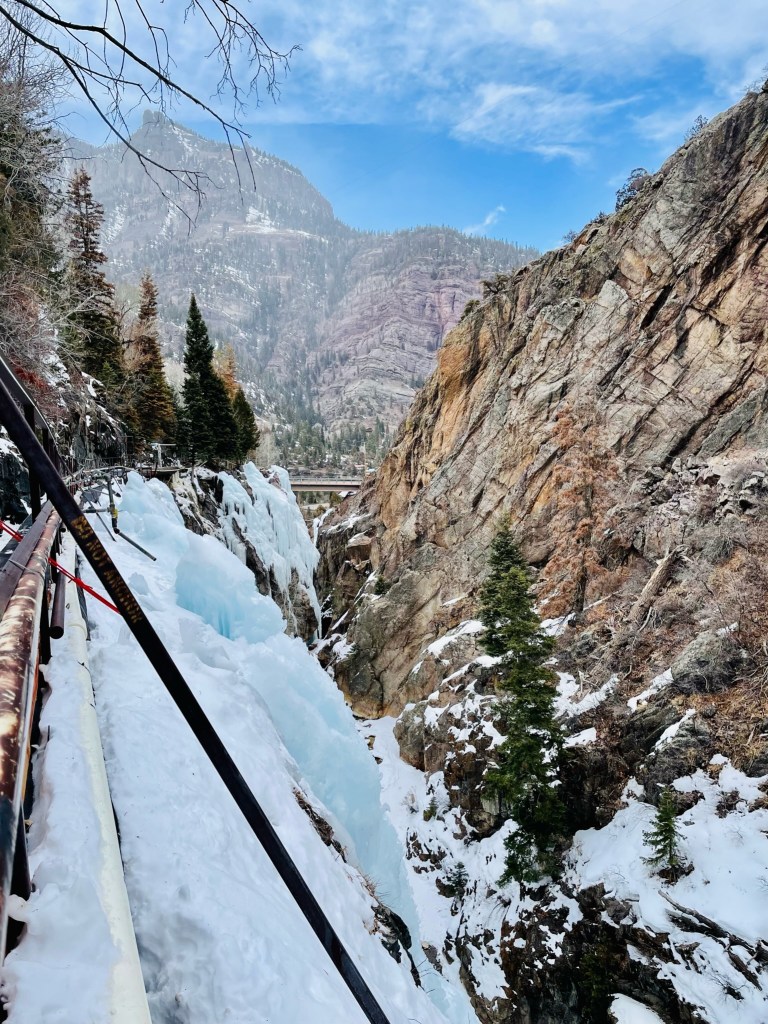
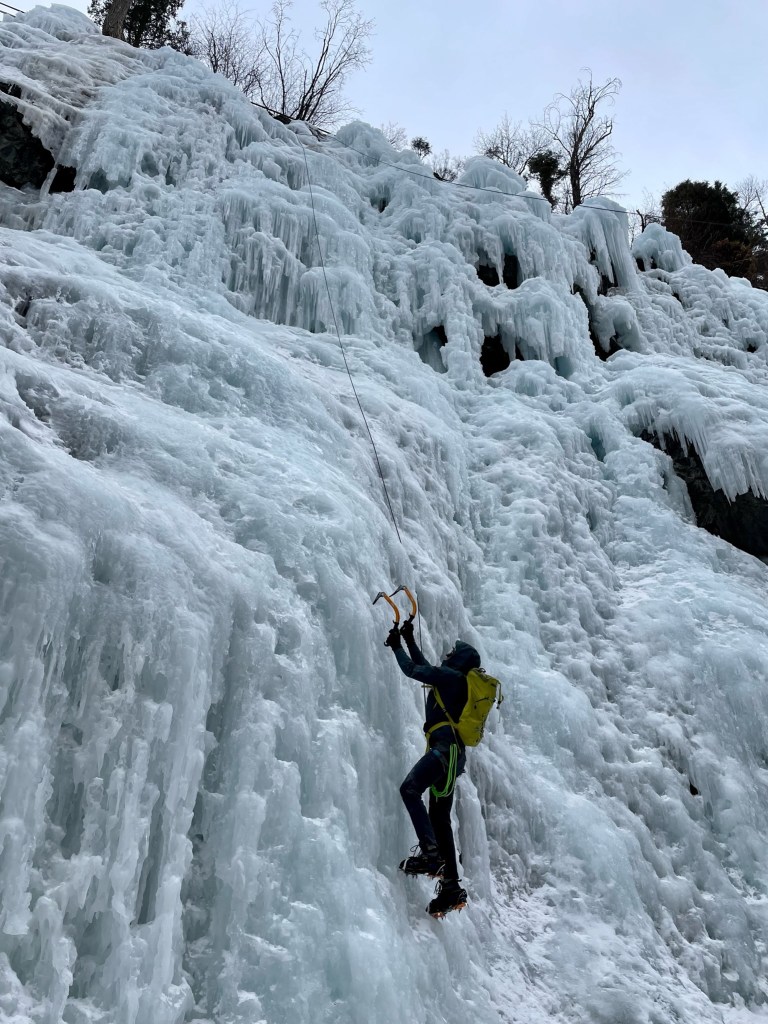
Having lived and played on the western slope of Colorado I knew Ouray would be a good spot to ice climb. There’s an entire canyon next to town where ice is farmed, look it up here… https://ourayicepark.com/ Found out while we were there that Sarah’s uncle’s brother is the one who shared his water rights to make it possible! This was Sarah’s first time ice climbing and a good warm up as the vertical nature of the climbing was much steeper than anything we would likely do in the Himalaya. Most memorable moment was Sarah’s first pitch. One ice tool was dropped, so one must continue with only one tool. If that tool gets stuck while removing it, this may happen..

Adze to the face, happy as a clam (eye protection was worn)
Setting up anchors while avoiding the water lines
Ouray ice park
Sarah coming up last pitch of the day
Trying to find some fresh ice

Ouray was the perfect spot to spend some time swinging ice tools and getting used to have sharp things on our feet again. Made even extra special by having good friends Steve and Kari along for the adventure and making sure we got to experience Ouray to the fullest.

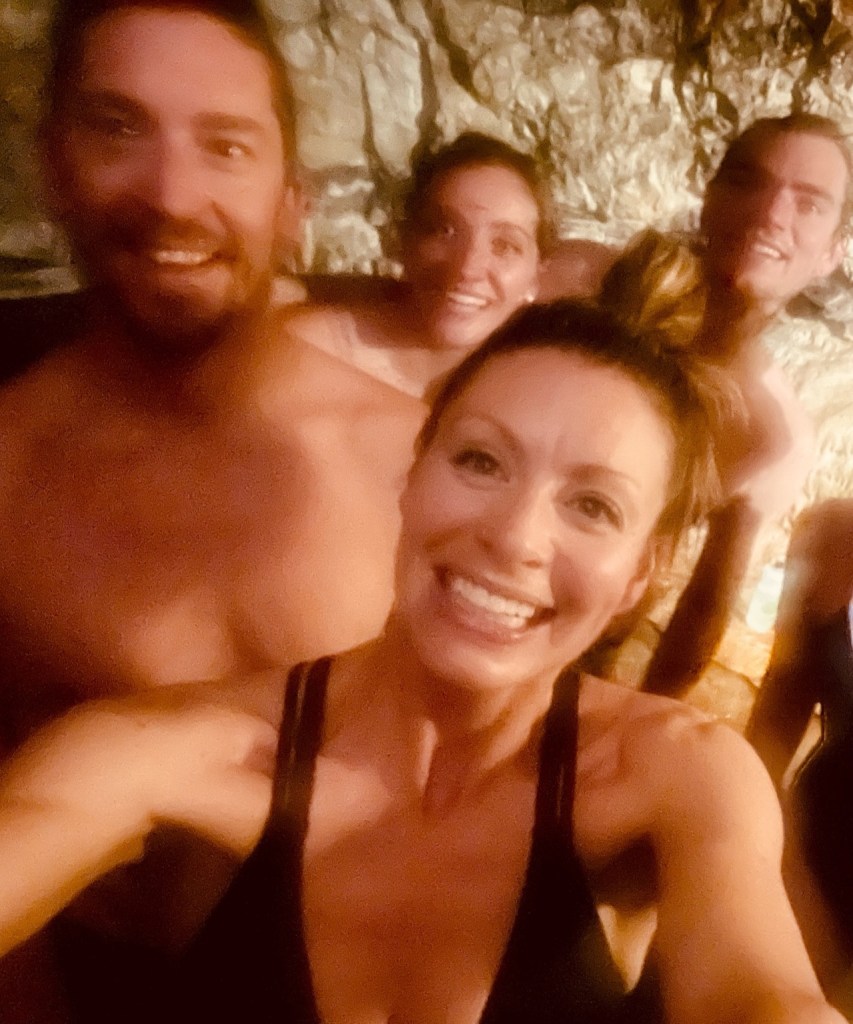
Wiesbaden hot springs and vapor cave

With fresh snow falling and needing to keep up with our cardio training we skinned and skied a couple laps at Powderhorn ski resort before Sarah had to fly back.

Fresh CO powder 👌

Trip was finished up by getting to catch up with as much of the Grand Junction family as possible. Good to see all of you fine folks and the adorable little people you have been making. So happy to finally have some relief from the pandemic to see friends.

Himalayas or Bust

If you think adventure is dangerous, try routine – it’s lethal.” – Paulo Coelho

This was a quote Matt Fioretti and long time Himalayan guide shared the other day while we were out on an overnight shakedown in the snow. Sarah and myself drove out to Mazama, WA to spend some time with 2 of our collaborators on this tour and one of the masterminds behind this journey (mentioned above). It was a good opportunity to test our sleep system down into the single digits and to discuss some particulars of the adventures that lay ahead.

One of many lessons that we learned on just a few days out, is that time and speed are on the back burner while in the high mountains. We need to pace ourselves, and from there, pace ourselves some more. The other take away was less comforting. This trip is only 5 weeks away and is barreling down the mountain like an avalanche towards us! Being gone for possibly 130 days in a remote region with everything we need on our backs, and in the resupplies, means a lot of attention to detail. It’s go time.

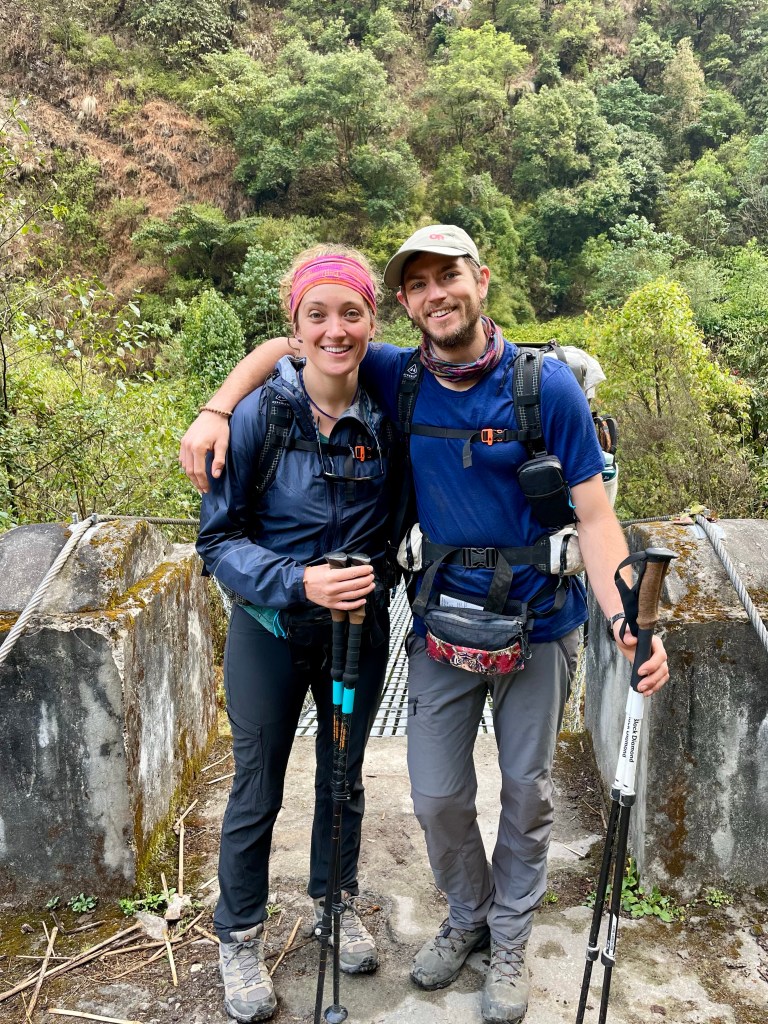
Tanner, Matt, Sarah, Tom