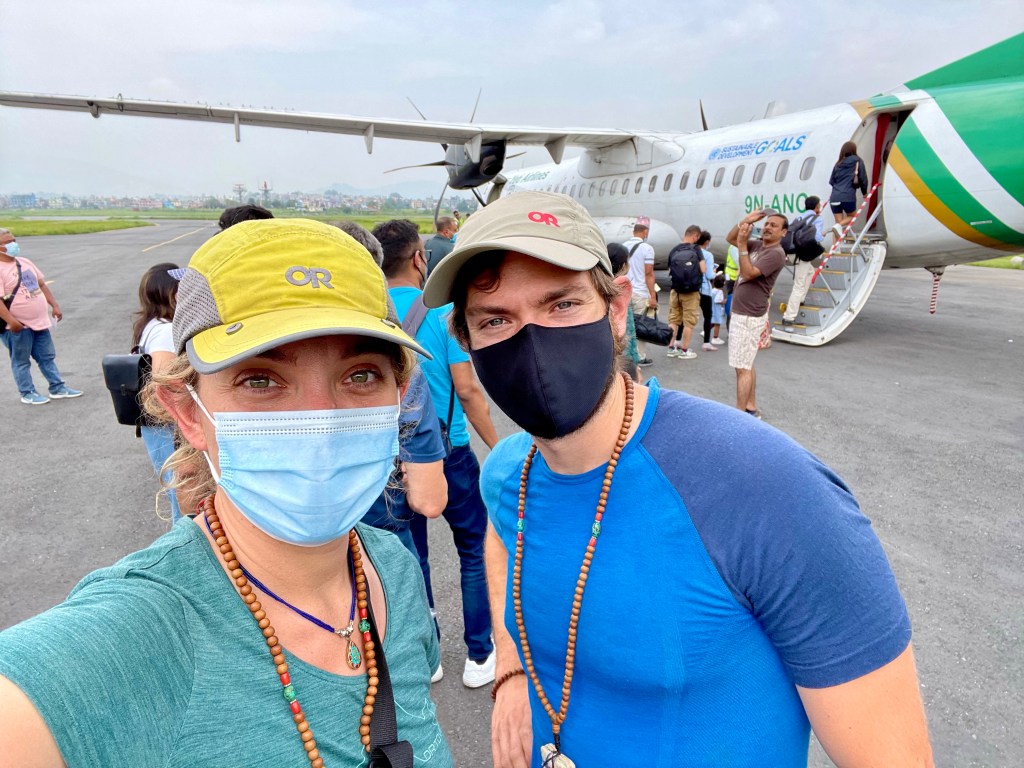
The first part of our Nepal experience was in the far east and now we were off to explore the far west. We were back at the far too familiar Kathmandu airport and made our way through security without any hiccups or snafus this time.
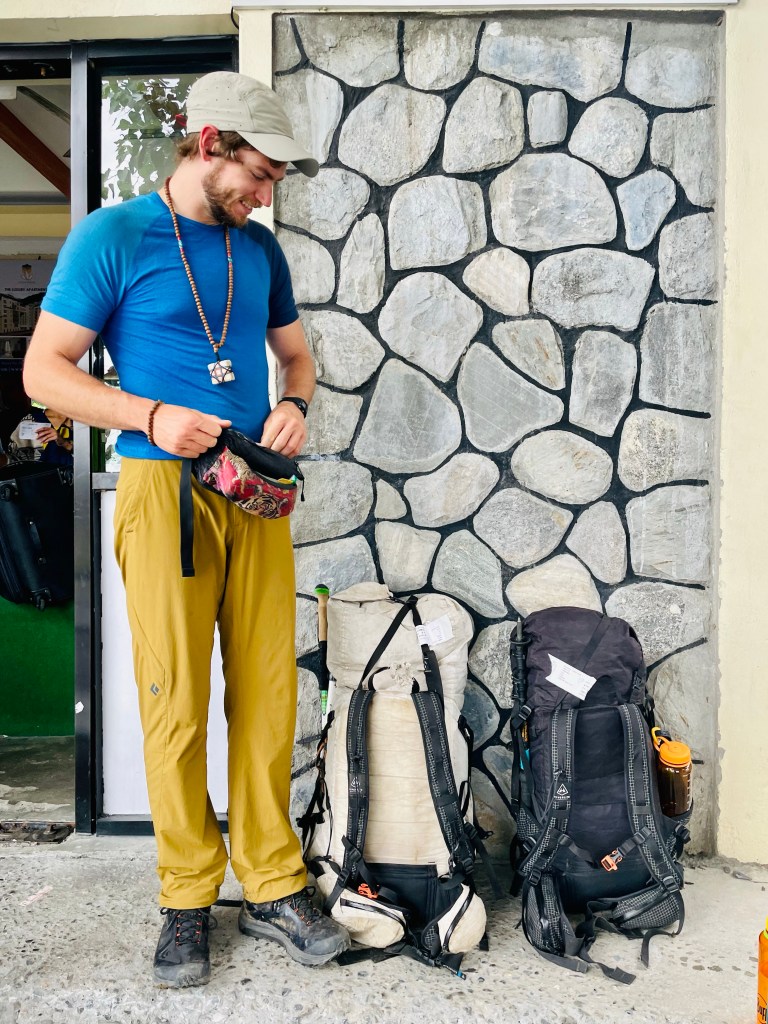
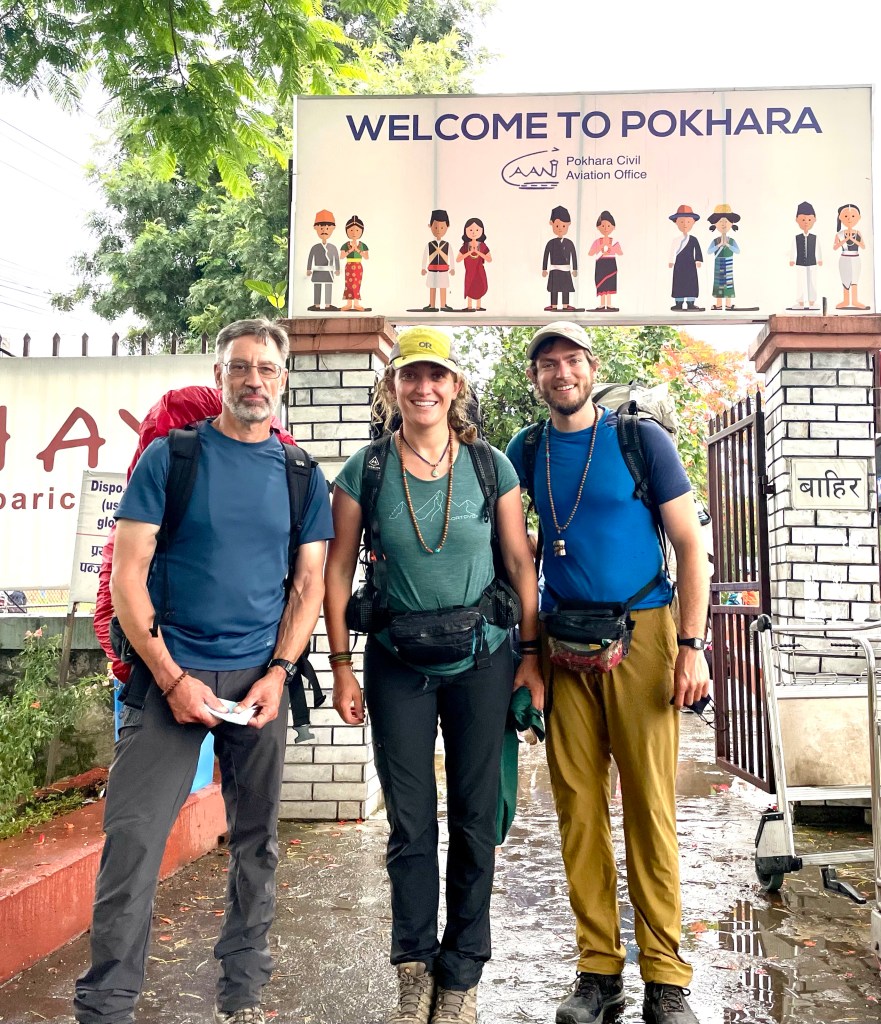
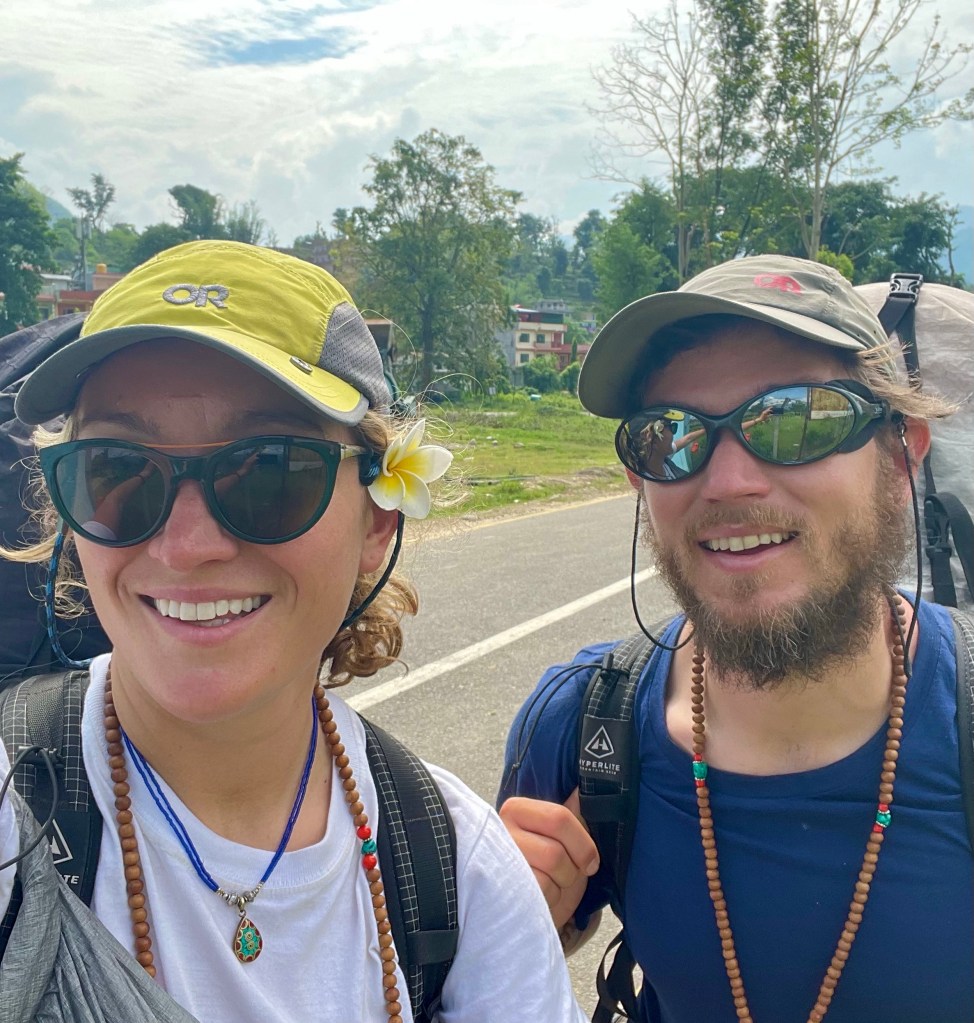
All aboard and off to PokharaHappy to see our Hyperlites. These packs handled the abuses of the trail and travel very well.And then there were 3…
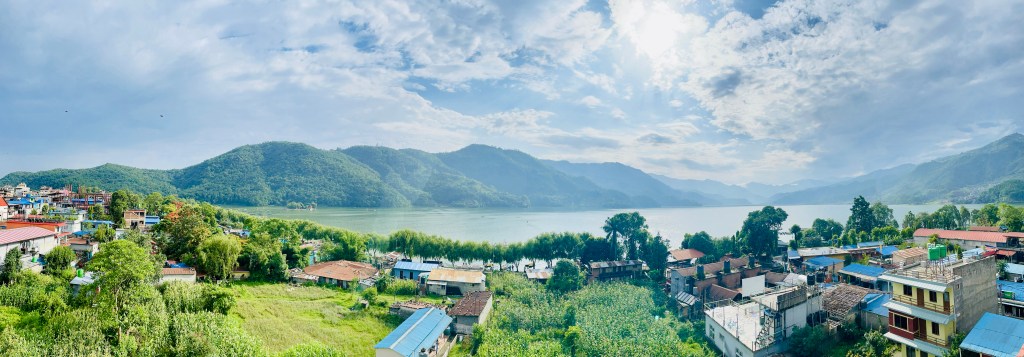
We had just one night in Pokhara and would have happily stayed longer if our itinerary allowed. The town of Pokhara is a frequent vacation getaway with views of Phewa lake and the Annapurna range. Being the gateway to the Annapurna circuit, which is one of the most popular treks in the Himalaya, it has a lot of nice restaurants, shopping, and tourist activities. Many locals utilize it as a quick getaway to escape the big city of Kathmandu. It is also a popular location for extreme sports such as bungee jumping and rafting.
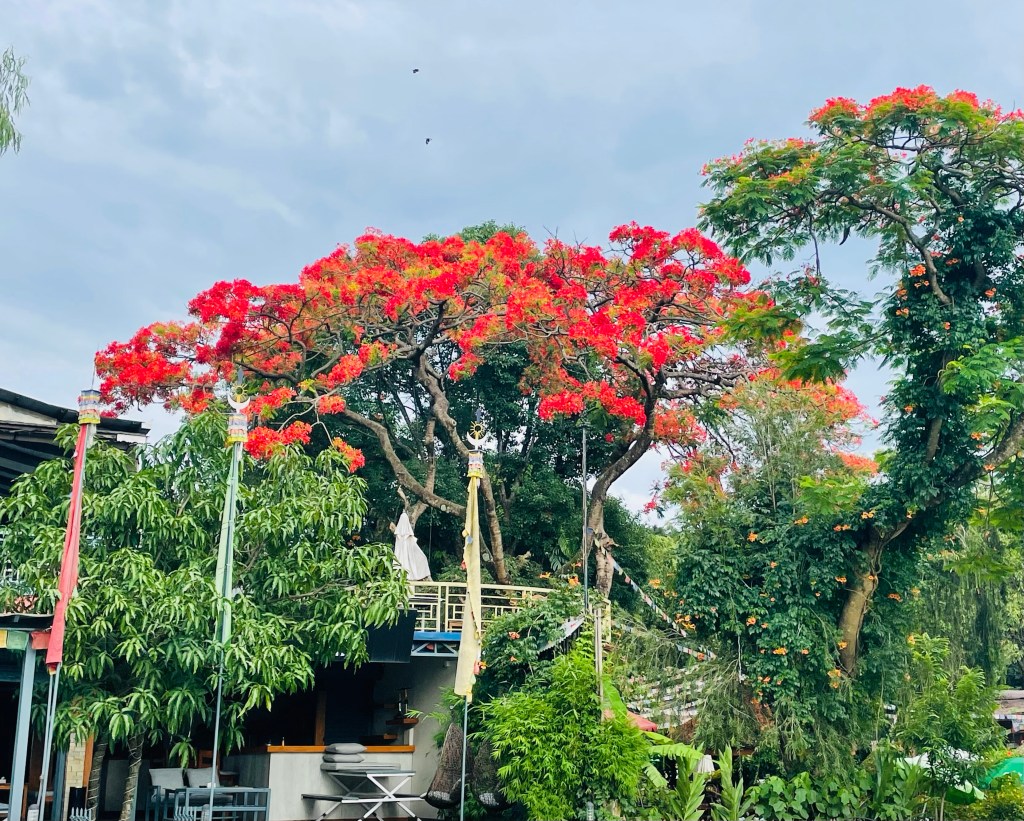
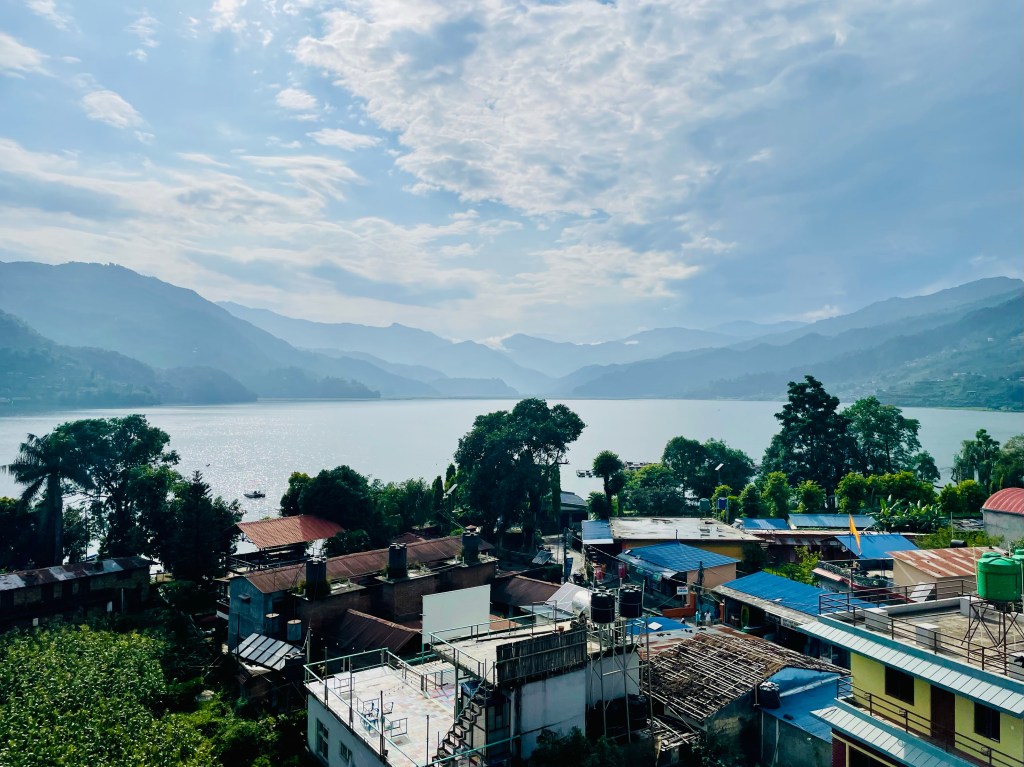
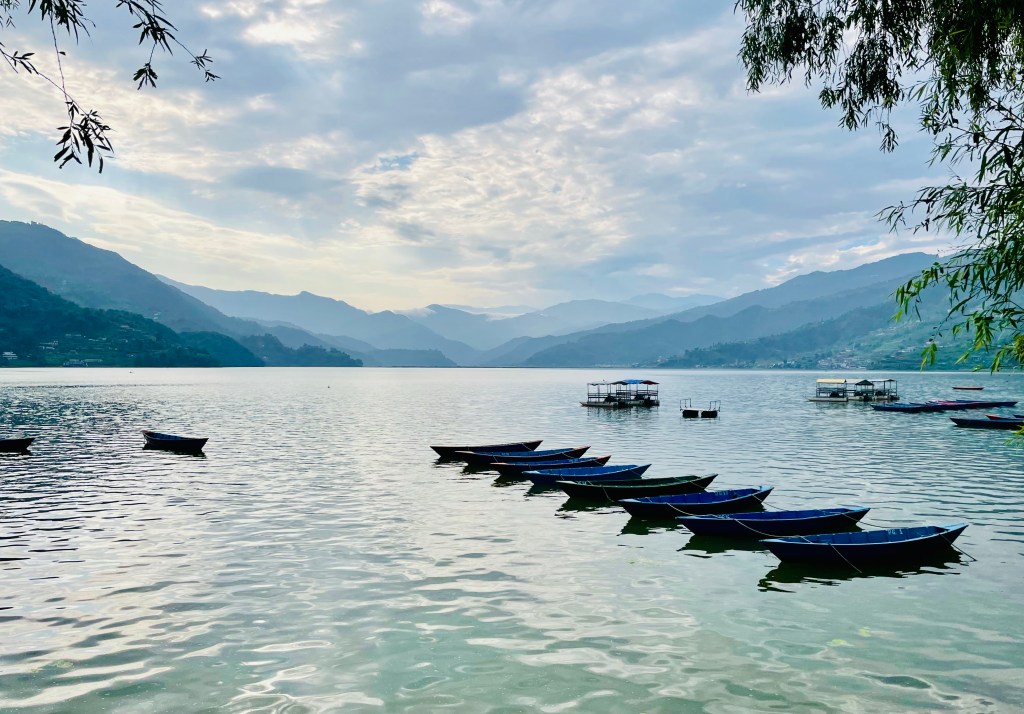
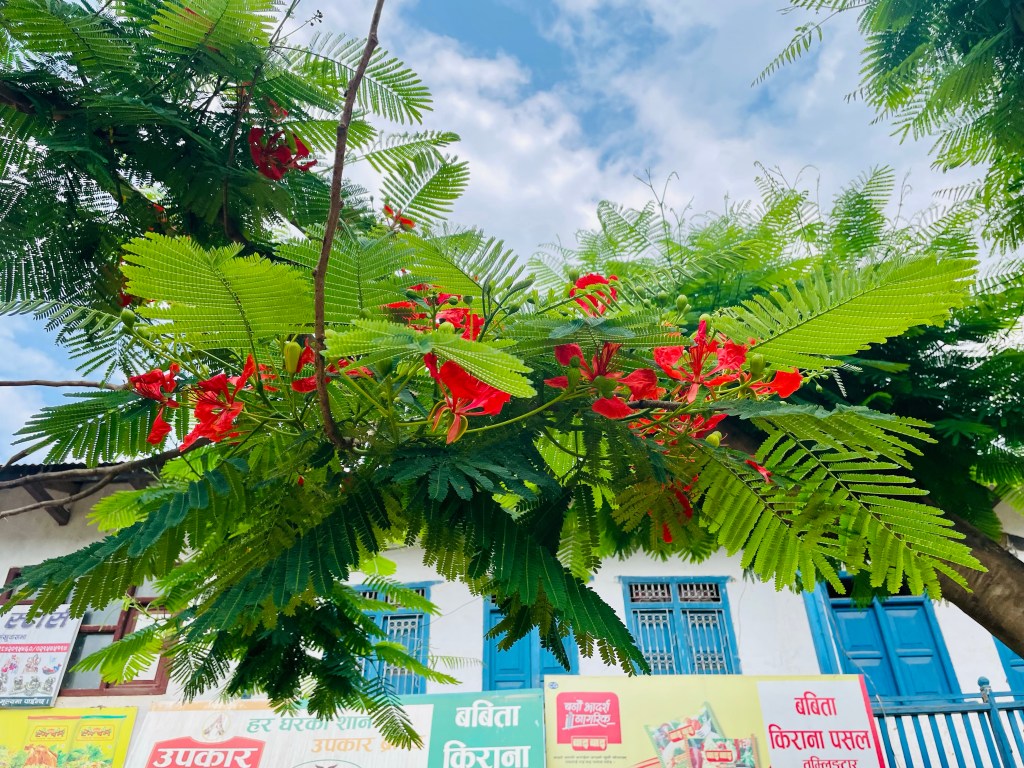
Gulmohar tree also known as a royal poinciana tree. Wow!Phewa LakeRooftop views from the hotel Colorful wood doongas lined the shores.
The doongas are used to visit sites across the lake such as lodges and the World Peace Pagoda. There is an island in the middle of the lake, comprised of the Bahari Temple, which is often visited by devotees of the Hindu Goddess Durga.
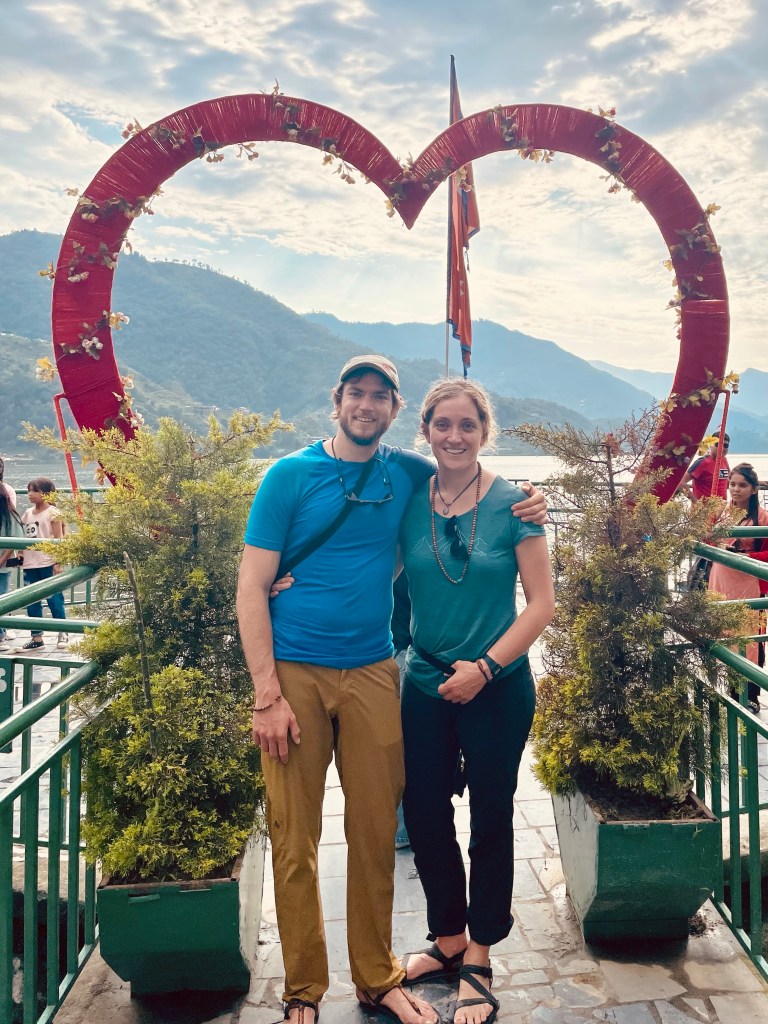
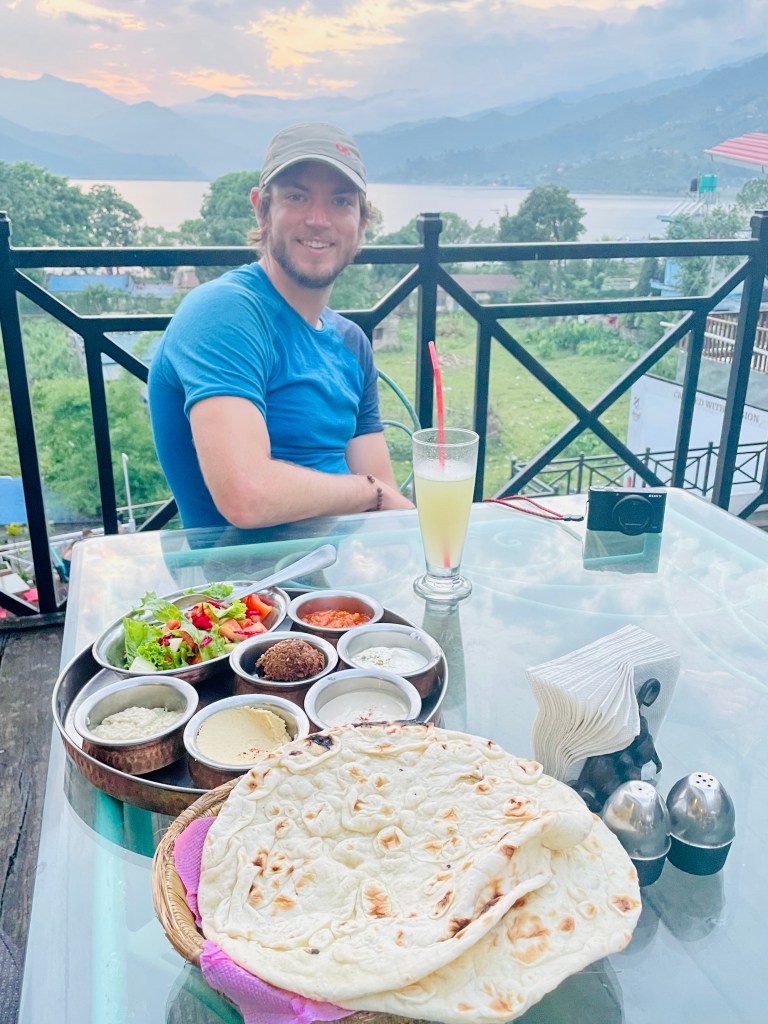
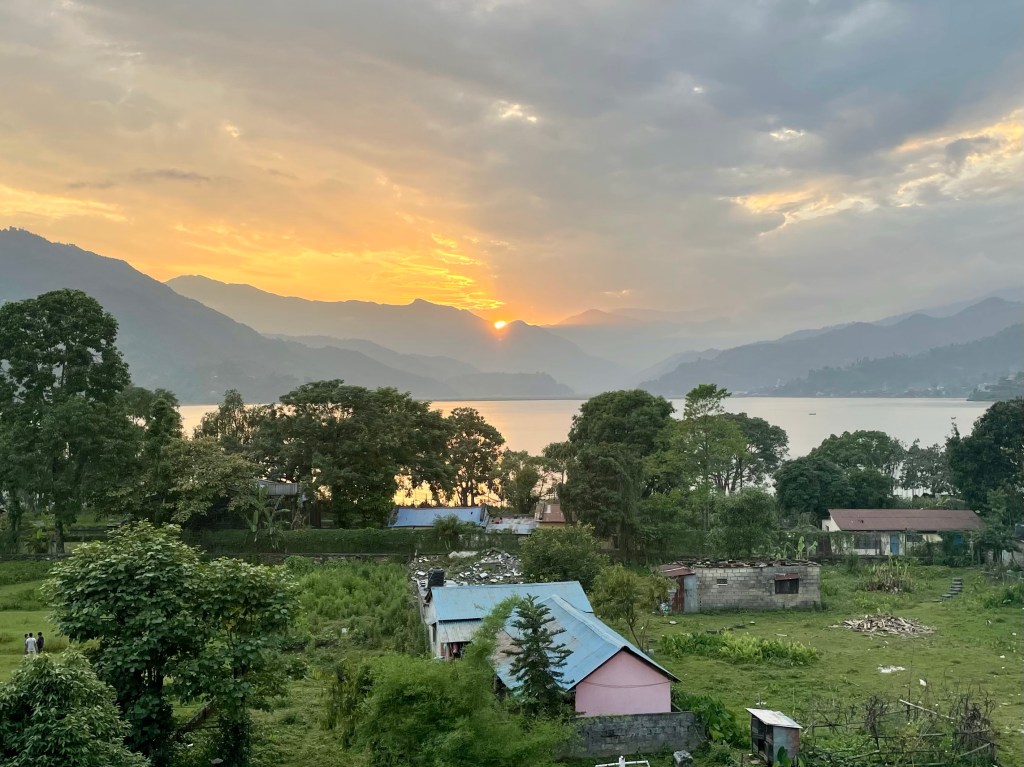
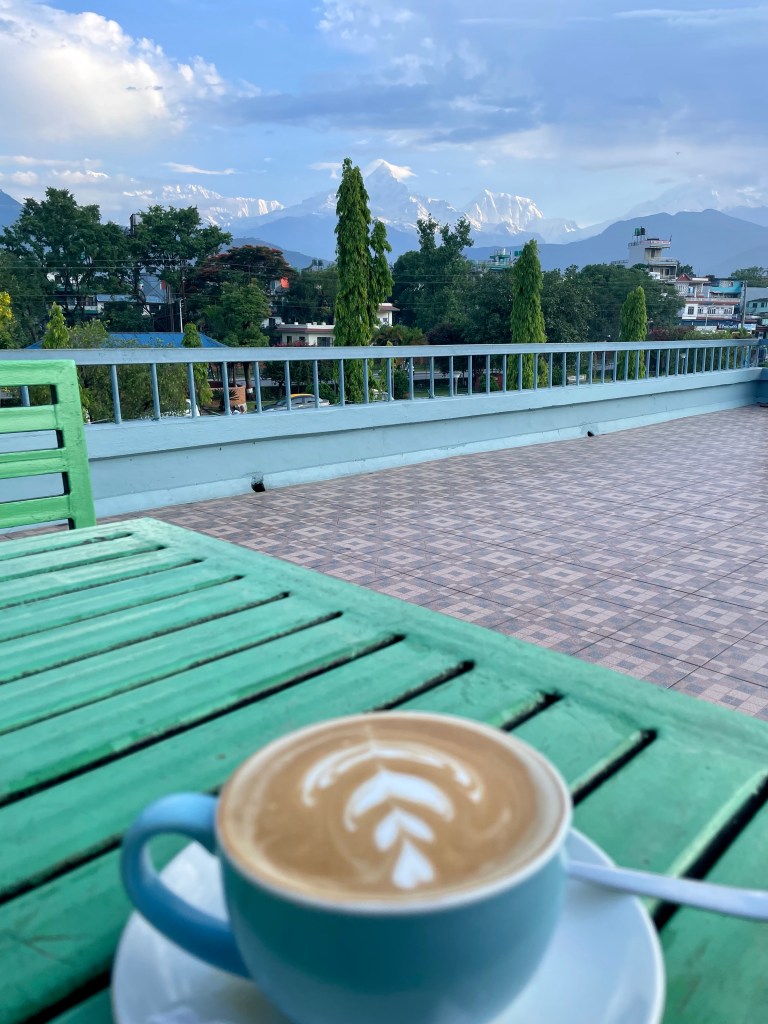
One love One heart…Middle eastern cuisine with a lake sunsetCoffee and Fishtail Peak from the airport
We had an early start leaving Pokhara in order to catch our flight to Jomsom. The prominent Annapurna range came into view as the clouds cleared. We enjoyed cappuccinos on the rooftop of the airport and watched parasail tours take off one after another.
Mike waving to us from the rear
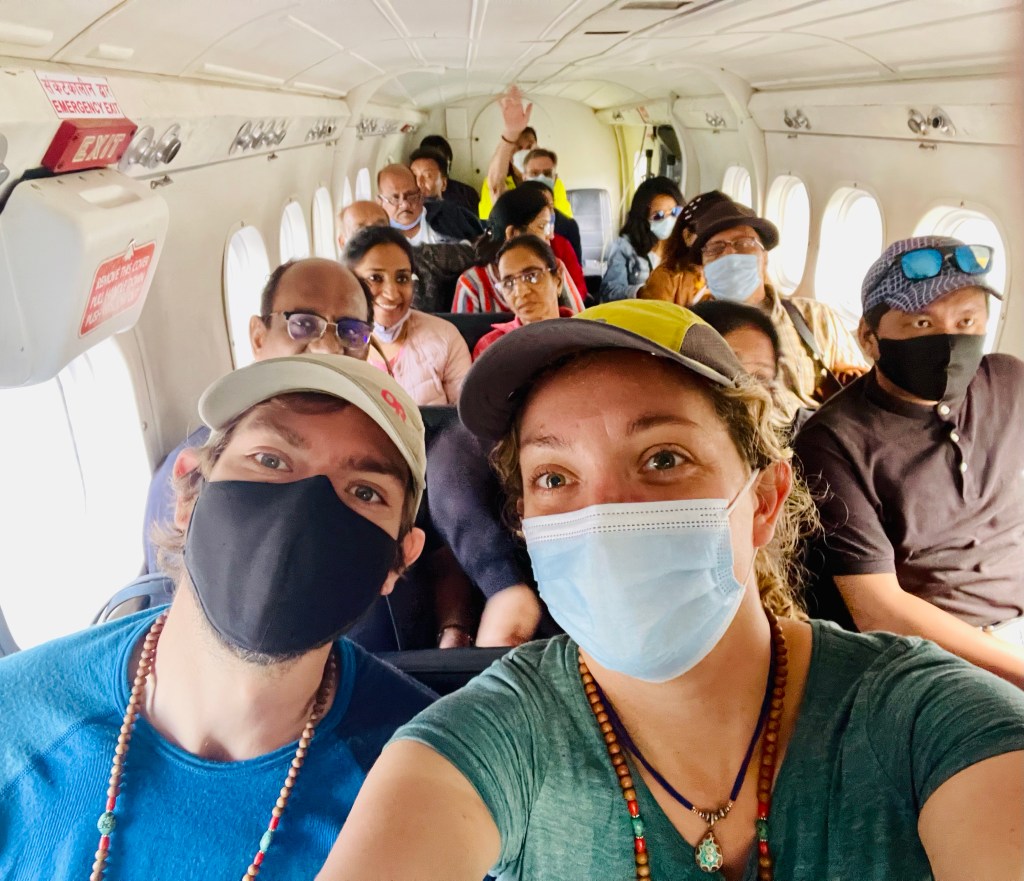
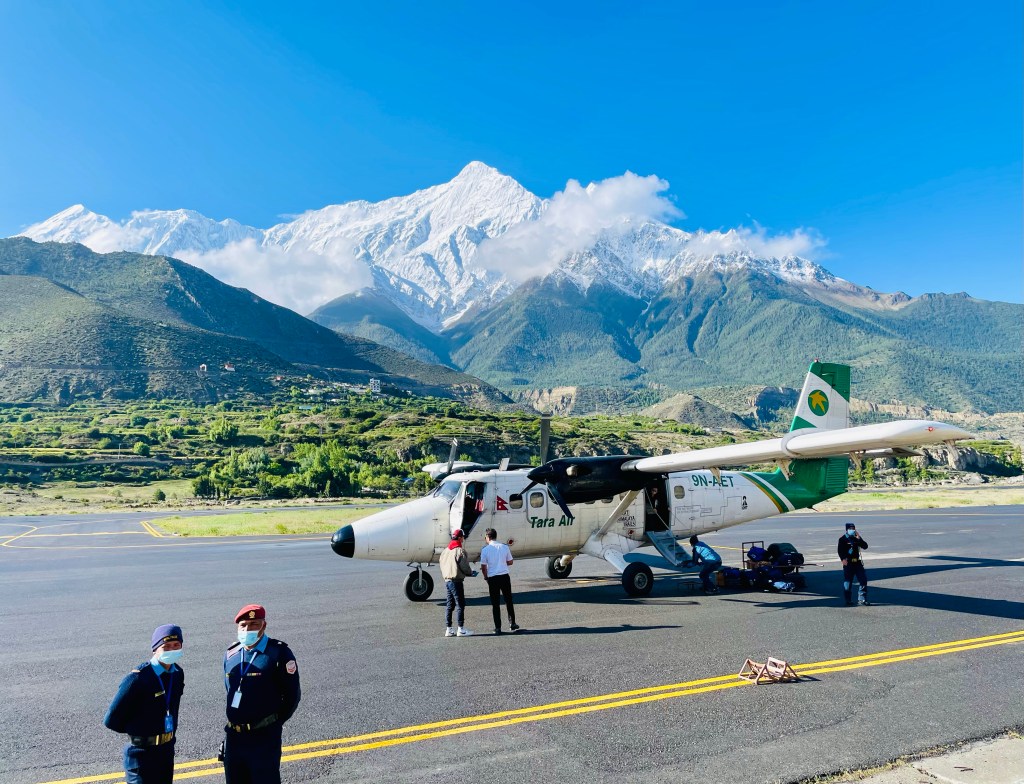
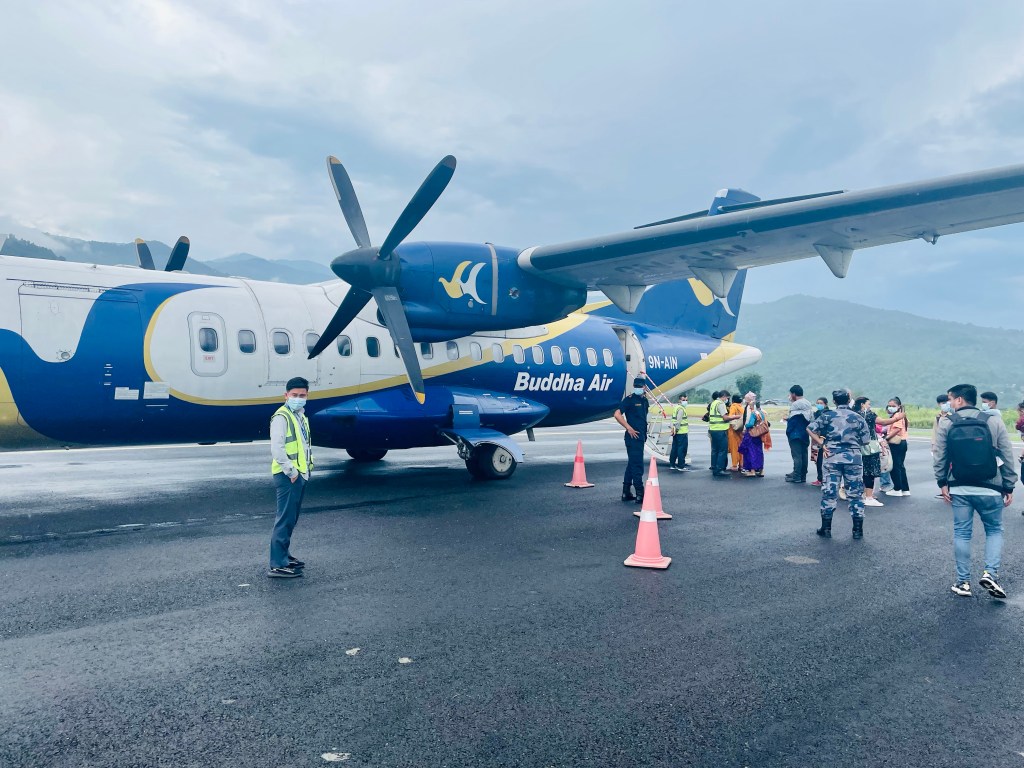
We chose to catch the earliest flight because clouds and wind often delay and shut down flights later in the day. The flight to Jomsom was on a small Twin Otter plane that held 19 passengers, 2 pilots and 1 flight attendant. It was a little claustrophobic as we squeezed into the first row right behind the cockpit. The 25 minute flight was beautiful as we watched the mountains grow around us.
The Twin Otter plane with Nilgriri in the background
Later on the trail we learned the tragic news that 22 people lost their lives flying on the same exact plane and flight path. According to reports the plane was in the clouds which obscured visibility of the narrow mountain route. After talking with Gombu, we learned that plane crashes are more common in Nepal due to challenging routes and the use of older planes. We all decided that we would catch a jeep back instead of fly once reaching Gamgadhi.
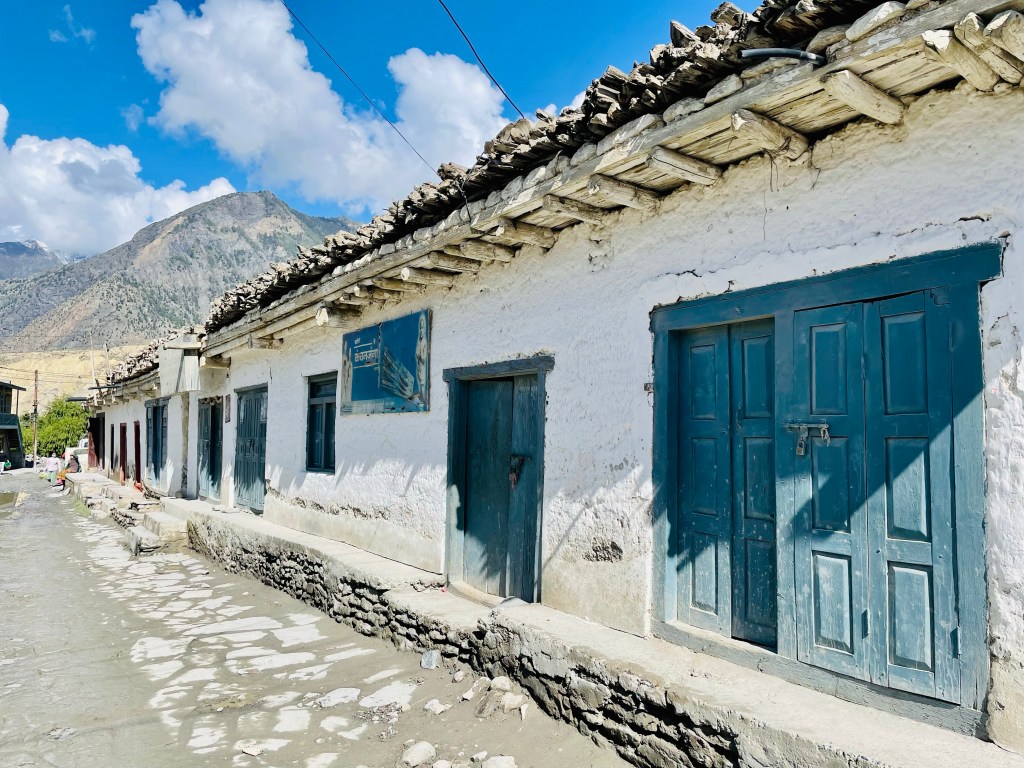
Walking the streets of Jomsom
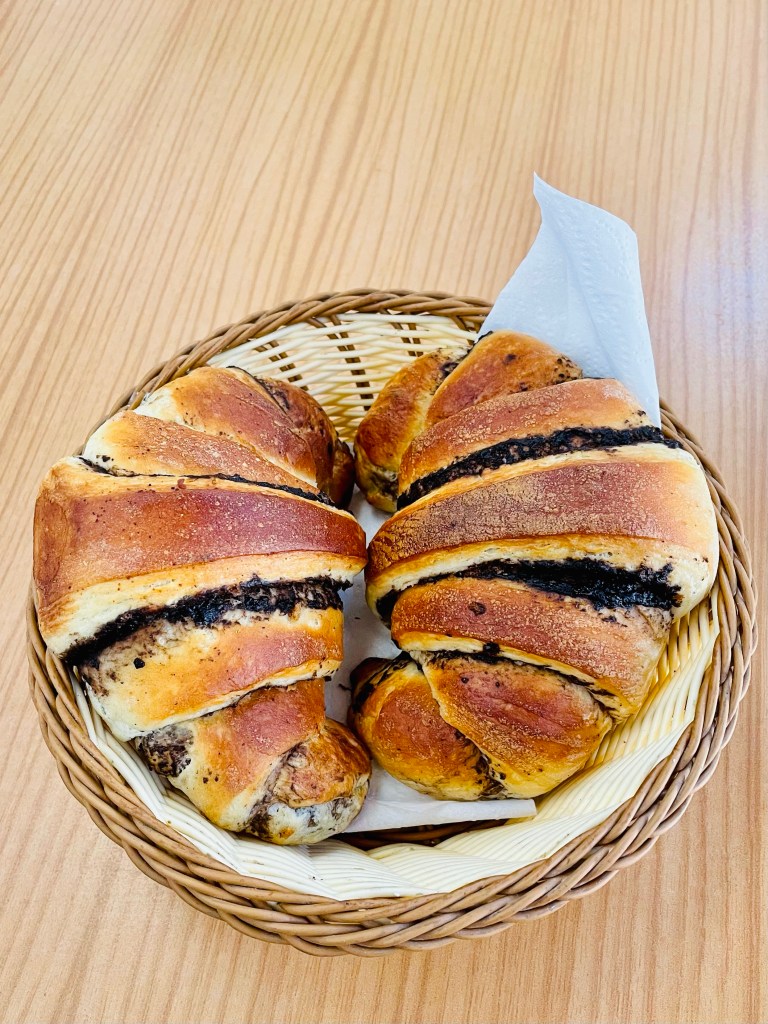
We stopped at a bakery in Jomsom that tempted us in with its appetizing smells billowing out to the street. We happily polished off warm chocolate croissants fresh from the oven.
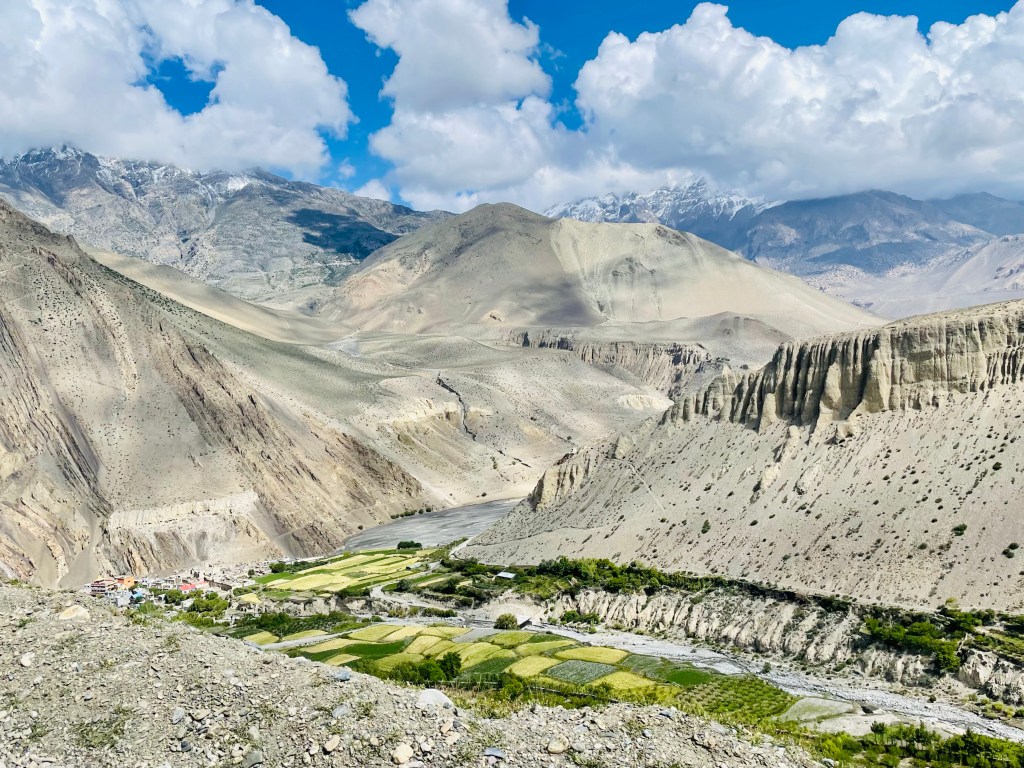
Many of the roofs had wood stacked around the perimeter. Some said it was to dry the wood, others said it just aesthetics.View of Kagbeni from the jeep ride
Mike, Gombu, and the two of us got into a jeep and proceeded to Muktinath. Muktinath is located in the Mustang district at the base of Thorong La mountain pass. The arid mountains and hoodoos were a stark contrast from the lush greenery of the east. We were excited to get back on the GHT route and start hiking!
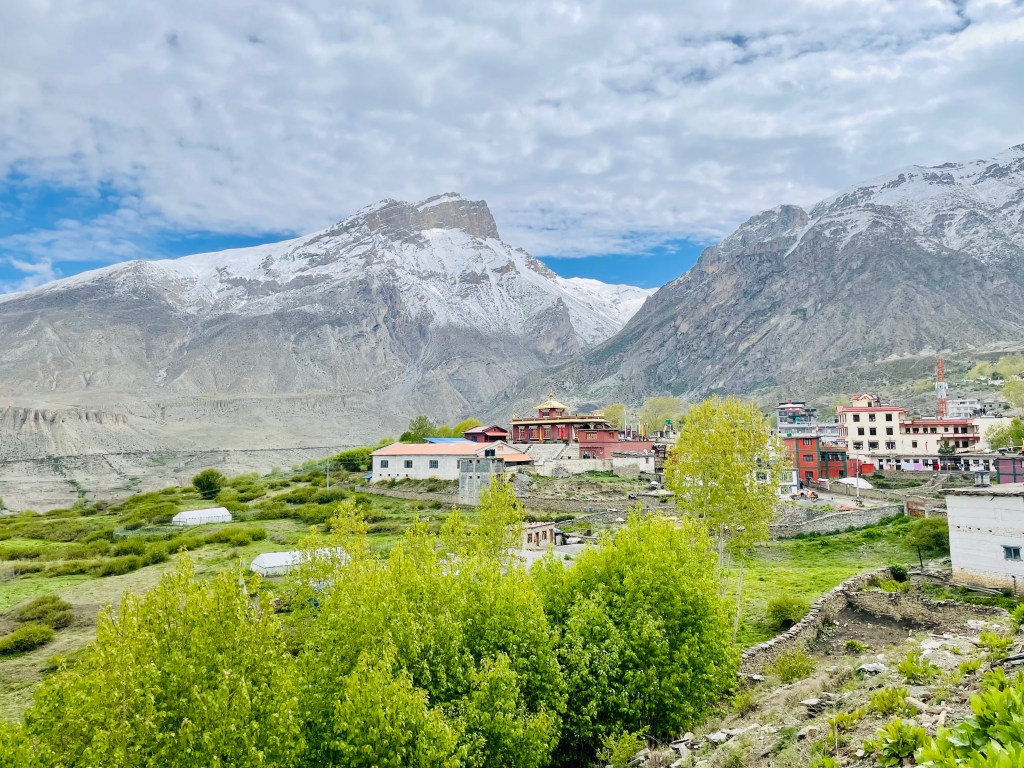
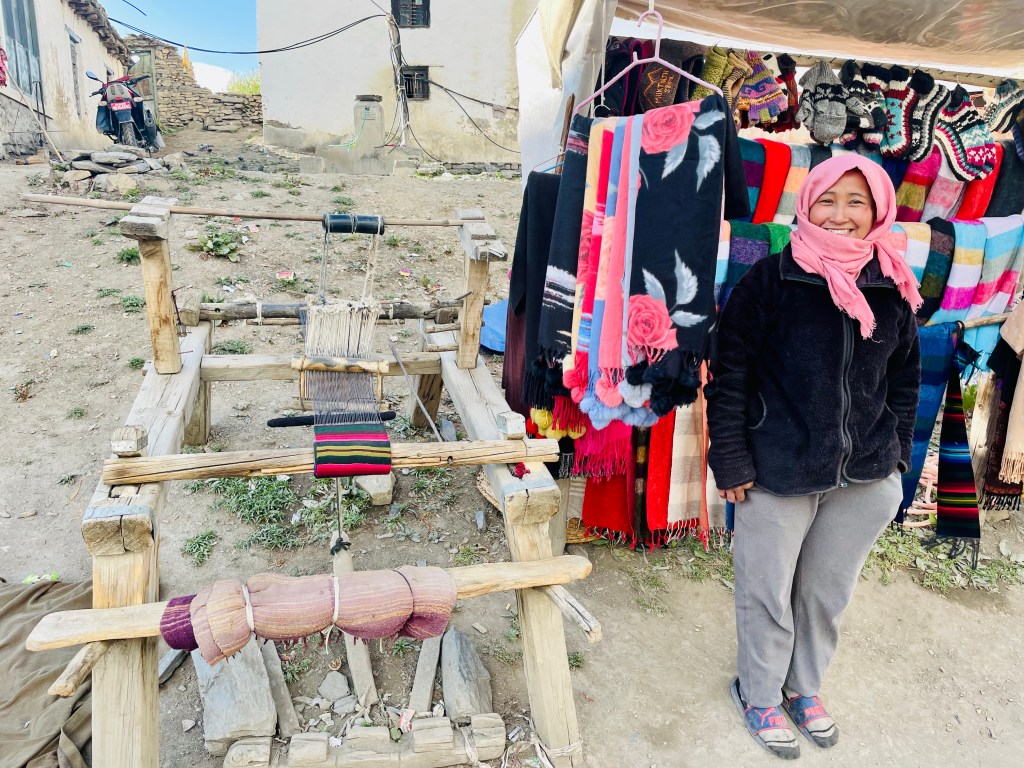
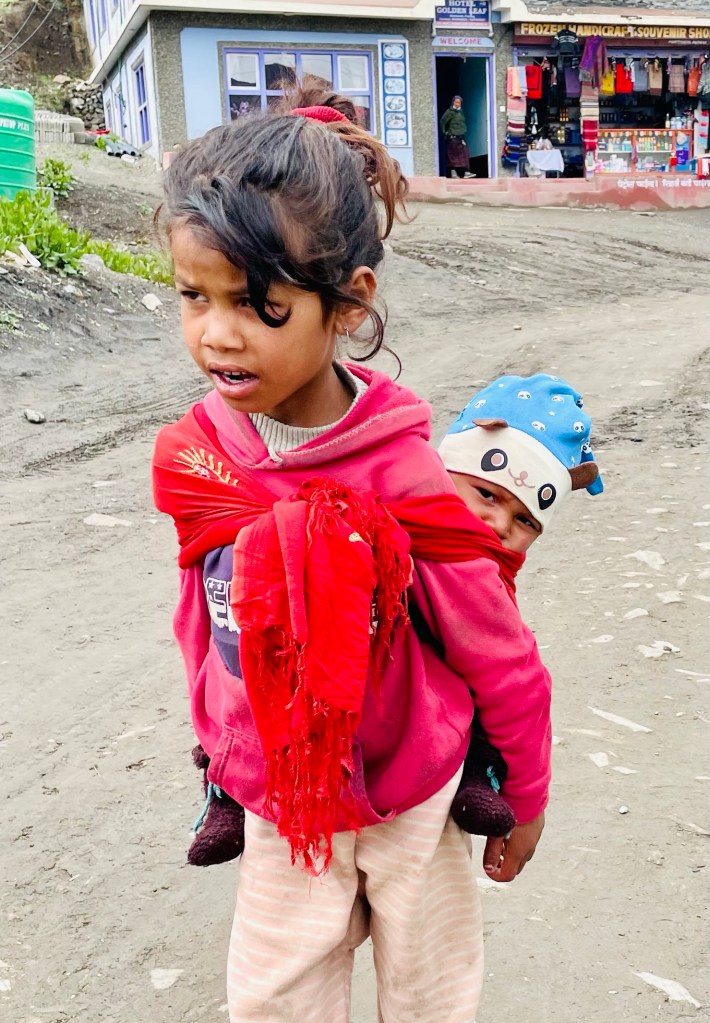
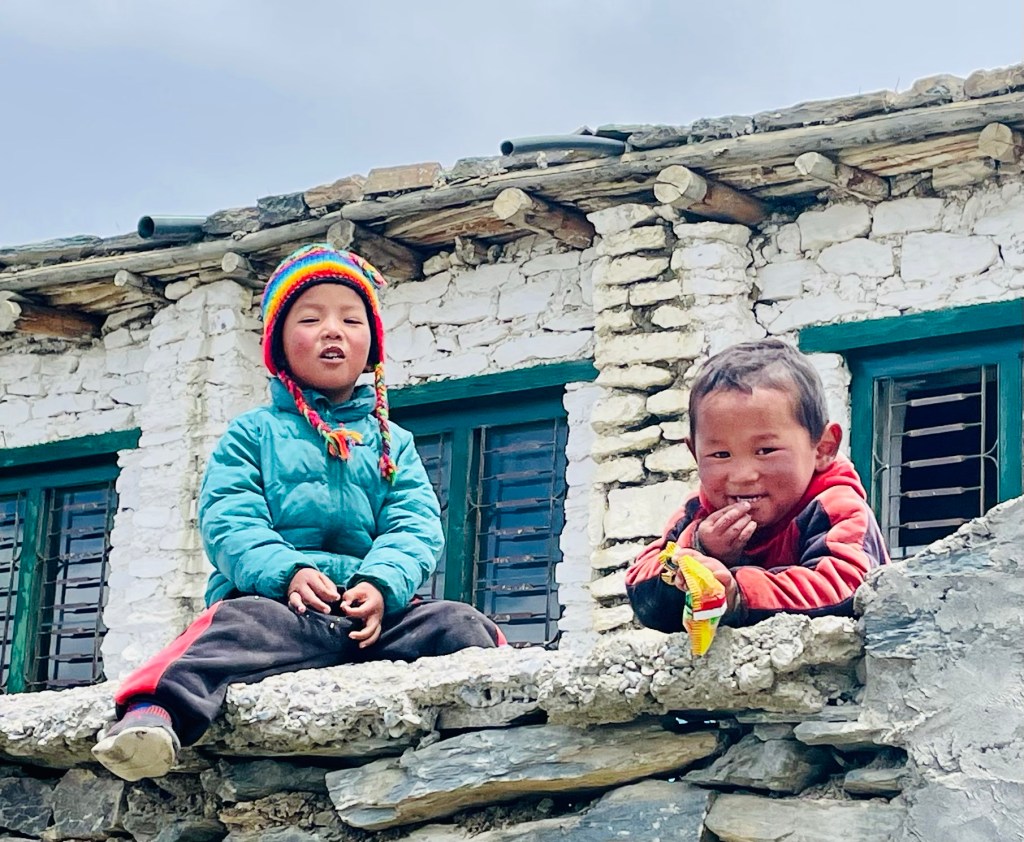
Muktinath Hand woven scarves made from yak & sheep wool. A common sighting of pure cuteness and early childhood responsibility Drying out red chilis
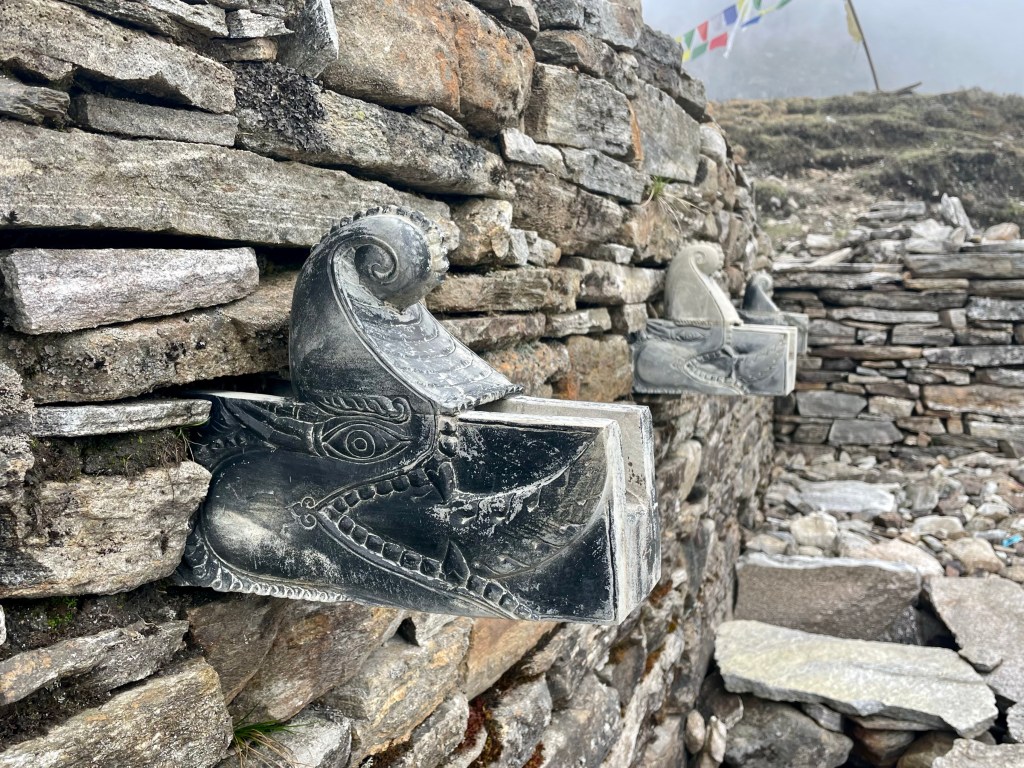
The Muktinath temple is one of the 8 sacred Hindu sites also known as Svayam Vyakta Ksetras. It is one of the earliest holy places of worship for Lord Vishnu. We walked up the many steps joined by pilgrims who had traveled far and spent nearly all their money just to visit this temple. The temple has an auspicious 108 golden, bull shaped, water spouts. The water is used for ablutions to purify one of sins.
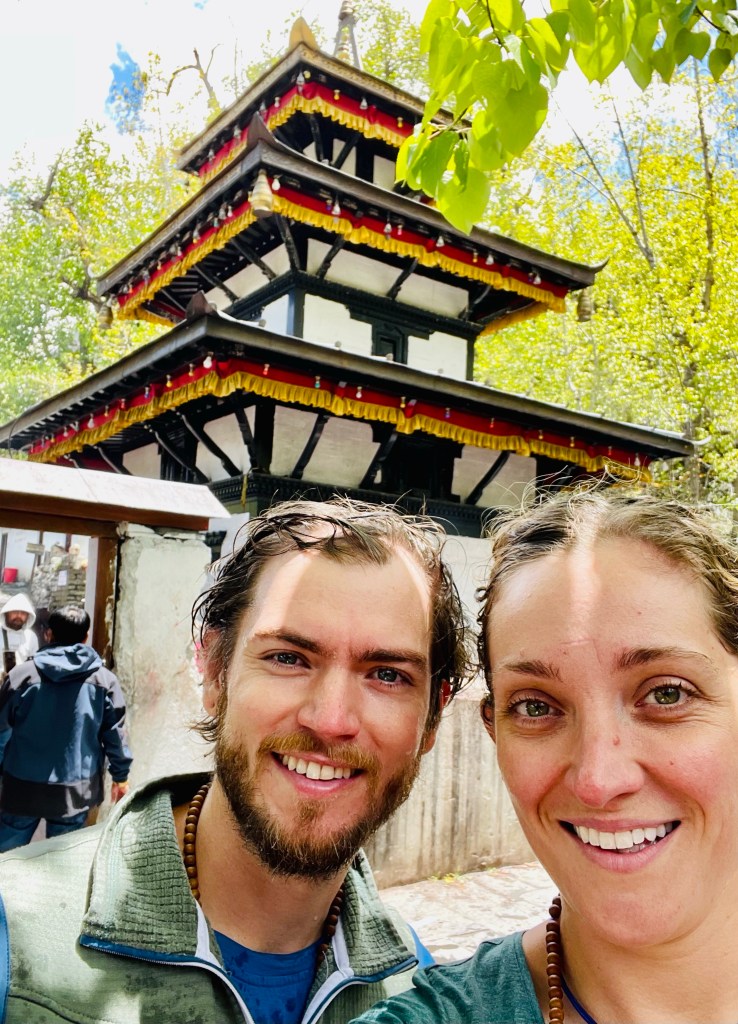
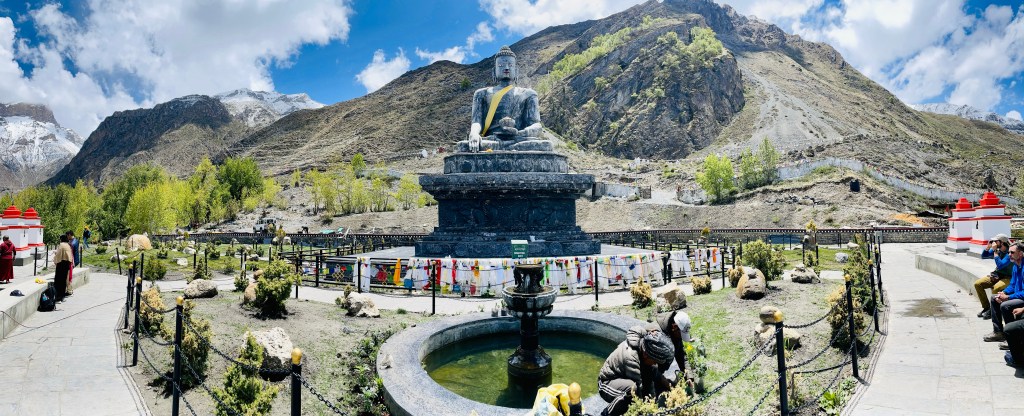
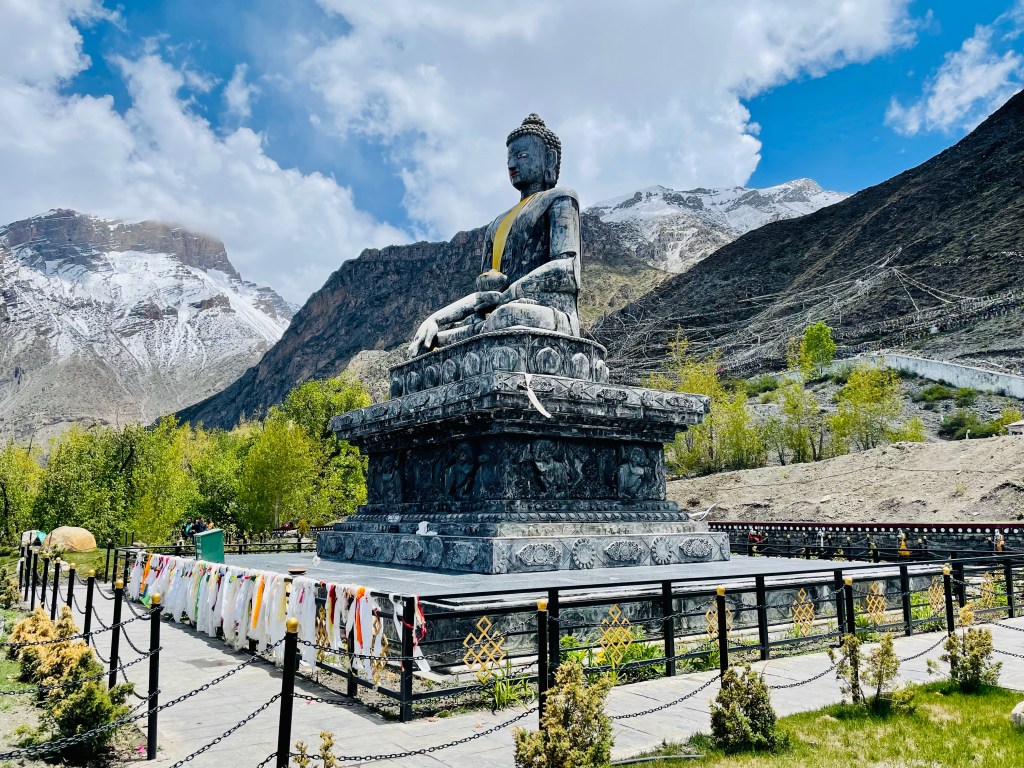
Sin free smilesLarge stone Buddha statue at Muktinath
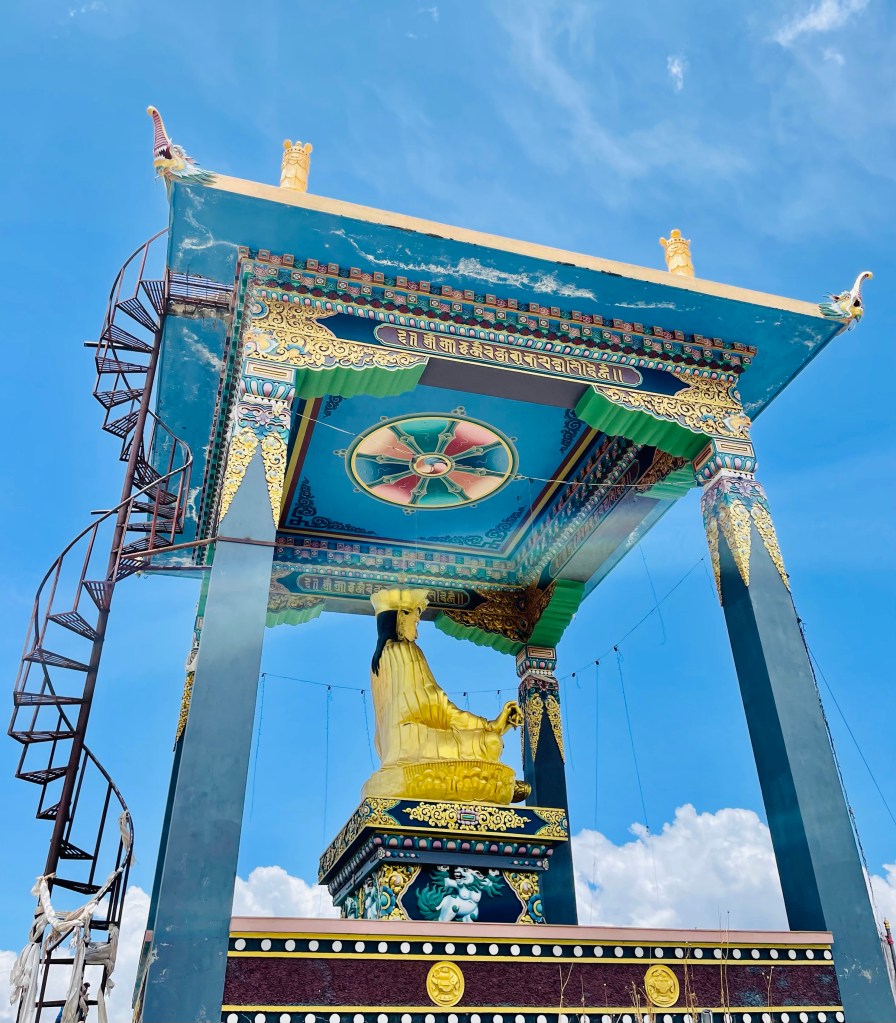
Muktinath is a shared holy site for Hindus and Buddhists. Buddhists visit this site to worship the grounds where Guru Rinpoche, the second Buddha, had stopped to pray during his travel from India to Tibet. There is still a site where his footsteps had been found after he danced with the Dakinis who are known as the manifestation of energy in the form of dancing goddesses. Next to the Hindu temple is the largest stone Buddha statue in Nepal and an ancient monastery. Beyond that is a giant statue of Lord Vishnu.
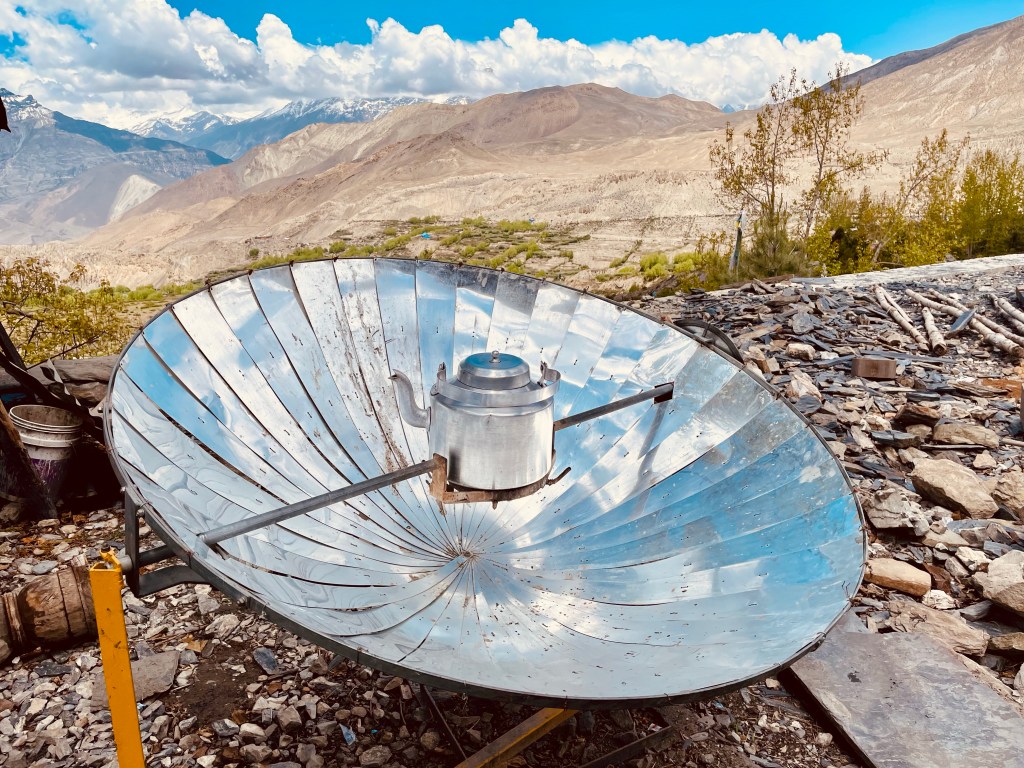
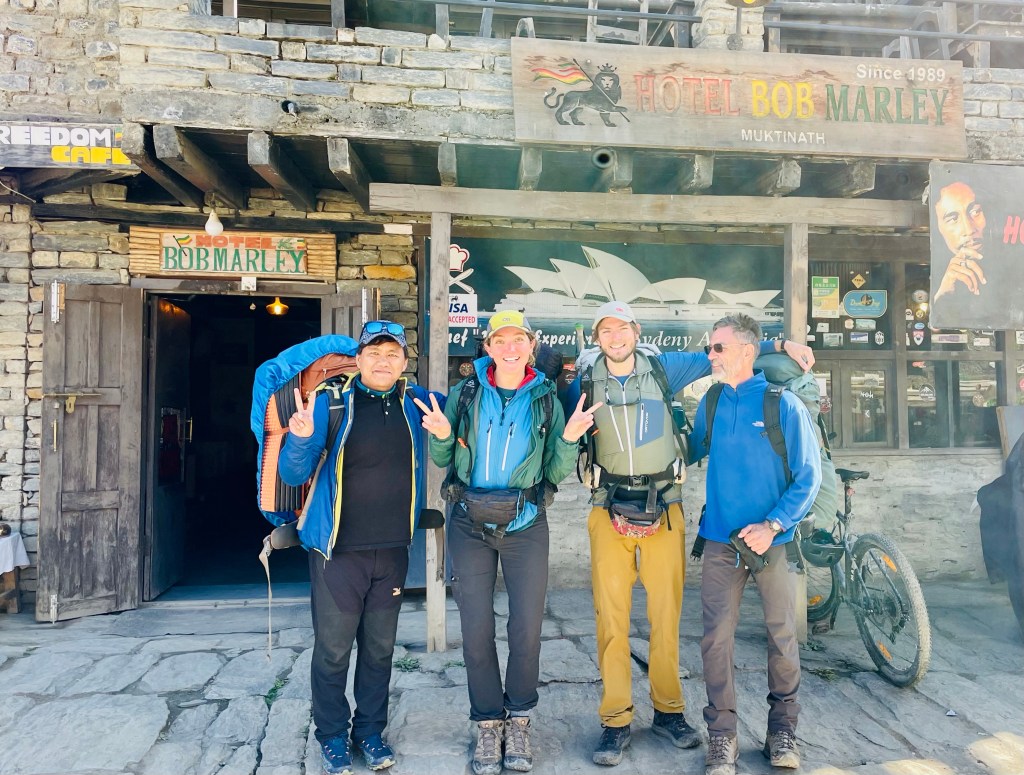
Lord VishnuNamaste Solar powered water heaterHotel Bob Marley
After a night at the reggae themed Hotel Bob Marley, the four of us packed up and got ready to make our way to Kagbeni. A short 5 hour hike down was in order to warm up our legs after 10 days in Kathmandu. We were giddy to be back on the trail at last!
After a wild jeep ride we arrived back in Kathmandu late in the evening. We learned that our friend Singhi Lama, who owns the travel agency doing our permitting, was getting married the following day. Now that we were back Kathmandu he invited us to attend their wedding!
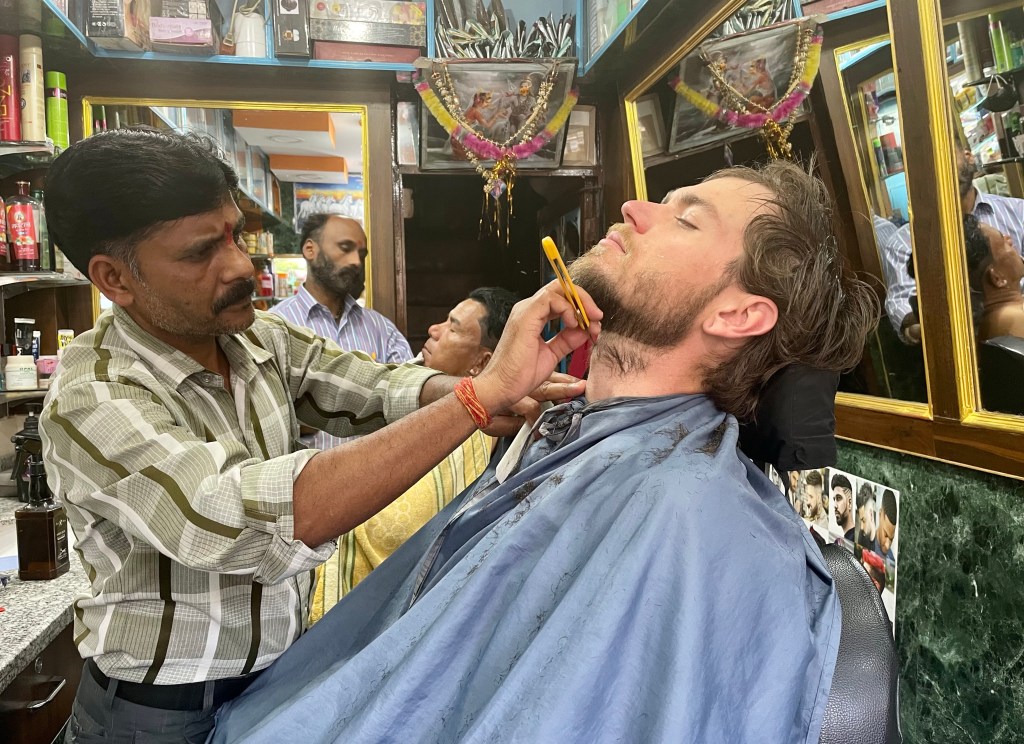
We got straight to work. Tom received a high class prune job from an exceptional Nepali artist. The experience was extravagant with creams, toner, aftershave and a little face slapping. A solid half hour of man pampering turned trail Tom into a presentable and slightly less hairy man.
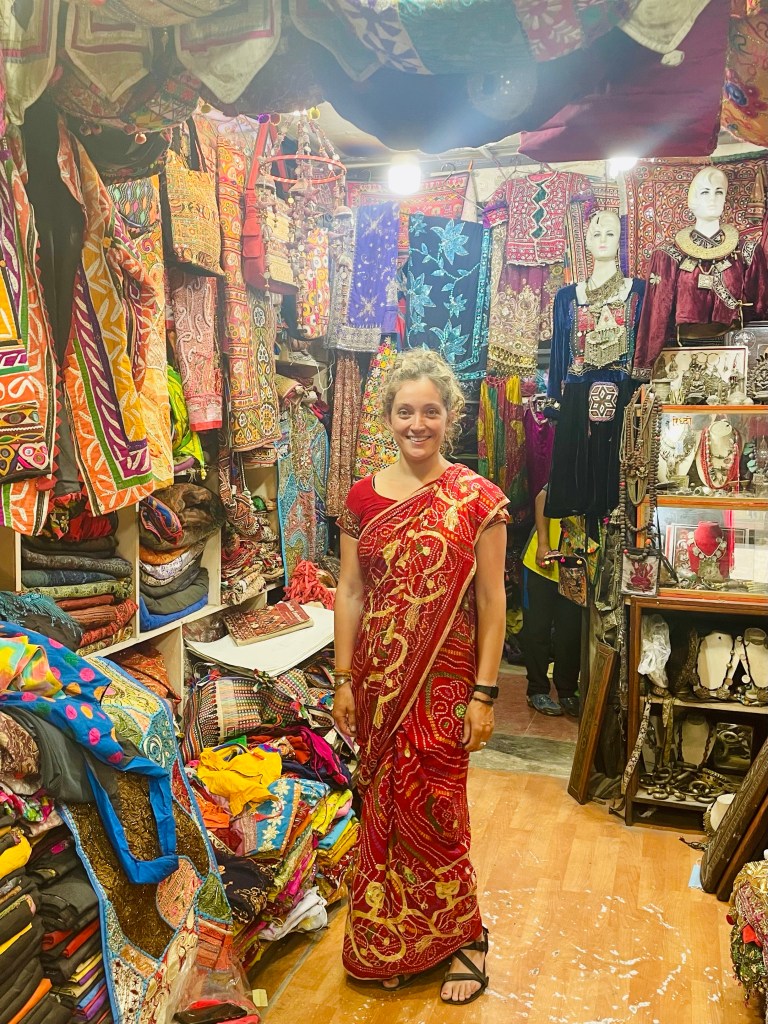
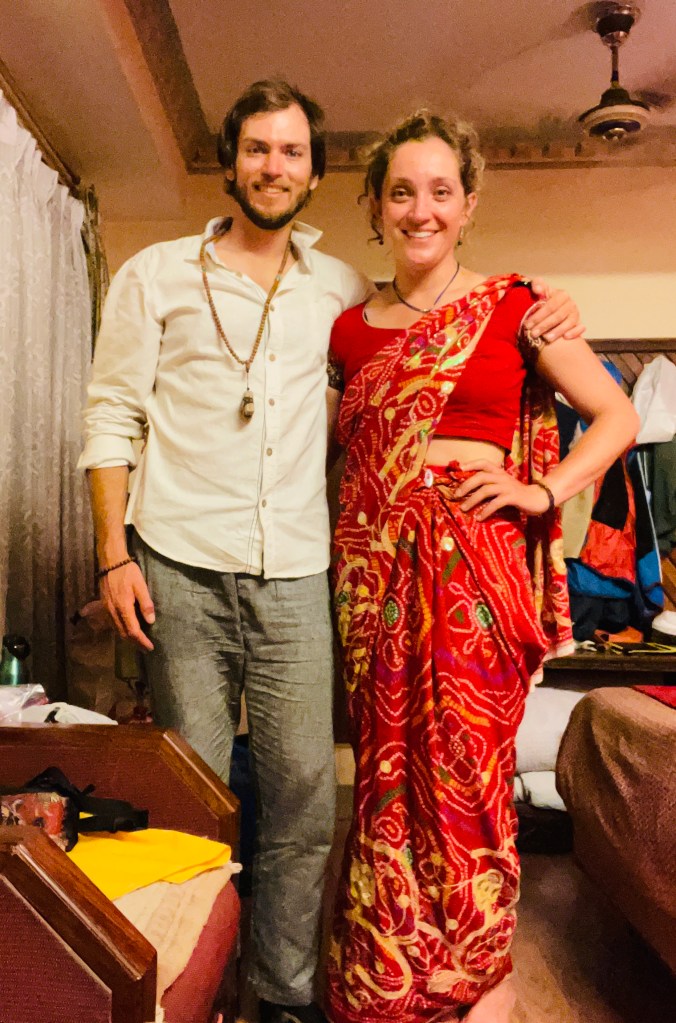
Knowing there are dress code rules for women in Nepal we searched online to find out what Sarah was supposed to wear to a Nepali wedding. The consensus: a red sari. Although saris are more traditionally a Hindu dress we read they are sometimes also worn by Buddhists so it seemed safe. With only a couple of hours before we had to leave for the wedding we hit the streets in hot pursuit.
We found a store filled with colorful fabric adorned with mirrors and sequins. Two kind men were up to the task and helped piece together a red sari. They brought us tea as they sewed a new button on the shirt. Then one of the men wrapped Sarah in the long sari and pinned it in place. We hustled back to the hotel while Sarah struggled to walk in the new contraption.
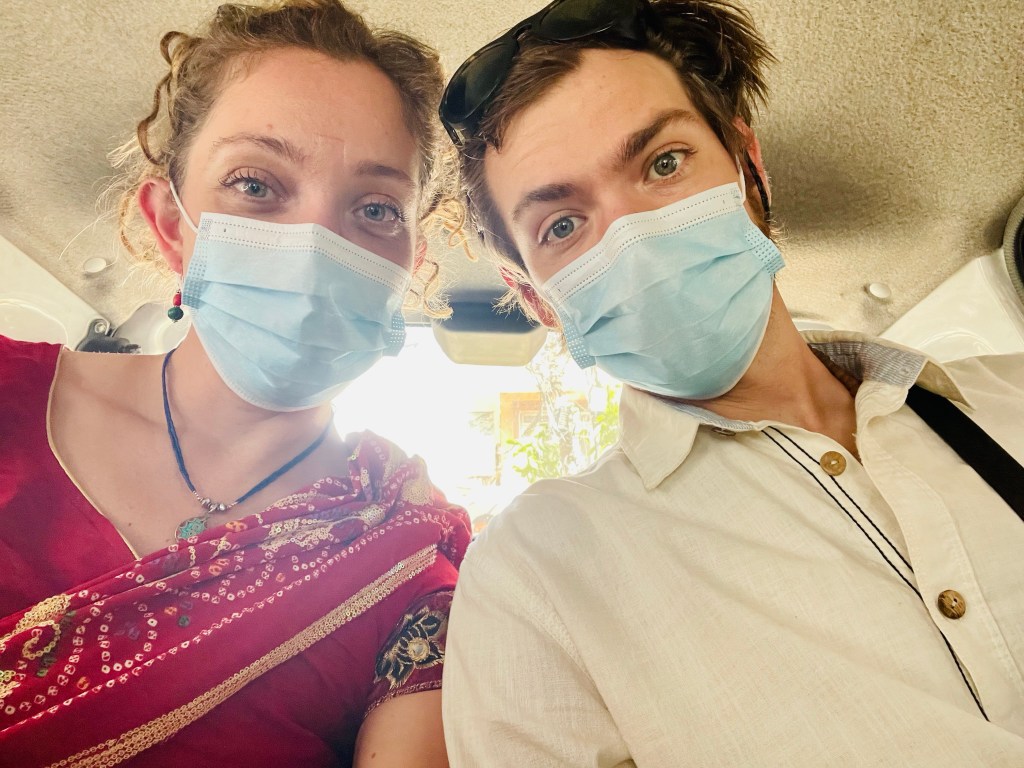
On our way to the ceremony.
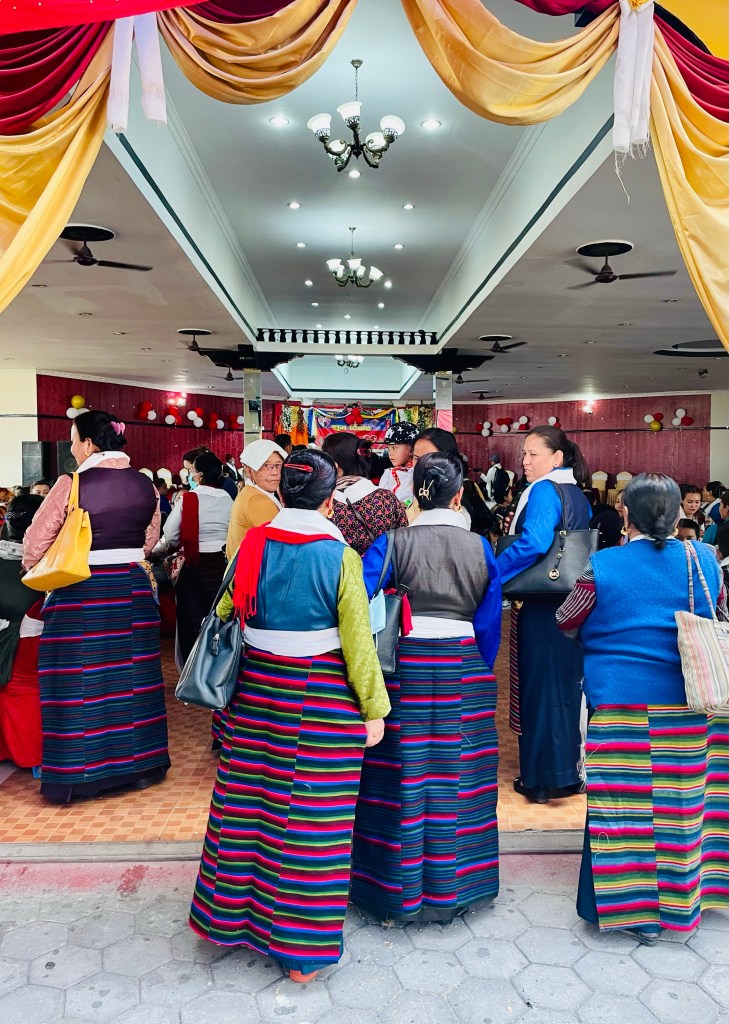
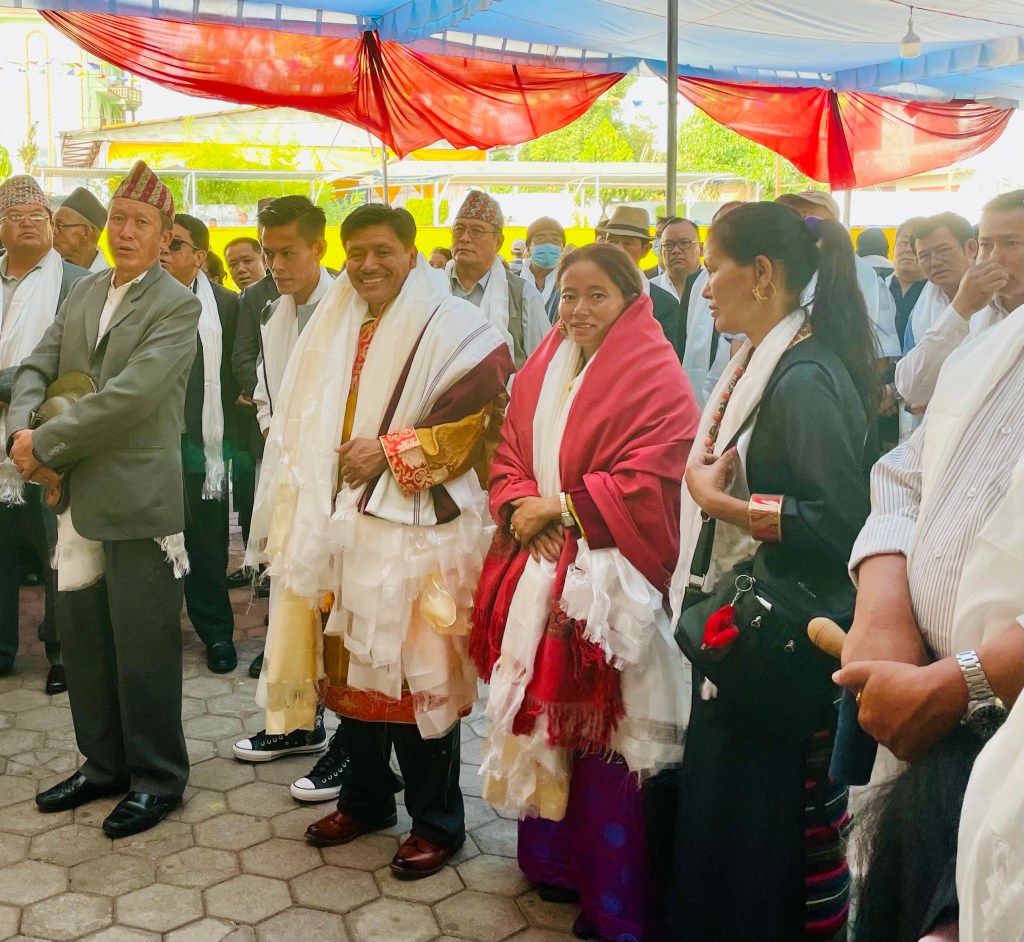
When we walked into the wedding we were all blessed with a khada. As we looked around for a table we realized Sarah was the only one in a sari. And yes, there was an obvious dress code for the ladies that we missed. Turns out this was a Tibetan Buddhist wedding which has a very different style of attire. Both are common in Nepal. After a good laugh and many stares in our direction we got ready to celebrate.
The women wearing classic Tibetan dressesMike, Tanner and Gombu attended the wedding as well.
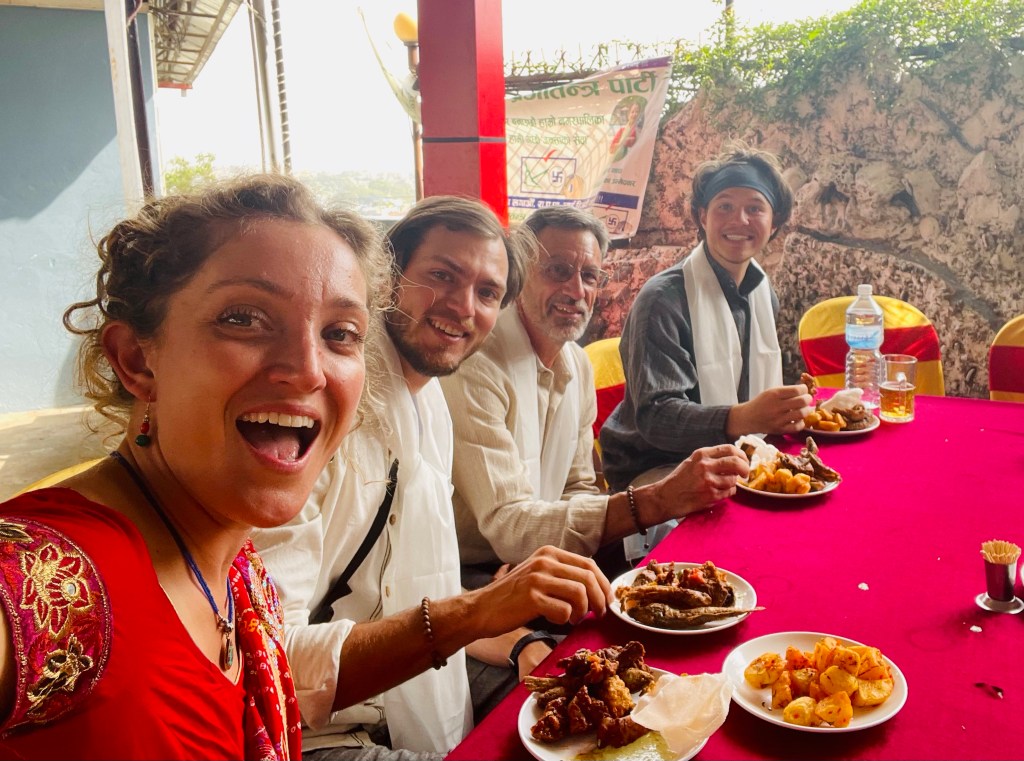
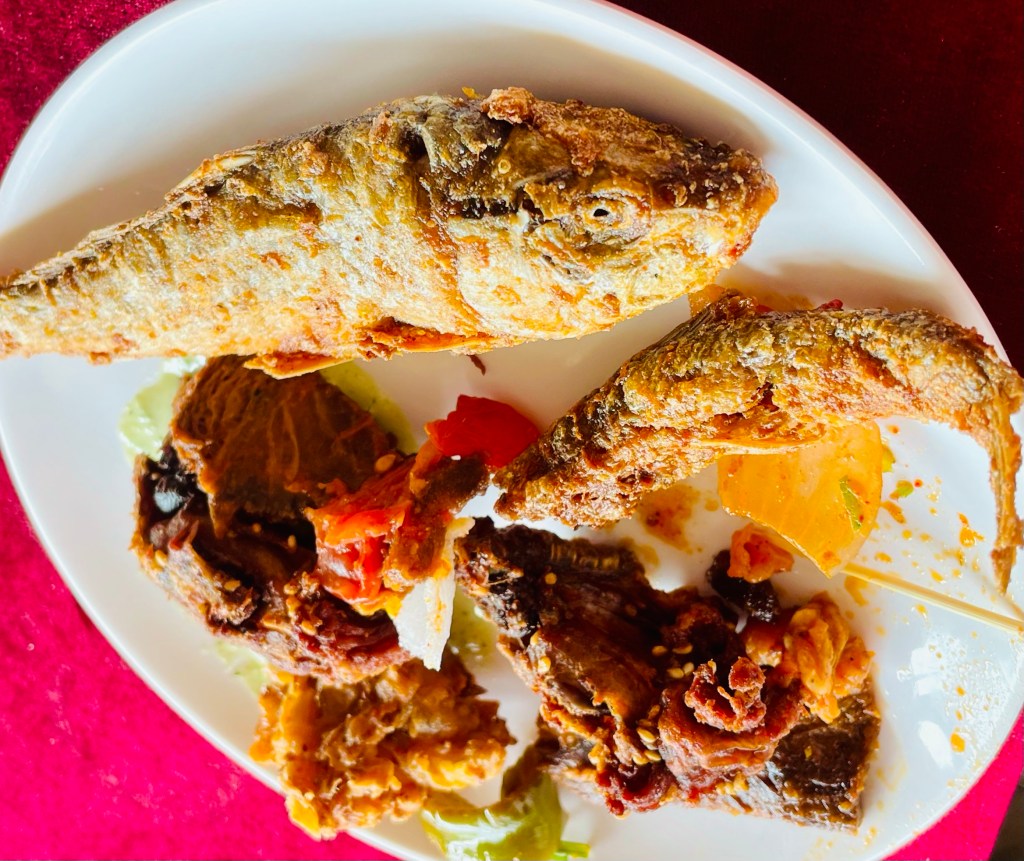
The wedding had nearly 600 guests. The venue was split in two by a fenced-in pool. The groom’s guests on one side, the bride’s on the other. We tried new foods that were impressively spicy and took sips of traditional butter tea. Beer and wine was being served every 5 minutes. Knowing it was a long wedding and ceremony we had to pace ourselves.
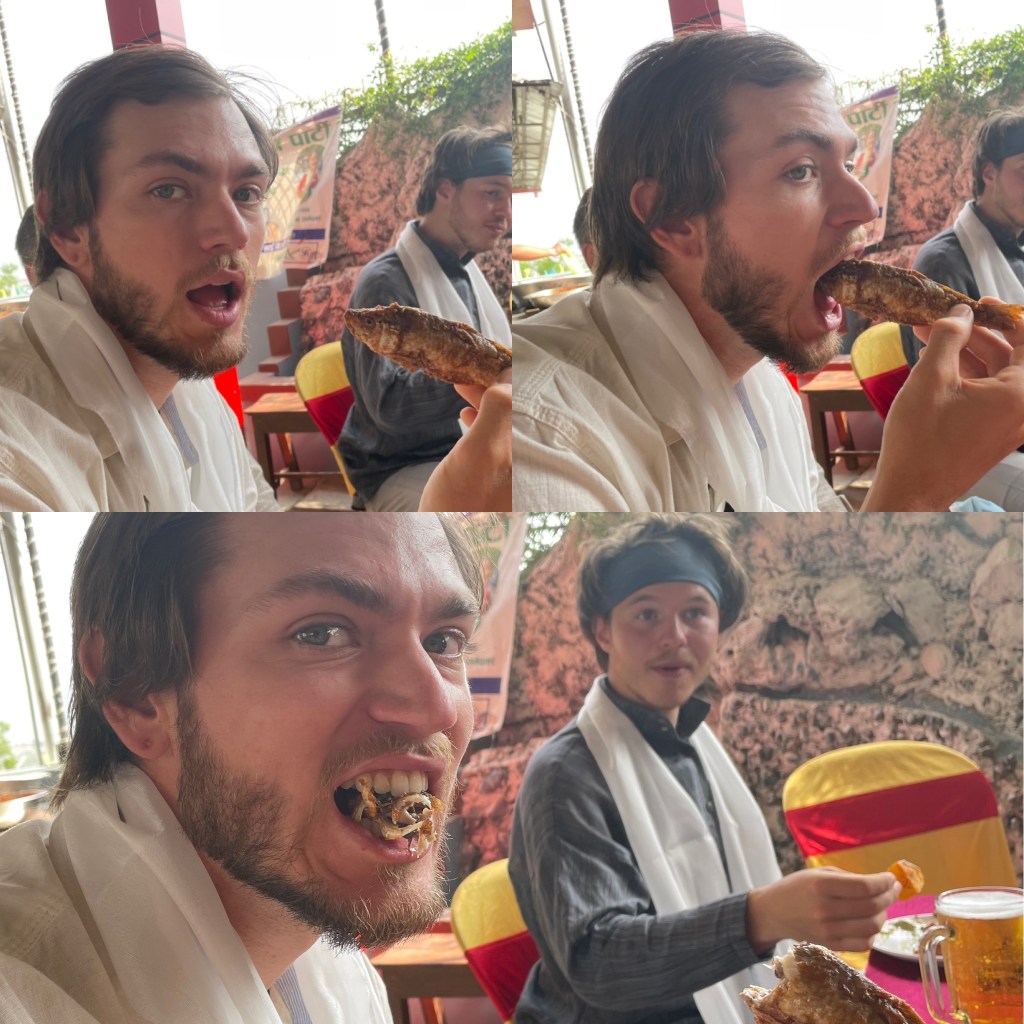
Hors d’oeuvresJust a Phish head taking it to the next level
After several hours performing the bride’s families’ ceremonies Singhi and Diki made their way over to our side. Shaman’s and monks were performing the traditional ceremonies of Singhi’s home village. Incense, mantras, songs, cymbals and bells filled the air as they made their way into the building.
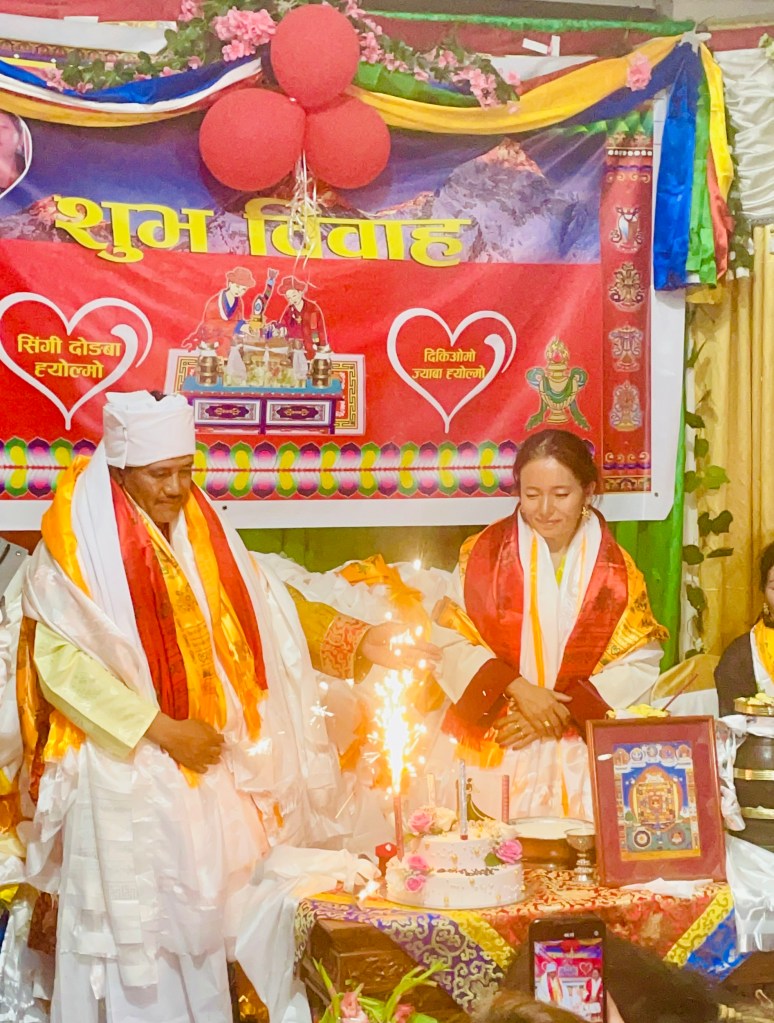
The beautiful bride and groom making their entrance for the 2nd ceremony on the groom’s side.
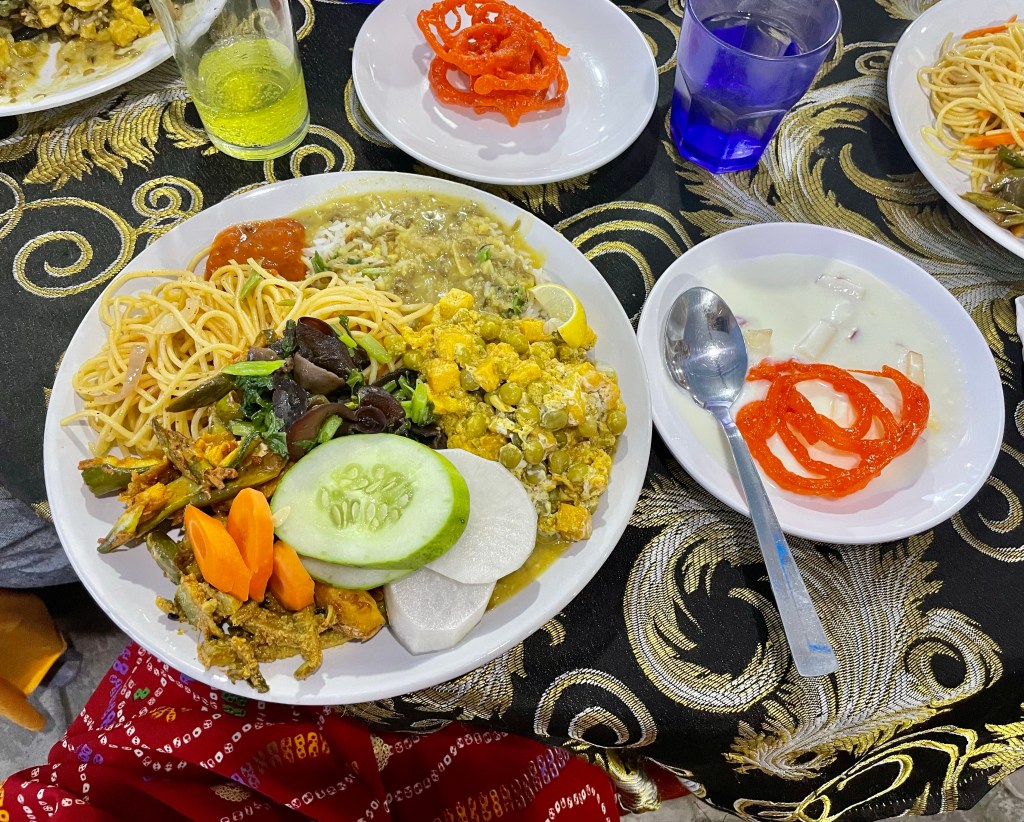
The dinner was segregated similar to the wedding parties: a line for men and a line for women. We lined up and had a plethora of delicious food options to scoop from.
The cutting of the wedding cake. Somehow they managed to feed each other while 100s of Khada scarves we’re draped over their shoulders.
The night ended with a bout of monsoon. Pouring rain and winds blowing away the tents pushed everyone inside. As the power flickered on and off a circle of song and dance ensued. Guys in a row followed by a row of women began doing a special shuffle and step. The song went back and forth like a call and reply between the 2 groups. Tom was roped in by a couple of rather intoxicated younger guys whom he met earlier in the night. Meanwhile, Sarah had attracted the attention of many sweet young girls that were full of questions. After 7 hours of wedding celebrations we finally called it a night and caught a taxi home.
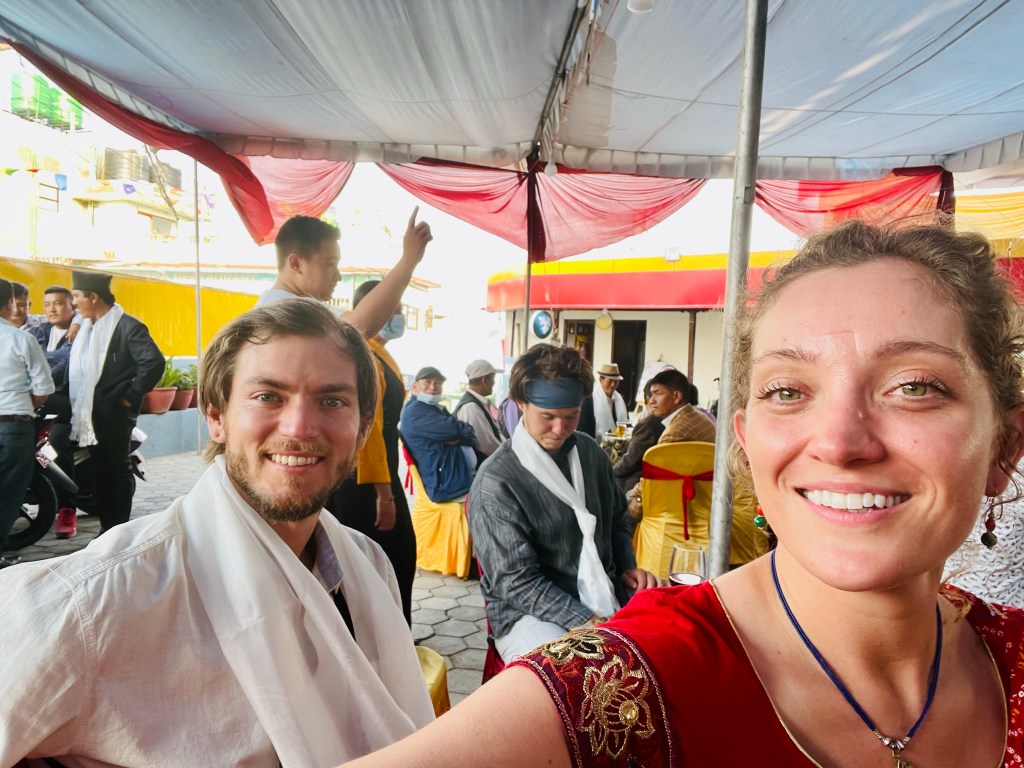
Post wedding selfie back in our hotel
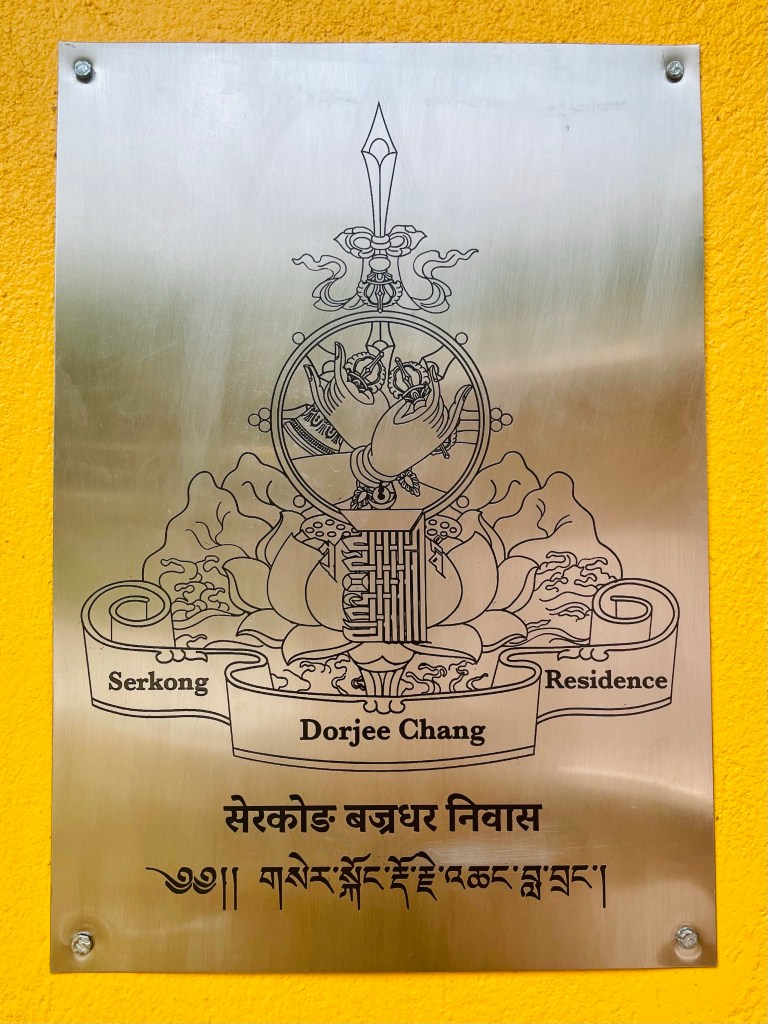
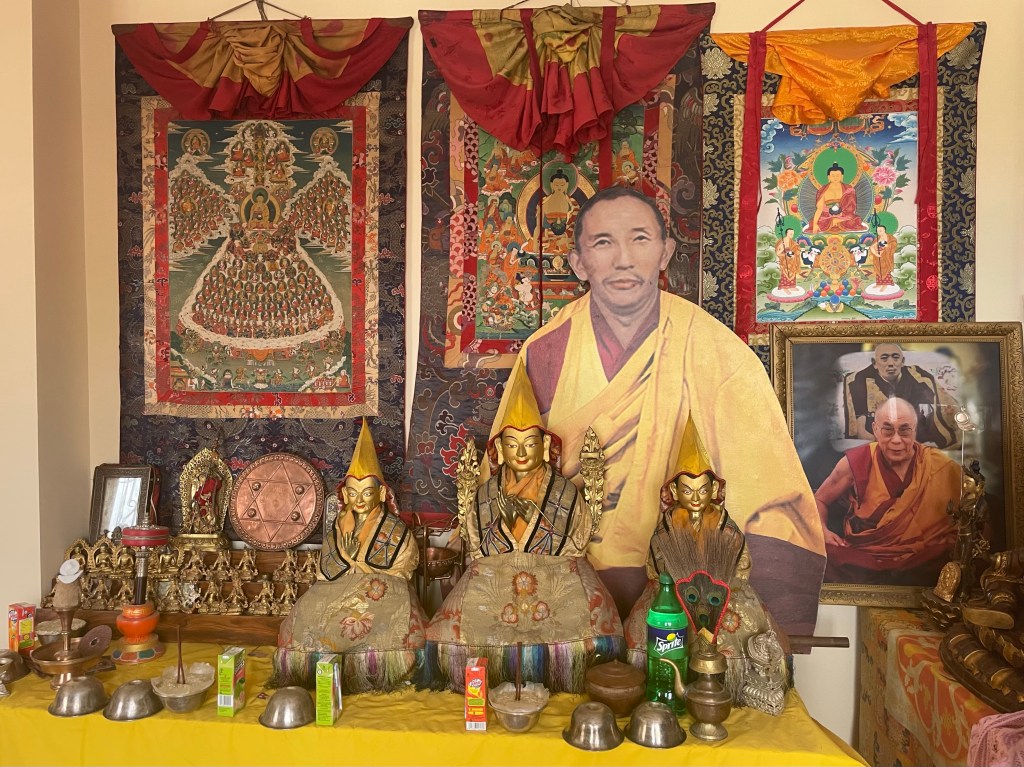
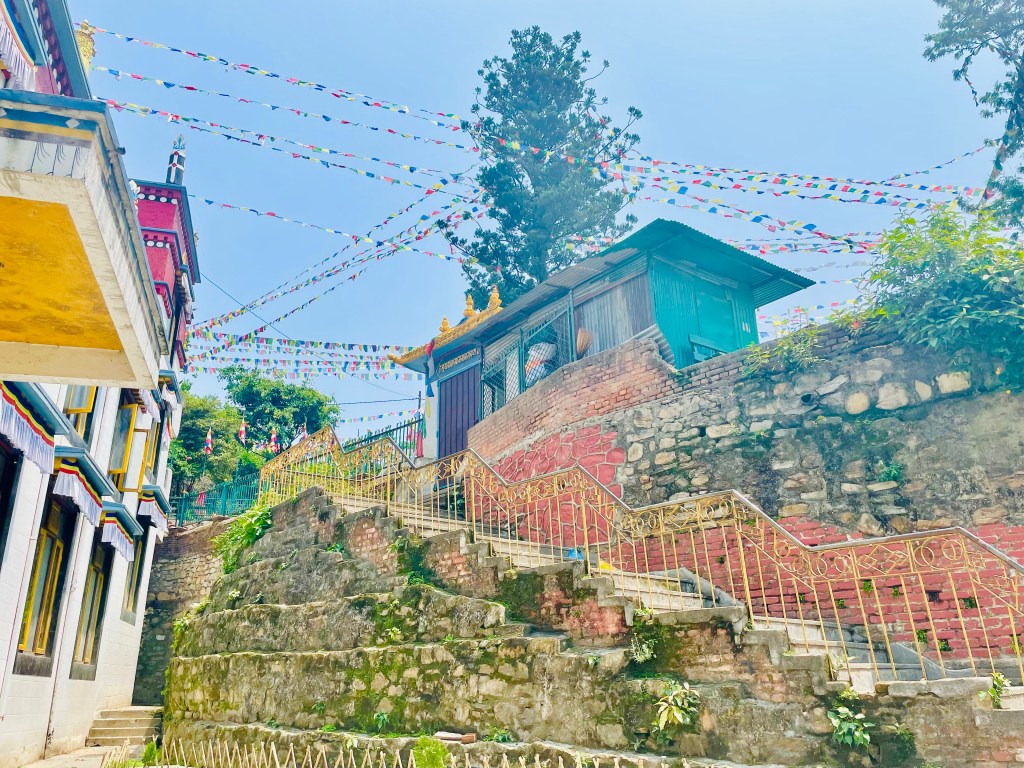
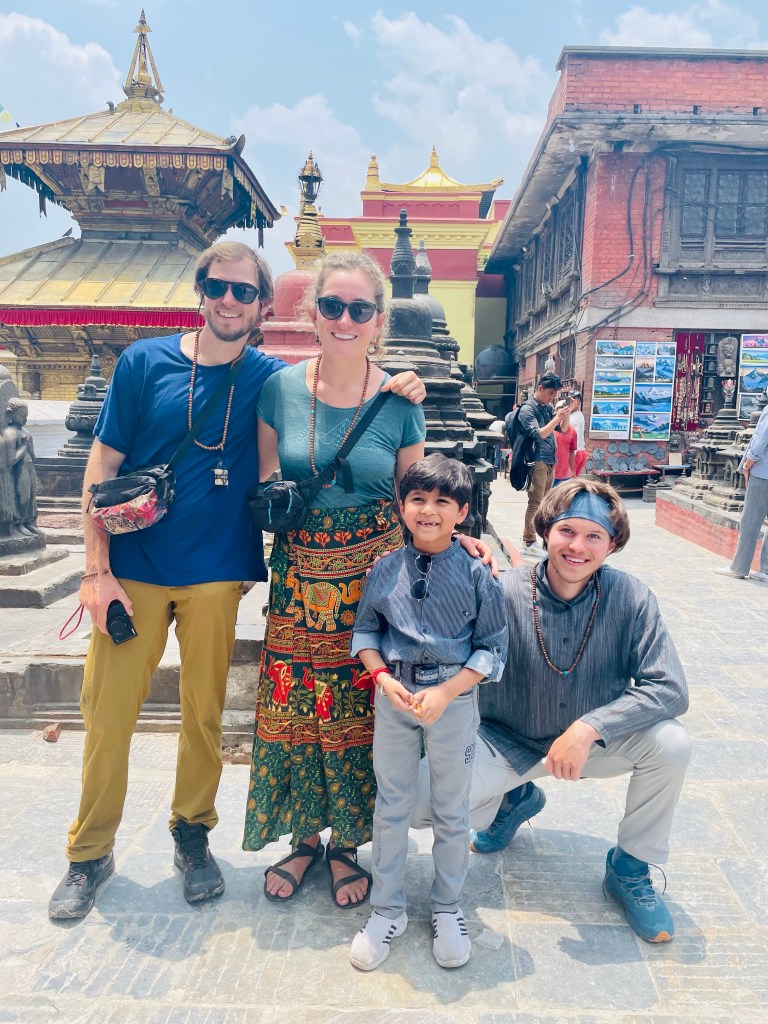
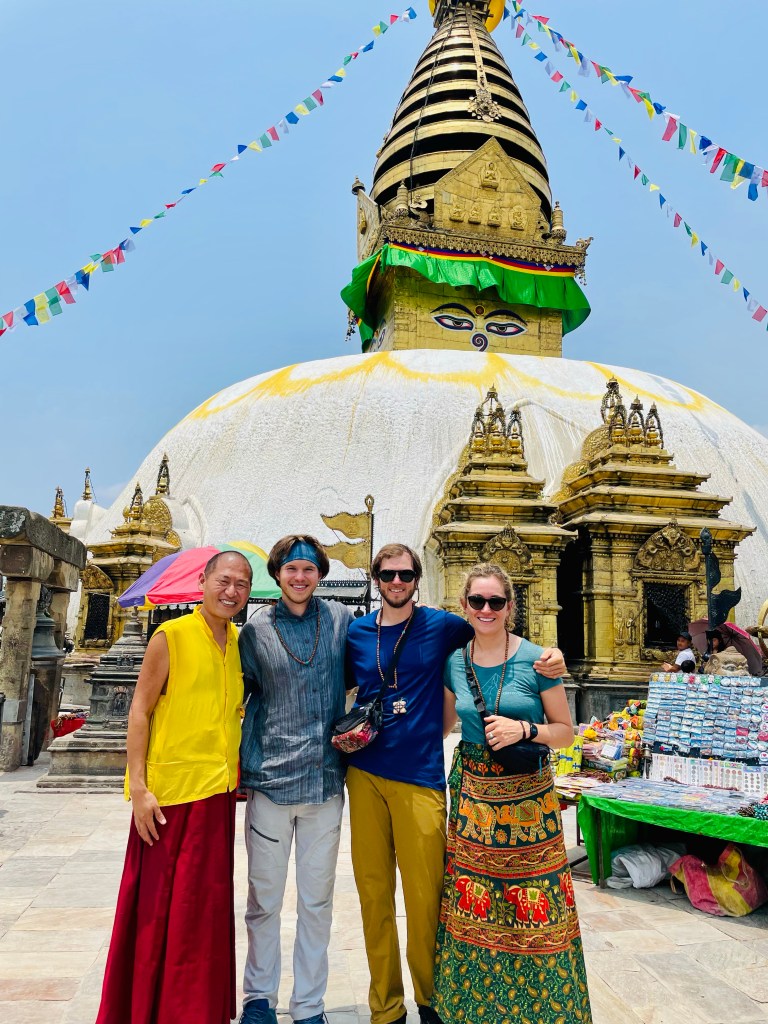
Our friend, Tsering, set up a time for us to meet his guru Serkong Dorjee Chang Rinpoche. Tanner joined as we walked to Swayambhunath, a Buddhist temple complex that sits atop a large hill in the middle of the city. The Rinpoche’s monastery and school are located on the grounds of the temple. Rinpoche, previously Tenzin Ngawang Tsültrim Dönden, shared that at just 3 years old, he knew he was the third reincarnation of Rinpoche. In 1985 he was recognized by H.H. the 14th Dalai Lama.
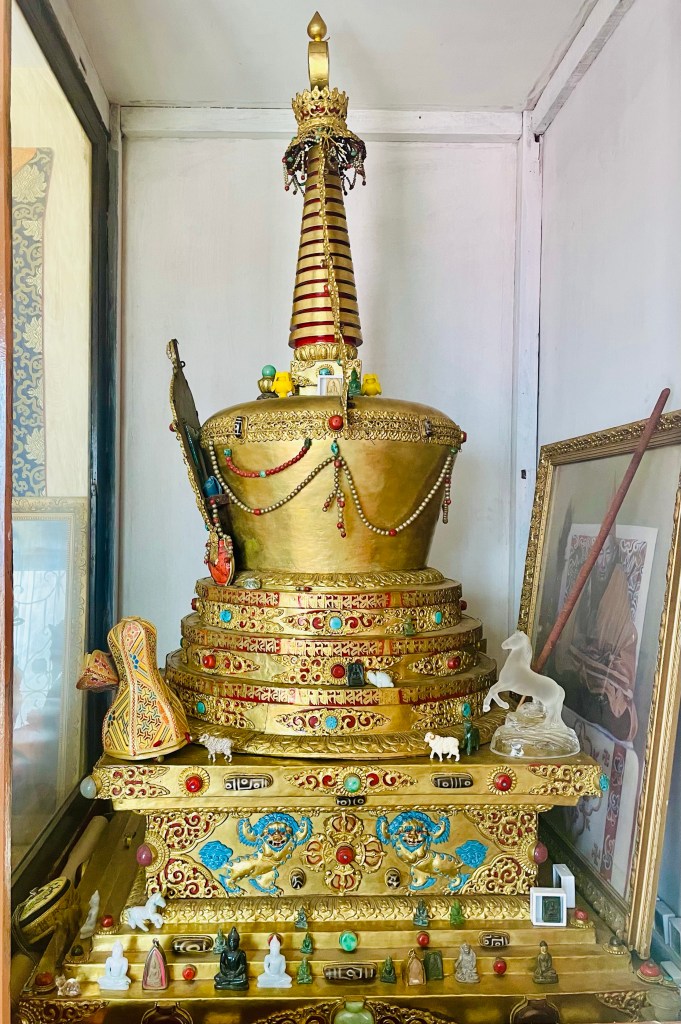
Alter for the gods This alter which belonged to his previous reincarnation had been carried from Tibet after the 1959 Tibetan Uprising.
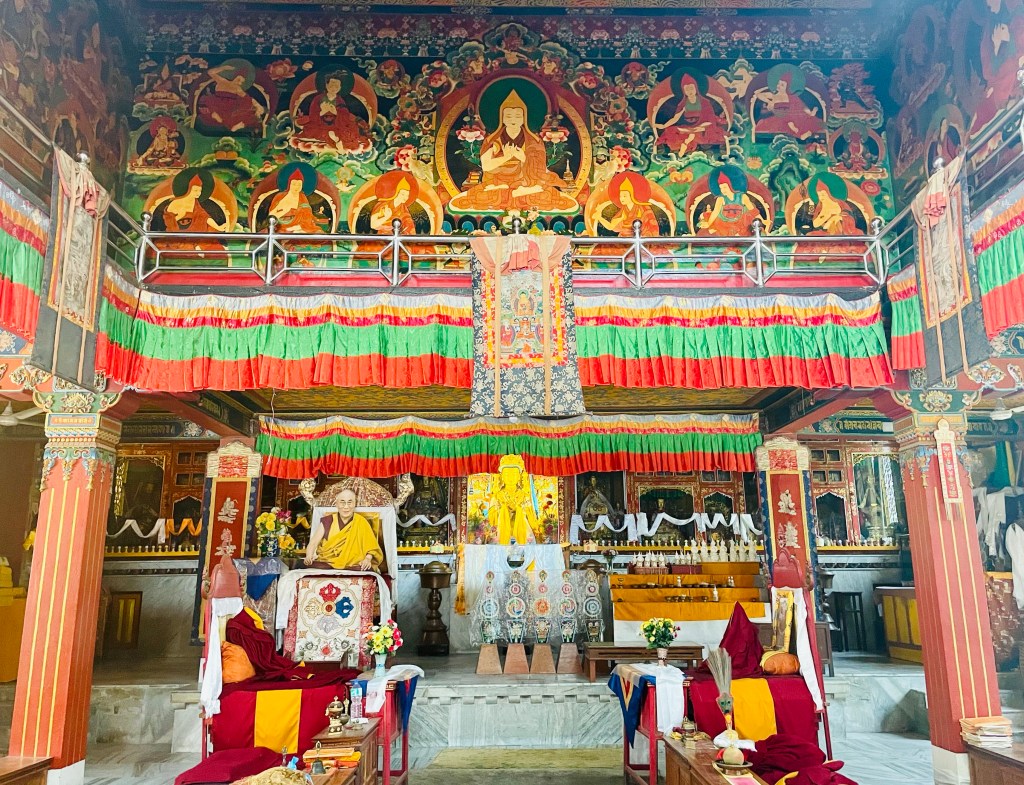
The Rinpoche has travelled the world and he developed an affection for espresso after visiting Italy. He was eager to make us espresso and had us each pick out a shot glass from his travels. The three of us sat on the floor of the prayer room like little kids drinking guava juice boxes and eating Lotte Choco Pies that Rinpoche had shared with us. Then we sipped espresso and talked about life and he taught us about history while discussing Buddhism. After snacks he gave us the grand tour of his Monestry.
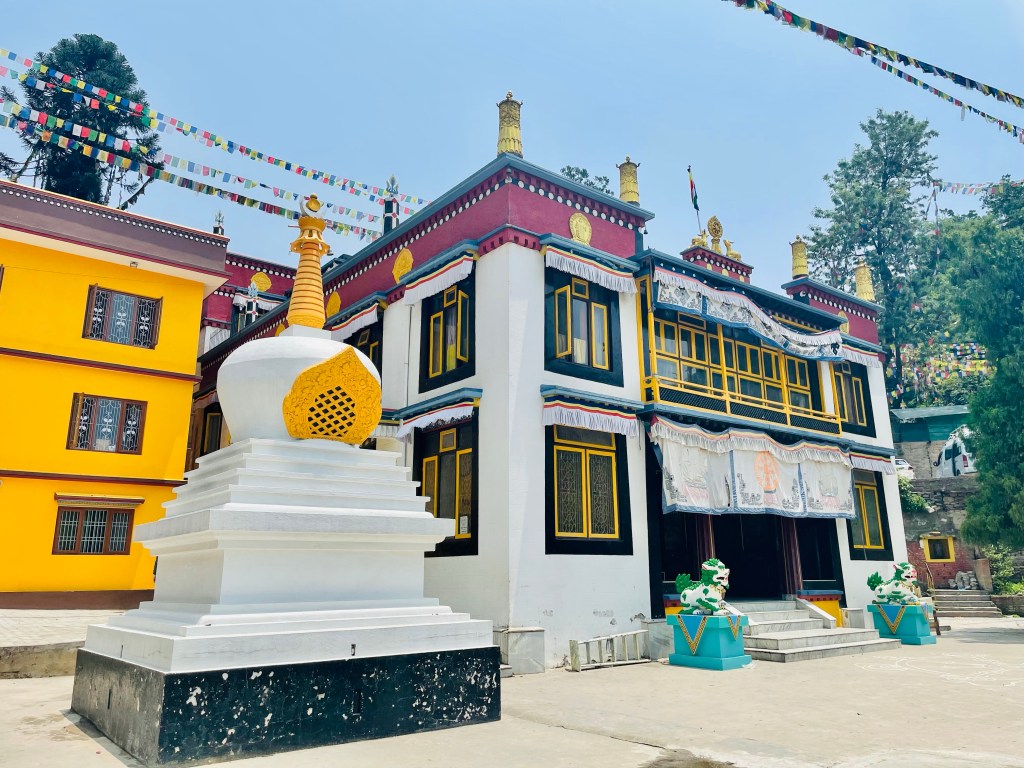
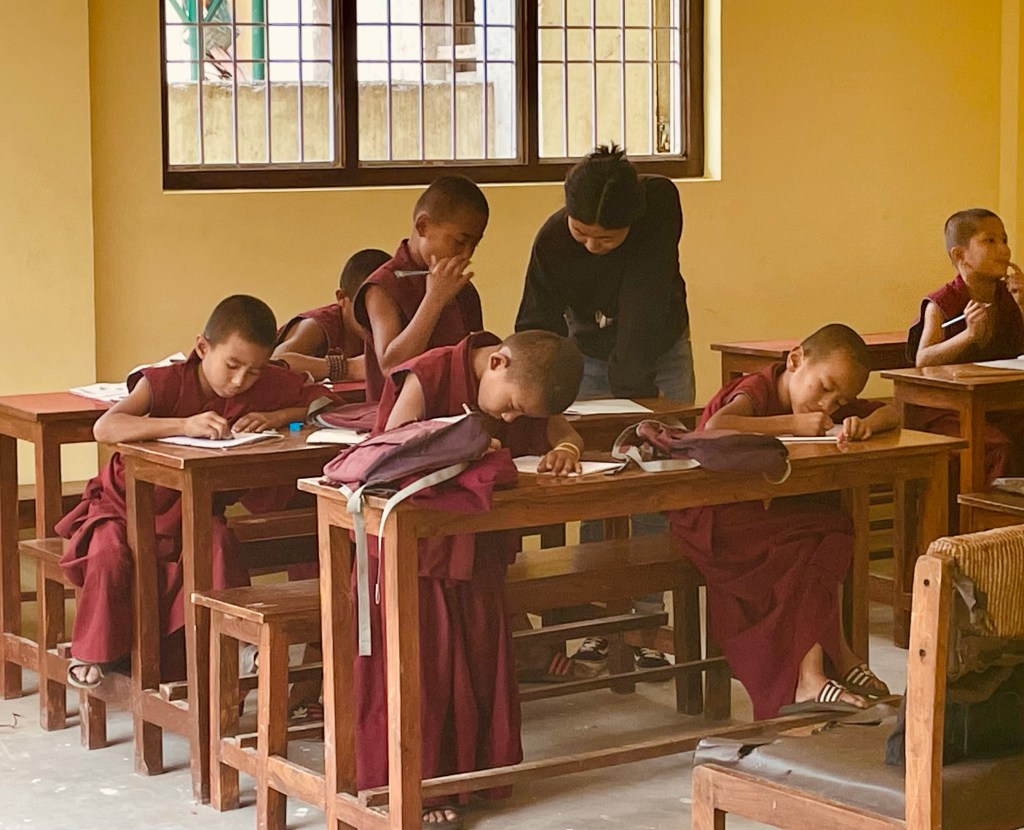
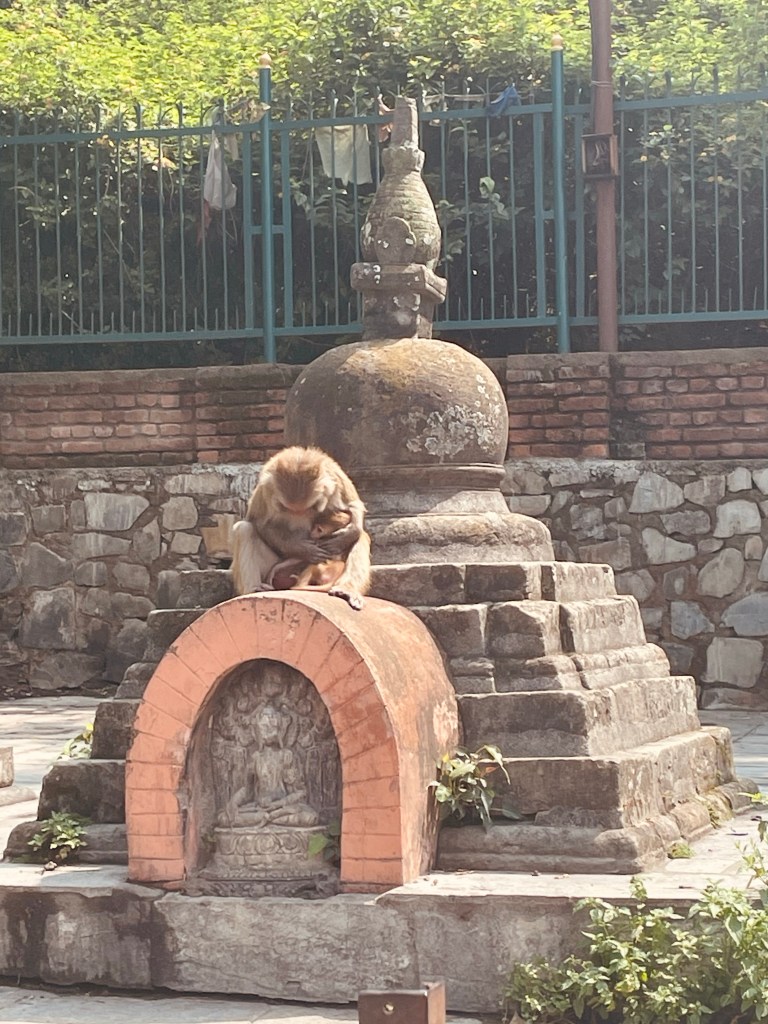
The white building is the Gompa.Inside the Gompa where the Rinpoche and his students pray for 3 or 4 hours each morningVisiting the school children at the monastery Swayambhu is also called the monkey temple for a reason
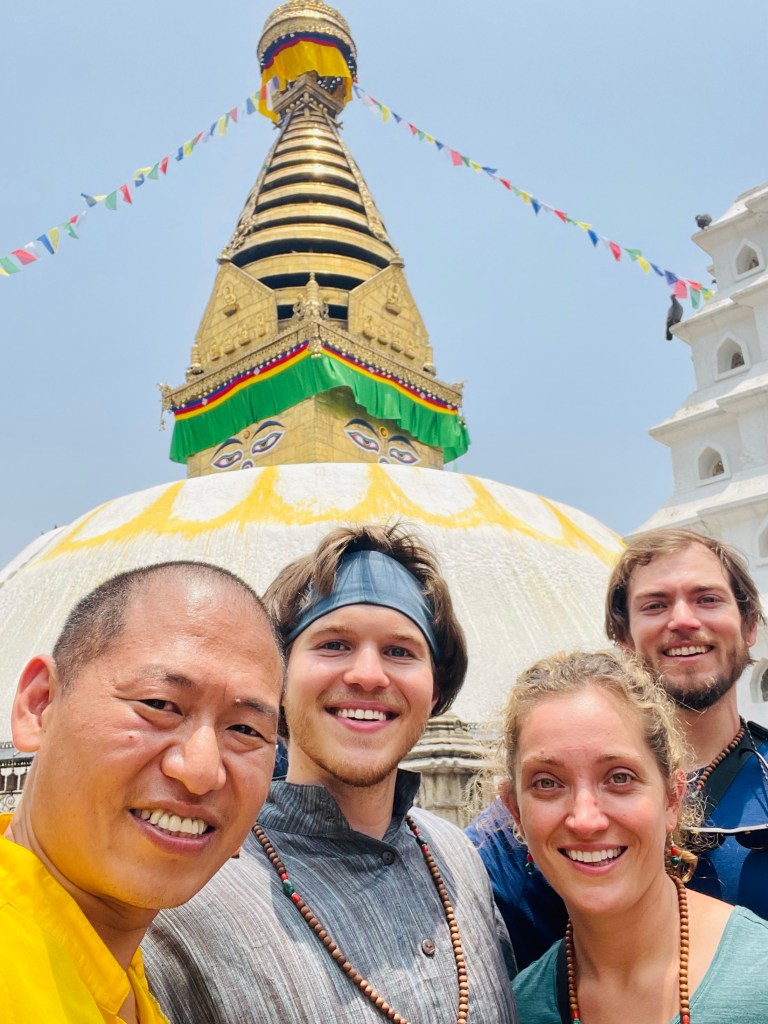
We were conscientious not to consume too much of Rinpoche’s time so after an hour of visiting we started our goodbyes and began making our way to the Monkey Temple. Enjoying one another’s company and conversation the Rinpoche joined us and gave us a tour of Swayambhu Temple. We greatly appreciated his easy going presence and willingness to answer all of our questions. He enjoyed taking lots of photos and introducing us to his friends long the way.
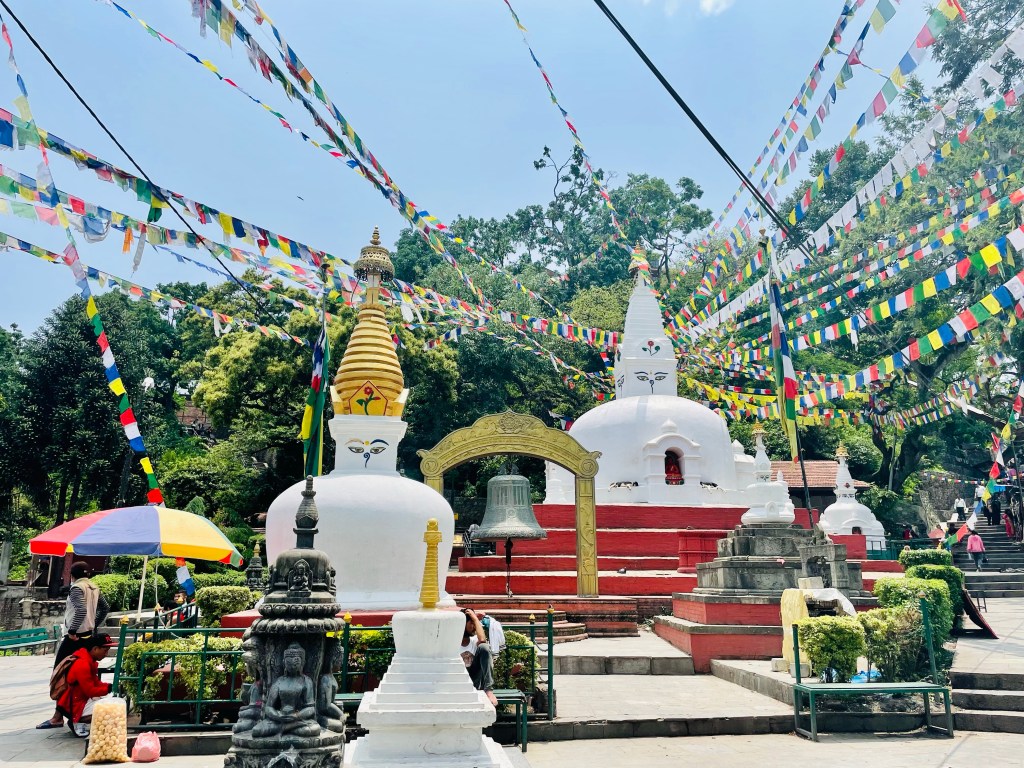
Small Stupas or Chaityas adorned the temple complex wherever we wentWe were kind of like celebrities… many locals asked if they could get pictures with us.Exploring Swayambunath with the Rinpoche
At the very top of the hill is the large Swayambhu stupa which represents the womb of creation. Serkong Rinpoche showed us one of his favorite ways to give our Khada blessings to the gods by wrapping a small rock up in the scarf and chucking it up high onto the stupa.
Rinpoche working his amazing selfie skills.
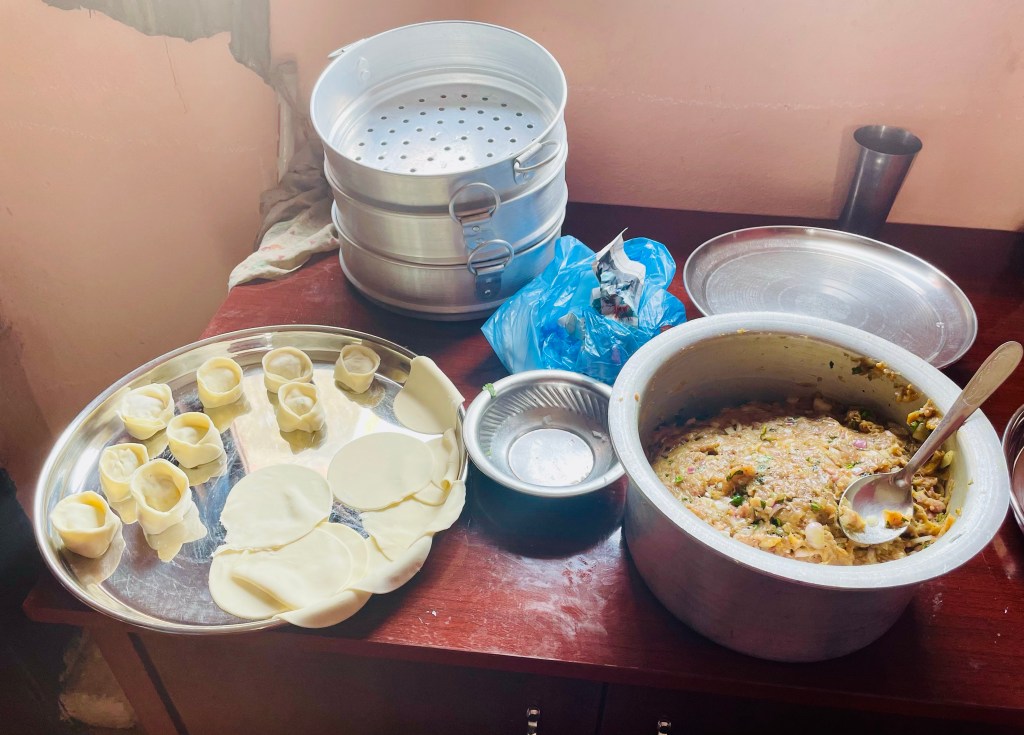
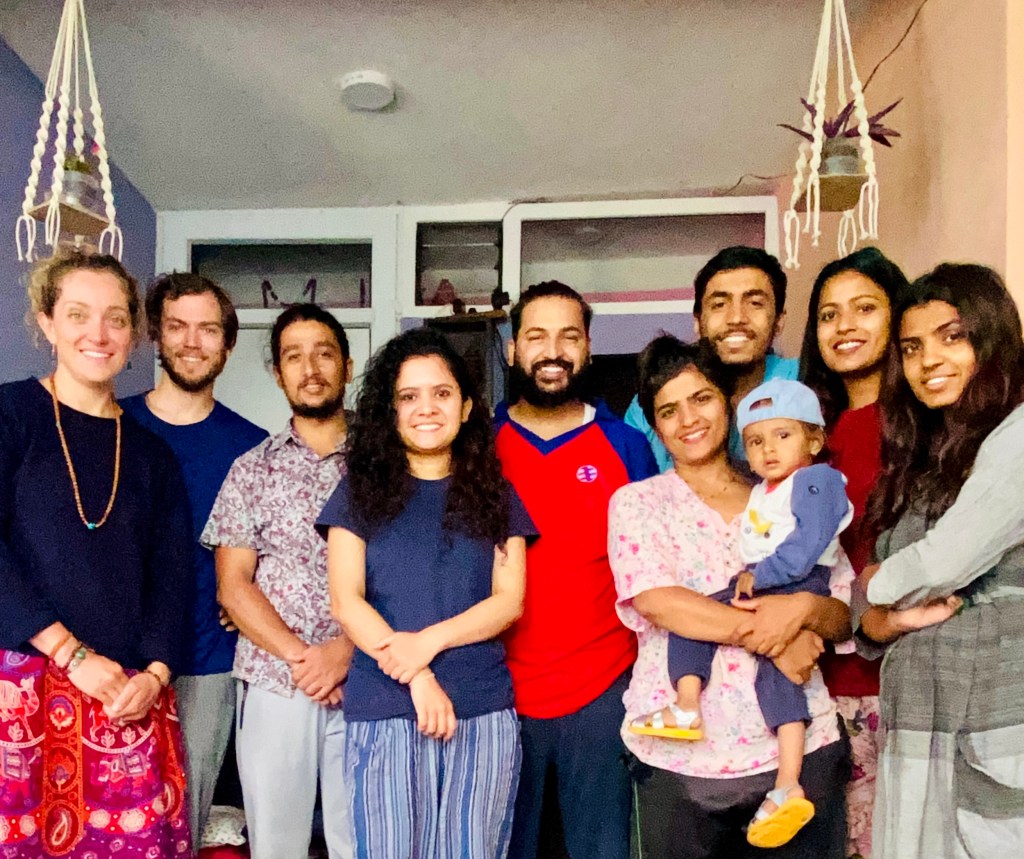
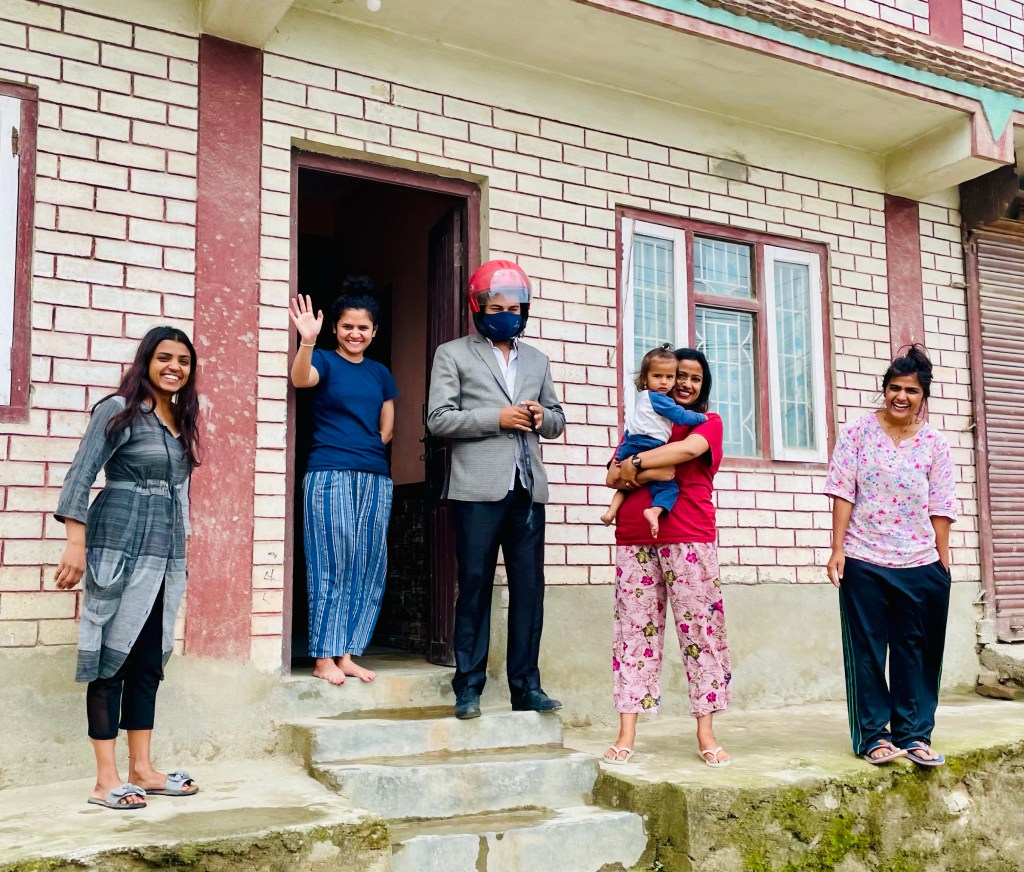
The following day we had a date to meet our friend Sangita and her family for their Saturday momo tradition. We caught a taxi and headed to their house in Lalitpur. Their house was a tall 3 story building. On the top floor resided the family room and kitchen. The walls inside were colorfully painted in shades of lavender, avocado, cantaloupe, and bubble gum. Their parents were out of town still from the elections but the house was full of siblings and spouses. The majority of households in Nepal are multigenerational, sometimes with grandparents all the way down to the grandkids living under the same roof. Sangita lived with 3 of her siblings, their spouses and her parents. She has one sister who lives in Austin, TX and another sister that lives with her husband 30 minutes away in Kathmandu.
The A-team making magic in the kitchen.
As they artfully wrapped the momos we watched cricket and played with their nephew who was just over 2 years old. We enjoyed learning about Nepali sports from her brother-in-law who is a sports writer.
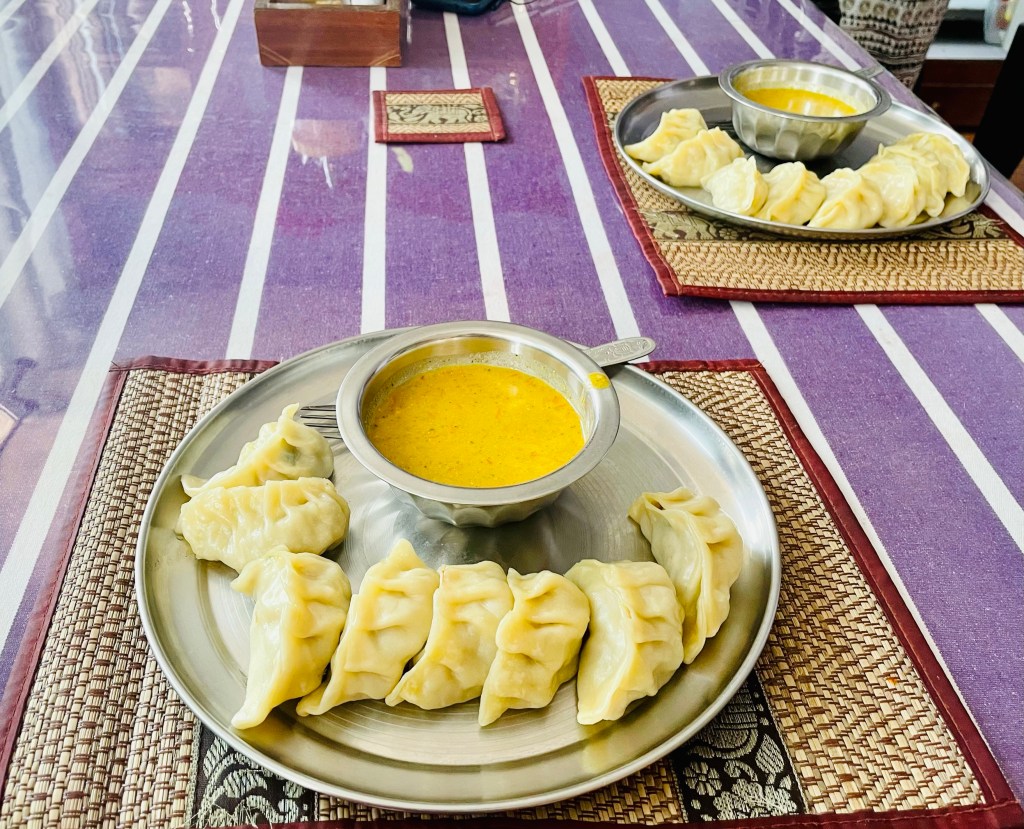
Chicken filling and dough wraps. They are then steamed like dumplings.
We were treated like royalty. Nepali hospitality sets the bar high. Sangita’s sister-in-law has spectacular cooking skills and made a mouthwatering momo sauce that was next level. We probably ate 15 momo’s each because they so kindly kept refilling our plates.
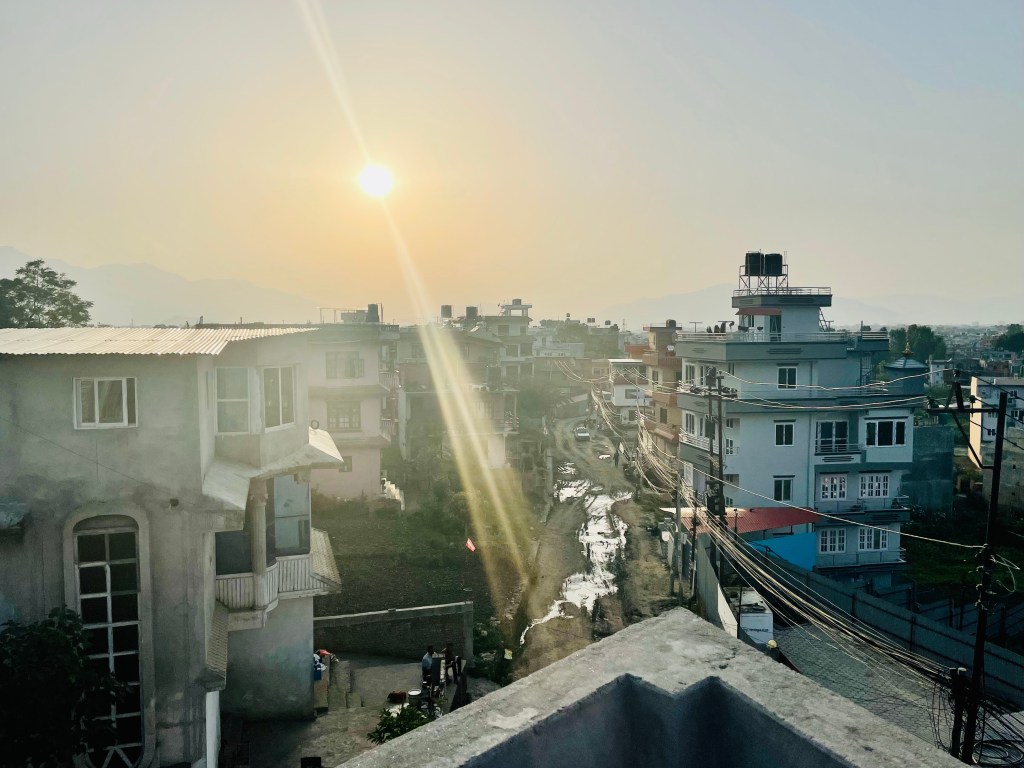
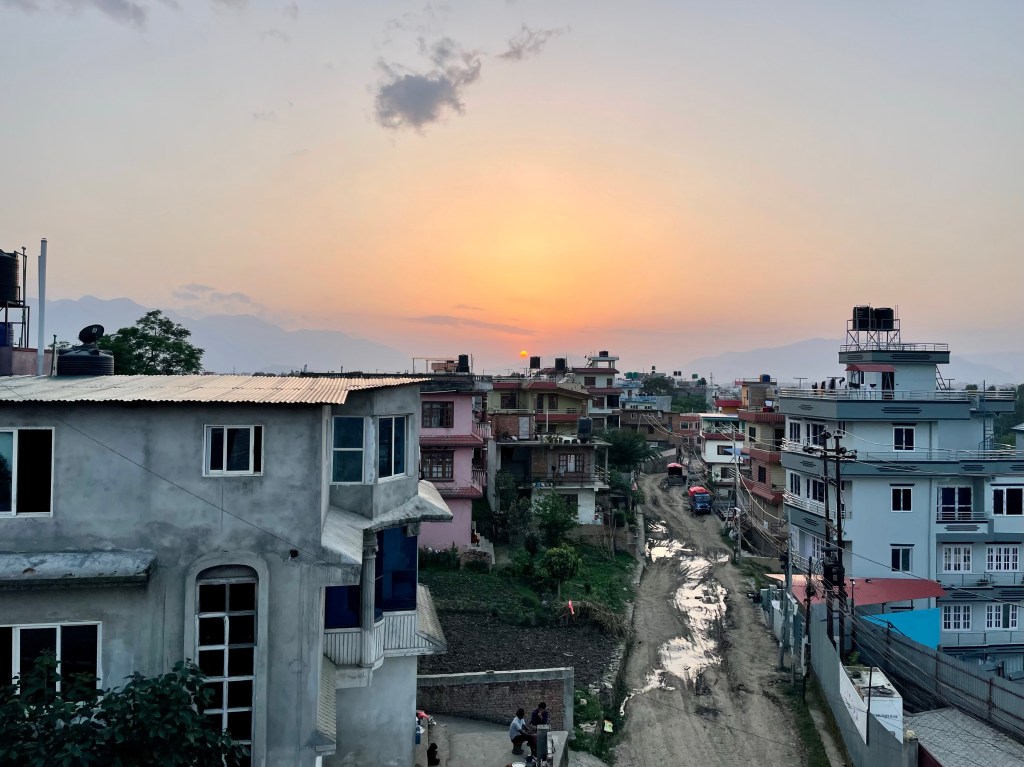
After a late lunch we were encouraged to stay for dinner and the night. It was a relaxing day sharing stories about the differences and similarities of life. Saturdays are the only day off and it was fun to see how they enjoy their days off. We walked up to their roof top terrace to see the city and enjoy the sunset. We had a wonderful evening talking and enjoying the special experience of being invited into a Nepali home.
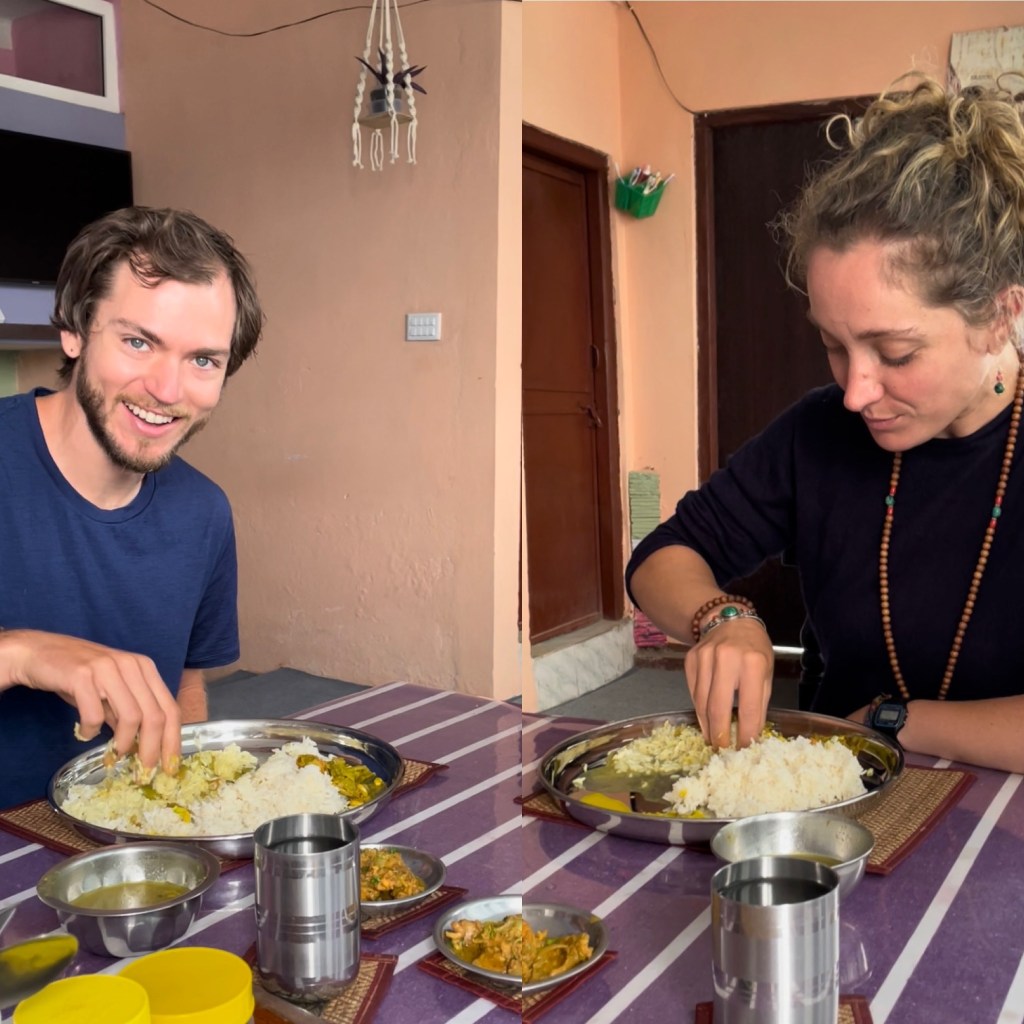
During dinner we learned one of the most important skills of the trip. We learned to eat with our right hand. Sangita’s brother showed an essential move with our thumb to help slide the food into our mouths. We made a vow to only eat Dal Bhat with our hands from that moment forward. Our Nepali assimilation had begun.
After dinner we were invited to stay the night so we did. “You stay” said the younger sister. We sang and played guitar then finished the evening watching videos of hikes in Nepal. We stayed in a nice spare room on the top floor and woke up to rain and gentle thunder with a cool breeze visiting us through the window screen. It was peaceful and comfortable.
Our fabulous hosts
After more incredible hospitality and some breakfast we said our goodbyes and headed back to the hotel to make our group meeting. Group dynamics were changing as 2 teammates were heading home early. So the last 3 of us made plans to explore the far west and enjoy another month out in the bush.
Thank you! We will miss you all
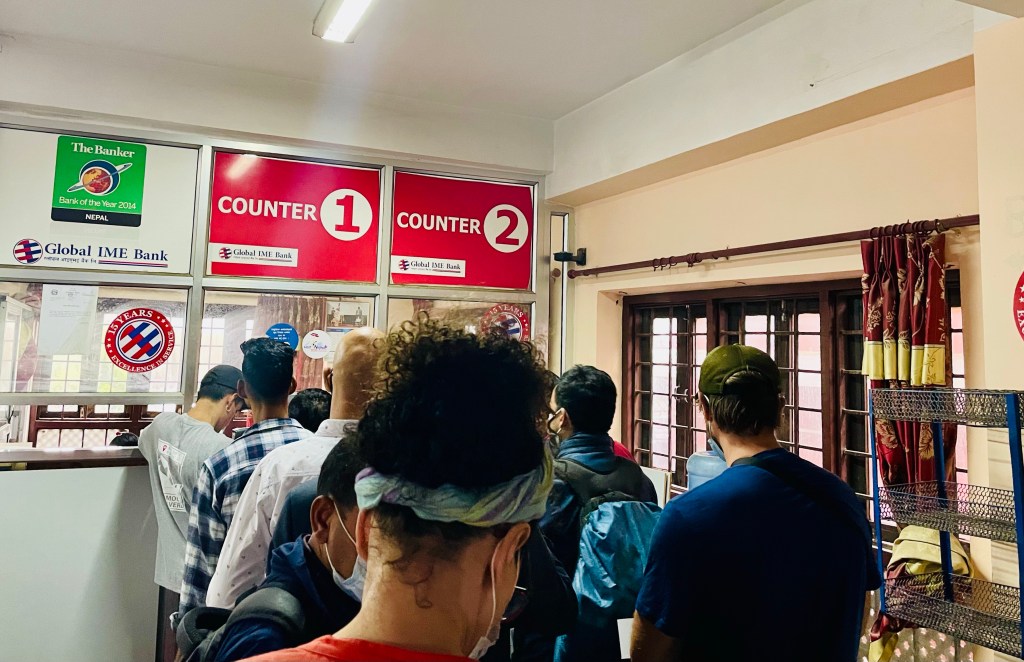
Later that day we went to the immigration office and were able to extend our travel visas. It was a pretty easy process. Just a little bit of time and a little bit of cash and we were done.
Immigration office
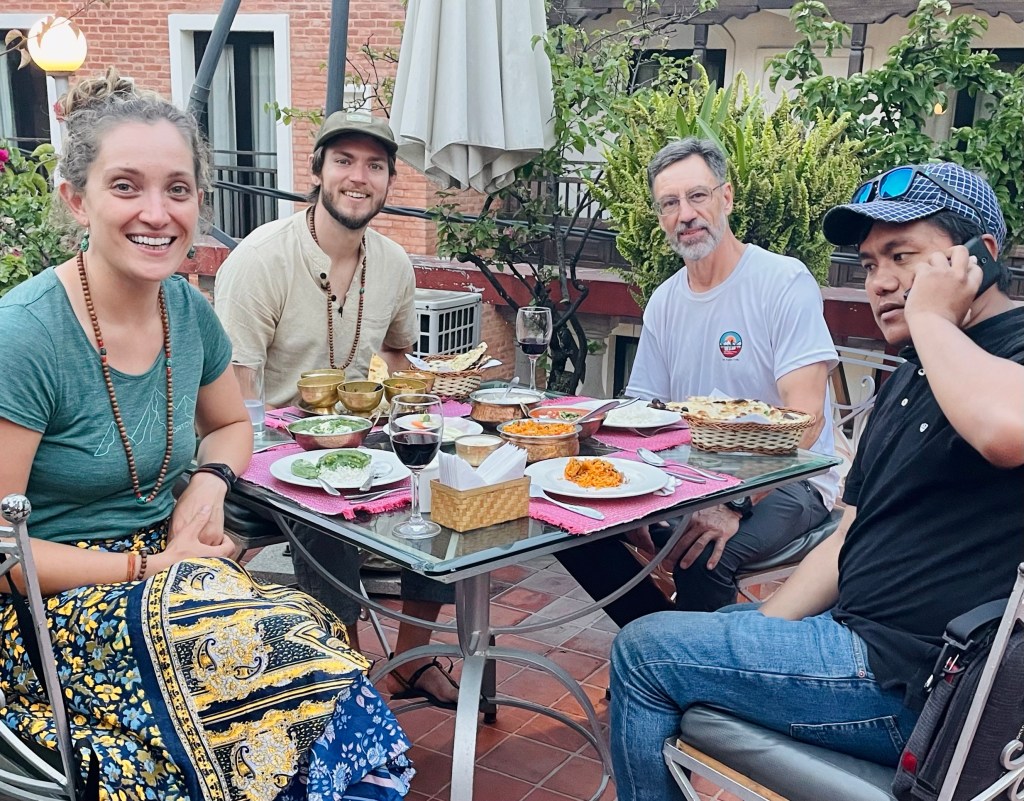
On our last evening before making our way out to the trail we went to Indian food at Third Eye. The following day we would be back at Kathmandu’s airport and flying to Pokhara. Then a small flight the following day to Jomsom where we would catch a jeep to Muktinath. Our plan is to hike west from Muktinath to Ra Ra Lake.
In a last minute decision we decided to head just north of Kathmandu to hike through Langtang National Park. Rather than staying in Kathmandu and waiting for our time to renew visas, we wanted to get back on the trail. The GHT section of Langtang goes from the village of Last Resort to Syabru Besi which are both accessible by road. Langtang was the first Himalayan national park and the closest to Kathmandu. The landscape is distinguished by dense jungle with a rich biodiversity. While mostly at a lower altitude, it still has some larger 7,000 meter peaks. So the 5 of us crammed into a jeep with 2 porters and strapped our packs to the roof.
View from Last Resort’s bungee jumping bridge
All of Nepal was returning to their home villages for elections, a rather inspiring sight to see. We were lucky to find a jeep amidst the chaos, but this also meant our drive would take several extra hours due to the increased traffic. The heat was sweltering and the black exhaust from the buses caked our skin and permeated our lungs even through our face masks. After three hours we stopped to stretch and eat some dal bhat.
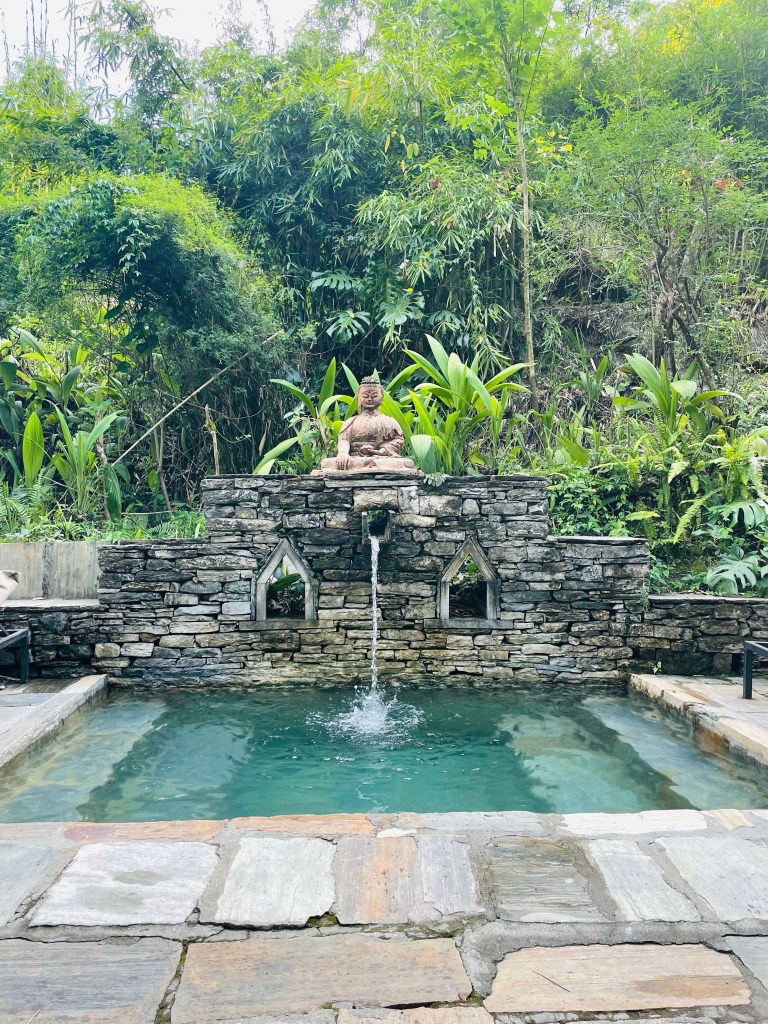
Plunge pool
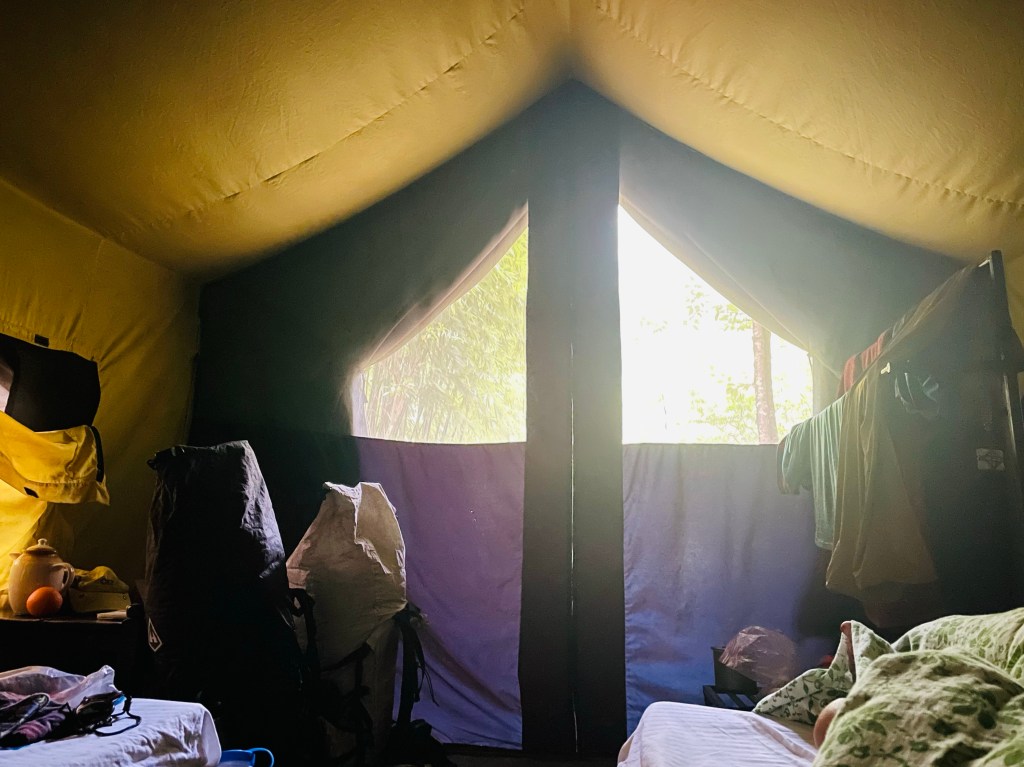
We arrived at The Last Resort after 8 hours, grateful we had been in a jeep after we saw buses filled to the brim with people all over the roads. Although ‘resort’ is in the village’s name, we had not expected an actual resort so we were pleasantly surprised by the swankiest accommodations yet. The grounds were manicured with detail as if we were at a retreat center and the paths would light up at dark. The bathrooms had actual sit down toilets, stocked with toilet paper, working lights, and large showers with warm water. There were spacious glamping tents on stone platforms, a nice outdoor bar and dining area, and a beautiful plunge pool that we quickly submerged ourselves in. This area is a frequently visited weekend getaway with bungee jumping, canyoneering, and river rafting. Knowing that we would soon be in the mountains and jungle we embraced the relaxing getaway.
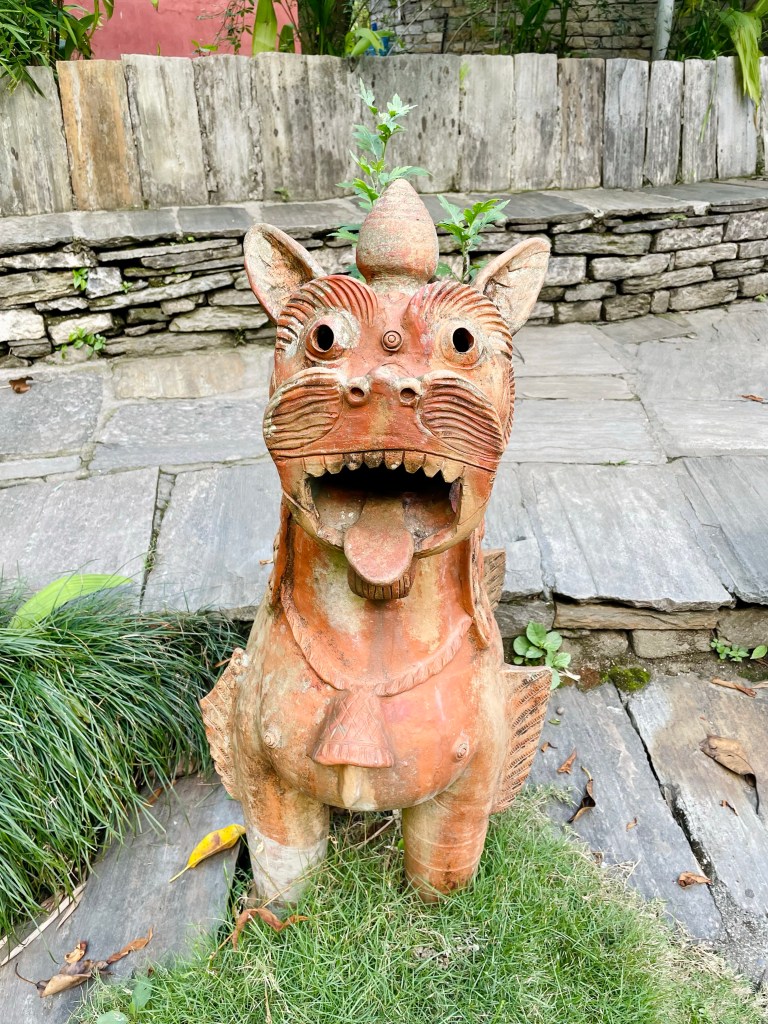
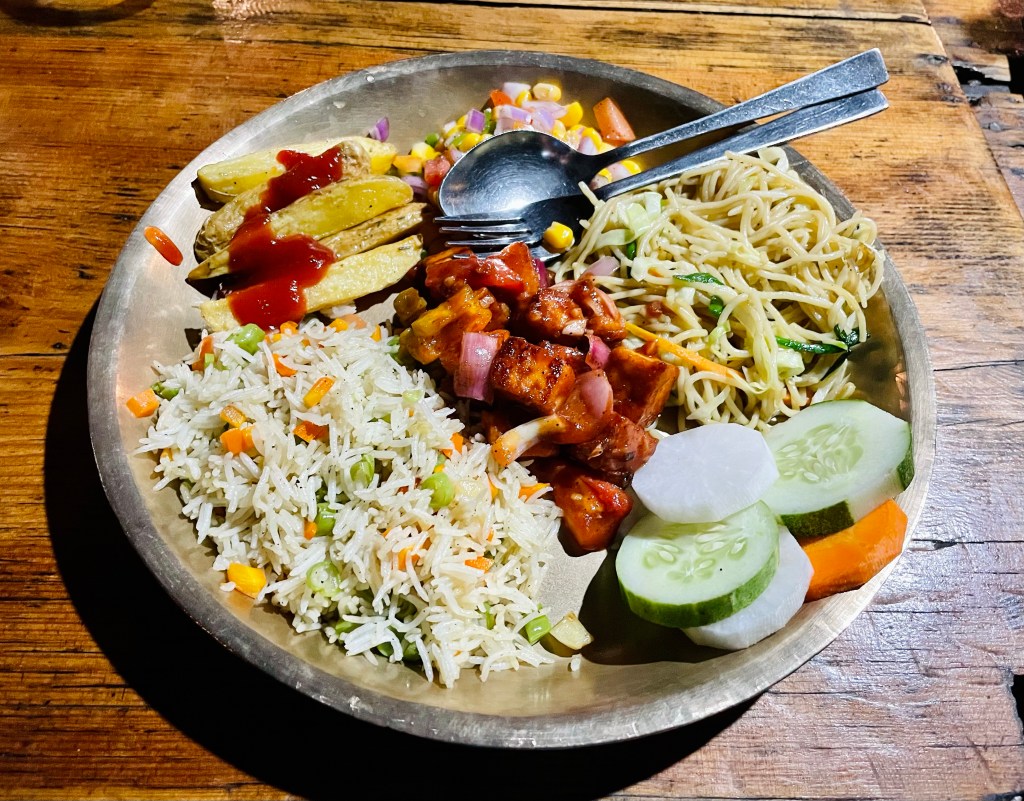
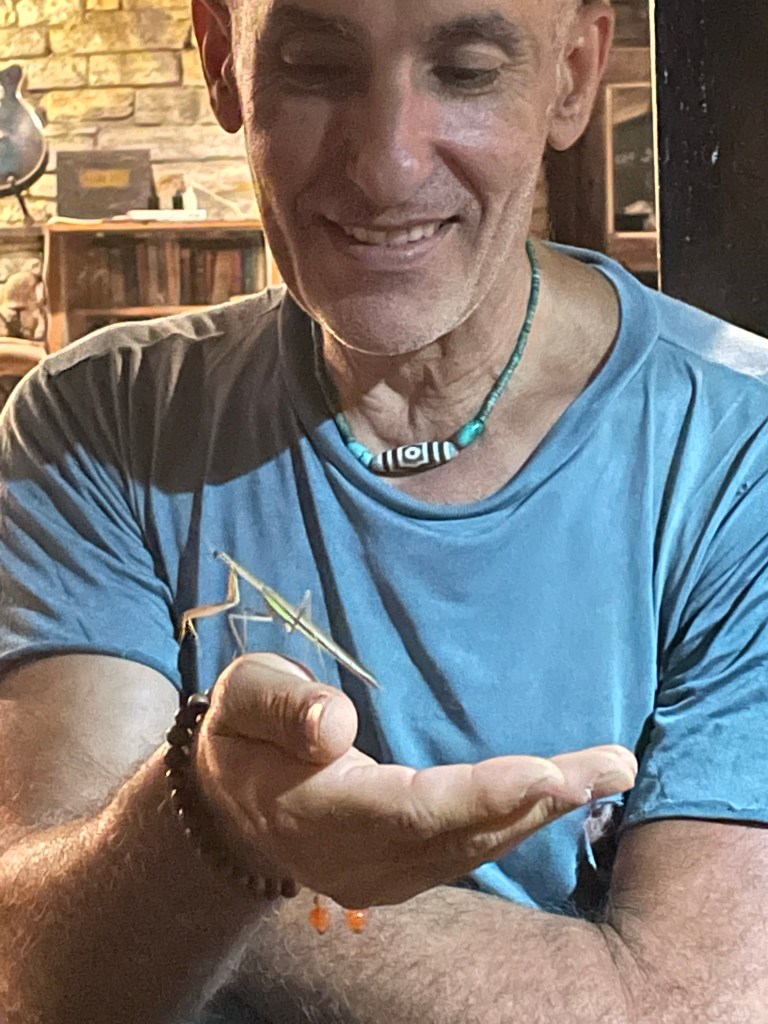
We miss Jackson, guess this clay dog will have to due for now.Delicious variety plate for dinner at The Last ResortSpacious glamping accommodations Matt making new friends with a praying mantis
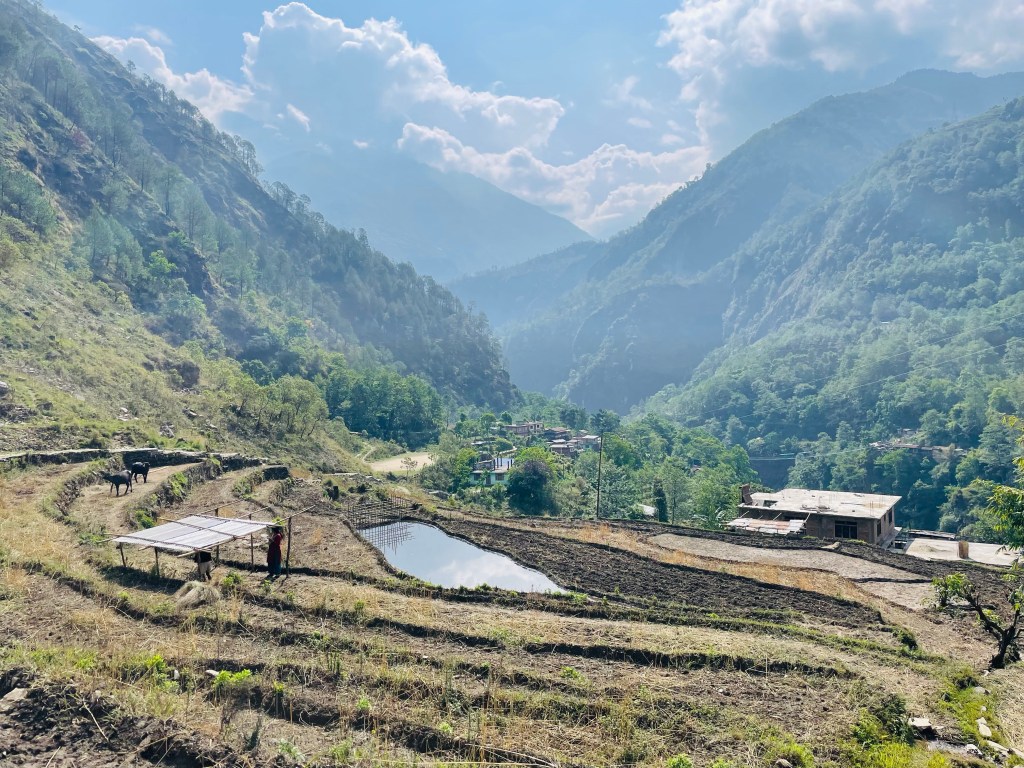
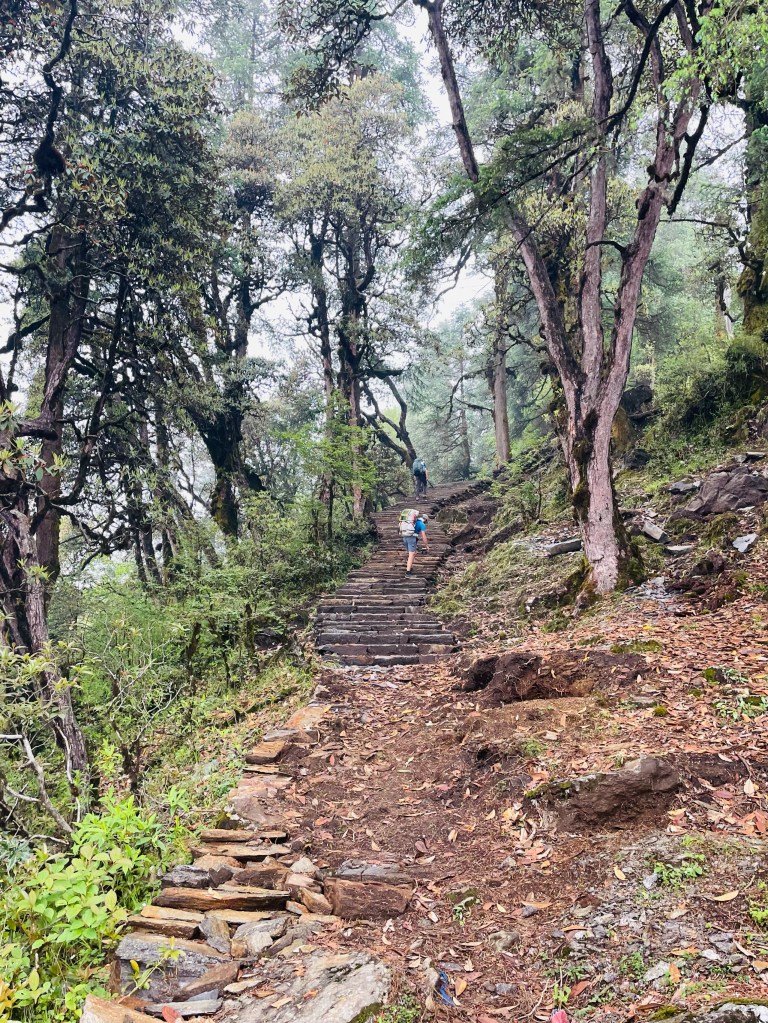
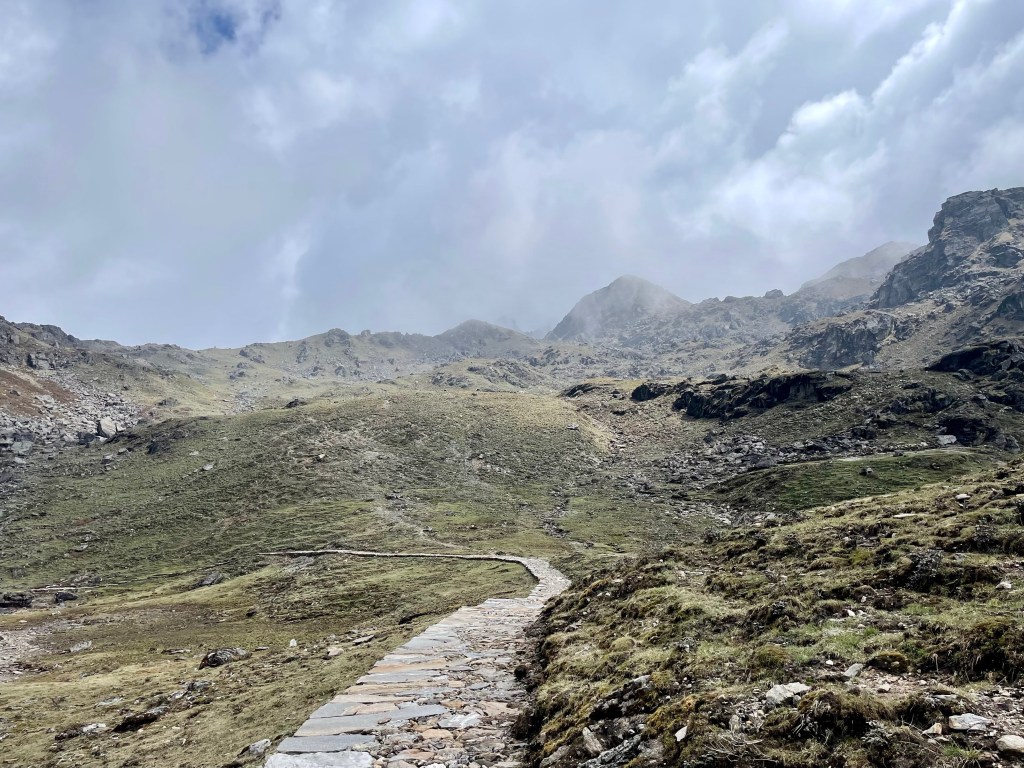
After a nice rest and a morning plunge in the pool we headed up the mountain. The trail was newly built with stone pathways and staircases. We found out there had been a grant from the government to improve trekking in the region and a lot of work had been done during covid. This region was most impacted by the 2015 earthquake so a lot of recent construction has been occurring in the district. This meant many of the buildings and homes in the villages were quite new.
Views leaving Last Resort
As we hiked up the mountainside we crossed paths with several groups of people heading to their municipality’s polling center. The local elections are a big deal in Nepal with a 64% turnout in this year’s election. This year in particular was unique as many young independent candidates won including the mayor of Kathmandu who is a 32 year old rapper and structural engineer. According to our local friends this was possible because many of the youth were talking to their parents and encouraging them to vote for independents and demanding change in leadership.
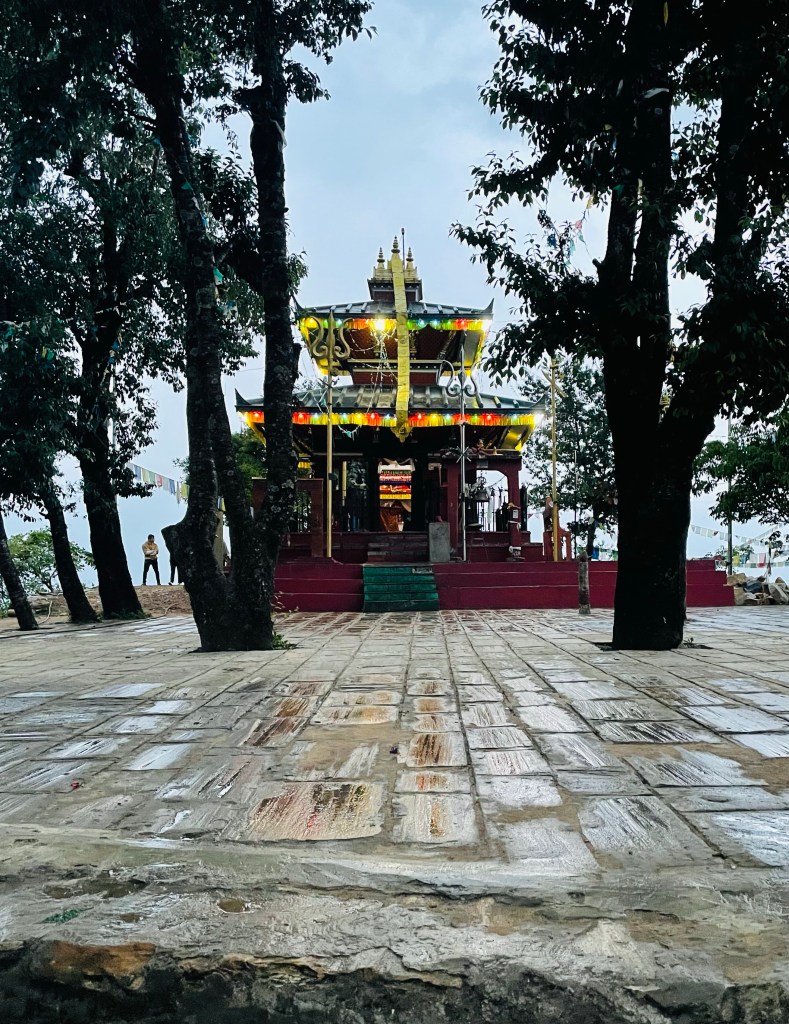
Hindu temple in Listi
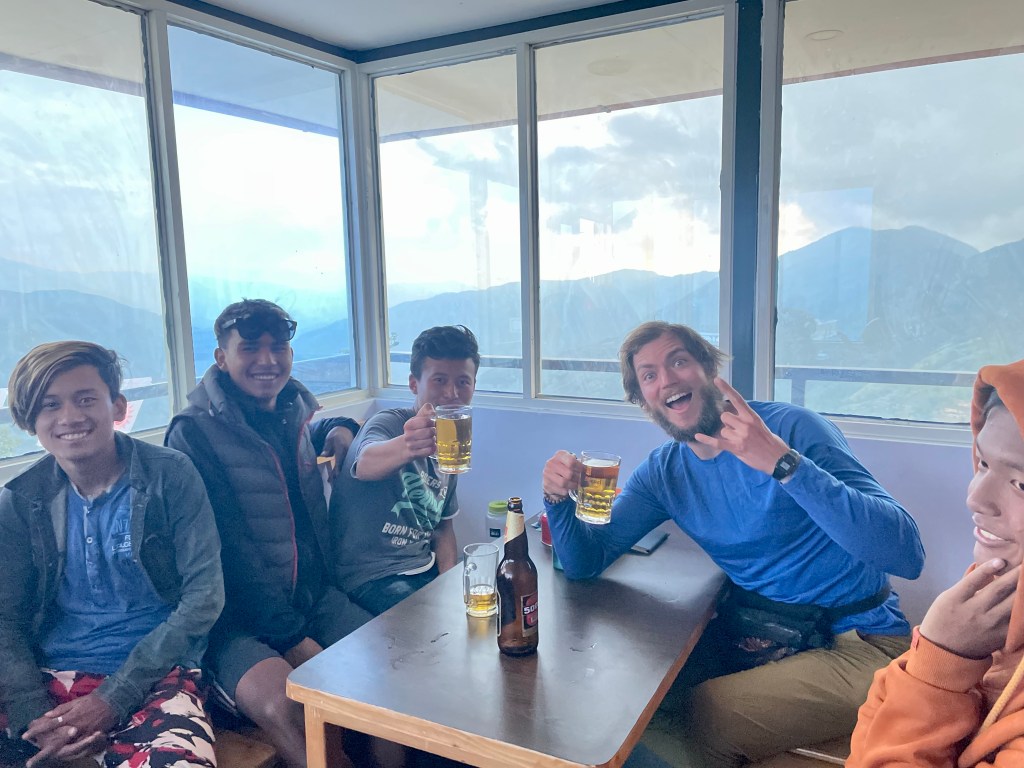
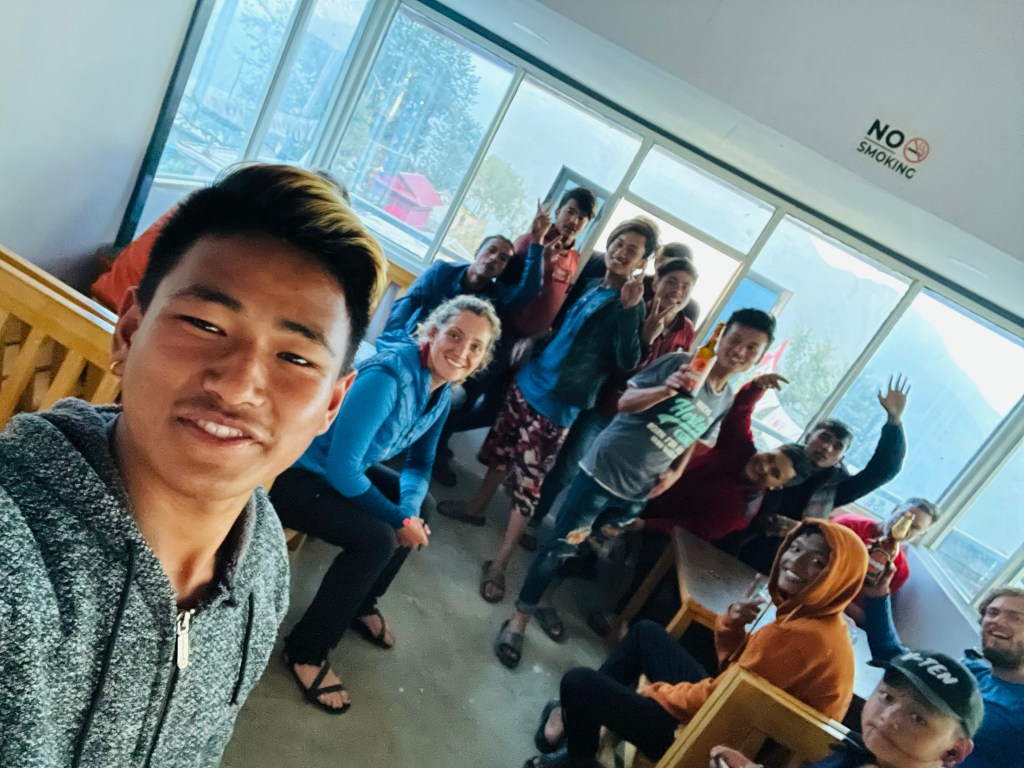
The first part of the hike was hot under the desiccating sun. By mid afternoon we arrived in the village of Listi and welcomed a light rain. We decided to make this our stop for the day. There were a lot of people hanging around because of the elections. We met a group of younger guys enjoying libations and hookah in the lounge of the guest house. It was quite the scene, and as usual we garnered much interest and provided some entertainment. Sarah came to sit with everyone while writing in her journal and was immediately swarmed by the boozey boys with cigarette breath. They hovered over her shoulder trying to read her journal and then took countless pictures with her until she finally retreated back to her room until dinner.
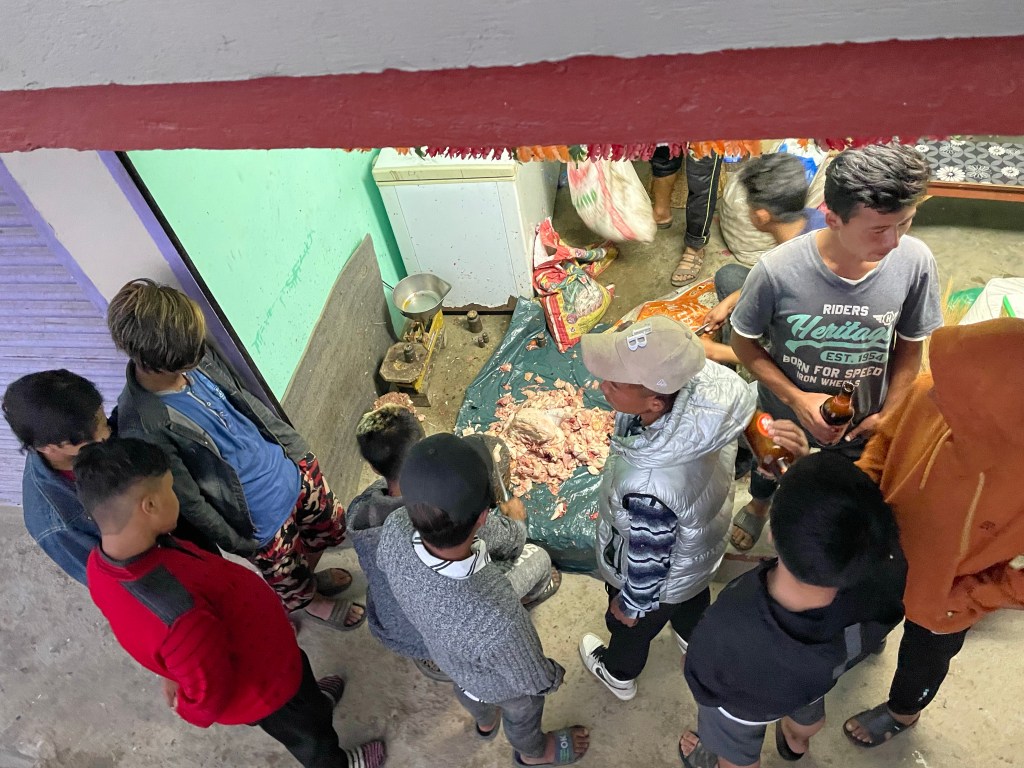
Can’t say no to a free beer When you give your phone to the local bros Mincing up chicken to sell. This was literally occurring about 4 feet from us as we ate our lunch.
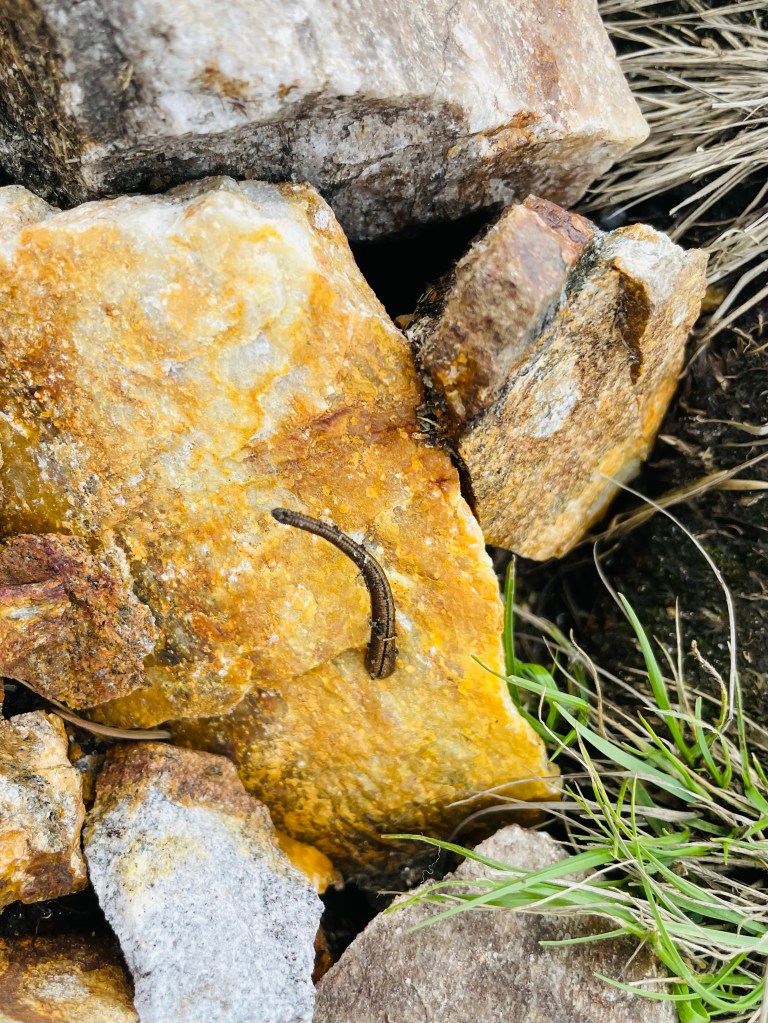
The next stop after Listi was the village of Bagam. Luckily we had ascended a few more thousand feet and the air was cooling. We encountered our first leeches of this section after a light rain during the hike. The weather was definitely deteriorating with lingering clouds and rain each day.
Meet Mr. LeechThe many chortens along the trail on our way out of town. Akin to a graveyard in this location many were built to honor those who have passed. Looking back on Listi (if you zoom in you can see the crowd gathered at the polls)Bagam Gompa More religious relics along the trail outside Bagam
The peaceful little village is primarily Tibetan Buddhist, speaking a dialect from Tibet. It was very quiet when we arrived as many of the villagers were down in Listi voting. So instead we made friends with a litter of puppies and set up our tents.
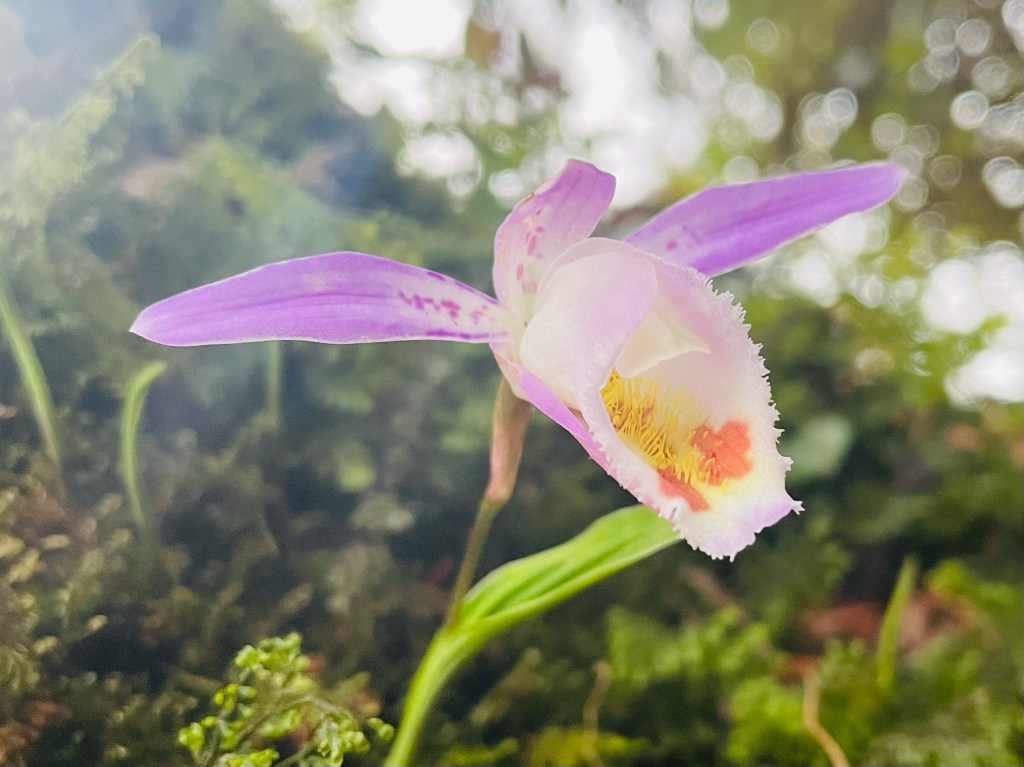
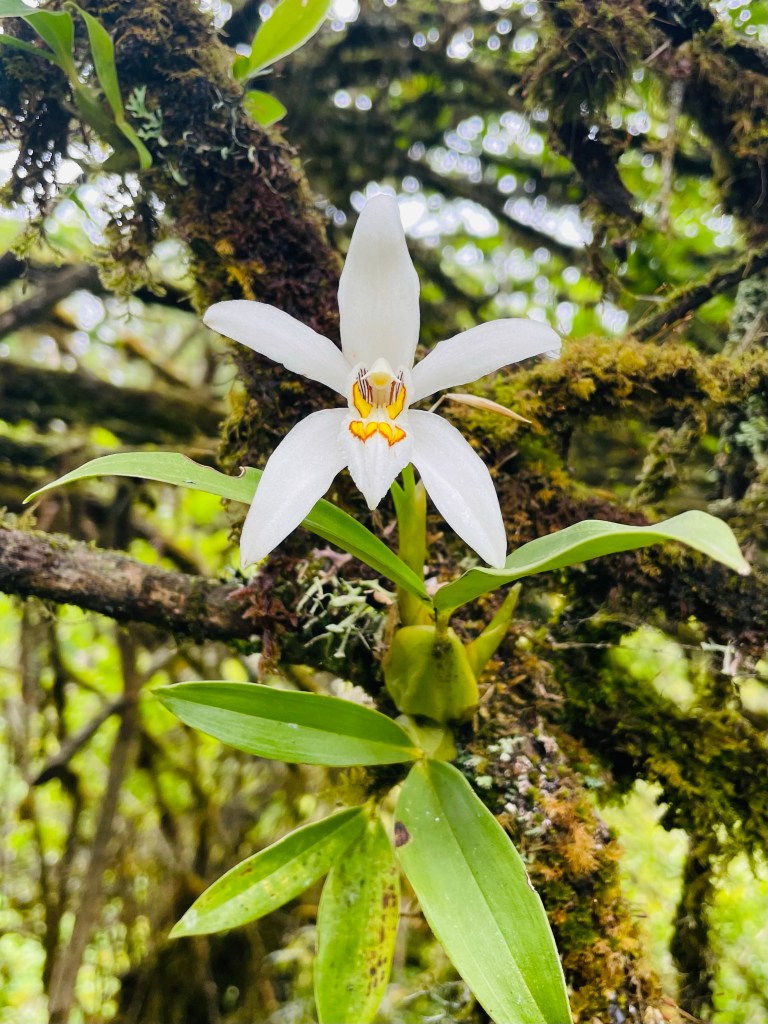
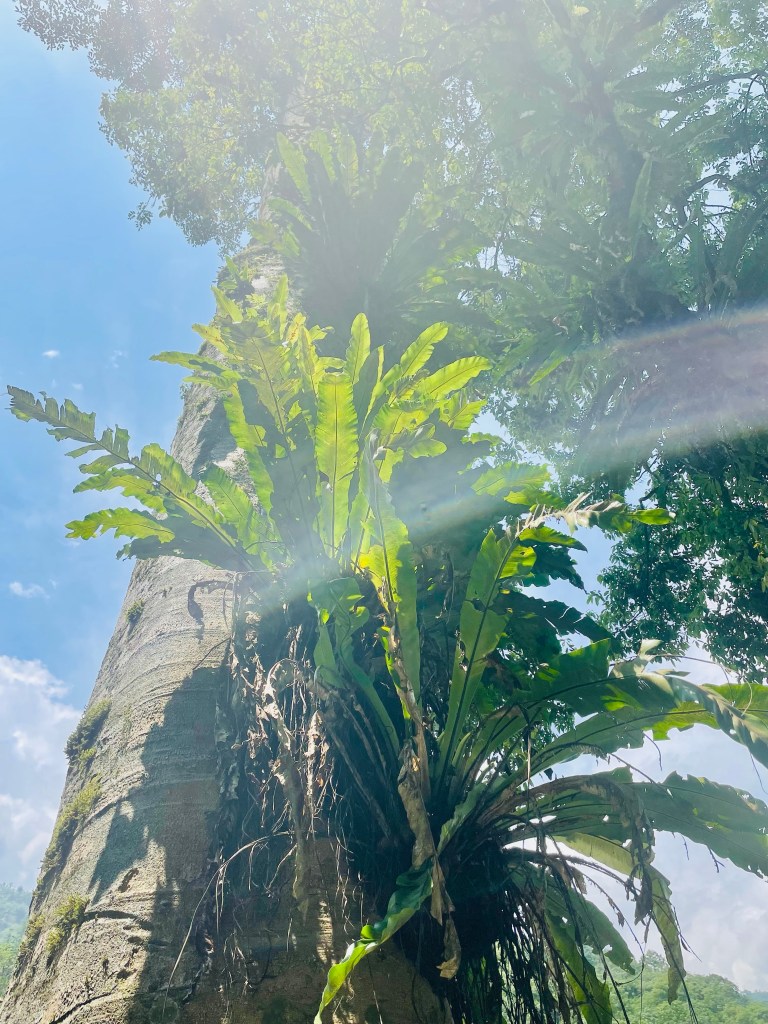
Orchids were growing out of moss patches all along the trail on an unidentified tree.Our tents seen across the way, the main village below and out of sight.
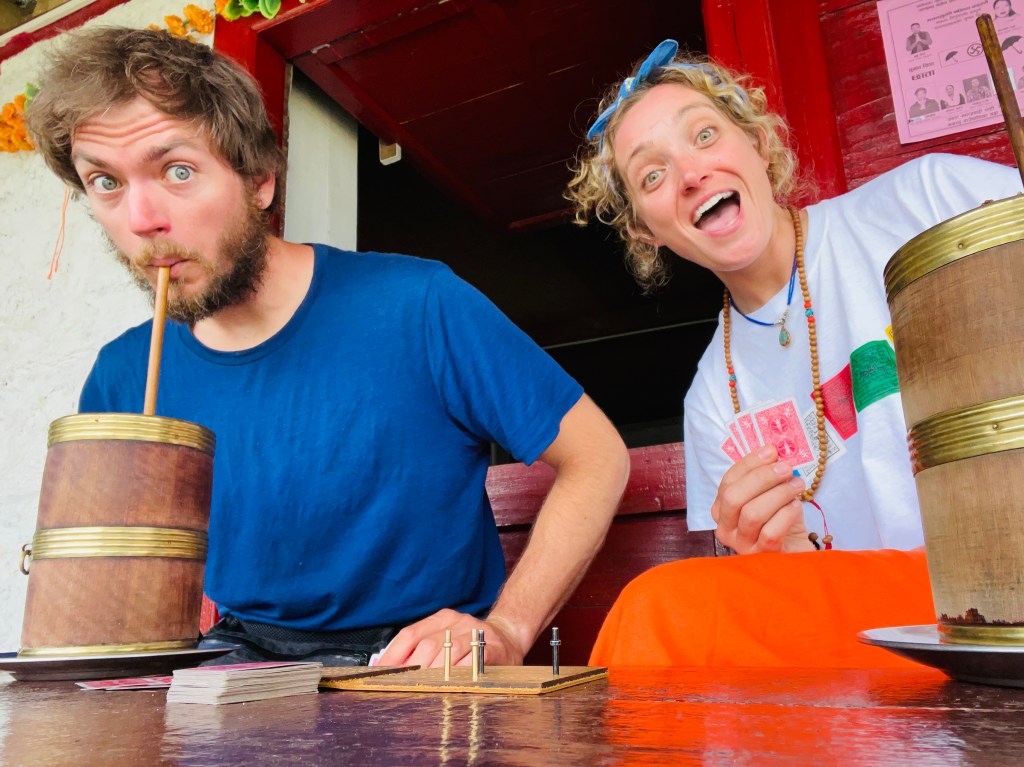
The two of us walked around checking out the area. We stopped in to have some tea with the local ladies and the porters our teammates had hired. Once the rain moved back in we hopped in the tent to watch a movie, which felt odd with cows munching grass by our heads. Once the local guest house owner returned, who was affectionately called Aunti, we played a couple of rounds of cribbage and enjoyed some Himalayan Dragon beer inside her place.
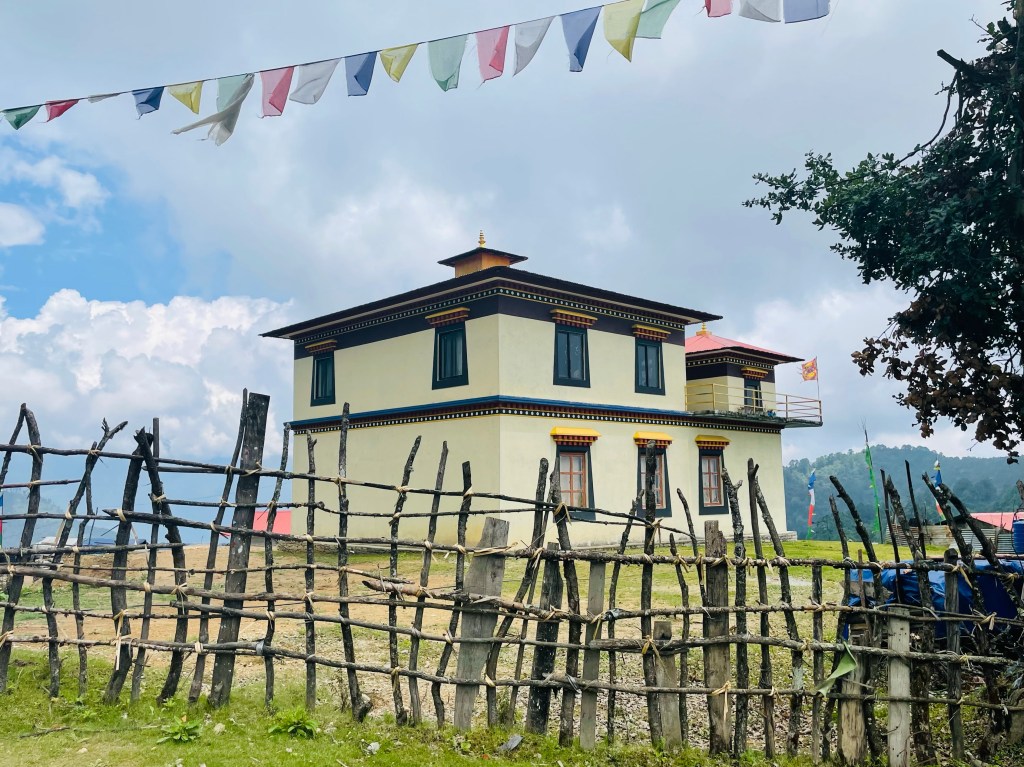
The new monastery
In the morning we rolled down to the guest house where Tanner and Mike had spent the night. We were drinking tea and before we knew it we were dancing to Nepali music and making our TikTok debut. Namgyal who owned the the guest house spoke great English, and his wife Dasangmu, the TikTok star, had a great sense of humor. After some dancing they blessed us with Khadas and showed us the way out of town.
The hike was short again due to some incorrect hiking times on the map. Namgyal from the guest house had shown us pictures of Bharaib Kunda, a lake holy among Hindu and Buddhists in the region. The two of us were still eager to get some miles in so we took off to another camp a couple hours higher and near the lake. We made plans to meet up with the rest of the group the following day in Kyansin.
Hiking up through the mist
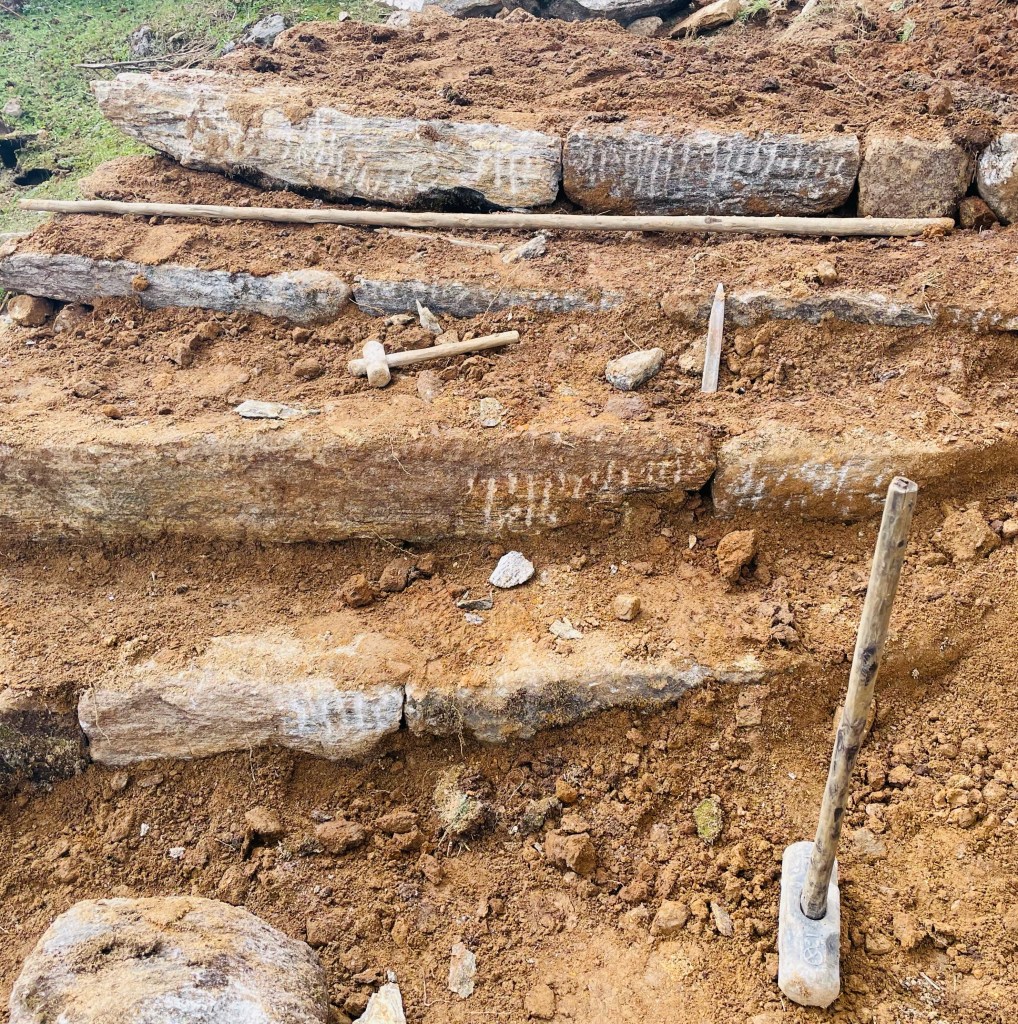
We hiked up to Bharaib Kunda the following morning in the clouds. Passing trail crews every 20 minutes throughout the hike. They were hunched over with chisels and hammers breaking up stones. We wanted so badly to give them all safety glasses!
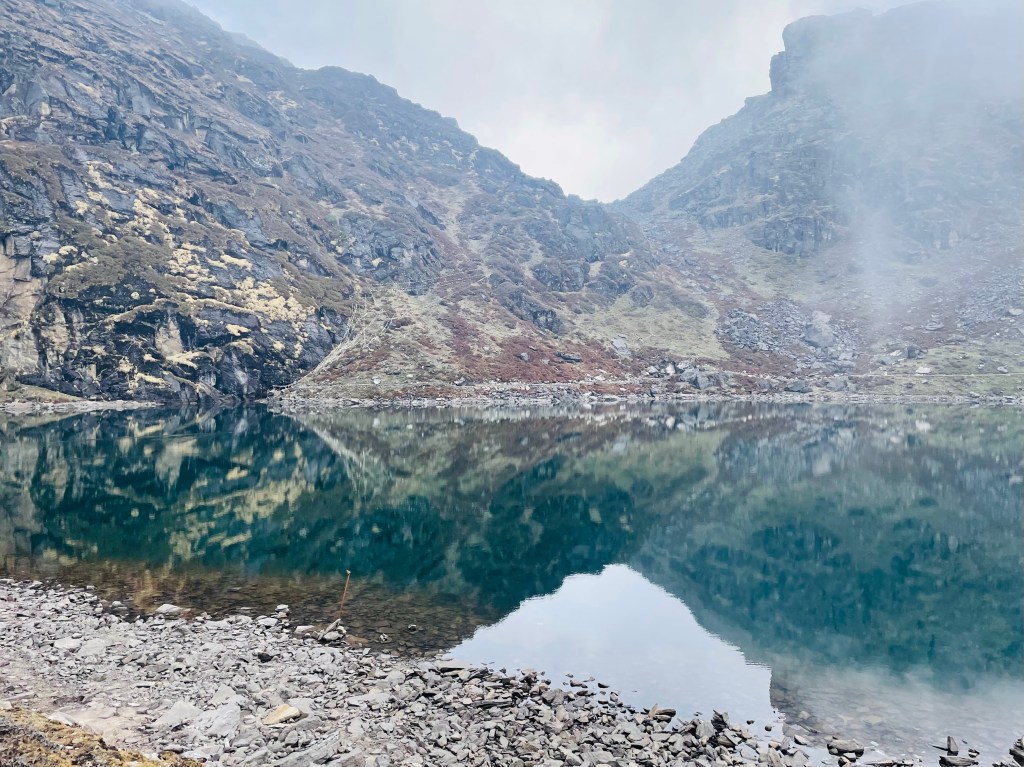
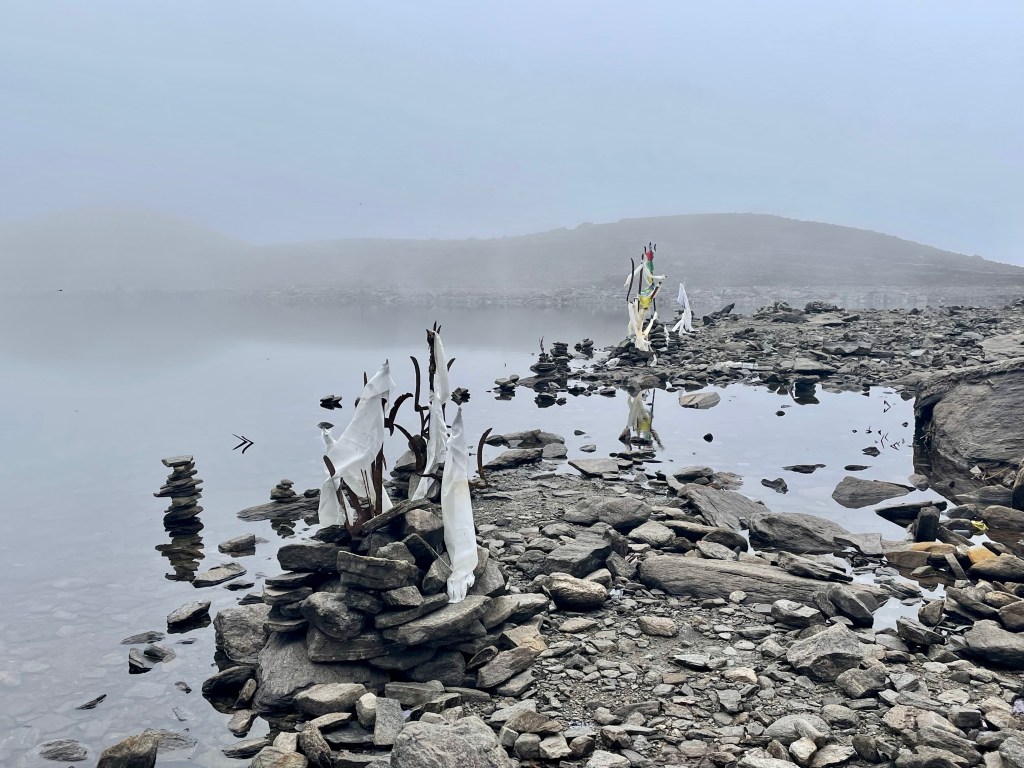
When we arrived at the lake it was decorated with the most khadas and prayer flags we had ever seen. The Hindu had filled the lake with little tridents for Shiva. We watched for an hour as the fog came and went, disguising and revealing the lake.
The lake is at an altitude of 14,000 feet and surrounded by craggy mountainsidesTridents erected out of the rocks.Sarah built a cairn for her Khada Spigots designed so holy water can flow out and bath visitors
We headed back down to pack up our tent and find the trail to Kyansin. Just as we headed out of camp Tom noticed a Dzokyo had just given birth to her calf. Her placenta was still emerging and she was licking the shivering little calf clean as we walked by. To see the cycle of life occurring on a cold rainy mountainside morning brought some perspective. The moment was magical.
Welcome to the world little one.
The quickest way down to Kyansing was a little trail we could see on satellite image on the phone. We had to descend over 5,000 feet to return to the valley floor. So we headed down through a Rhododendron forest until we emerged on a trail. After a stop by a stream to fill water we began to realize the leeches were swarming us in numbers we hadn’t seen before. We tucked our pants into our socks and tried to keep moving fast. As soon as we would stop to pull one off you’d have find another 5 jumping on. We were outnumbered.
An old wooden spool in the Kharka
After a few hours the trail began to flatten out, but the rain was picking up. Instead of the trail becoming more obvious as we neared the village it was slowly disappearing. We stopped and backtracked multiple times to find a path but each time it would disappear. Eventually we could see part of the village down and across a small gorge with a stream. At this point it was a complete downpour and we were totally drenched. We started slipping and sliding in the mud down the hillside. We avoided any injuries and the laughter meter was high. Someone had blocked the creek crossing with piles of logs to keep in livestock, so we had to find an alternative route. We slid down into the gorge grabbing plants to find a way across and out. We eventually landed on the road below and then walked into the village. The stairs and village trails had become waterfalls running thick with muddy water. We searched for our group knowing they would be in one of the village houses. Eventually we heard voices from under a metal roof and saw the porters on the porch. It was Namgyal’s sister’s house who was taking us all in for the night and letting us sleep in their prayer room.
Looking out on their garden from the porch
We quickly huddled underneath the roof to get our wet clothes off. Leeches covered our shoes and socks making it a meticulous process. Then we flocked to the fire in the kitchen warming ourselves inside and out with a Tongba. The other guys had been there for a few hours before our arrival. After some time we had a group discussion leading to the decision to head back to KTM. With deteriorating weather and a family emergency for one of our group members, the Langtang section wasn’t going to work out.
That evening while everyone was fast asleep, Sarah reached up to itch her armpit finding what felt like a dreadlock like knot in her new nappy armpit hair. She worked to detangle the mess and was soon inoculated by the familiar metallic smell of blood. It wasn’t a dreadlock but a chubby leech who’d been pit camping and gorging on blood. She spent the rest of the night lying still, hypersensitive to every tickle or slight itch. As much as we didn’t want to leave the trail, the monsoon had moved in and the leeches were less than encouraging. The mountains had spoken.
After a short stint on the Langtang section of the GHT route we returned back to Kathmandu. It was necessary that the team leave the trail. No need to get into the nitty gritty on here. The two of us still had a desire to continue hiking and knew that in order to do so safely it would be best to head back to Kathmandu. So 5 of us plus 2 porters crammed in to a Bolero camper jeep.
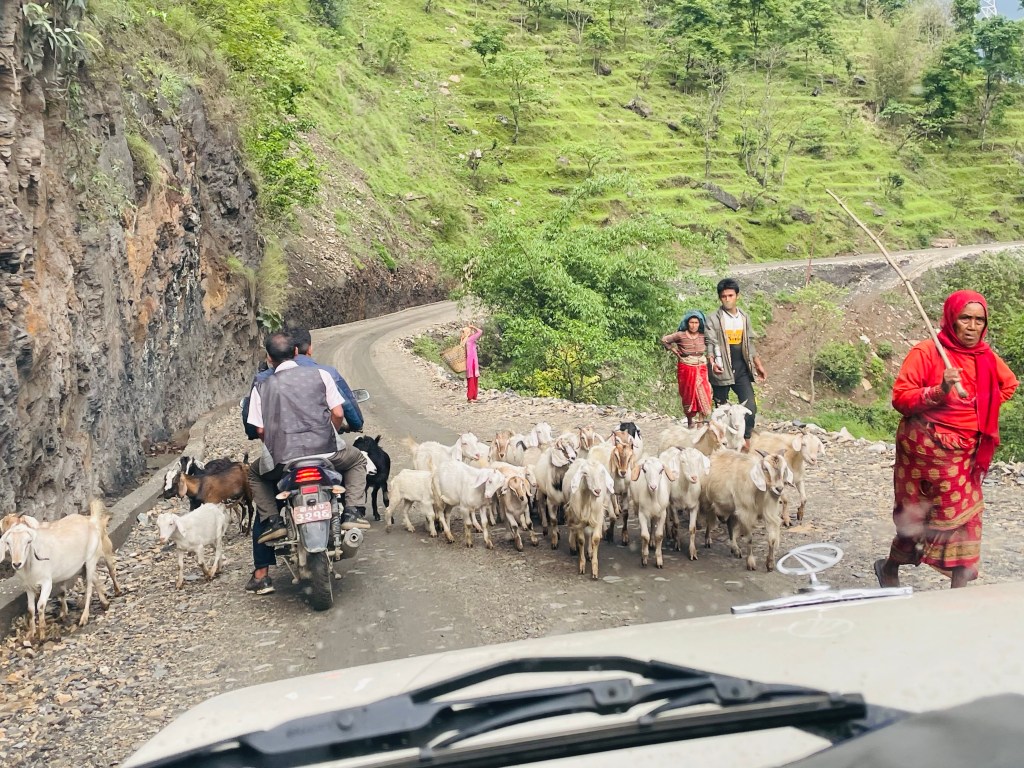
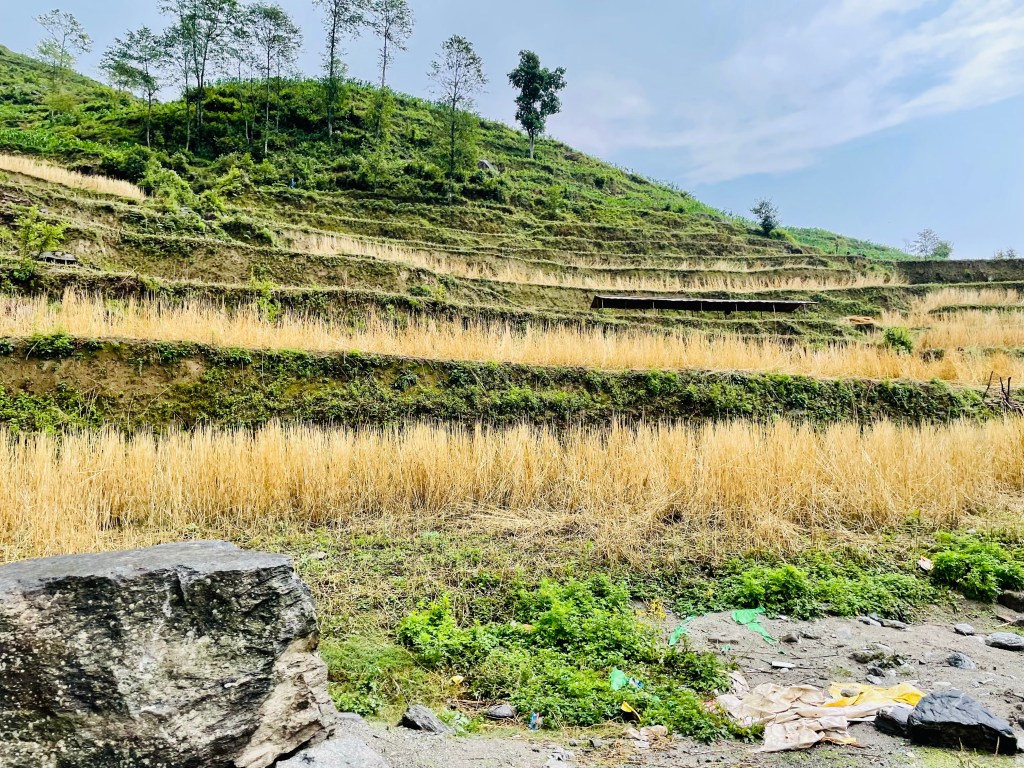
We jeeped down from Kyansin in one long day. Bouncing our way through the mud and beautiful country side. We passed kids herding their family goats and water buffalo while winding our way through terraced fields that covered entire mountain sides.
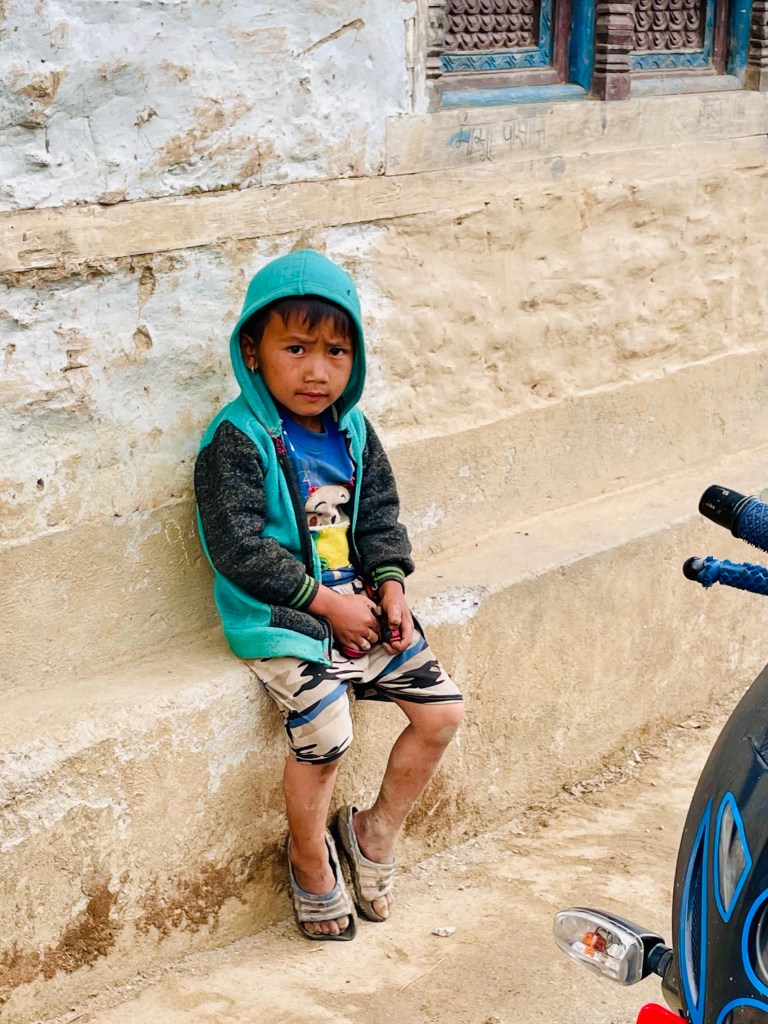
Goat brigadeTerraces of wheatWe met this kiddo when our driver made a quick stop to pound an energy drink. He has a sling shot clutched in his hands.
After 3 1/2 hours we emerged on the road we had come in on. Soon after the downpour of the monsoon hit. The roads began to flood and the rivers turned red. When the rain got too we heavy we pulled off at a little cafe so the driver could eat.
Monsoon has arrived
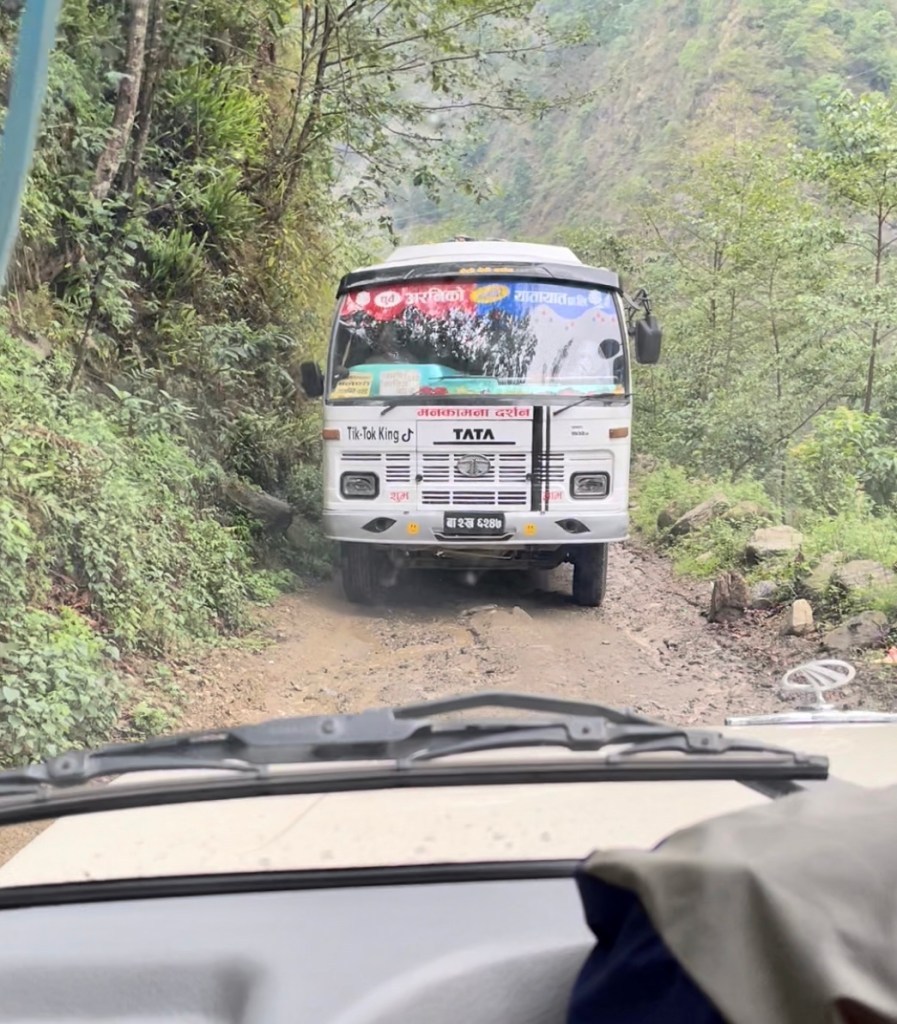
Once it eased we finished the final drive to Kathmandu. Squished in the front next to the driver, the two of us were gripped as he passed every vehicle on the road. We have become more accustomed to the chaos of the roads in Nepal, but still can’t help but feel our hearts skip when we pass large trucks and buses around a corner.
After a 20 minute showdown our driver finally retreated, backing up the the hill so the bus could pass.
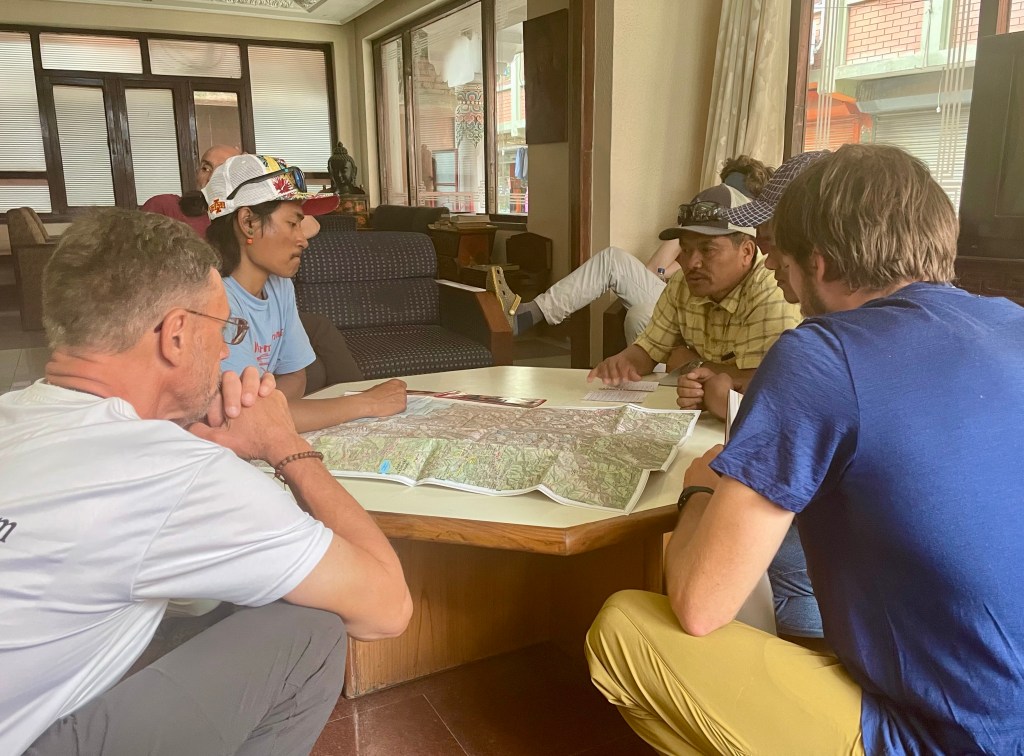
Once back safe in Kathmandu we discussed plans. The group decided not to get permits for the peak in the far west so we started devising a plan to hike the upper Dolpo section of the GHT. There’s a few reasons as to why we want to hike this section out of all the others. One, is that it is west of the Annapurna range which is the start of the rain shadow. This greatly reduces precipitation during monsoon season, although not completely. The other reason being that it is another more seldom traveled region with high passes and beautiful lakes. One that we had all been dreaming about since the beginning.
Back to the drawing board
The plan is to fly from Kathmandu to Jomsom then hit the trail in Kagbeni. We will be on the trail around 30 to 35 days hiking west towards Simikot. Once we reach Simikot we will fly back to Kathmandu hopefully in time to catch our flights home. You will be able to keep following us with a GPS link, it will just be under a different link name.
We intend to continue retro posting when we can. There are a lot of fun Kathmandu adventures we are excited to share! The city that initially seemed so wild and rough has started to feel like home. Our new friends here have done so much to share this beautiful country with us and we can’t thank them enough.
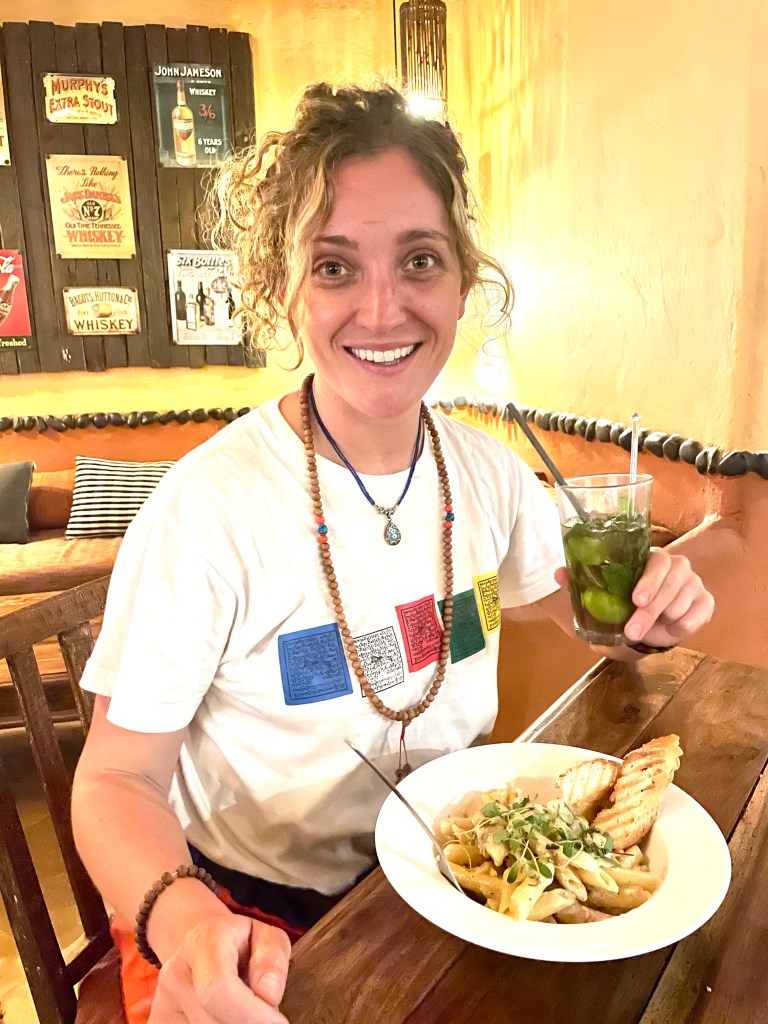
The hustle and bustle of Kathmandu was a bit overstimulating at first, but our eyes and bellies were eager to indulge in all the morsels we had been dreaming about on the trail. Arriving in KTM late, after waiting for a delayed flight in the hot Tumlingtar airport, we hit the Road House for ice cold mojitos, nachos, pasta, and dessert.
Nachos!
We had 4 unplanned days back in Kathmandu, before heading back to the trail, so we asked our friend Gombu for his advice on the top sites to visit. Even though we missed the sweet pace of the trail, the natural beauty of the mountains and jungle, and simplicity of country life, we were having fun together no matter the circumstance. So we set off to explore the Kathmandu we hadn’t had time for previously.
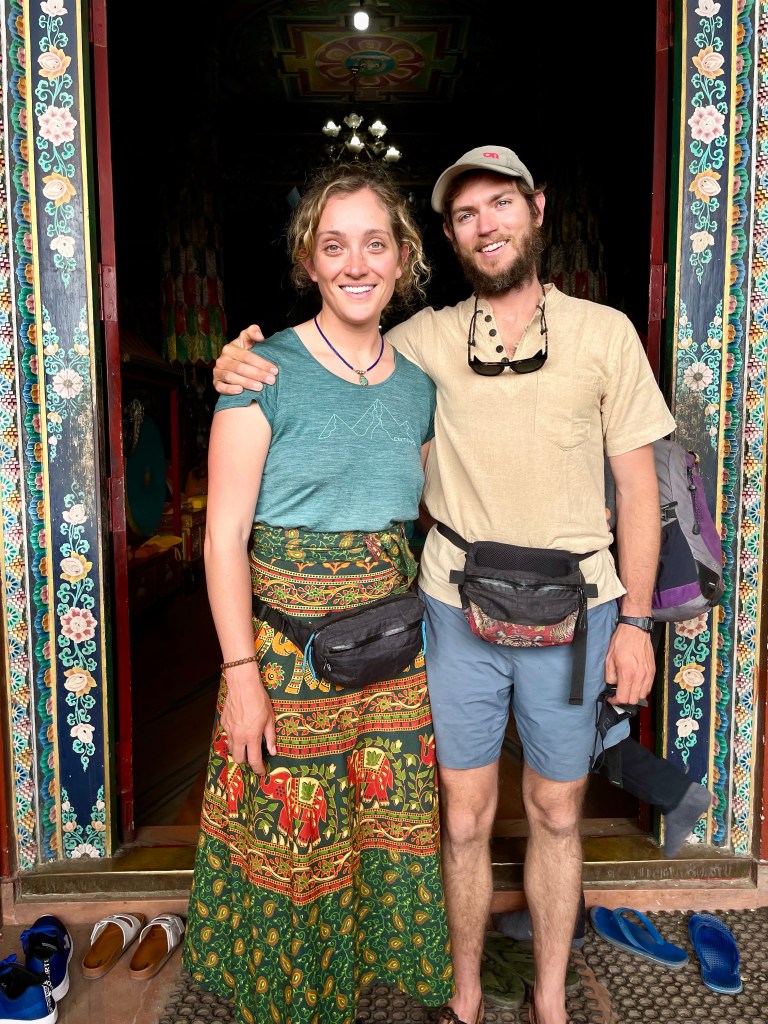
Entrance to the Guru Lhakhang Monastery
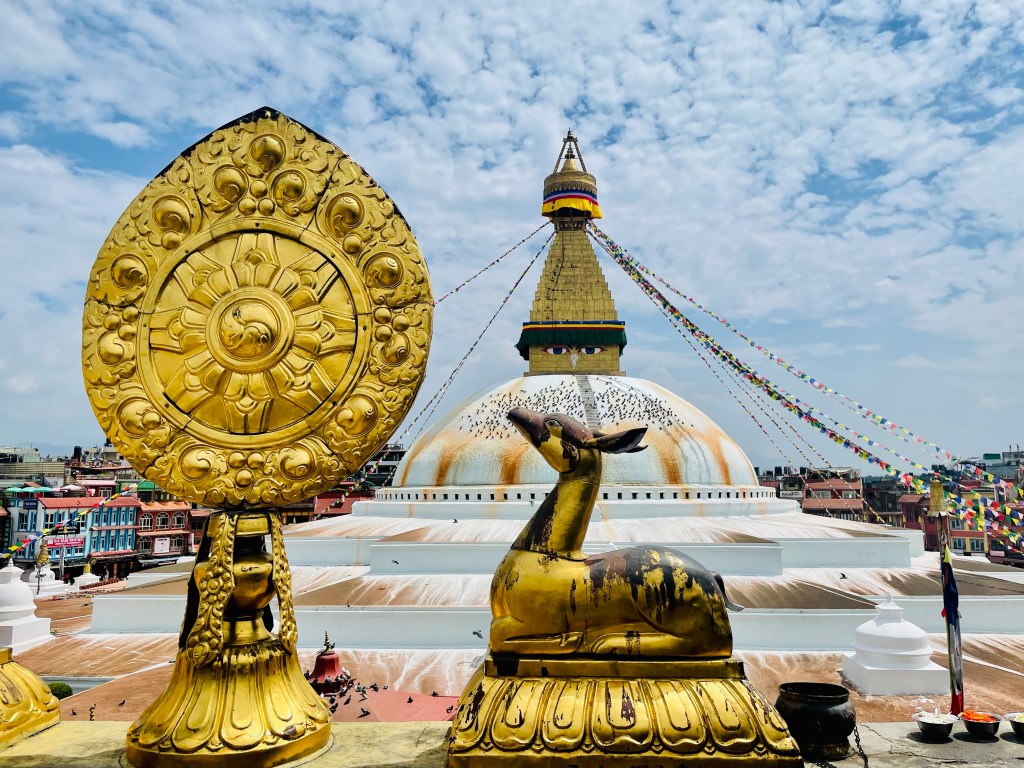
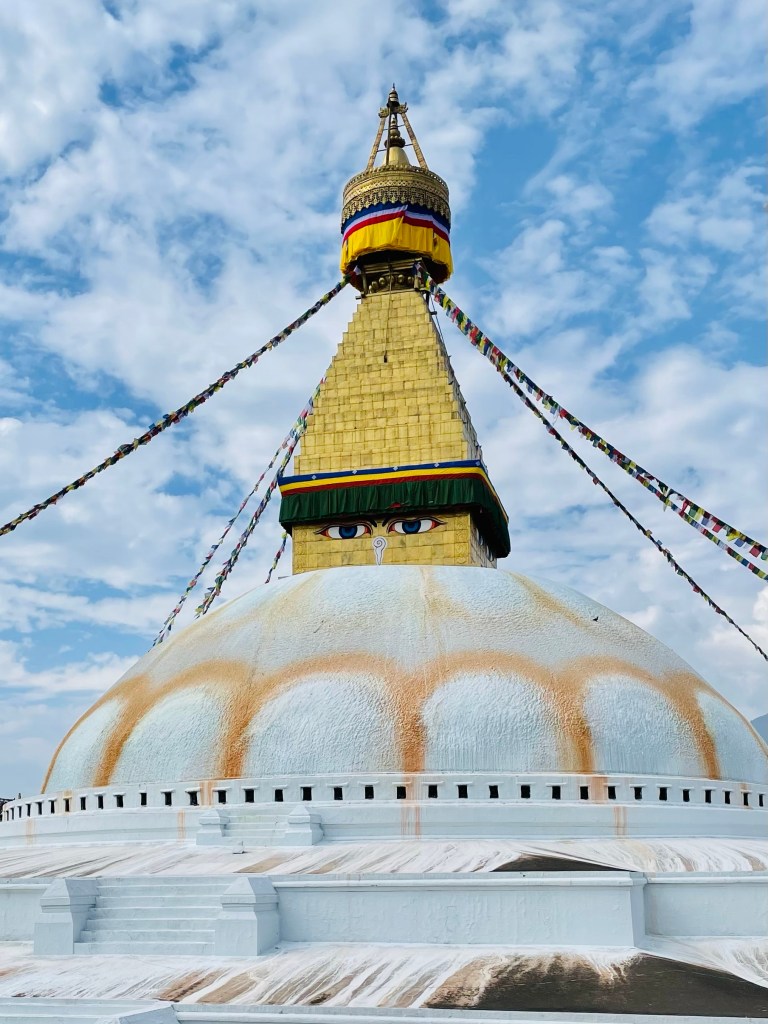
We caught a taxi from Thamel to the Boudhanath Stupa, a famous Buddhist temple and giant Stupa. It was built some time in the 14th century and is one of the largest temples in Nepal. Once inside, there were store fronts built around the temple that looked like an old movie set. We were quickly greeted by a young boy named Depak who initially said he just wanted to practice English, but it soon became apparent that he was trying to sell us an expensive mandala. This hustle is a common trap for foreigners, luckily we had been forewarned. Mandala’s are beautiful works of art that at times are painted with a single yak hair taking over a month to make. Depak was a great salesman and friendly kid, but we had to explain we weren’t in the market to spend 100’s of dollars on a Mandala. He was quite the tour guide though and we appreciated what he could teach us about the temple.
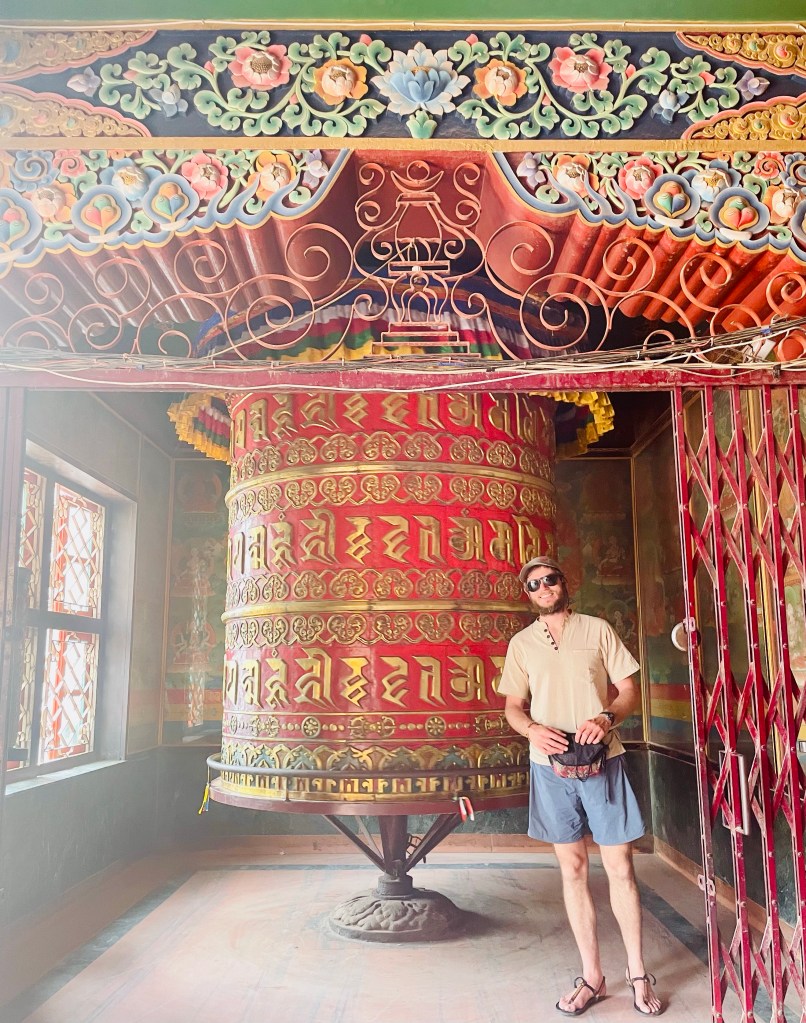
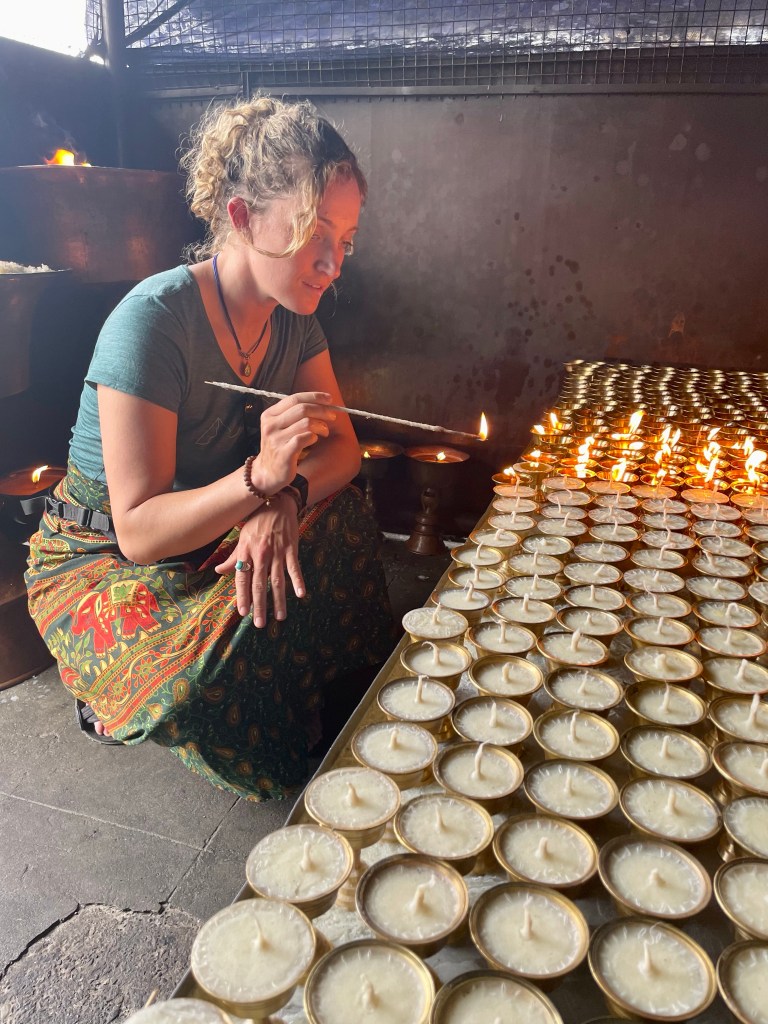
Prior to covid you could walk around on the stupa.Tom spinning a life size prayer wheel.Sarah lighting butter lamps. She lit them all, we were there for over an hour…. j/k
Butter lamps are an important symbol of many Buddhist beliefs. They are found in all the monasteries and homes of Buddhist followers that we have met. One valuable meaning behind the lamp is that by creating more light one can dispel darkness and ignorance.
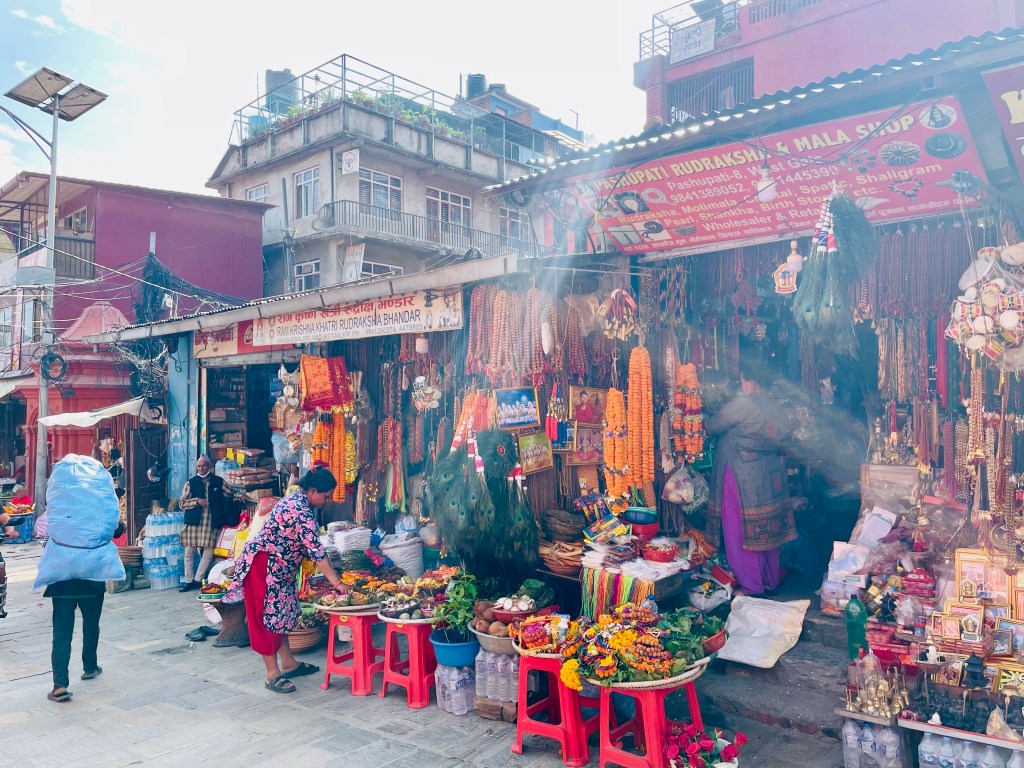
Market outside of Pashupatinath
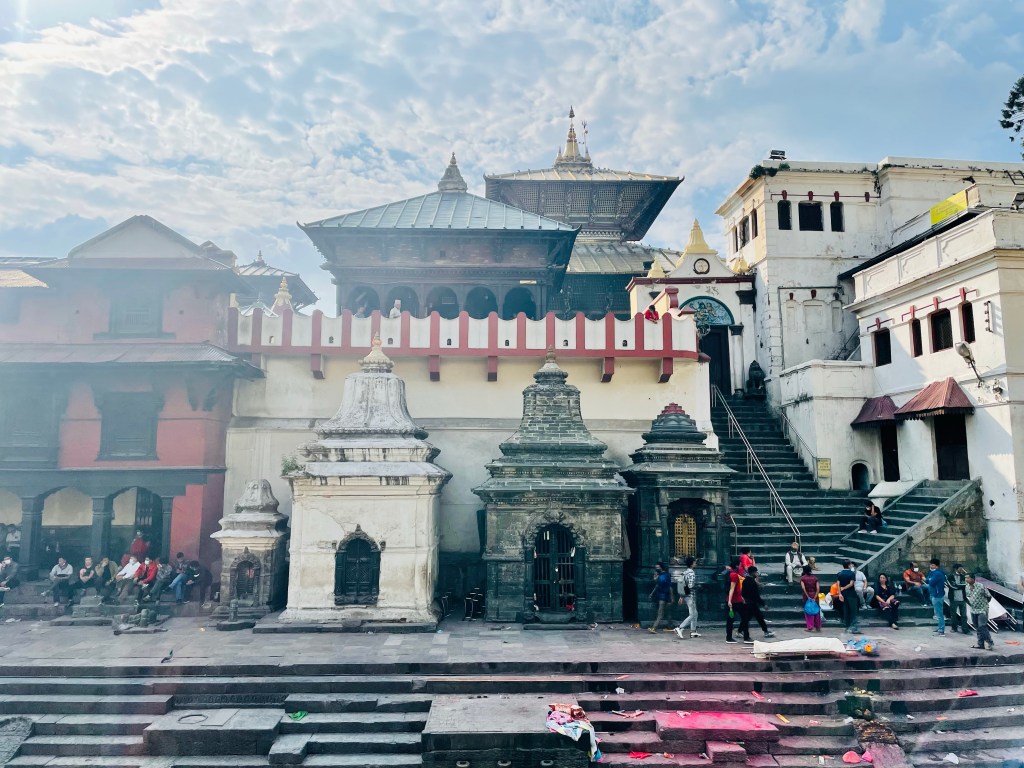
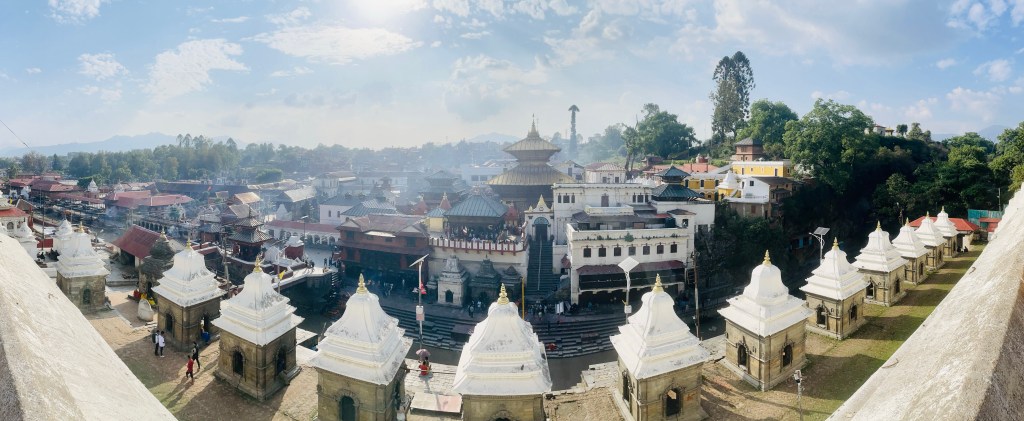
After exploring the Boudhanath Stupa we walked to the Pashupatinath Temple. As we neared the temple the city began to change around us. The pagoda architecture and stores clearly had a different feel as we moved from the largely Buddhist part of the city towards the famous Hindu shrine. This is one of the oldest and largest Hindu temples in Kathmandu and a famous world heritage site. Pashupatinath is a giant complex consisting of hundreds of temples situated along the sacred Bagmati river.
Cremation site along the banks of the Bagmati River.
When we arrived the air was smokey from the ongoing cremations. The Pashupatinath Temple is open 24 hours and is the one place in Nepal where Hindu people come when they die. We met a Nepali man who gave us a tour explained the different platforms for regular people, wealthy, and royalty. Each site is more holy, and more expensive, as it nears closer to Shiva’s temple. If someone is homeless or has no money they are still provided a platform and all costs are covered. He explained the process and earthly elements involved. The washing of the body in waters of the sacred Bagmati, the fire, then the earth, and how one of the family members (historically the oldest male child) would take the last bit of ashes, walk into the river and tuck it into the river sediment.
The most holy cremation platform in front is for the wealthiest or royalty.
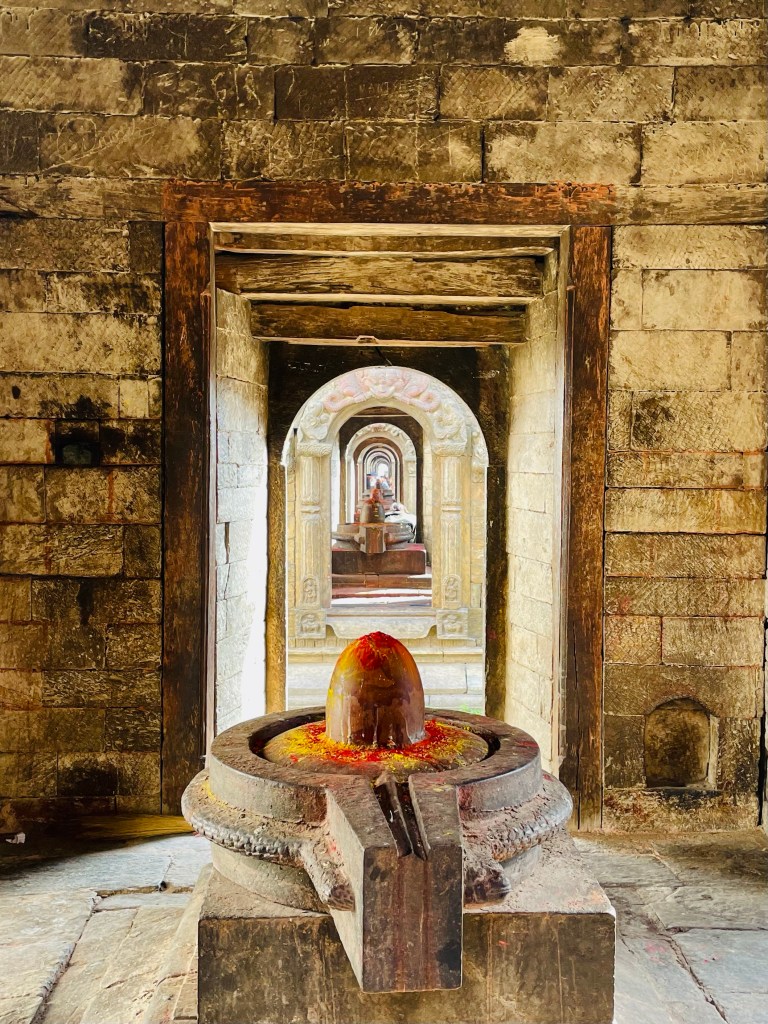
Pashupati comes from the meaning ‘Lord of animals’ because Shiva was the protector of animals, hence why his image is often depicted with the 10 snakes. The main shrine at the center is the head of Shiva and one of the most holy shrines of them all. The story goes that one of Shiva’s reincarnation’s was an antelope, his horn was discovered in a nearby pasture. A herdsman noticed his cow would shower the dirt with milk in one spot leading the herdsman to dig down finding this previously sacred horn. This horn is the sacred linga to Hindu followers and now resides in the primary temple at the center of Pashupatinath.
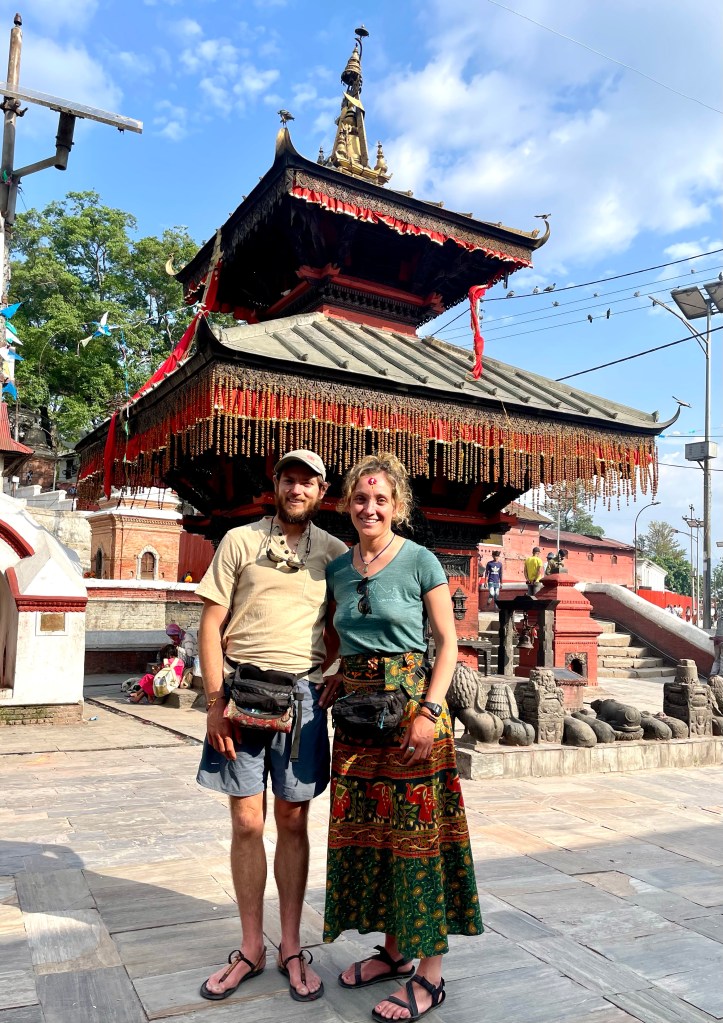
You can see the animal statues lined up behind us. This is the main site of animal sacrifice at the temple.
Our guide told us stories about human sacrifice that previously occurred once a year. One of the wildest stories we heard is that they used to take the tip of the thumb of the last sacrificed person and put it in soup. Then the entire community would eat the soup, blindfolded, and whomever got the thumb would be the next sacrifice. Nowadays they use animals, frequently goats.
Pashupatinath Temple
It is unknown exactly how old the original temple is. It was rebuilt after Muslims destroyed the complex in 11th century A.D.. Due to this attack and still to this day no one other than Hindu followers are allowed in the large Shiva temple at the center of the complex.
Getting blessed by the Sadhus
Around Hindu temples there are often Sadhus, aka Hindu Saints, who devote their lives to a spiritual path of meditation and purity. They take a vow never to work and must ask for money. They are frequently seen around Hindu temples decorated extravagantly with face paint and offer to take pictures with you in exchange for rupees.
A long row of temples designed to look like a series of mirror reflections
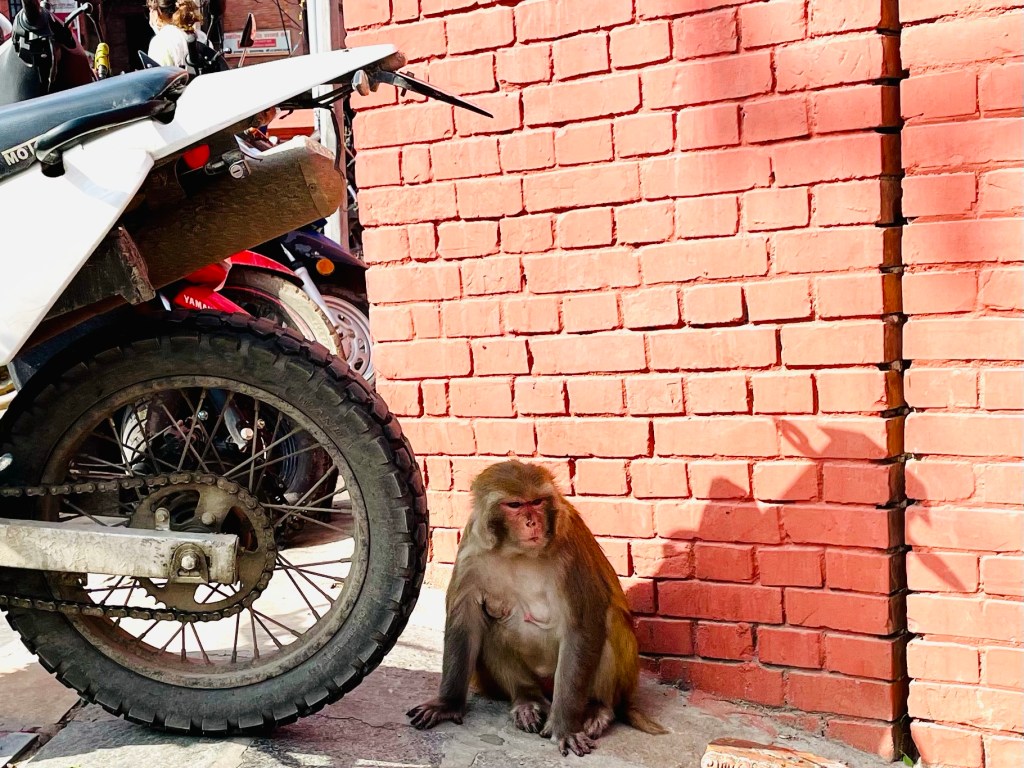
There is also a famous TikTok monkey at this temple. It initially reached out and blessed someone which led to its fame. We did not visit it, but we’ve heard it has become more aggressive over time. Hmmm, wonder why? https://youtu.be/uy7erkOT3Xs
Casual monkey sighting
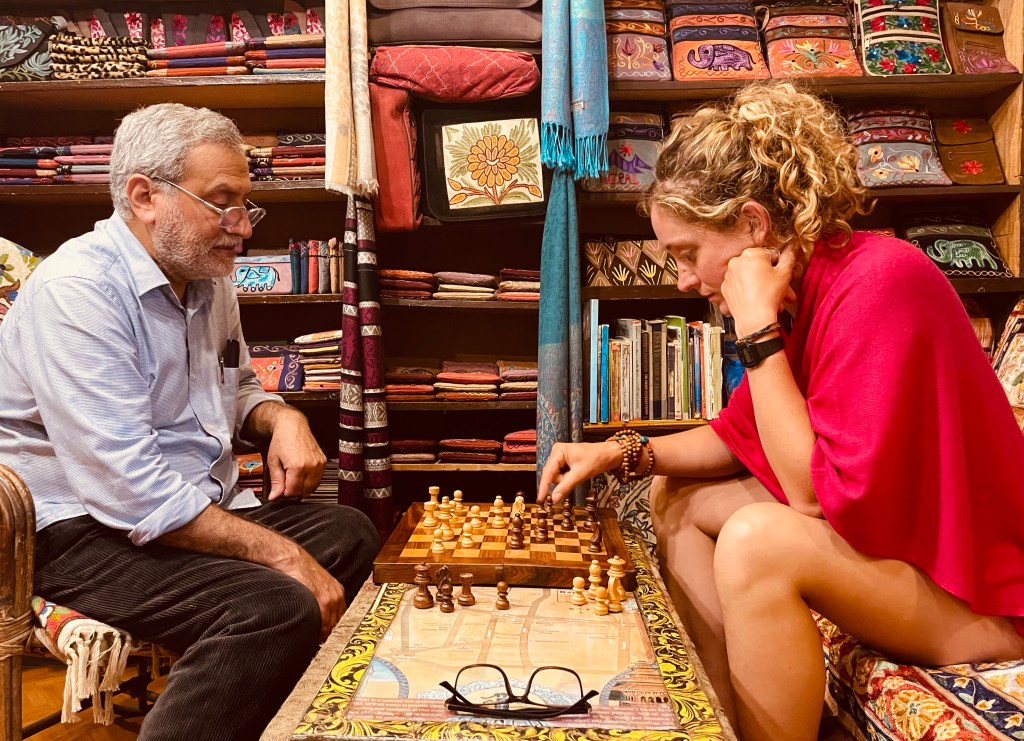
And of course no stop back in Kathmandu would be complete without a stop at Rug Up Originals to visit our friends Quayoom and Yusuf. They have become our Kathmandu gurus, sharing advice and providing us with compliments and encouragement for life and the trails ahead.
Sarah and Quayoom engrossed in a chess match.
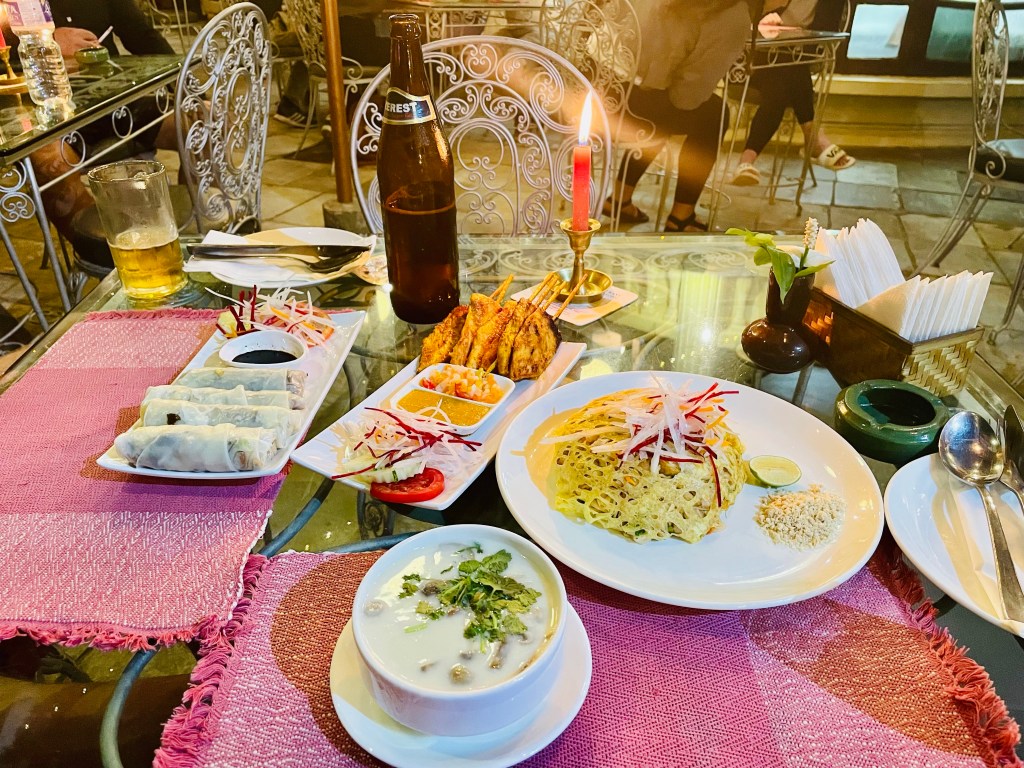
We enjoyed our last meal in the city at Yin Yang and got ready for our next section in Langtang where we would hike for the next 2 weeks. The plan is to hike until we reached our time frame for renewing our visas, head back to Kathmandu, then back out to the trail again.
For those wondering about the gps tracks here’s the update. Sarah got sick with a upper respiratory infection and after 4 days at 16,000 ft it was advised to go down to a lower elevation to recover. The two of us headed down with a plan to take a little detour and meet up with the the group in Namche. After 2 days we received a note that another member of our group was very ill with fevers and all 3 team members had helicoptered out to Kathmandu. With no way to talk from the mountains we knew we would hike to Num (our back in service update) to make some calls. Sarah was feeling better after a few days rest down lower so we embarked on a 3 day hike out to service. For the sake of meeting up with the group we decided to jeep to Tumlingtar and fly to Kathmandu. Our team member’s fevers had cleared and he was doing better by the time we talked.
Once we all reconvened in Kathmandu the decision was made to start in the far west and hike back towards Kathmandu. We would start by climbing a peak that we intended to climb at the end of the trip and then hike east on the trail. The one hiccup is that Nepal is smack dab in the middle of elections this week and basically the entire country is shutting down which makes getting permits a challenge. During this time, everyone returns to their homes, often villages high in the mountains or other remote regions, to vote in their local elections. The permit would likely take over a week to get in hand, so instead of waiting in Kathmandu, we decided to hike a section of the trail in Langtang National Park. We are hiking this morning after jeeping from Kathmandu to the start of the trail in The Last Resort.
Our 4 day stint back in Kathmandu was really nice. Eating all the food, taking in more sites and enjoying the company of our Kathmandu compadres was healing. We are adapting to the changes and enjoying the wild flow of life in Nepal. We will continue to retro post on our blog when we have service.
After 3 nights and 2 days of rest we embarked on our journey to Num. Some people said 5 days to get there, while the locals said they do it in 2 or 3 days. We hoped to do it in 3 days so we could contact our teammates and family as soon as possible. It seemed a little ambitious since our packs were jam packed with mountaineering gear and food we had brought for the high passes, but we were eager for a challenge and some adventure.
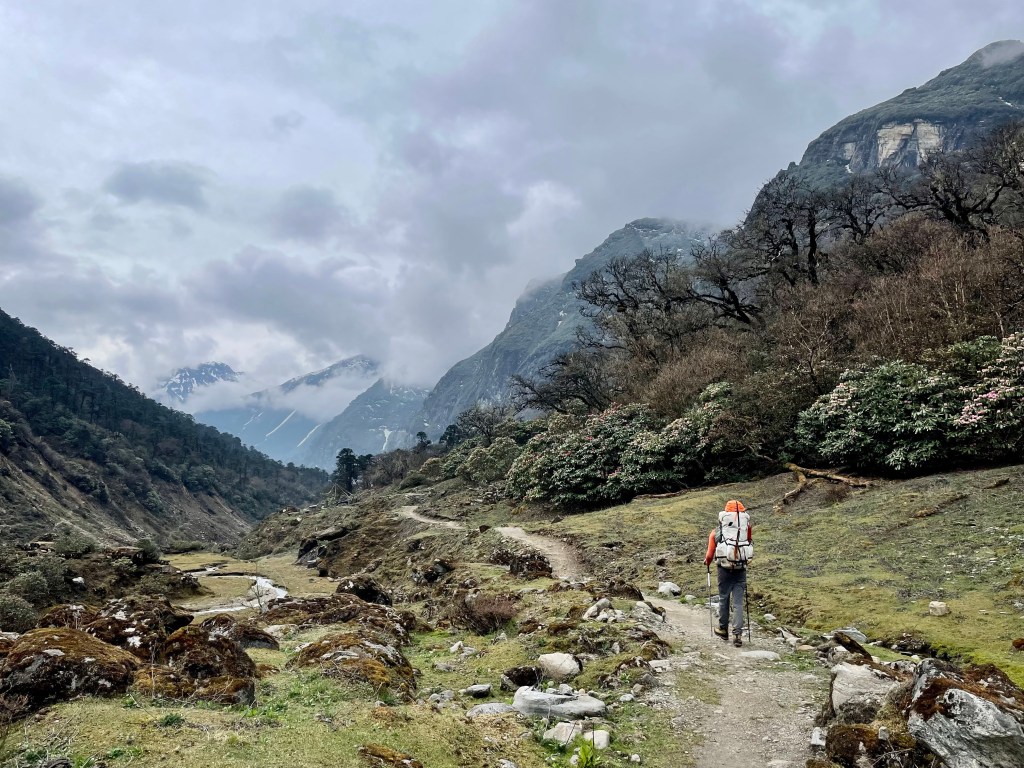
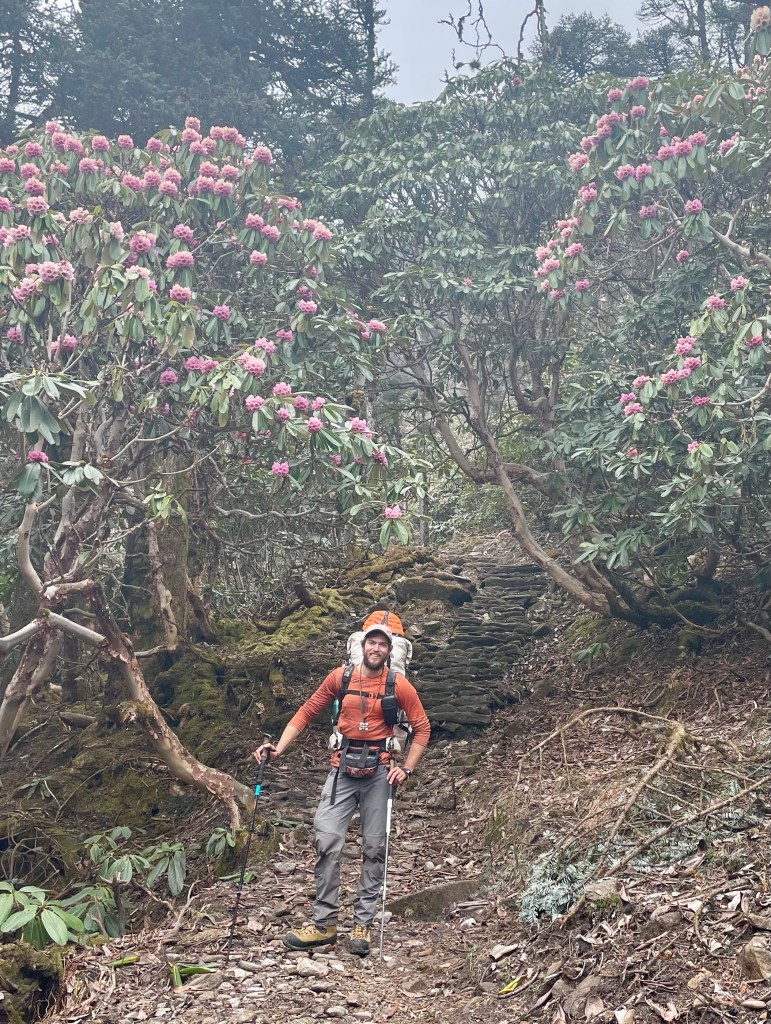
The plan for the first day was to hike to Kalo Pokhari. This would be the second Kalo Pokhari we would be camping next to on this trip. So we set off down the same trail we had envied just a week before from the other side of the river. This trail too had some land slides, but it was more well developed and hiked smoothly. We enjoyed blooming yellow and pink Rhododendrons and nice riverside hiking where the trail was intact.
The next section was one we had were less excited about. Many trekkers doing the MBC (Makalu Base Camp) trek had told us how they were dreading the climb back up to Dobate. So we summoned our strength and began sweating our way up the steep rock steps. This wouldn’t have been too bad except we only had our mountaineering clothes and boots. Clothes which comprised of all our warm layers and boots that are rigid, hot, and heavy. Tom had a blister on his left heel from the day before hiking to MBC and back to Yangle. So each break the boots came off trying to mitigate blisters and to keep trench foot from setting in due to the sweat.
The beginning of the up
We reached Dobate early in the afternoon. Our friend Sangita was hanging out there having lunch so we stopped as well. The friendly owner made us some veggie rara soup and warm chyang. We enjoyed a little conversation and amused some young kids who had portered food over from Tashigoan. Then we started up towards Keke La in a light drizzle with Sangita and the porter Pasang who caught up to us on his way back home to Seduwa.
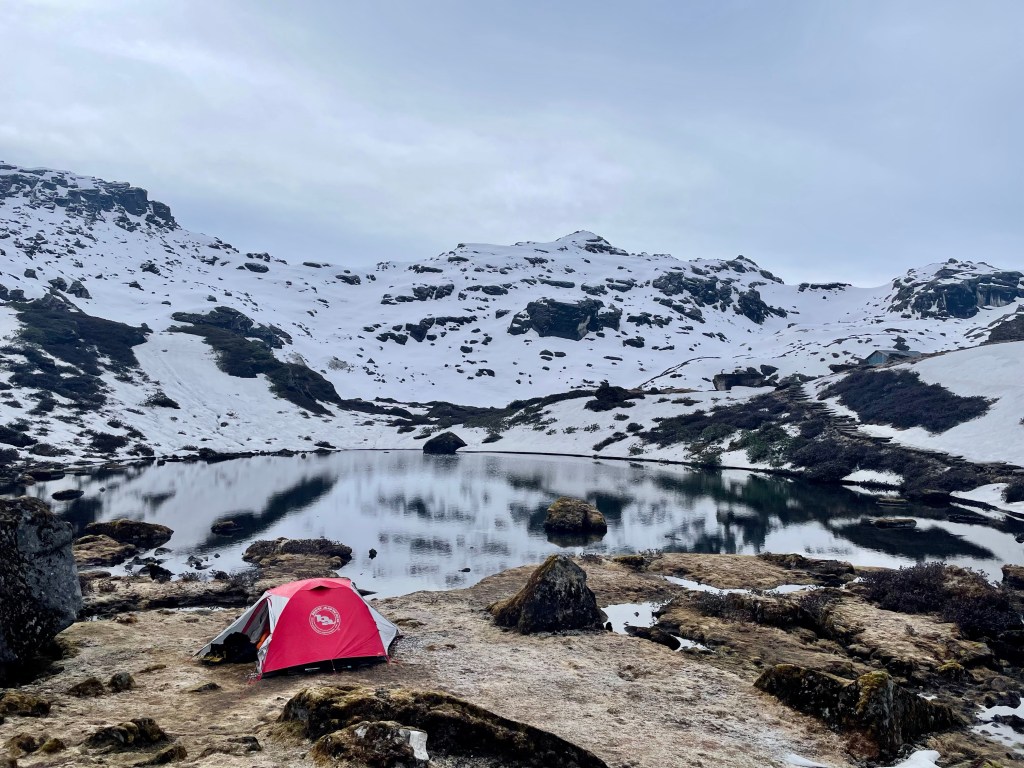
We told them we were planning on stopping at the lake to camp, so as the clouds moved in and rain picked up we held back. Much of the hiking was in the snow and it was nice to have footprints to follow for once. Once we reached Kalo Pokhari we hung out in a shelter to avoid the heavy rain. We spent an hour unsuccessfully starting a fire in the shelter until the rain stopped. Then we quickly set up camp and enjoyed our first night back home in our tent.
Kalo Pokhari all to ourselves
We woke to frozen rain on the tent and sun that couldn’t quite reach us because of the mountains. It was a slow start as we waited for the sun to dry our gear, so we enjoyed a leisurely morning.
The night out was worth the gorgeous sunny morning hiking up from the lake to Shipton La. We were able to look back on the south faces of many mountains we had hiked through on our way to MBC.
Once we reached Shipton La we could see we were teetering on the edge of the mountains looking down on the foothills. Everything below was shrouded in clouds with only the tallest hills peeking up. From here it was 9,000 feet down to our intended destination of Seduwa.
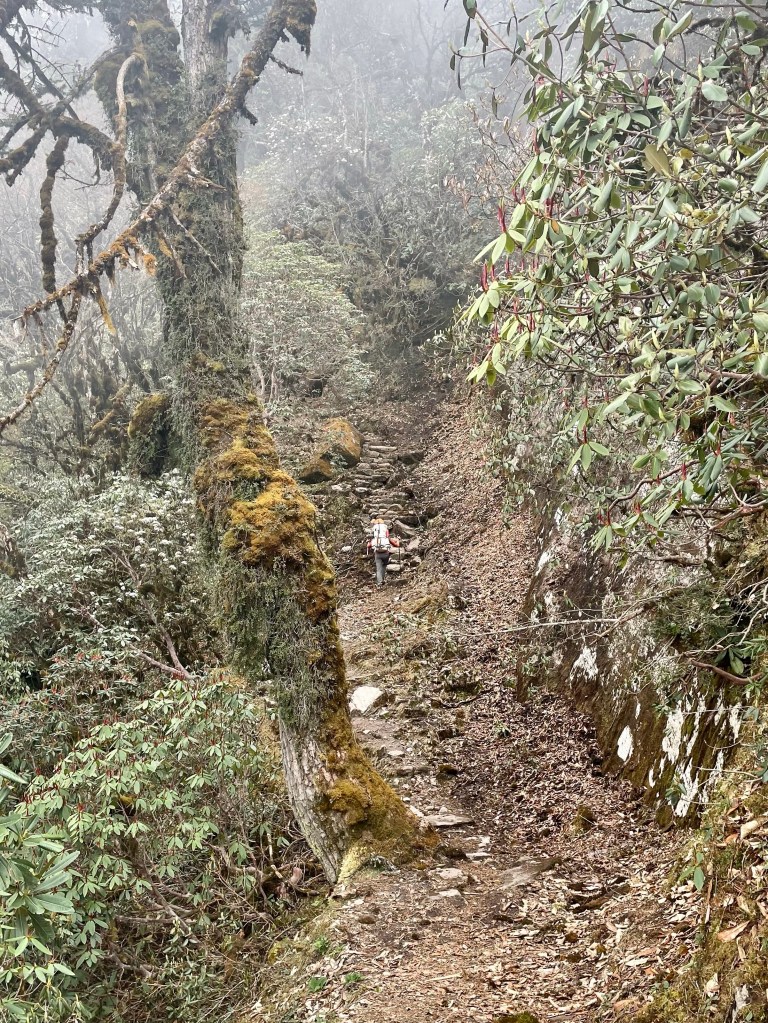
Most of the hiking over Shipton La was in the snow until we got down below 13,000 ft. The stone path and stairs were reminiscent of a miniature Great Wall of China as we winded our down the ridge. In Kongma Danda we met the better half of the guest house owner in Dobate. She got us some water and told us to stop in and see her daughter, Pasang, in Tashigoan. We became acutely aware we had entered the jungle again when we started getting swarmed by no-see-ums during our breaks. Even then we still enjoyed being back in the forest full of plants and mushrooms we had never seen before.
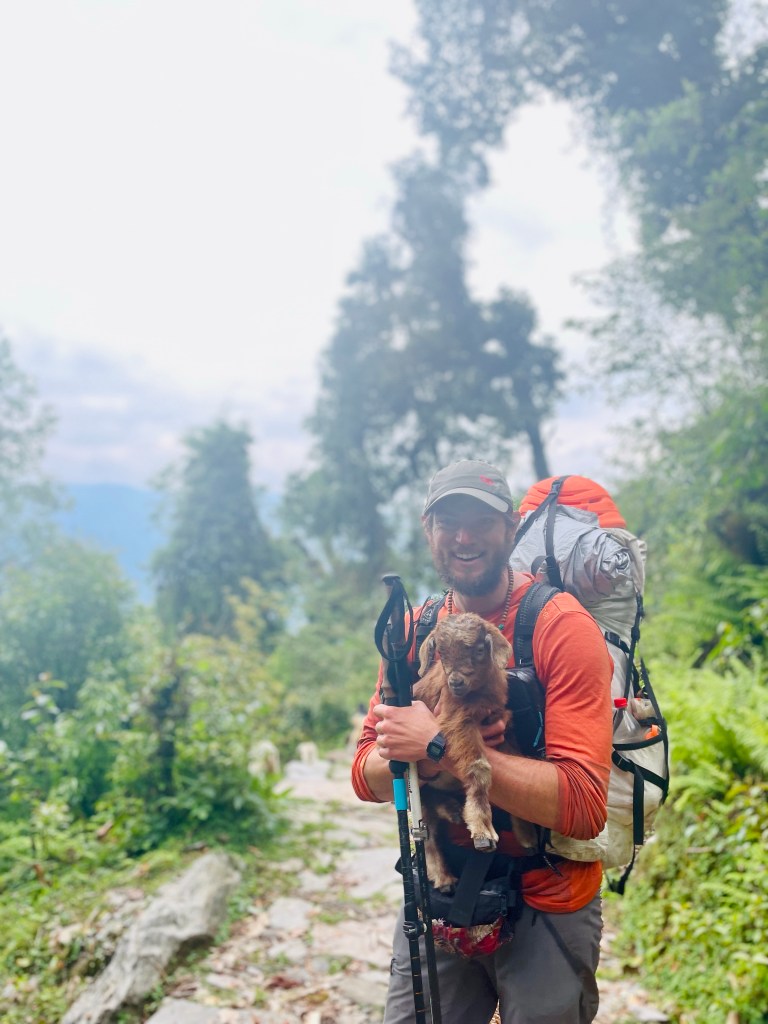
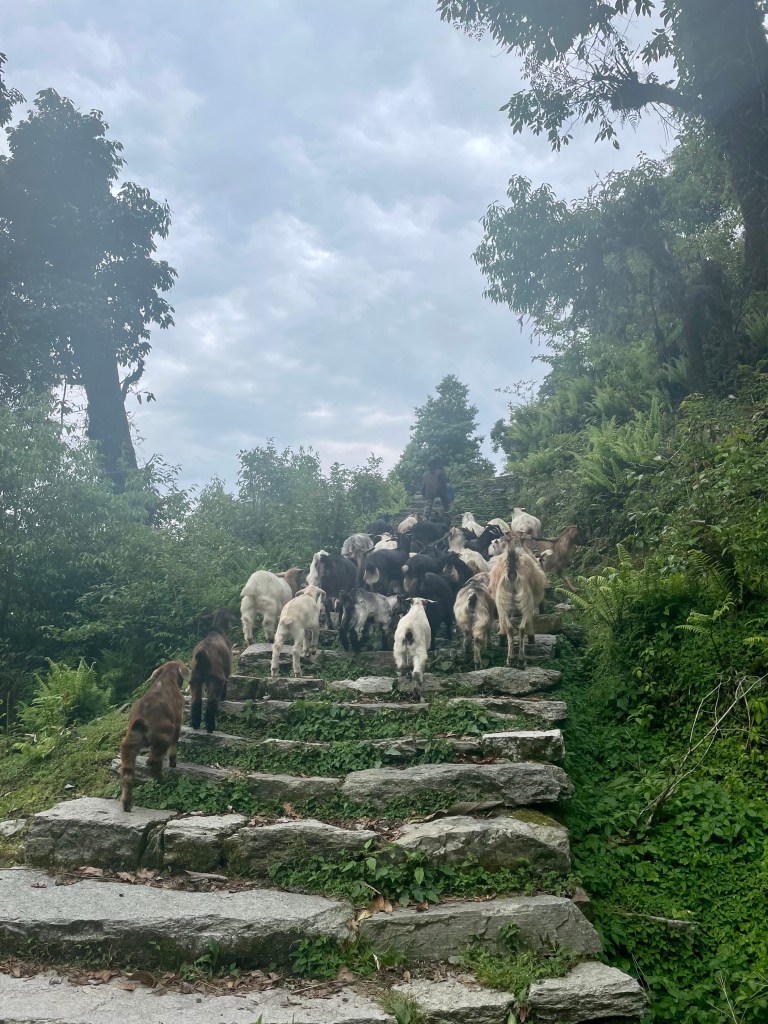
That face The trail passed under a large cave that appeared to be the resting spot for a goat herdBaby goats became our spirit animal while on the trail
We followed two young sisters and their herd of goats into Tashigoan around 3 in the afternoon. As we entered the village we asked an older lady how long to Seduwa and she replied “1 hour.” We saw a familiar sign for the guest house and met Pasang who spoke good English and was quite friendly. We needed something to dull the pain from our hot boots so we took a lesson from locals and got a pitcher of chyang. We sat outside and talked to Thómas, a friendly Ecuadorian who was on his way to MBC. His friends were attempting to climb Makalu without oxygen and he wanted to give them some encouragement. His Sherpa was quite friendly as well so we all sat and talked for a while assuming we only had a short walk to Seduwa.
Traffic jam TashigoanFern-o-megalyTom sharing almonds with the local kids. They asked for chocolate, but all we had were almonds.
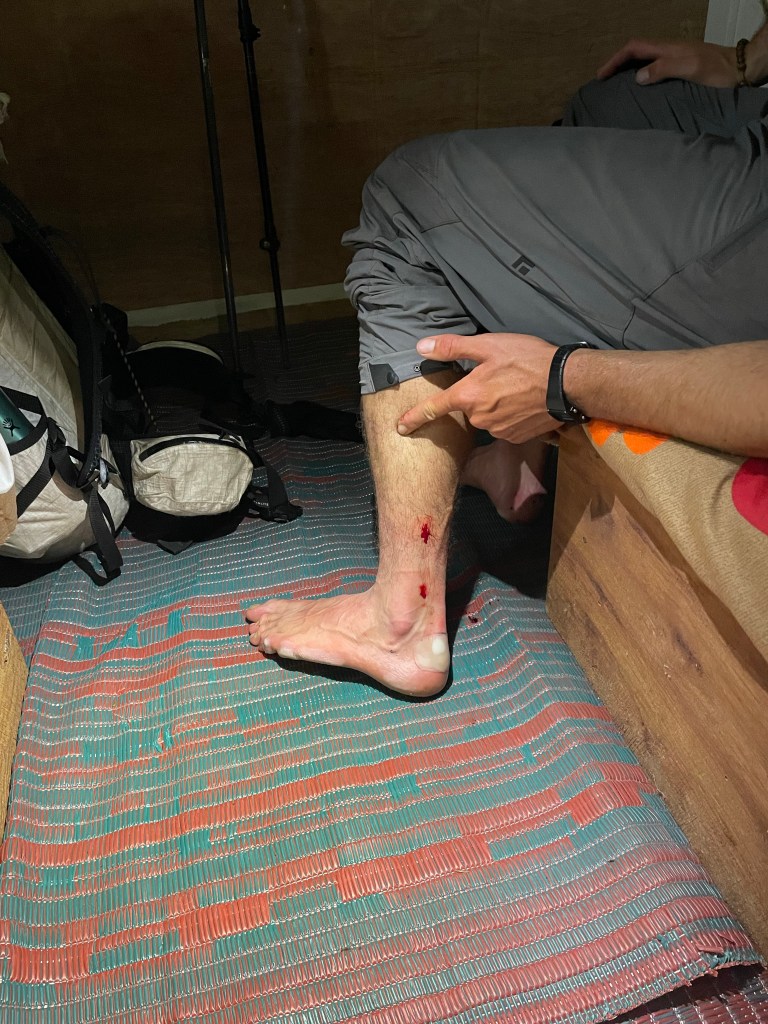
3 hours later, after getting lost in some paddy fields, we stumbled into Seduwa in the dark. We had forgot our previous lesson; when an elder Nepali women tells us how long until the next village, we should always triple it. After asking around we finally found Pasang’s aunt and uncle’s guest house she had told us to stay at. Dolma, her aunt, got us a room and started on some dal bhat. We were covered in sweat and were more than ready to get our boots off. Tom popped off his left boot and 2 engorged leeches fell out. During our last break, Tom had taken off his boot in the dark by a creek to relieve some pain and forgot about the leeches. Hirudin, the anticoagulant enzyme found in leeches, causes an impressive amount of bleeding which was the most surprising part.
Leech love bites
When we went down for dinner we saw Sangita was there as well. Then Pasang showed up too and said hi. It was nice to see some familiar faces. We finally had service and were able to reach Gombu, who let us know our teammate was okay and not in the hospital. We told him to let the group know we would have wifi the next day and should be able to get a jeep soon.
One of the relatives of the guest house serenaded us with song and sweet vibrations from the Tungna. The Tungna is a Tibetan stringed folk instrument that sounds comparable to a banjo. After enjoying the music and ginger tea, we were off to bed for a good night’s rest.
Knowing the hike to Num was only a few miles we slept in. The sun was out and the guest house was bustling. The guy the from the night before was giving Tungna lessons, kids were playing under the tables and the family was busy doing their chores. We indulged in coffee and had the best trail pancake we’ve had. Dolma gave us some bananas then we were off heading down through the village just before 10 am.
When instant coffee feels like a luxury.Thanks for the fresh fruit Dolma!
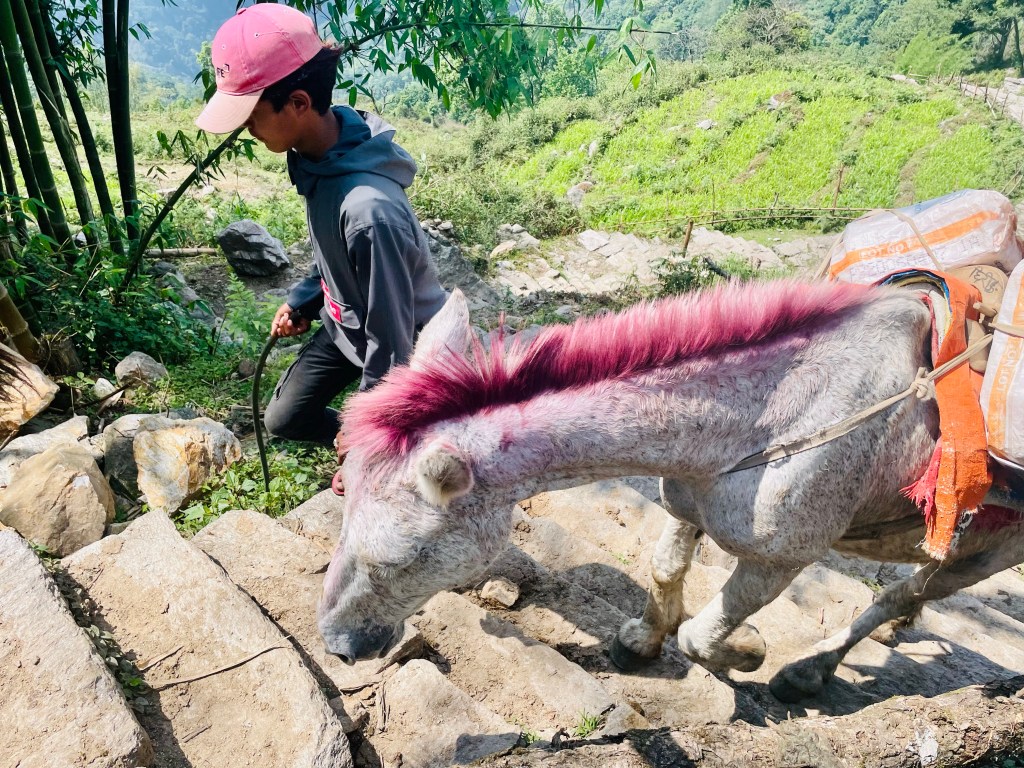
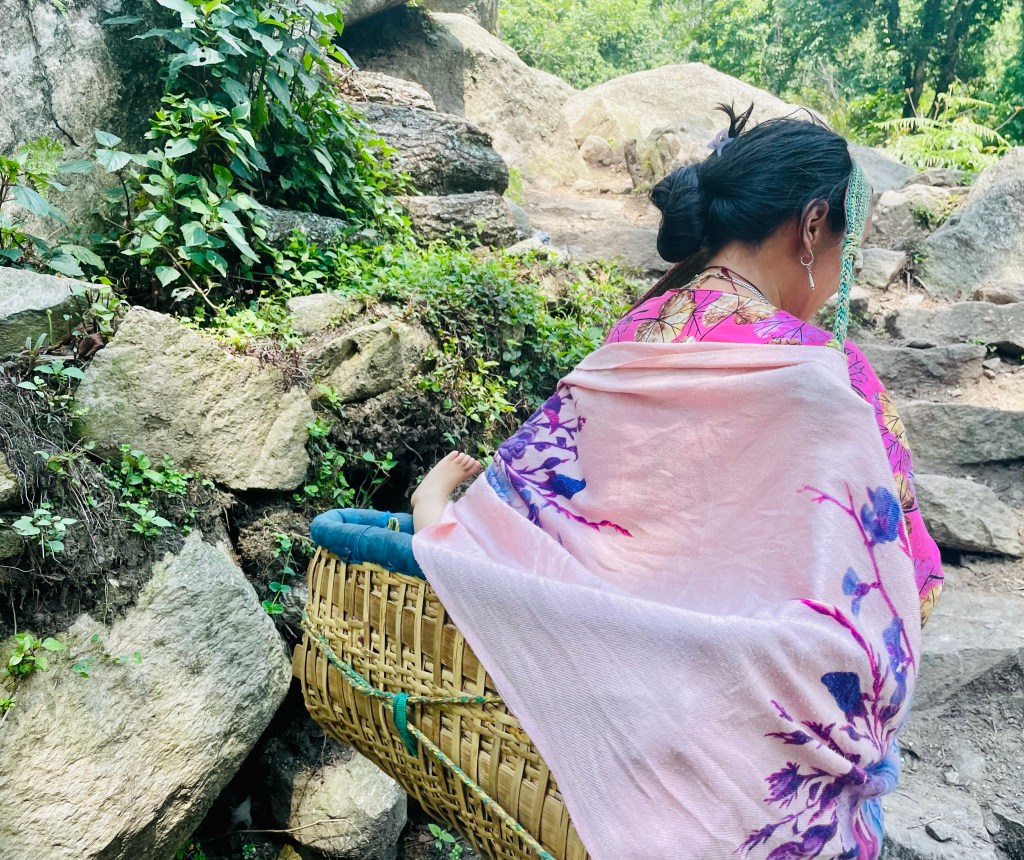
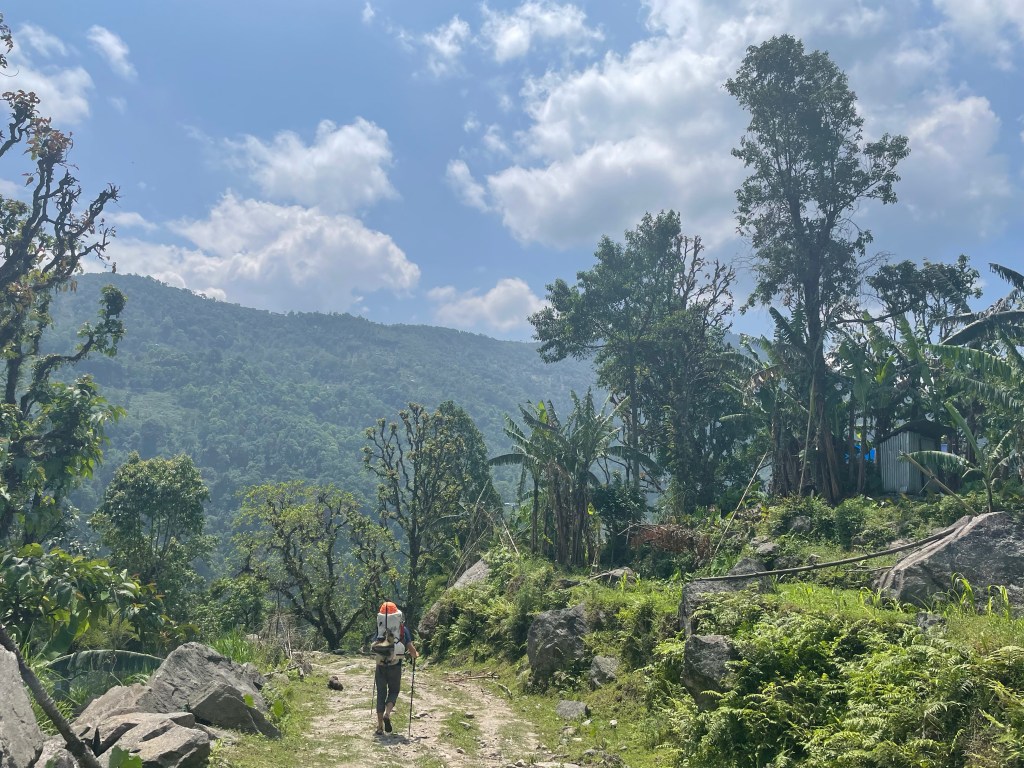
As we went down we saw a lot of mule trains and locals heading up the trail. One of our favorite parts of trekking has been seeing all the locals on their home trails doing their usual commutes. We feel like little kids curiously observing every little thing we see; how they plant their gardens and layout the farms, how they bring everything they need up and down the steep difficult trails, and how families will carry or take their kids between villages. The trail we were on was the main route between Seduwa and Num, it went down and up 3,000 ft crossing a river valley.
Punk rock pony (actually a mule)Another baby in a basket
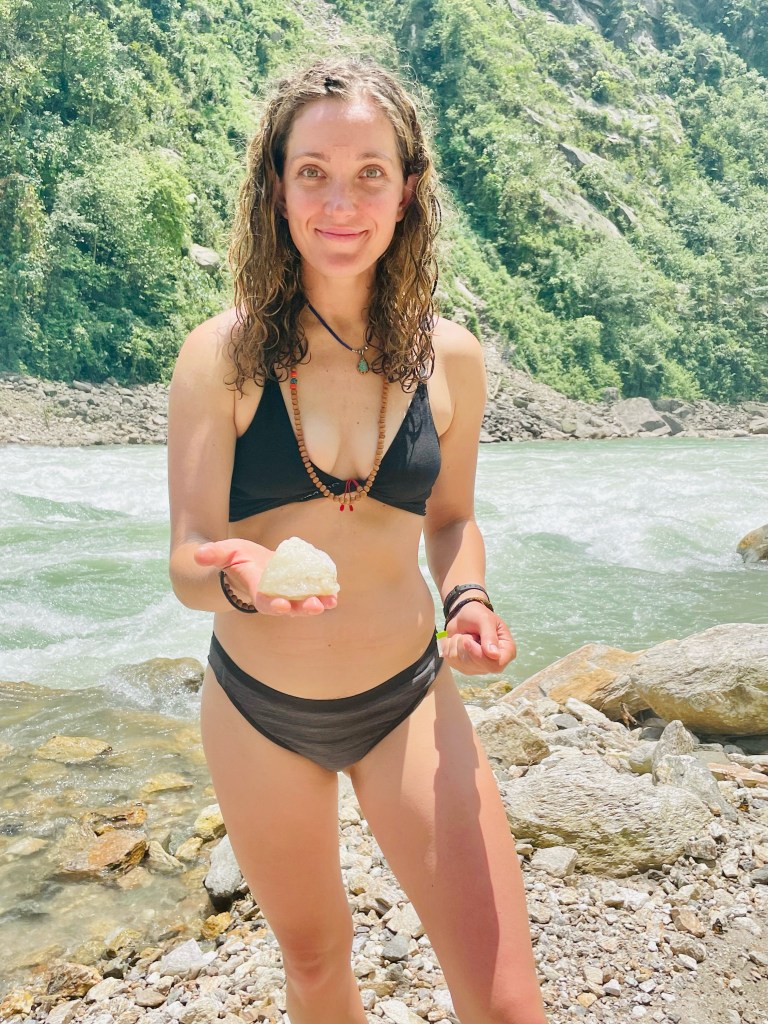
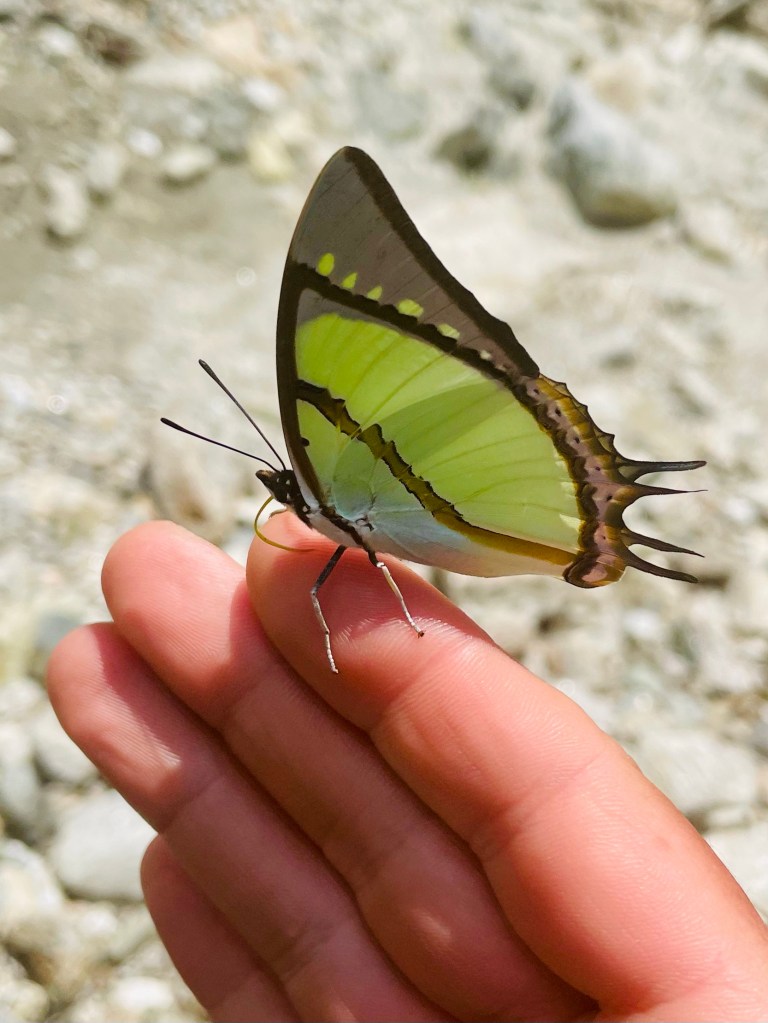
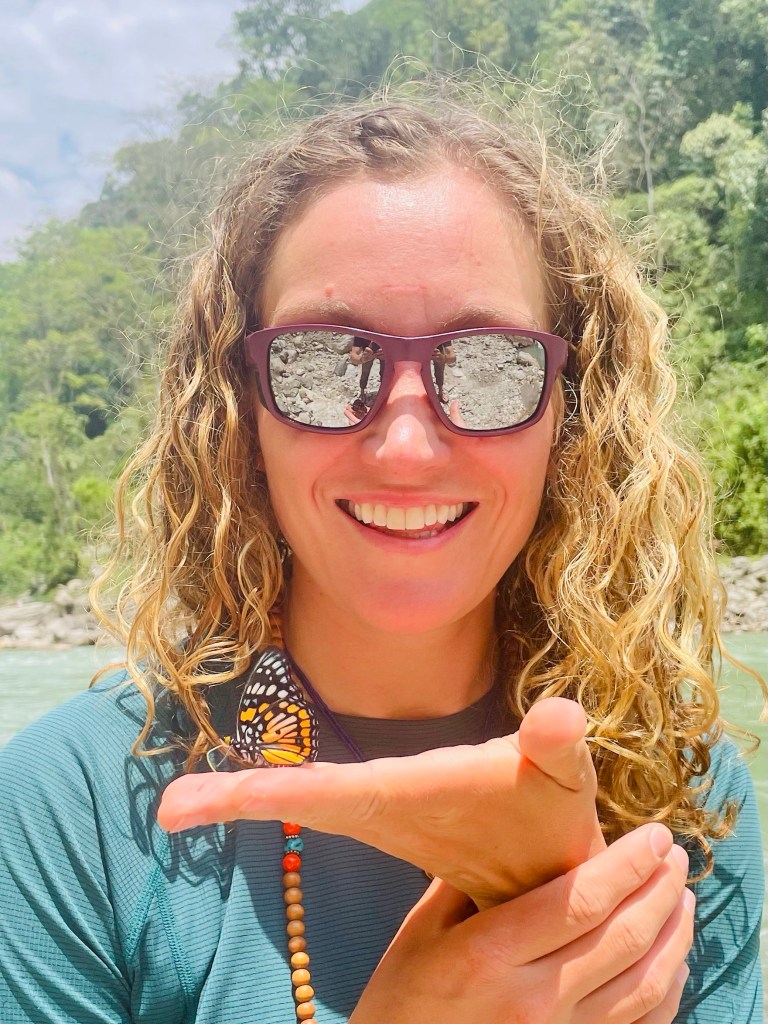
We were so sweaty by the time we reached the river that we had to take a dip. Not to mention it had been over 2 weeks since our cold water spigot rinse in Hongon. After we bathed in a little hole next to the raging river we discovered butterflies were covering our clothes laid out in the sun. There must have been over a dozen different varieties surrounding us. Their color was so spectacular we couldn’t take our eyes off of them.
Finding quartz crystals down by the riverThe butterfly whisperer
Once we crossed the suspension bridge and started the climb up to Num we realized why we saw so many people on their way up the trail in the morning. It was hot and muggy. We sweated back through our clothes within the first 30 minutes and hardly saw anyone on the trail until we got closer to the village.
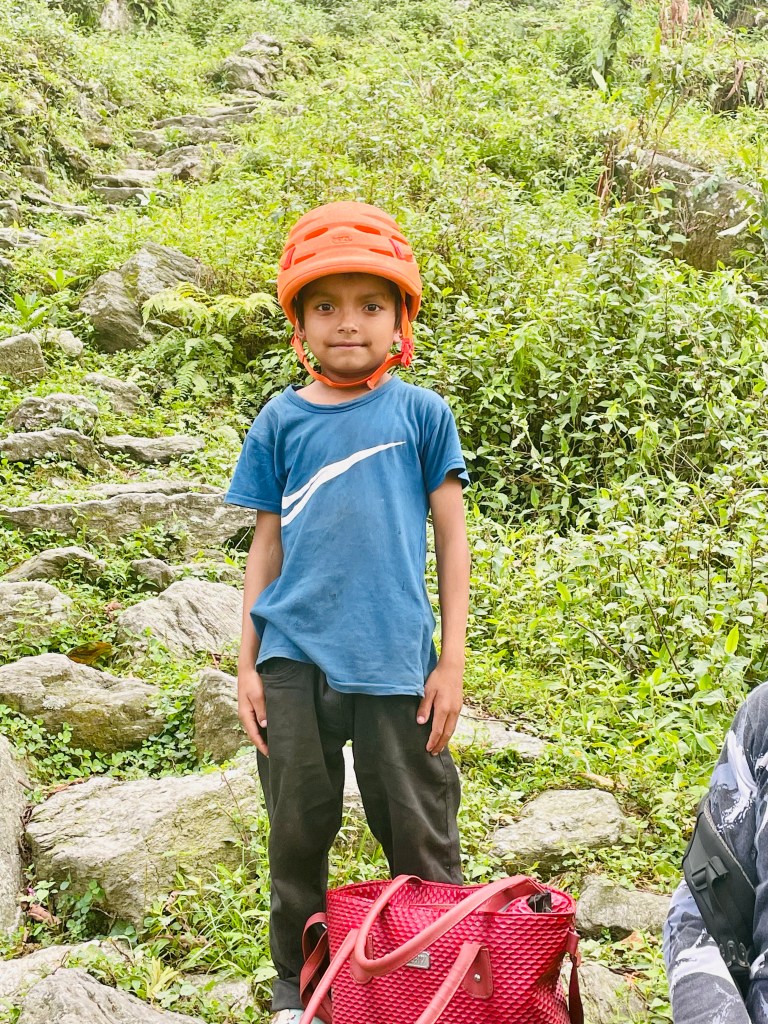
While taking a break in the shade we met a mother, father and son, or in Nepalese: ama, dadu, and babu. They were on their way to catch a jeep to Khandbari. The boy was 8 years old and knew more English than his parents. We hiked the last hour up to Num with them. Tom shared his trekking pole and let him wear his helmet. With all our gear he had thought we climbed Everest. The trail was very difficult as we climbed 3,000 ft in 1.2 miles.
Our faithful trail leader
We emerged between 2 buildings directly on to the main road. Not knowing exactly where to find a guest house Tom wandered over to some uniformed gentlemen in the main square. One of them was very friendly and led us over to the Purba Sherpa Guest House which looked nice. A young man named Nima came over to greet us.
Finally able to connect with the parents after 45 days
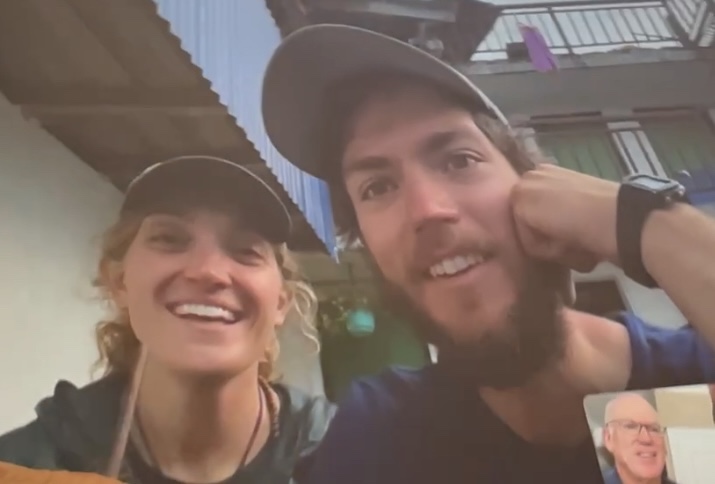
As soon as we connected with wifi we reached out to the parents and had plans to FaceTime. In sync with classic Nepal planning, the power went out moments before we could make the call. Our poor parents had to wait another 30+minutes before we could connect again, but getting to see everyone’s face and hear their voices was pure joy.
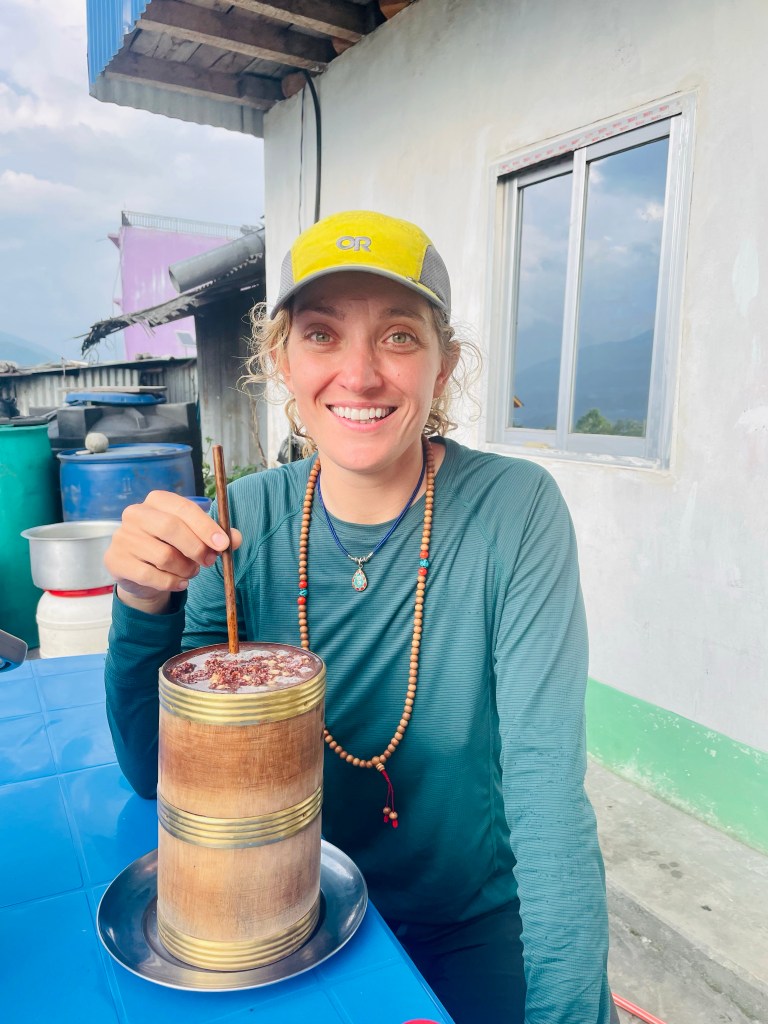
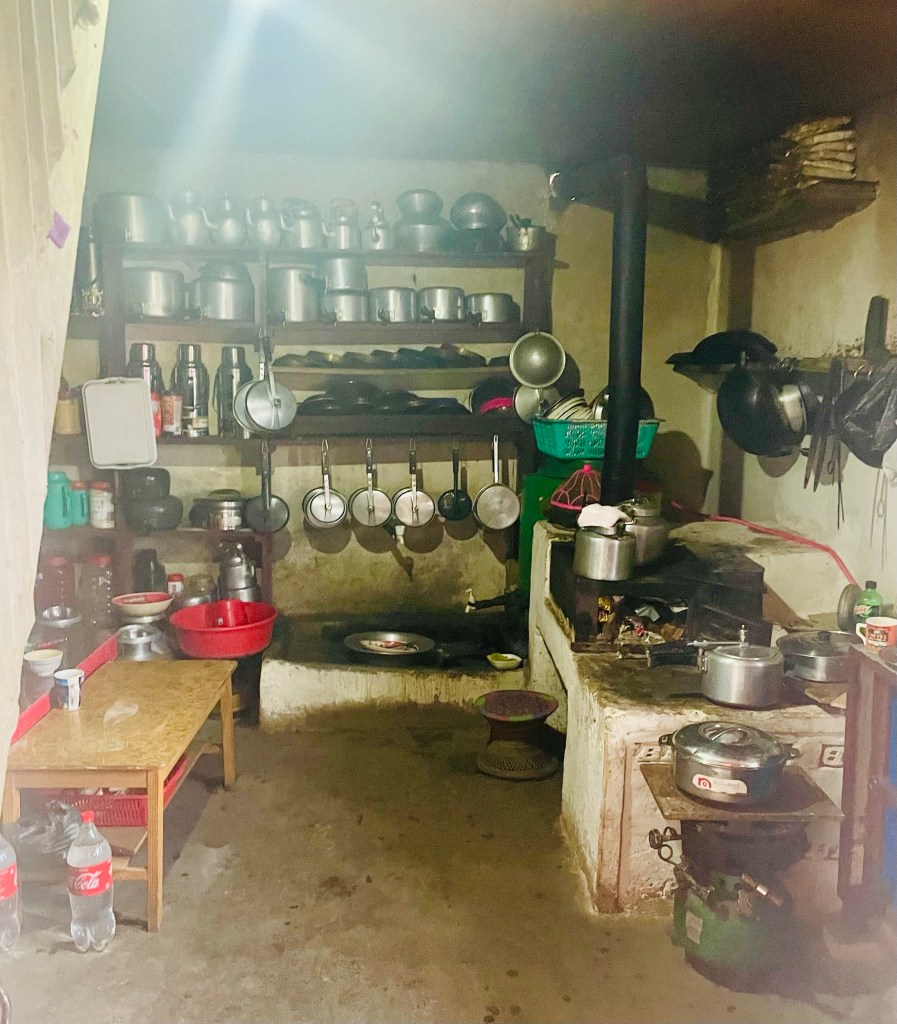
Sarah enjoying a tongbaNepali kitchen, where the magic happens.JasmineTom crushing Sarah in an epic cribbage tournament.
We worked out logistics for our jeep to Tumlingtar and booked our earliest flight to Kathmandu which wasn’t until Saturday so we stayed a second night in Num. For a couple hundred rupees we got a bucket of hot water and indulged in the closest thing to a real shower we’ve had in over a month. Then we relaxed on the patio playing cribbage, drinking tongbas and watching the neighborhood kids play on the grassy field in front of the guest house. First a group of kids playing with a white rabbit, then another group who went straight into a show no mercy wrestling match, all under 10 years old. The streets were busy, more than normal Nima said, because if the upcoming election. Num was a sweet village and a nice place to relax.
Looking for a jeep
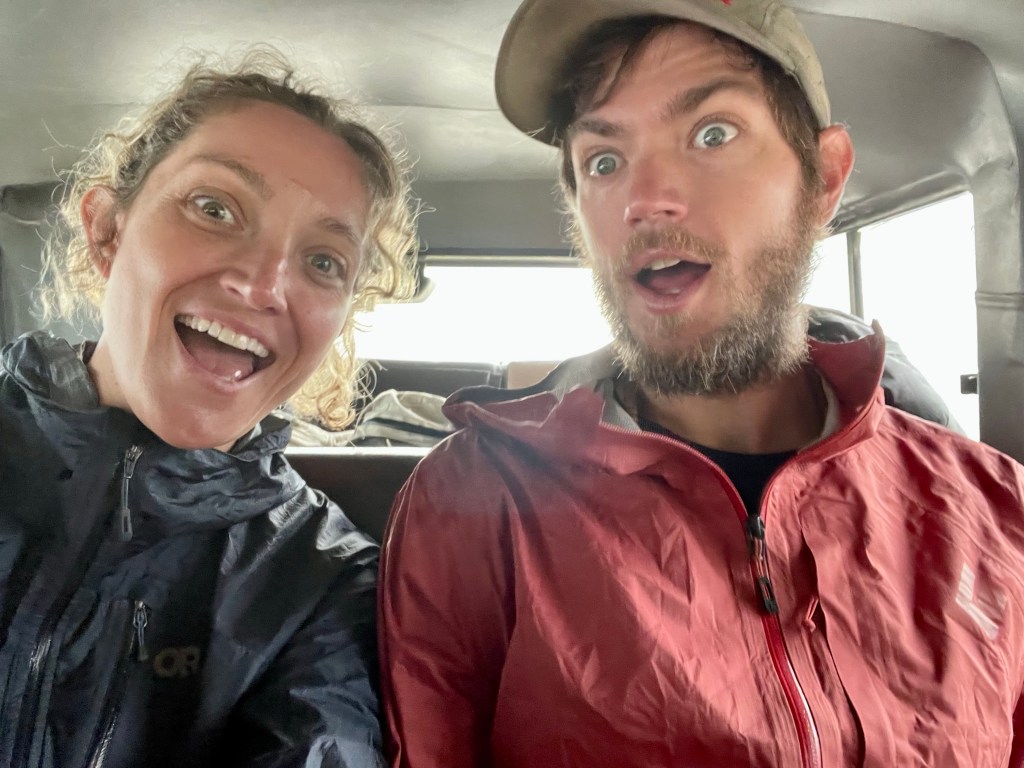
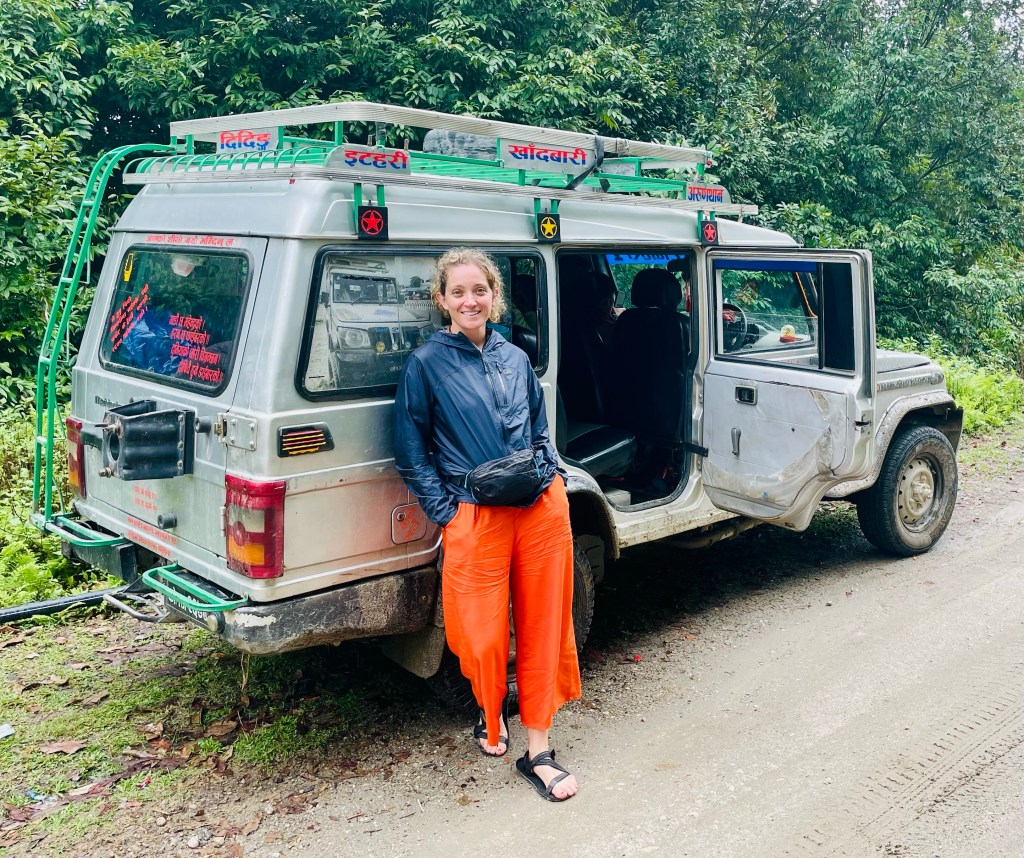
Our first jeep ride started with just the two us, then a kind local man hopped in the front seat. The driver had us rocking out to Nepali tunes and before we new it there were 12 people crammed into the jeep. The ride was bumpy and the road was wet from the rain the night before. The driver was skilled going in and out of high and low 4 wheel drive to make it over the obstacles.
Our first jeep ride in Nepal
We stopped in little village called chinchilla and were greeted by the sweetest man. We enjoyed fresh samosas and spicy soup that the local man in the front seat treated us to.
We arrived in Tumlingtar by 1 and it was hot. We walked around until we found a hotel and were greeted by a 2 inch cockroach. We didn’t really care cause this hotel had the real deal hot shower. The kind that comes out of an actual shower head. We walked around town and bought ourselves a watermelon then retreated to our air conditioned room to enjoy watching Jaws with some cold beer.
Always making furry friends
The following morning we caught a plane ride to Kathmandu. Only a few hours delayed we were happy to finally arrive back to our home away from home, the Tibet Guest House.
After 45 days we have finally reached a village, Num, with access to wifi. We had to make a detour from the original route due to delays and illness amongst some of the group. Everybody is okay and on the mend now, but we had to turn around just before the high passes. Makalu Base Camp was our turnaround spot, too risky to continue over the 20,000 foot passes without good health. We will be skipping the entire section from Makalu Basecamp through the Solokhumbu and getting back on the trail in Beding. It’s a tough decision but necessary to see the rest of the trail and stay ahead of the monsoon. Stay tuned and we will be posting sections of our journey thus far. We have only pictures from the iPhone, as that is all that can be uploaded from the phone to the blog at this time. The trail and this country have been very good to us and we are excited to share some stories. You may have to move backwards from this post to see our other blog posts. While on the trail we have been making the blog posts but unable to publish them. This makes the publish date correlate to when we started working on the blog post, not when we actually got to publish it.
45 days with no shower and 12 hours on the trail in the hot jungle, this is where we are at right now.
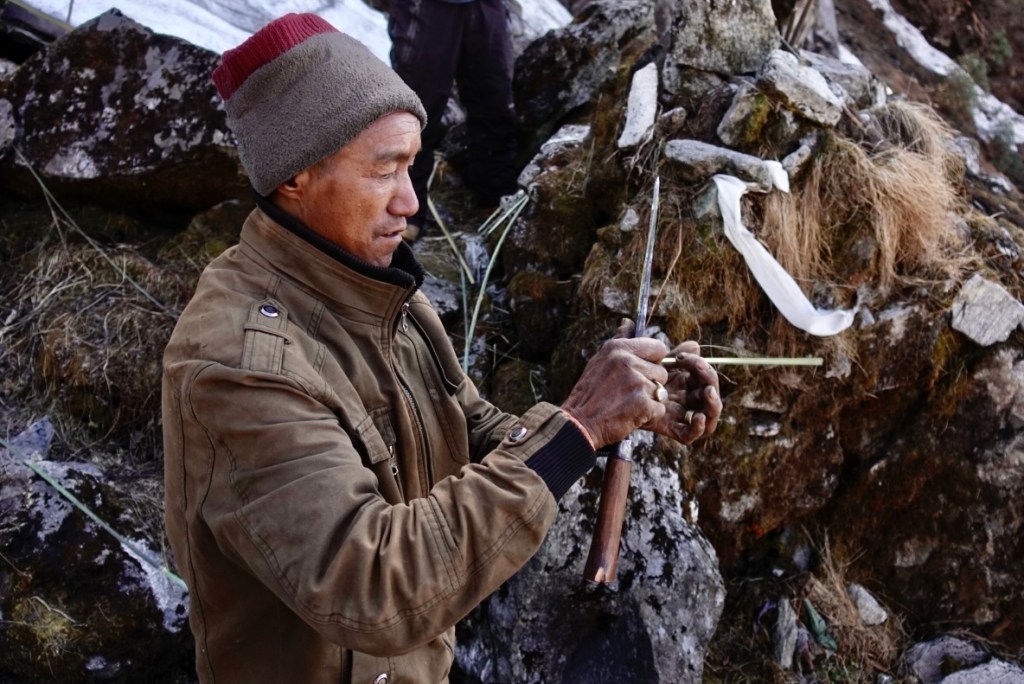
We said goodbye to some of the coolest porters we had met, Mingma and Nupu. Mingma, in his gold boots, the true Nepali woodsman. Nupu, the unstoppable, always moving and forging ahead to find the next section of trail. They both wore their gold rubber boots up snowy mountains without socks, started fires with wet wood during snowstorms, slept under rock slabs without a tent, grabbed metal pots with bare hands straight from the flames, and honed a Khukori to clear jungle paths and construct tools along the way. We watched as Mingma made a tumpline (a strap placed on the forehead) in a matter of minutes, slicing bamboo into thin strands and weaving it with Nupu so they could more easily carry their loads. Another time making a spear just in case we came across an aggressive bear.
Mingma
No adventure in Nepal, whether climbing or trekking, would happen without porters. They are much more than just the muscle carrying loads. Their humble, kind and caring nature makes the porter’s role more akin to steward’s of the trail and the people that walk it.
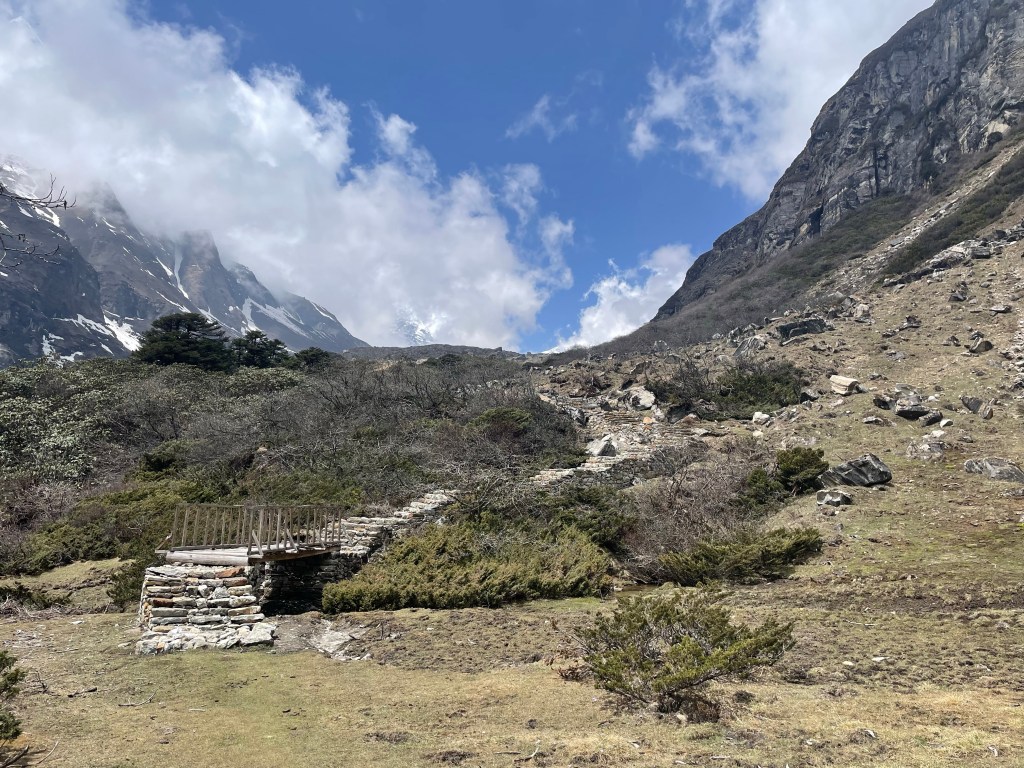
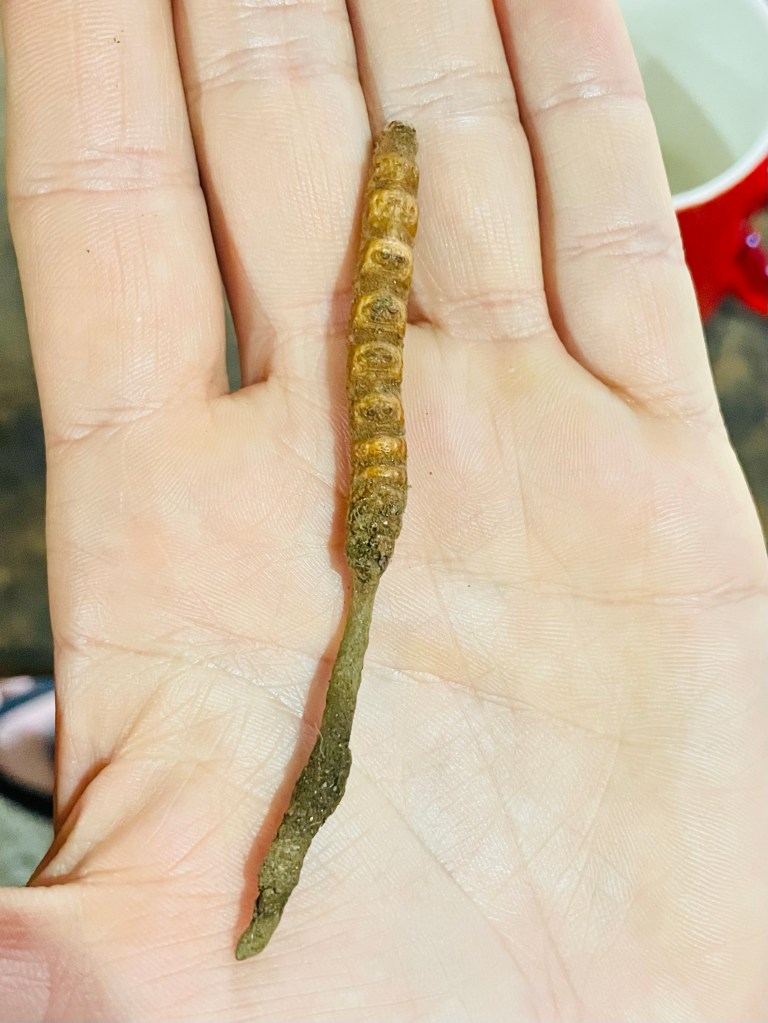
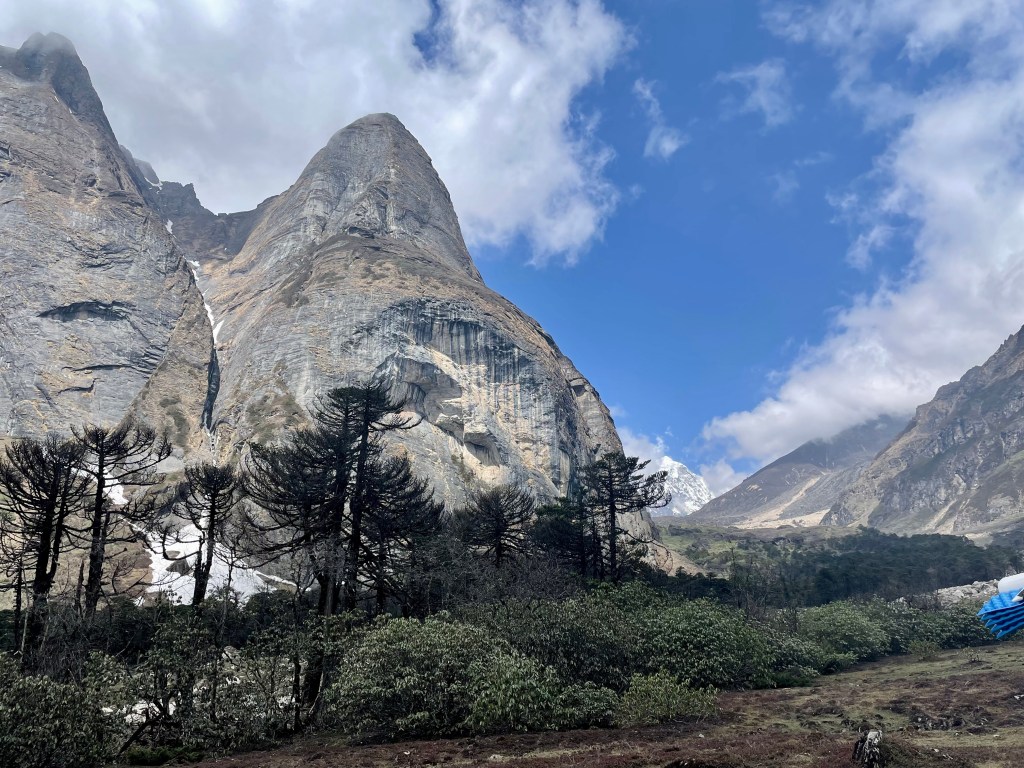
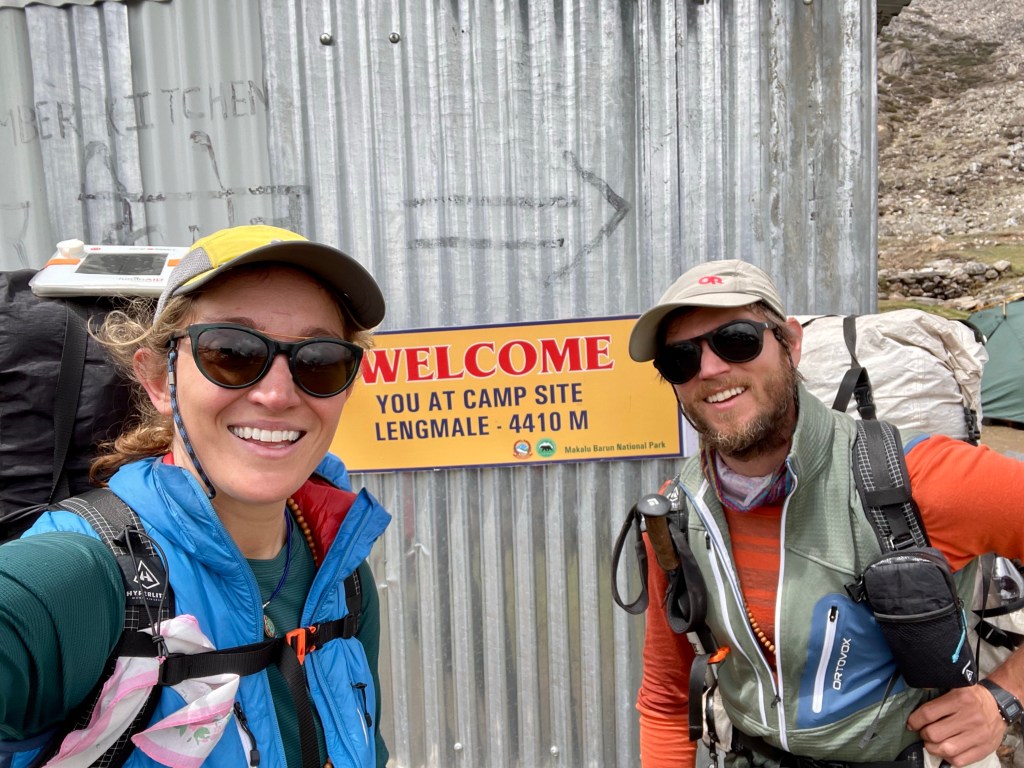
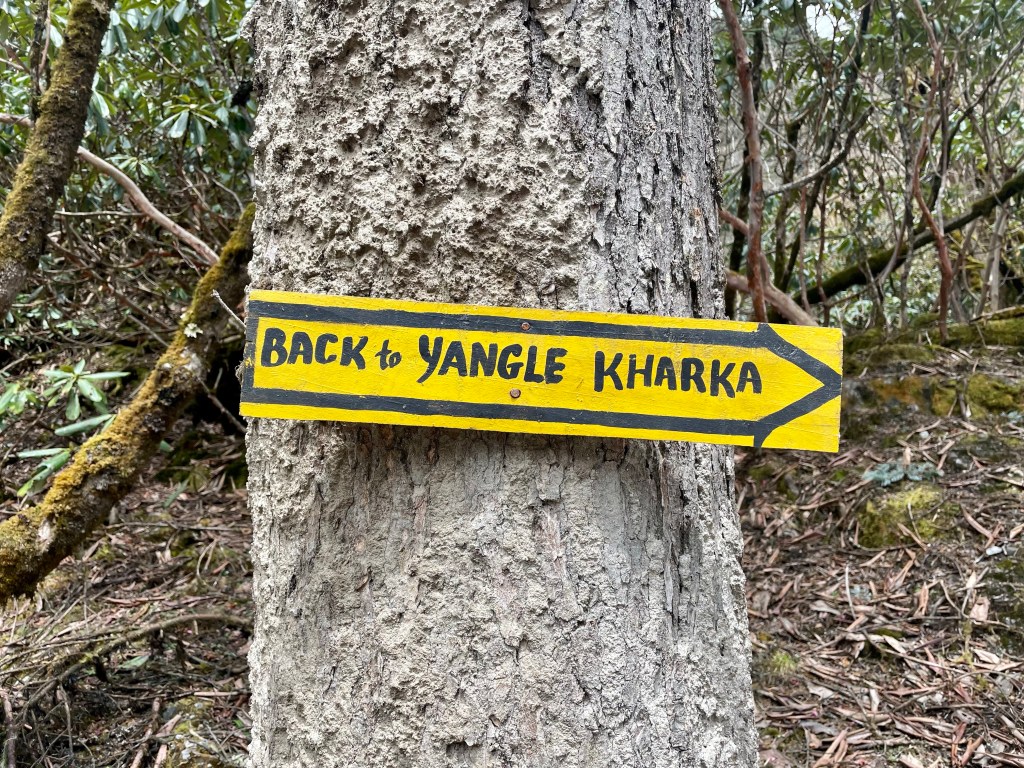
The hike from Yangle Kharka (~11,600ft) to Langmale (~14,500ft) was a treat compared to our last month of backpacking. Not only could we actually see the trail, but in only 4.5 hours we were at our next location. Tom joined one of the porters and went hunting for Yarsagumba.
Yarsagumba
By now the yellow rhododendrons were starting to bloom and the sun was shining. It was one of the first mornings in over a week where we got to put on dry socks and shoes.
We passed the sacred fertility rock that resembles the womb. Our friend Gombu told us that many women who are having trouble conceiving will come and pray here and then will become pregnant. We managed to walk past it without conception.
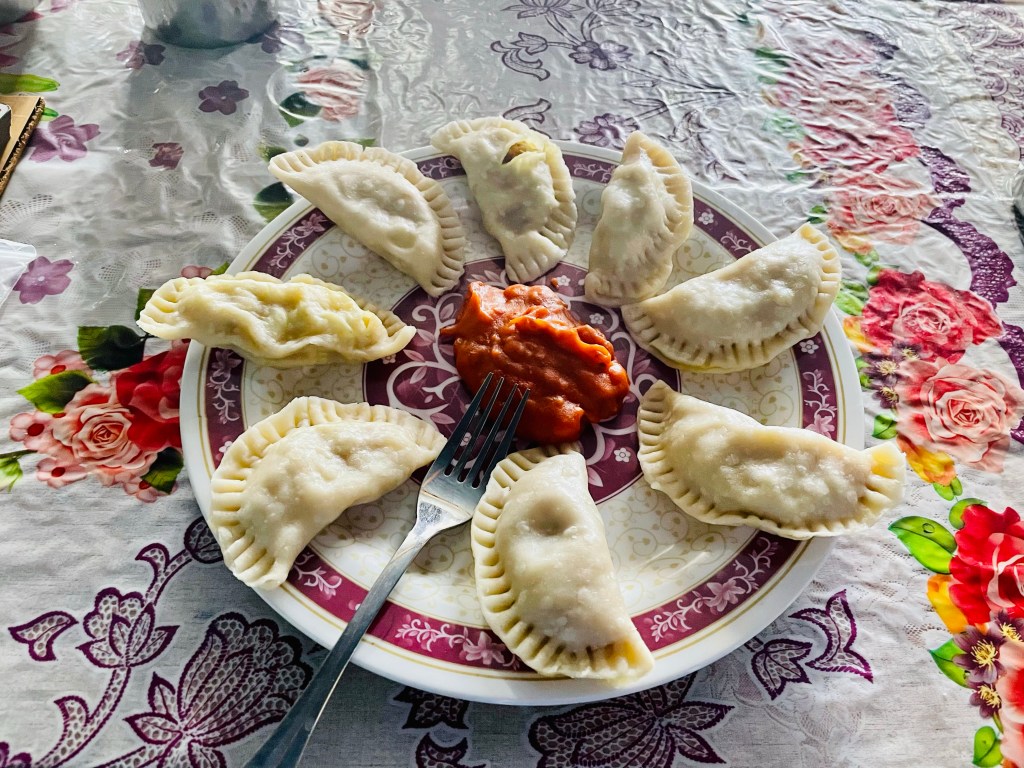
Made it!We ordered veggie mo-mo’s that were delicious! We learned later that this labor intensive dish takes a couple hours to prepare.
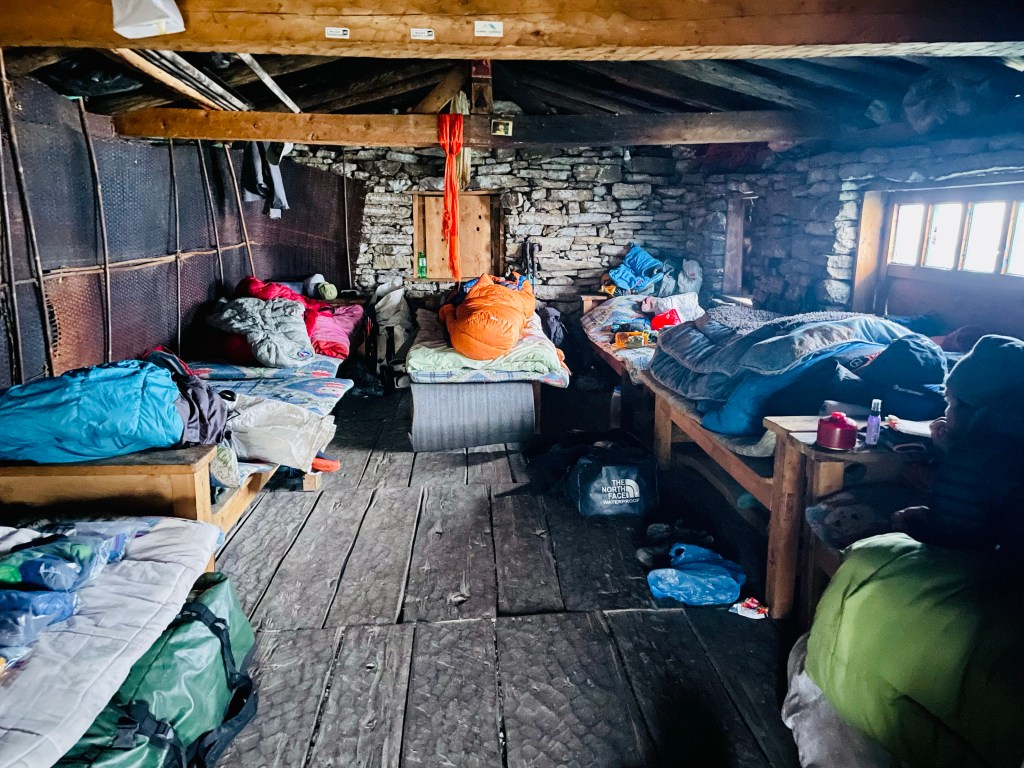
Our first night in Langmale was a dorm sleeping arrangement. We were lucky because no one in our group is much of a snorer. Unfortunately a lot of smoke seeped in from the kitchen below creating an acrid airspace. The smoky environment is the norm for locals but often leaves us feeling a decline in our respiratory health.
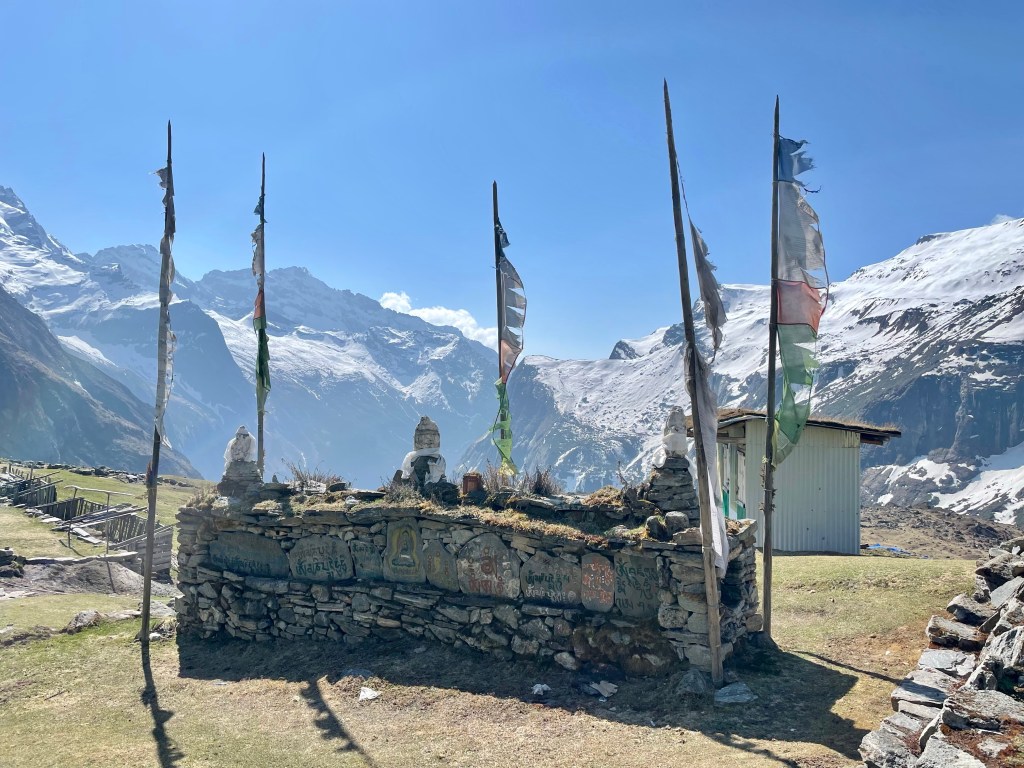
Om mani prayer wall on the Langmale guest house grounds The evening view from Langmale
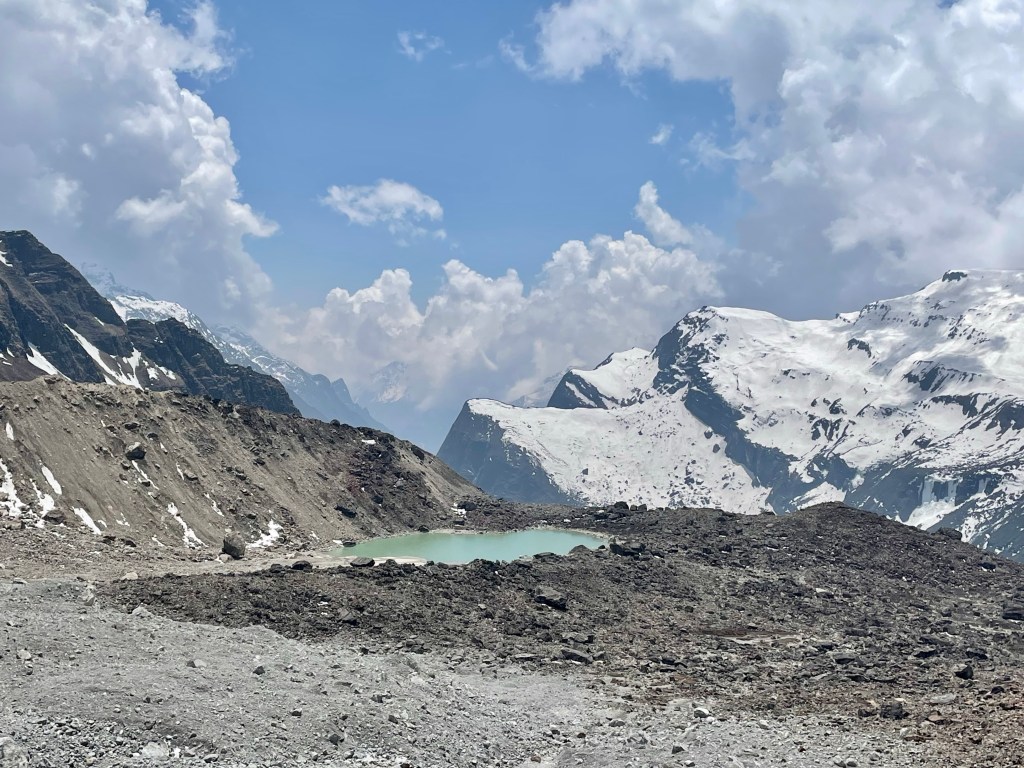
The two of us were craving some exploration on our rest day so we hiked up to 15,500 ft to check out Langmale Glacier Lake. This glacier lake was the site of a Glacial Lake Outburst Flood (GLOF) in 2017. Large rockfall from a nearby peak precipitated an avalanche throwing large chunks of glacier into the lake. The waves from the lake washed over the moraine into the valley moving giant boulders and scouring the land between Langmale and Yangle Kharka. This sort of incident is among the most common and worrisome results of climate change in the Himalaya.
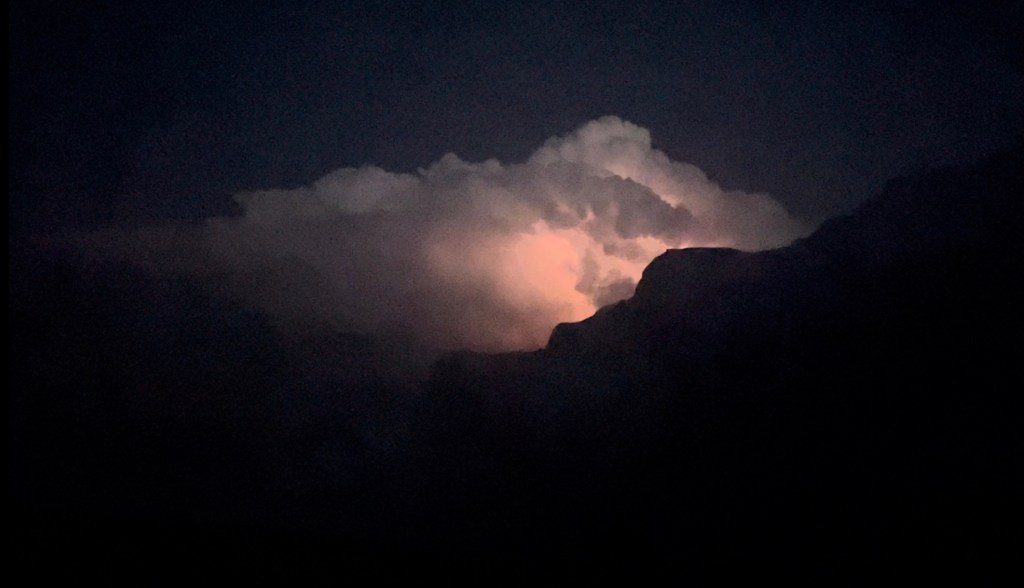
Avid cold water swimmers at home, we decided to pass on this plunge knowing we didn’t have a warm shower to warm up in.Lightening storm
We spent 3 nights at Langmale resting our legs and getting ready for the big crux over Sherpani Col and West Col. We received our second load of gear which contained 5 days of backpacking food and all of our mountaineering supplies. And… we finally got to send down our hefty snowshoes we’d been carrying around for the last couple weeks! They created an extra challenge when we were bush whacking through bamboo and rhododendron forests. A friend Gombu found us 3 porters to help us over the high passes to Chukung then he headed down the trail with the gear we no longer needed.
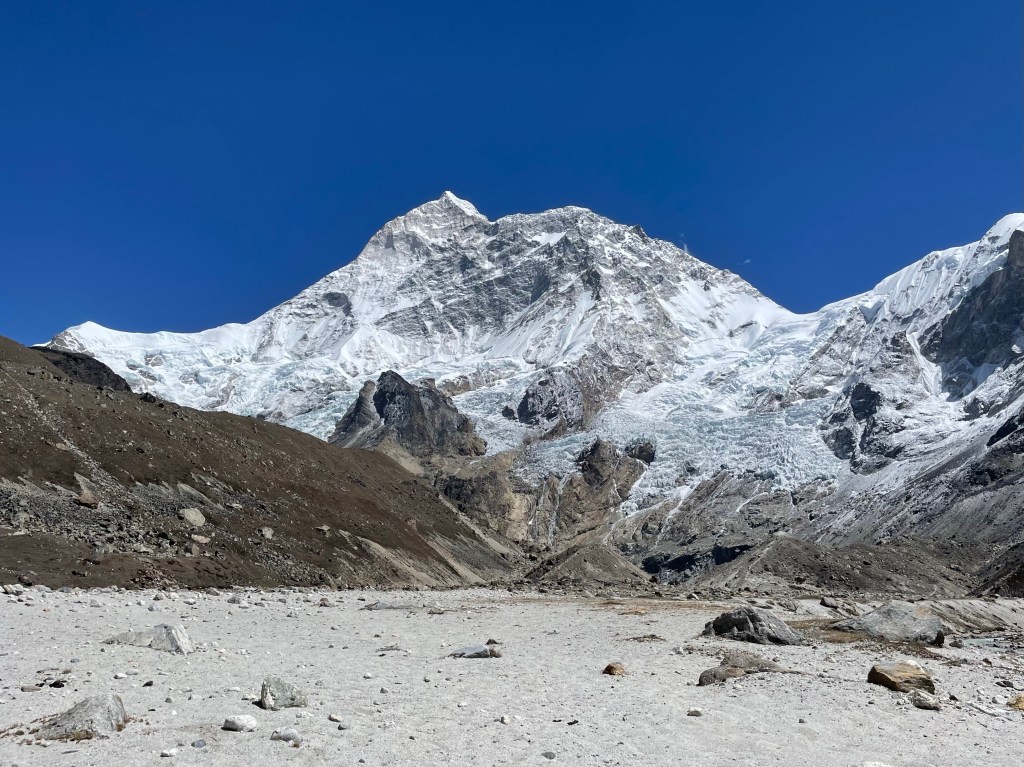
We left Langmale and headed to Makalu Basecamp (~16,000ft) which was another gorgeous 4.5 hours hike. We stopped off at another glacier lake that sat just below the stunning Peak 7. One of the areas many holy mountains.
Views aheadViews from behindPasang, another impressive porter with magic gold boots. He gathered some juniper for pujas and strapped it to his pack to share with our next tea house.
Tom was feeling well but Sarah was more stuffy than normal and sneezing a lot. As we hiked further up in elevation she was accompanied by an ear ache and more sinus pressure. By the time we got to Makalu it was clear she was coming down with the crud. When we were at the previous location, Yangle Kharka, the large group of British trekkers informed us that some were having cold/flu-like symptoms. So we had some concerns that Sarah was coming down with the same.
Makalu: the 5th tallest mountain in the world.
During our stay at Makalu Base Camp we were taken great care of by a nice young couple. We referred to them as the Lakpa’s, as both husband and wife had the same first name. Lakpa Kipa was the daughter of Pemba who owned the guest house. Pemba also owned the guest house in Langmale and cared for us there. The young Lakpa couple spoke great English and were so helpful during our time at the base camp. They did everything they could to help Sarah feel better and helped us with some troubles among the porters. Due to our prolonged stay the porters had a little too much time on their hands. The Chyaang (rice beer) was flowing and one particular porter didn’t handle his alcohol very well. In his drunken stupor he really wanted to make sure our group knew he had experience on our next section. He was such an overly kind drunk but his mumbling and literal charades got to the point where we could no longer entertain him anymore. The Lakpa’s helped us many times as we walked him back to his sleeping quarters and to help us get the other porters to watch him. There was a large community of porters living at the basecamp supporting climbers on Makalu, so the partying had tempted the porters that came up with us. They had also received a down payment for their work so they were flush with funds. Not all porters are alike in this regard.
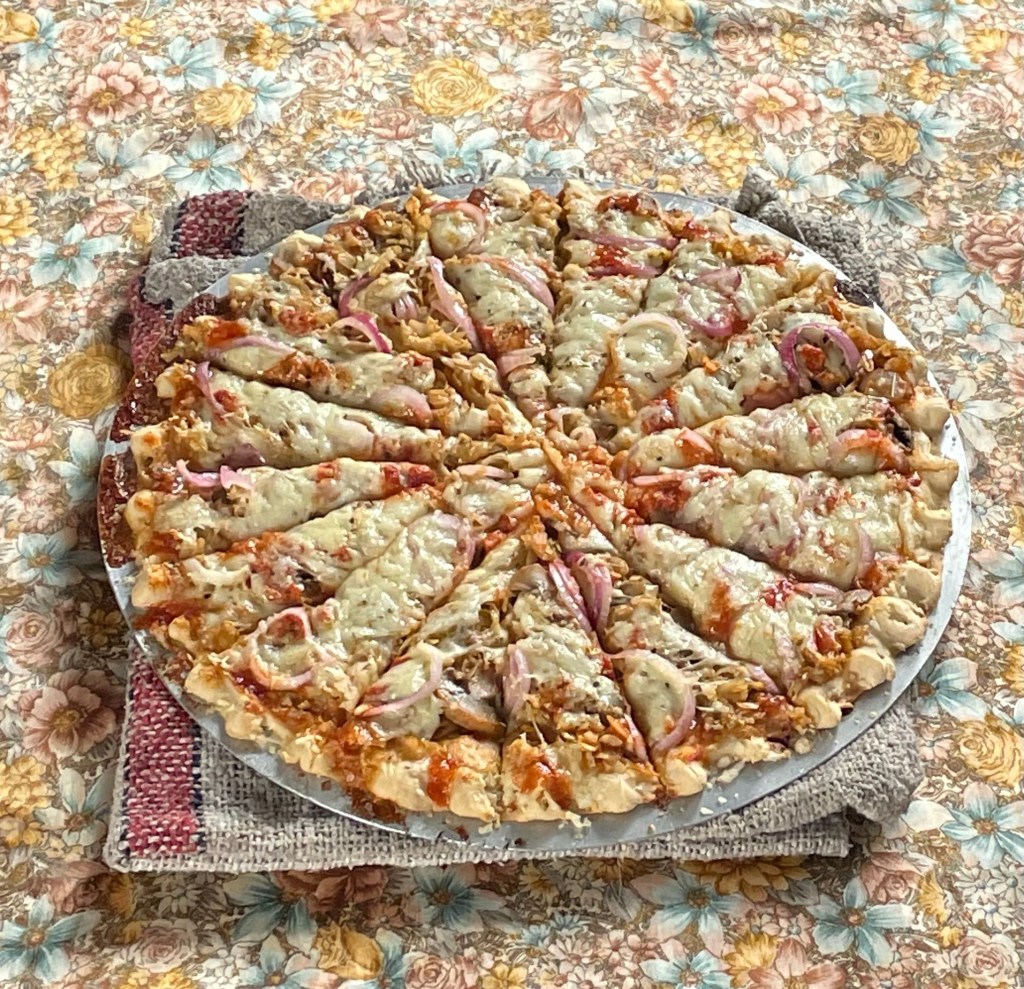
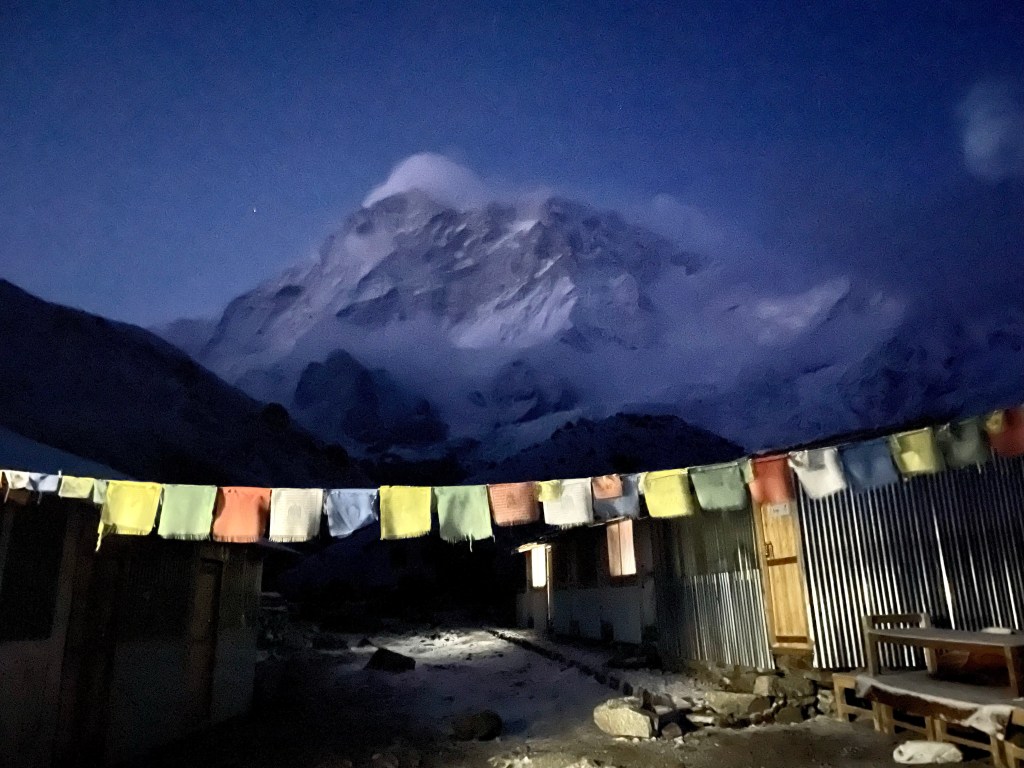
The Lakpa’s at Makalu Basecamp made us pizza and it was amazing!Magical Makalu at nightGuest house steam bath
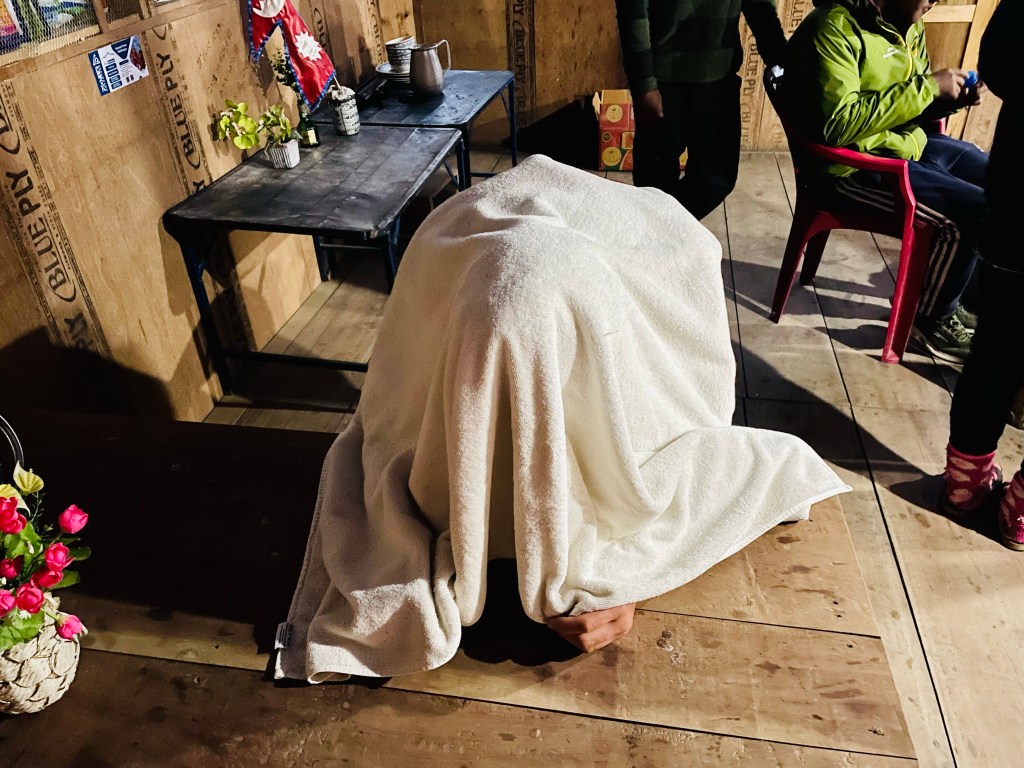
Sarah spent day 2 at basecamp sick in bed eating noodle and broth soup. The kind Lakpa family heated a bowl of hot water to make a steam bath of Vicks Vapor to inhale. They even made some Nepali healing tea: ginger with some salt.
The Evernew pasta pot has 2 settings
We took an extra rest day and things seemed to be on the mend. Sarah mastered the backpacker’s neti pot which wasn’t easy. (We boiled filtered water for 10 minutes to be sure it was clean then added salt). She consumed many garlic broths and more ginger tea. Our experienced guide friend, Matt, was concerned. He had been helicoptered out in the past when the crud turned to pneumonia after continuing up in altitude which eventually lead to an 8 day hospital stay in Kathmandu. “There is no recovery at altitude” he would always say. Our plan was to try going to Swiss Base Camp, up another 1500 ft in elevation, the following day to see how Sarah was feeling. But after another sleepless night the sickness got worse and moved into the lungs. Breathing at 16,000ft became challenging and the decision was made.
We had to make the heart breaking choice to skip the Sherpani Col section of the high route and head back down to Yangla Kharka. Which felt extra difficult after all the training, rappelling, and ice climbing we had done prior to the trip. Matt called this sickness the Khumbu Cough, and insisted it would probably go on for 3-4 more days and that going down was the wisest choice we had ever made. So in sickness and in health, the two of us headed down back to Yangle and got ready for a new twist in our itinerary.
We said goodbye as the other 3 went up and we went down. The hike down took about 6.5 hours and the second half was accompanied by rain, then hail, and a 2 inch covering of slush to walk through. A rough day when you are sick but getting to breathe at 11,000 feet again felt like sea level. We both decided that for some divine reason unbeknownst to us, we weren’t meant to do the Sherpani Col section this time. After discussing with the group before parting ways we made a plan to meet back back up in Namche 10 days later.
So much snot and so much tea
After 2 days at Yangle Kharka we received a note from one of the porters that accompanied our friends. It said that one of our teammates was very ill and was helicoptered out to Kathmandu and the rest of the team flew out after. He was accompanied by Sangita, a Nepali girl who we had met when we initially got back to Yangle Kharka. She was able to explain a little more about his condition and illness in better English. Instead of jeeping to Lukla we knew we would likely need to jeep to Tumlingtar, and then fly to Kathmandu. We had a local phone Mike had lent us but there was no service this far into the mountains to contact our group. The following day we would start the 3 day trek back out the typical Makalu trekking route to Num.
Our wonderful hosts: Nima Lama, Pemba, and their 4 little girls
We started the morning with a series of emotions ranging from nervousness, joy, sadness, and excitement.
-Nervous, because we recently learned 2 groups ahead of us had to turn around up high because of too much snow. Not to mention 2 previous GHT hikers had to helicopter out when they couldn’t find their way through the jungle in previous years.
-Joy because we had a sweet farewell playing with the kids and receiving khada blessings from Nima Lama.
-Sadness because we had to say goodbye to Tony as he was venturing south to get a jeep.
Goodbye Tony
-Excitement because the trail ahead was going to be a great adventure through one of the least travelled sections of the entire trail.
Pemba had wrangled two Hongon locals to porter some of the group’s load for us. They also had experience going over this next section which helped our navigation confidence. After news spread through the village about the other trekking groups turning around because of snow, these were the only porters willing to take on the mission.
Mingma Sherpa, a small middle aged man with a wiry build, was profusely friendly when we met him. He shook all of our hands repeatedly saying Namaste more than we could count. Norbu Sherpa, who appeared fit, strong, and around 20 years old, but looked like he just woke up 15 minutes before and took the job. He emerged from the bottom floor of the guest house with an old rice bag stuffed with a few belongings, then strapped it to the duffel bag , and we were off.
Day 1
As we followed the villages water supply line up over the hill, we lost view of Hongon. After a short section of road we dropped into the jungle on an overgrown path. Luckily we could see the pass up to Mulan Pokhari, providing us some direction. Right away it became clear that Mingma was an experienced bushman. He would take the lead and use his Khukuri (Nepali machete like knife) clearing limbs and bushes.
Norbu pulled out a bottle of chyang (rice beer) during our second break and we realized that was the only sustenance he had brought for the entire 5 days. Once we arrived to the kharka we also discovered they hadn’t brought any shelter. This was Norbu’s first time doing a porter job but Mingma had experience so the group assumed he knew better. Also, they he had both done this trail before. Our group was likely going to be short on food, as we had figured 4 days for this section, but now expected at least 5 due to snow, so we couldn’t scrounge much. They decided to hike back to Hongon that evening leaving around 5 and getting back by 9 with more food and a tarp. We took it as a good omen that we had not seen our German friend, Matisse, coming back down because of snow conditions so we planned to be on the trail by 7am.
Day 2
We didn’t encounter any real snow until a few hundred feet below Mulan Pokhari (Pokhari meaning lake). We were lucky that the snow was soft enough to kick good steps, but not too soft to where we had to post hole.
View back towards Hongon
First we had to get around the lake safely, then it was another few thousand feet up to the pass. Nearly the entire day was spent on snow from the lake on. On the other side of the pass we quickly dropped several thousand feet glissading on the soft snow down what would have made some great ski runs. The snow line reached all the way down to the river and we found a kharka just downstream out of the snow.
Day 3
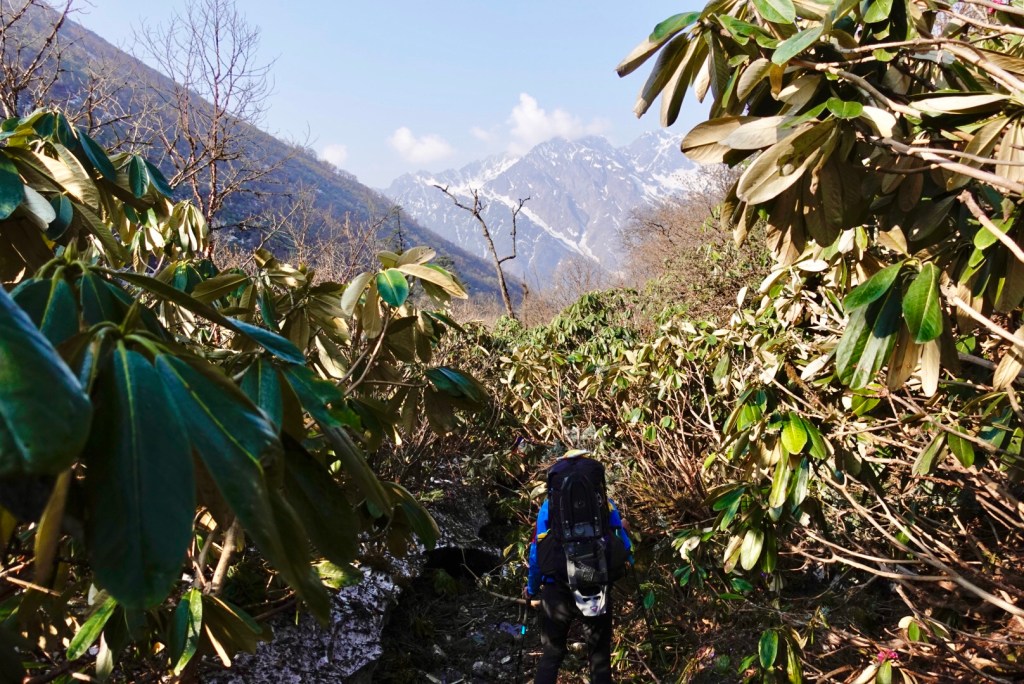
The morning was peaceful, with a beautiful view of the moon setting over the mountains. The peace was soon interrupted by a trail that turned into an obstacle course of Rhododendron and bamboo. Our snowshoes that we strapped to our packs were constantly getting caught in branches. The snow had just melted and slippery bamboo sticks covered the trail for most of the day. Mingma was in front and was slashing through what he could, but much of the time it was quicker just to push through.
This section was the same area that 2 other GHT hikers had previously been so lost they had to call for a helicopter. We trusted Mingma and Norbu when they lead us way up the valley away from where we were told a bridge might be. It was 2 hours of extra hiking but they said the bridge had been washed out and the only way across was at the head of the valley.
We reached the source of the river in a beautiful big valley with a delicate clear icy blue stream and a giant waterfall. This clearing is where the helicopter picked up the previous lost trekkers. The trail continued to require some crawling and climbing, but the cut marks on trees kept us on a general path only losing the trail for a few moments. We expected the trail back down the valley to be very difficult and hard to follow and couldn’t quite fathom how others had been so lost before.
Sarah making her way across the treacherous river crossing. No margin for error.
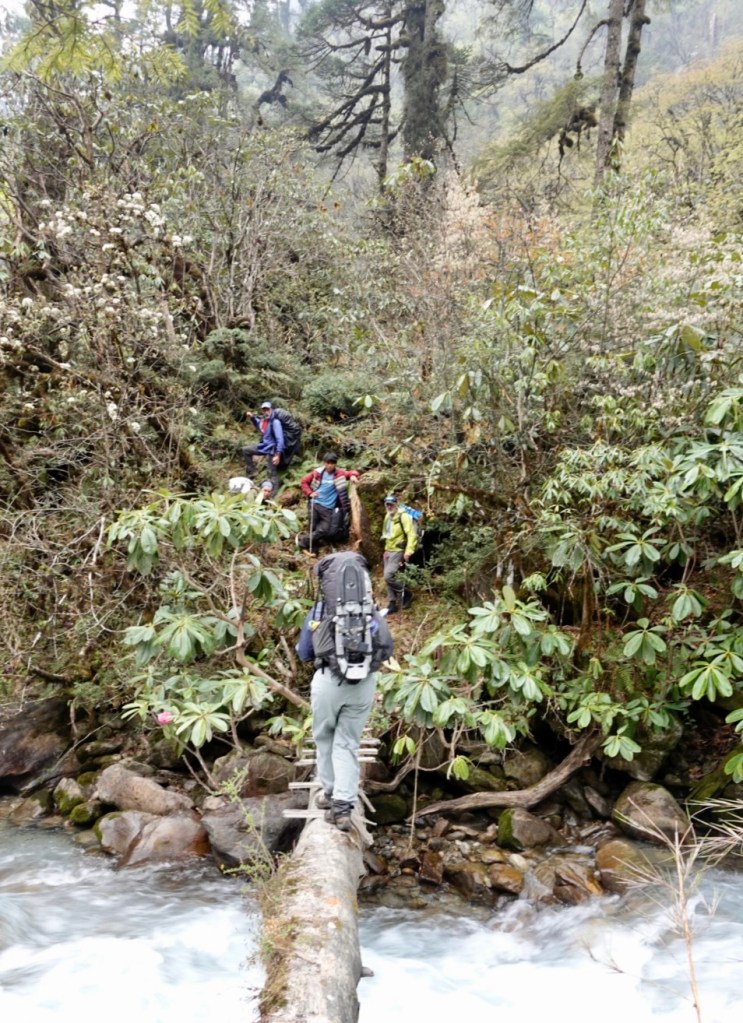
We crossed a slippery log across a raging stream and started our climb towards cave camp in a light drizzle. Our porters feared the camp we were looking for would be buried in snow. As the trail turned into a snow filled gully that was clearly an avalanche path we had to start thinking about alternative camping options.
Tom, just above our tent at Cave Camp, after topping out a ledge.
Tom was drawn to an overhang on the cliff which ended up being cave camp. It was protected by rockfall and had some flat snowy spots so Tanner and ourselves pitched our tents there. The porters and Matt spotted a large boulder out of the snow and few hundred feet up. It had a decent overhang so Matt, Mike and the two porters decided to stay under it together.
Day 4
Hiking up the old avalanches
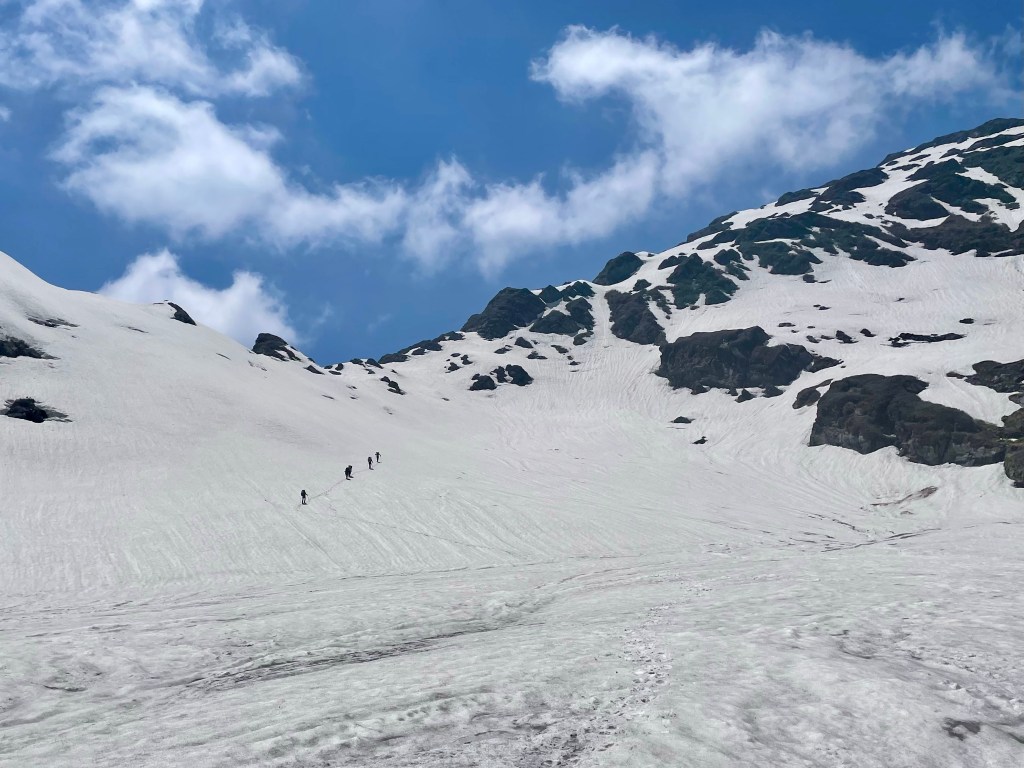
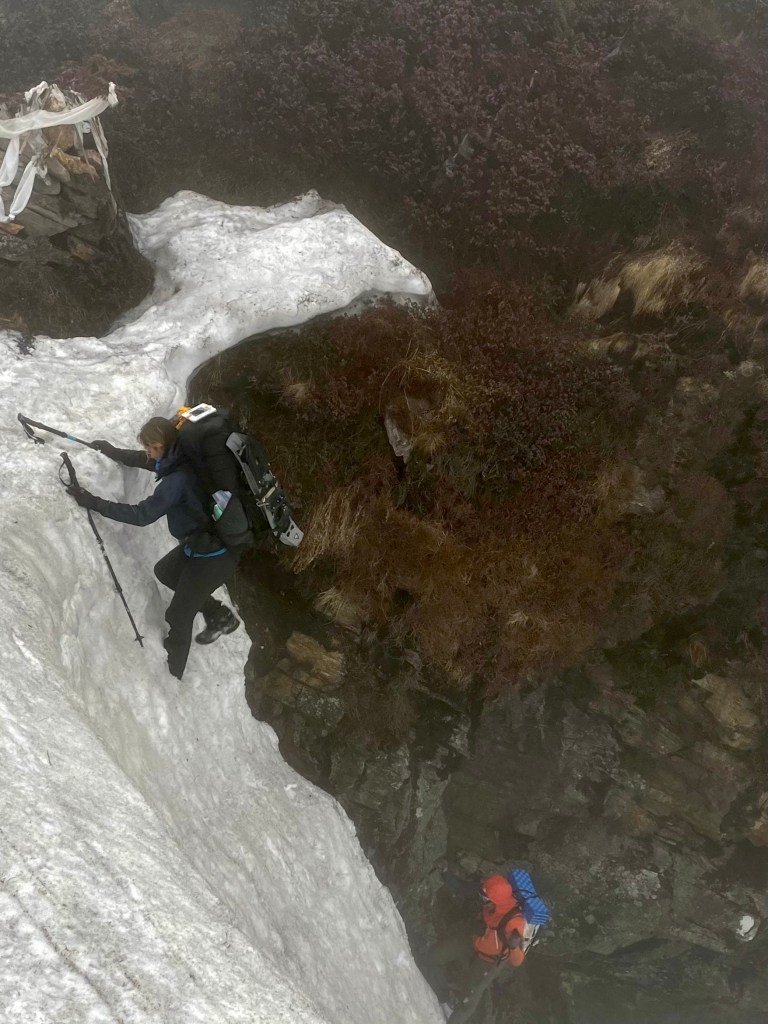
An 8 am start had been decided so the snow had a little time to soften. When we hiked up to the boulder we learned a few things. First, was that Norbu’s name was in fact Nupu and he hadn’t corrected us for all 3 days before! Second, was Mike and Matt had dubbed their new spot the hell kharka due to their inadequate and tight sleeping quarters. We hiked up steep snow for over 3,000 ft to a ridge. As we neared the ridge we entered the clouds and it was nearly a white out. The trail appeared on the other side without any snow briefly giving us hope, but soon after we were back in all snow. Due to lack of visibility the porters stopped and said they no longer knew the way. Tom pulled out the GPS and found a track. The goal was to stay near the trail, but also to avoid steep topo lines because we didn’t have any proper snow gear, and the porters were in their gold rubber boots.
Wishing we had our crampons, rope, and ice ax
Kicking steps and switchbacking up the slope it turned steeper than anything we had encountered yet. As snow started to fall and thunder started getting closer we began to worry. There was nowhere good to pitch a quick camp, and we weren’t very excited about back tracking. The map showed us being very close to the pass, but it lead to a final very steep snow slope below a rock face. We pushed over it and emerged between khadas and prayer flags. Everyone thankfully made it safely through and after quick deliberation we decided to head down the now visible trail.
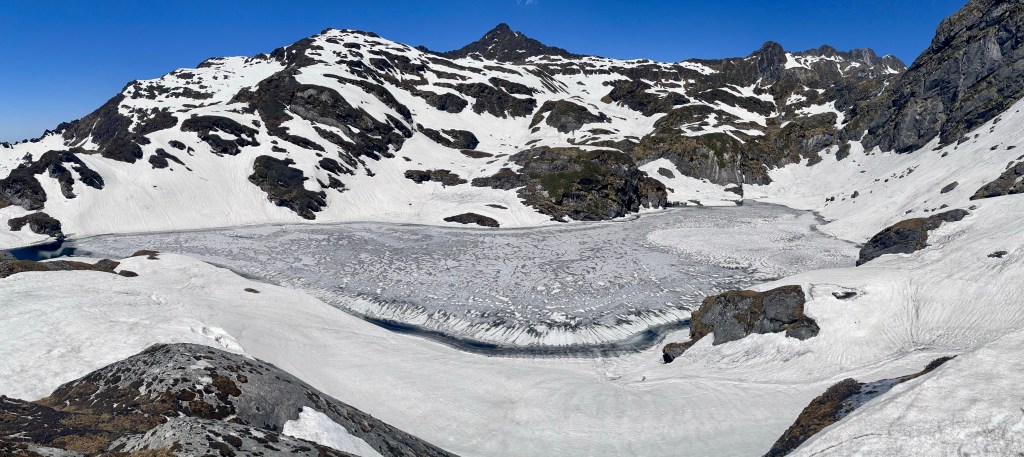
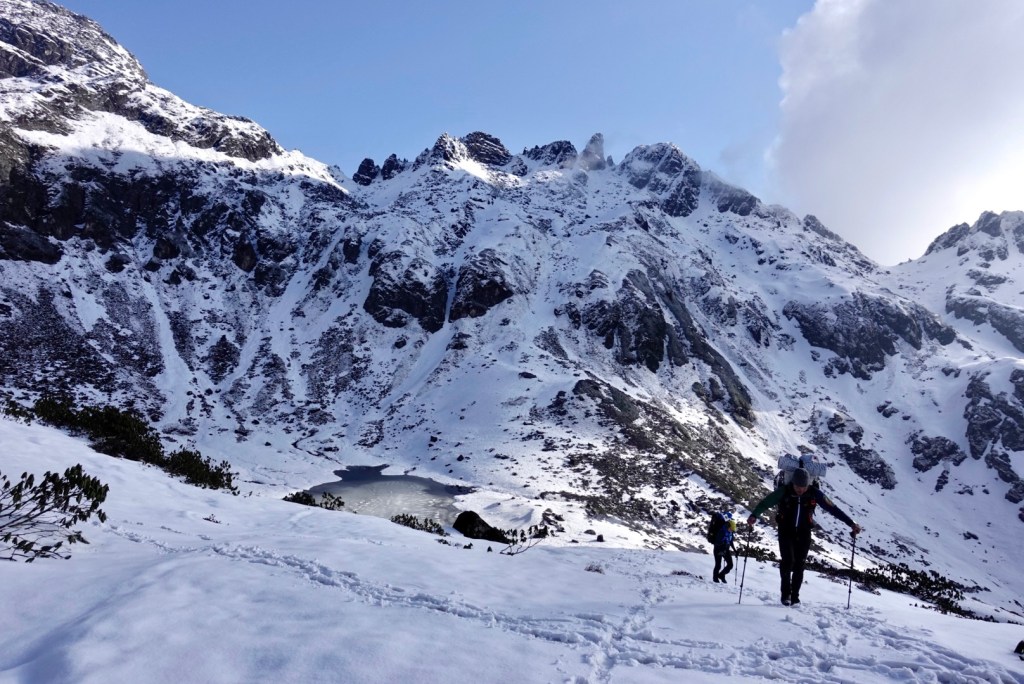
We felt very lucky the storm hadn’t strengthened and seemed to move on. We went up and down over a few more small saddles with decent weather. Kalo Pokhari finally came into view. A snow and ice covered lake in a gorgeous cirque surrounded by craggy peaks. As soon as we got near the lake the snow began to fall heavy and wet. Due to weather and unknowns about water at the next kharka we decided to set up camp. The porters said they would find a cave.
Day 5
We awoke to clearer skies, shaking snow off the tent and trying to dry out some gear. At this point we had been wearing wet boots and socks for 4 days straight. They were frozen solid so once they were on we wanted to keep moving to keep our toes warm. Our struggle felt like nothing compared to the porters. They had failed to find a decent cave and turned down the offer to bunk up with the other guys in their tents. They eventually decided to lay a tarp over some Rhododendrons and somehow they survived the night in the snow, amazing us with their ability to start a fire in such conditions. The amount of resiliency and toughness in these guys is incredible.
We climbed 1,000 or so feet up to the next ridge spotting a few Danfe, Himalayan Pheasant with beautiful peacock like feathers, along the way. Once we reached the ridge we were discouraged by what we saw. The trail was a few hundred feet below, but the only way down was through a series of steep couloirs either filled with snow or rock. We assessed other options, but once the porters arrived they made it clear the only way was down the first snowy couloir.
Tom went down first to make sure conditions were soft enough and to make sure we could traverse back over to the trail at the bottom. During his descent he broke through a soft spot of snow falling awkwardly and losing his Nalgene bottle but otherwise unscathed. The slope was nearly 50 degrees and was a definite no fall zone. We were all wishing for our crampons and ice axes at this point. Everyone safely descended and we found our way across the valley to the next ridge. We got the feeling this trail was not going to be done with us though, around every corner it seemed to get harder.
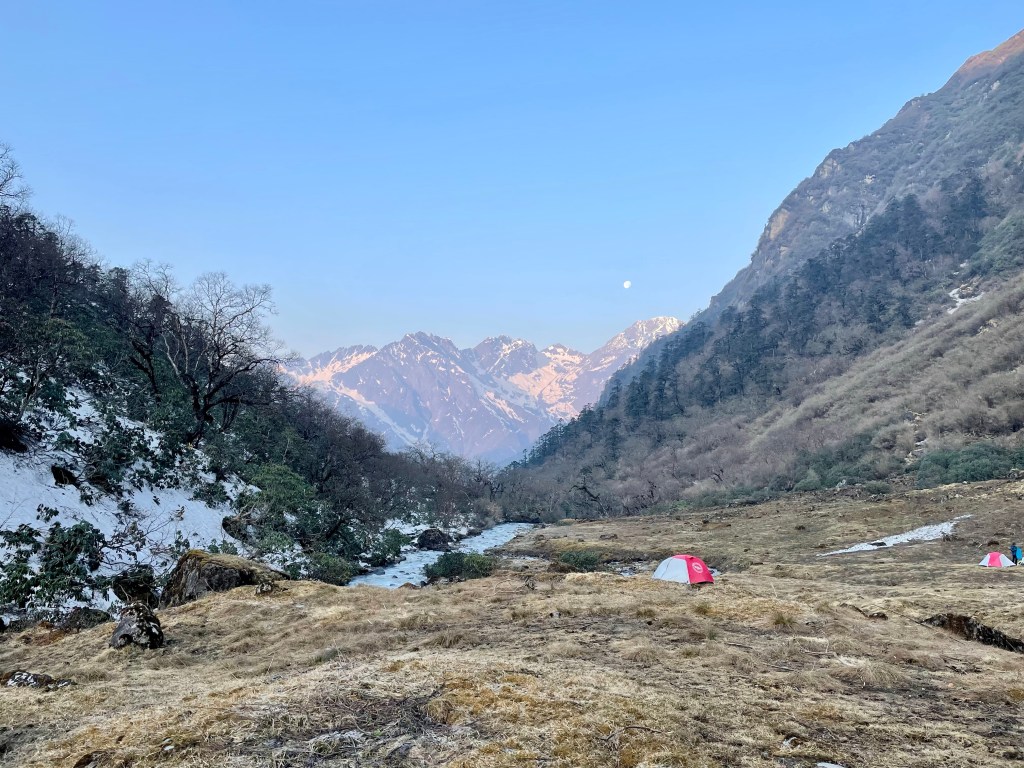
After reaching our high point we actually found some section of uncovered trail. After a few steep steps we were out of the snow. Finally reaching a nice kharka and the first structure we had seen in days we. From here the porters said it would be 4 or 5 hours to Yangle Kharka which would get us there just before dark so we pushed on. We descended quickly through a luscious PNW like forest to the river that flows out of Makalu’s glaciers. Then we worked our way upstream to Yangle Kharka.
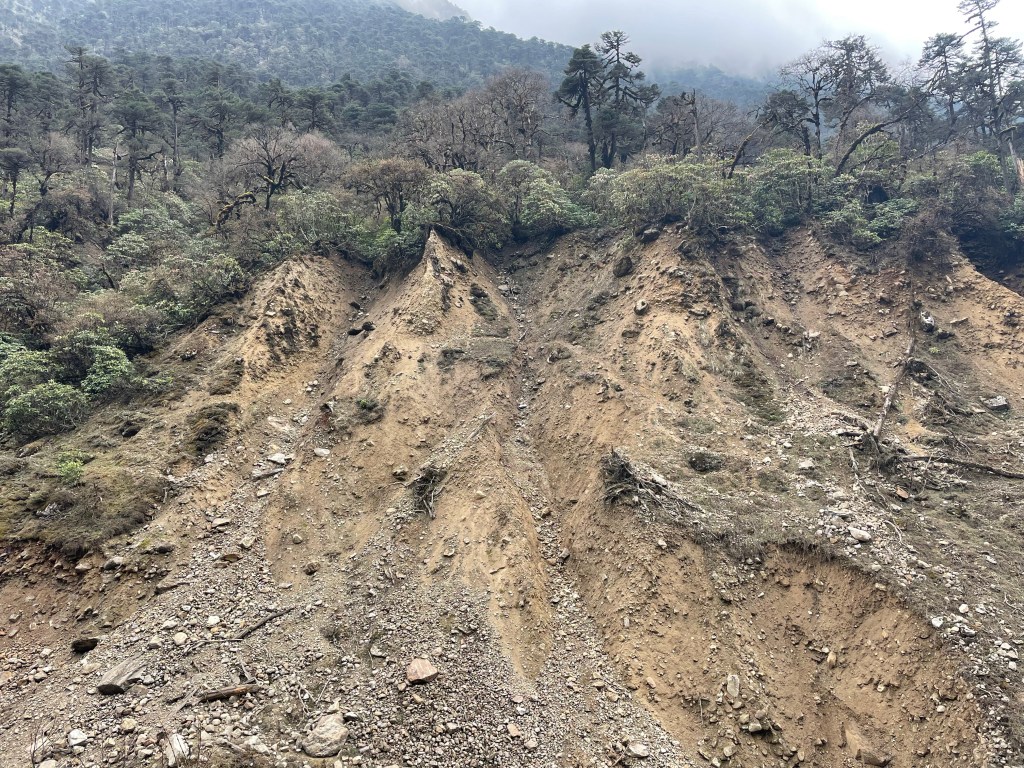
Our minimally existent trail through the landslide
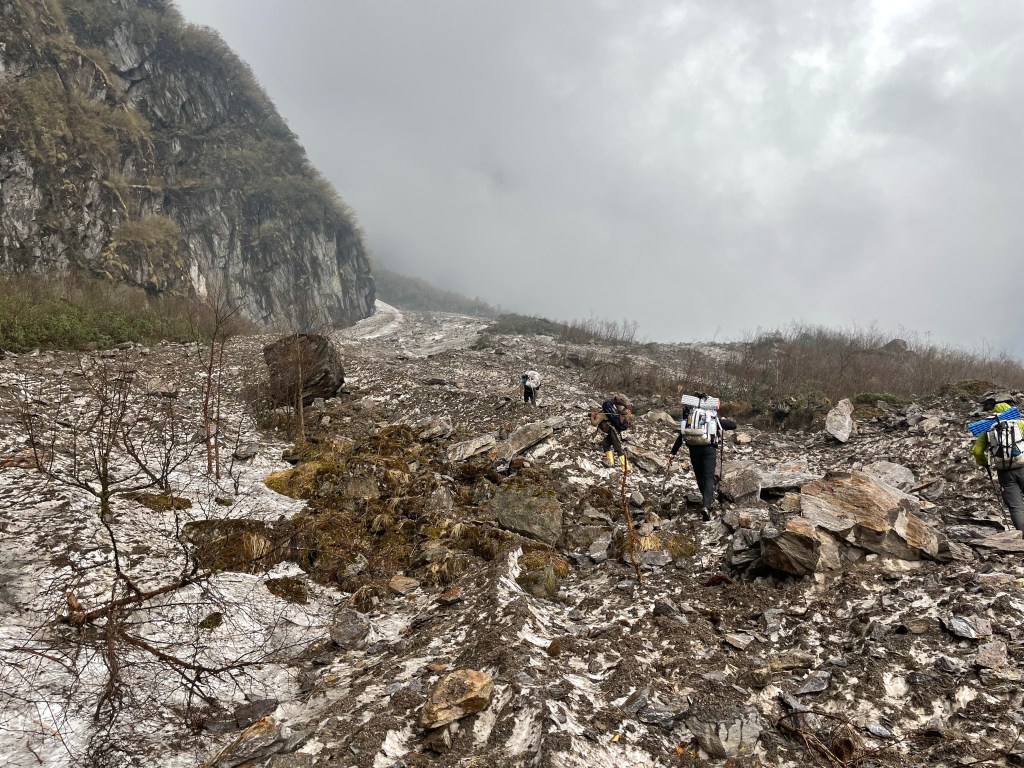
The trail was not done with us yet though. We hiked parallel to a 4 foot wide trekking trail across the river while the trail under our feet was literally starting to crumble. We began encountering landslides dropping straight into the raging river. Eventually we were jumping across steep loose water runnels and grabbing on to vegetation to stop from sliding down. Mingma was doing his best to make it safe, but his over zealous desire to help led him to grabbing Mike’s hand and launching him into the landslide bank. Mike coined the nickname for him, “Mr. Muscles.”With bloody knees and knuckles, Mike caught up to us. Mingma stated “one more danger section.” Luckily he was right, and once we passed it we met up with the main Makalu trekking route.
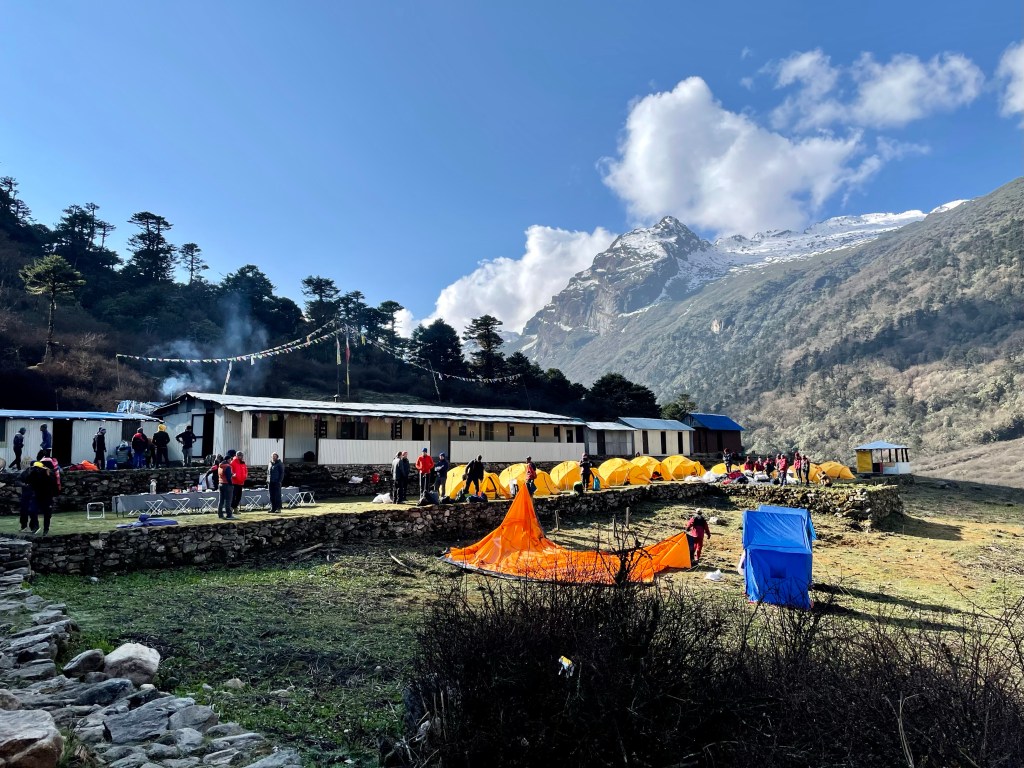
When we finally arrived to Yangle Kharka we were stunned by the number of people. There were 8 tents, including a mess tent lined up in front of the guest house with a large group of Brit’s coming back from Makalu Base Camp. Then another group of 6 Czech’s who were planning to do the same passes we were heading towards. Thankfully Gombu Sherpa, who has been helping with resupply movements, was there to greet us. It was nice to see his smiling face and to have him help us navigate the busy scene and get us a room and tea.
















 On Tour with Tom and Sarah