
Ghunsa which means “winter land” is at the bottom of the valley leading to Kanchenjunga Basecamp. It was dubbed Ghunsa because the original settlement in Khambachen, up higher in the valley, was too cold and received too little sun. Families initially migrated to this area from Tibet over the high mountain passes. They traditionally would move between Ghunsa and Khambachen seasonally, but now some go even lower to a village we hiked through called Phale.
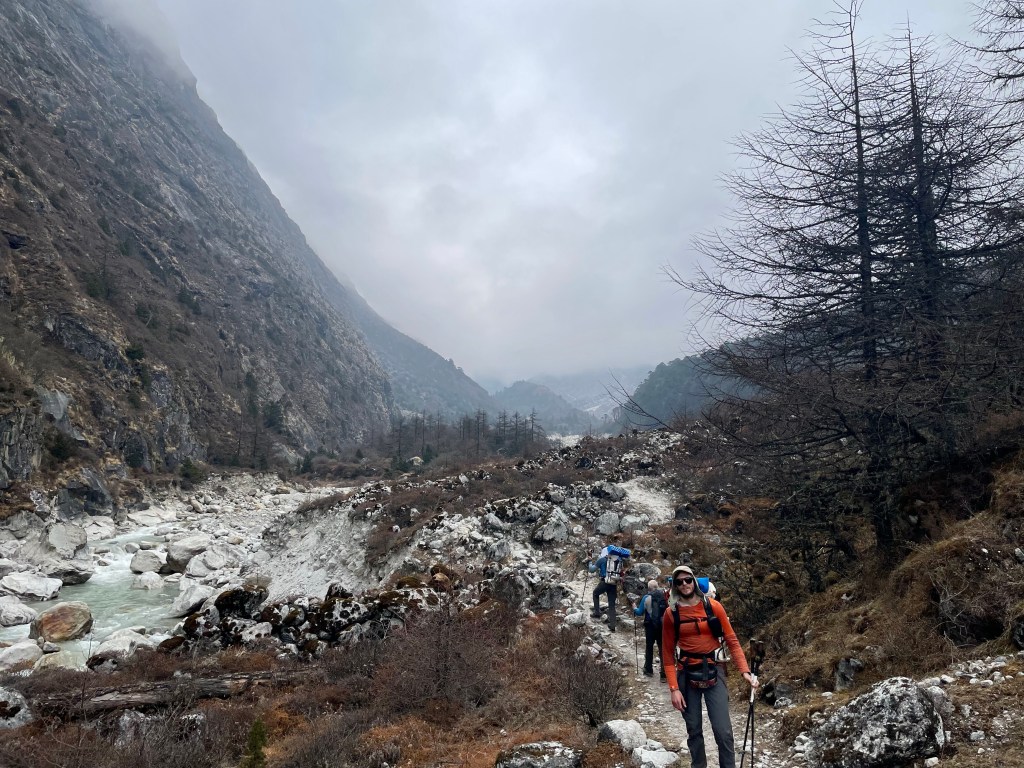
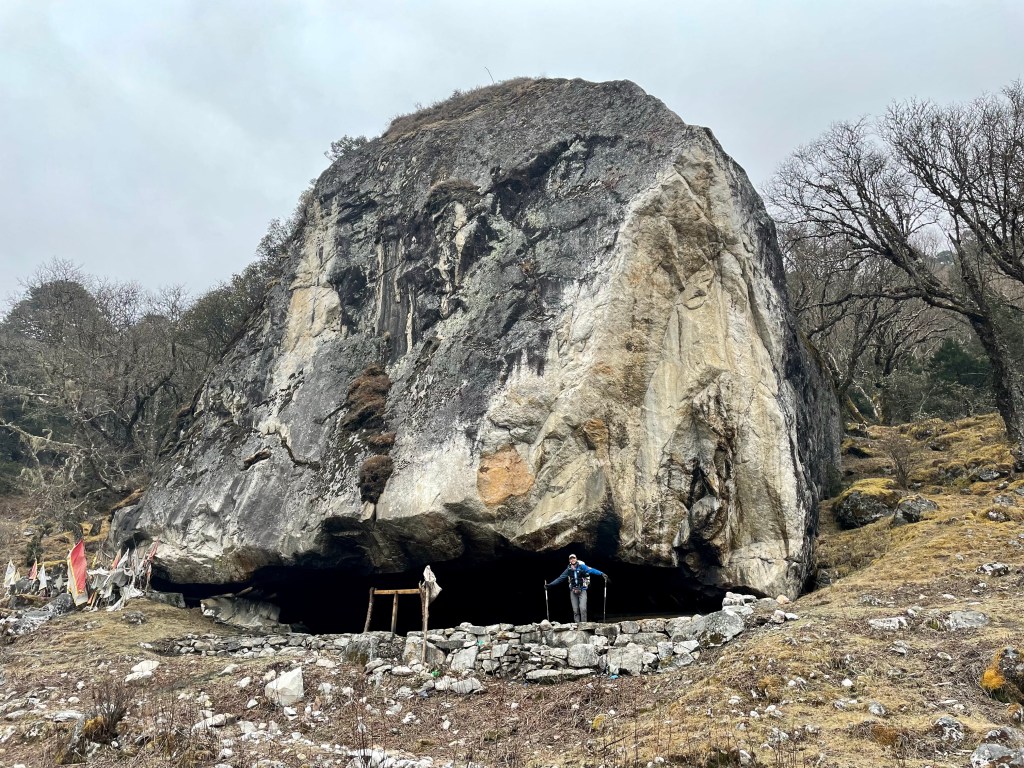
Hiking up the river we found several Limbu shrines and sacred rocks. The route is part of a pilgrimage to the holy mountain, Jaanu, a stunning 7,000 meter peak composed of a beautiful gold tinged potassium feldspar granite. Tsiring told us that most years several 100 people visit Khambachen to see Jaanu.
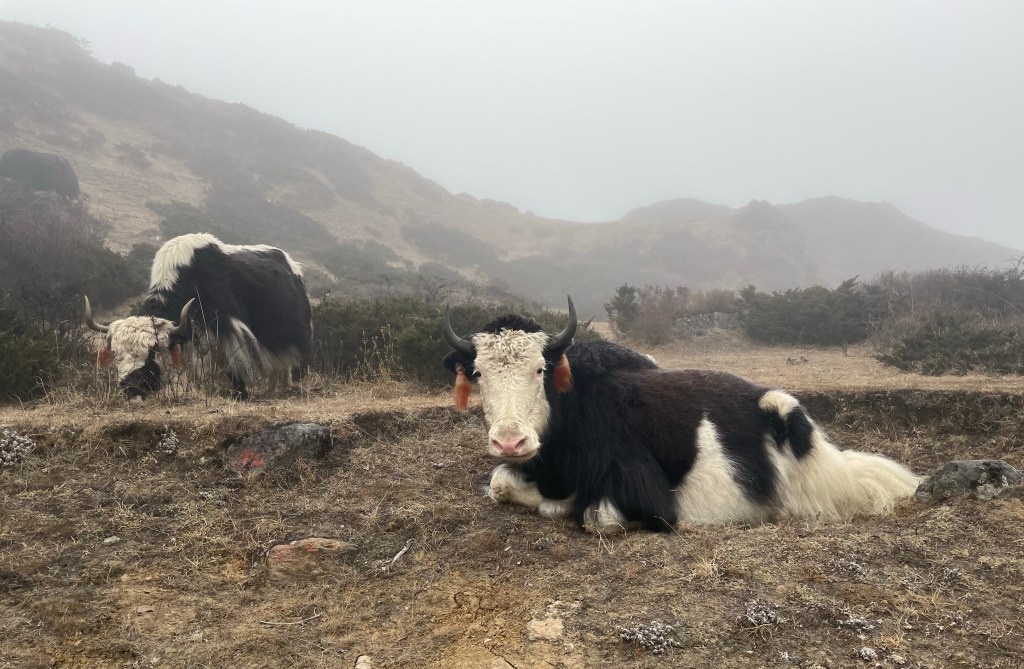
We climbed endlessly up rock stairs over a terminal moraine for the final portion of the day. We have both hiked over moraines in WA, but nothing like the moraines here that take several hours to get over. We were in the clouds as we crossed the bridge over the river to Khambachen. As we followed the trail through boulders and pasture we could hear the clanging of bells. Then out of the mist we saw our first Yaks! Having heard so much about them it was exciting to see these majestic mountain dwelling cattle and their huge horns and long fur. The females are called Naks and have horns as well, which took us a little while to learn. Although they are owned by a herder; bought, sold and traded, there is something wild in their presence. Trekkers have been gored so we keep our distance. Yaks shake their heads when they get irritated which is a good sign to give them space.

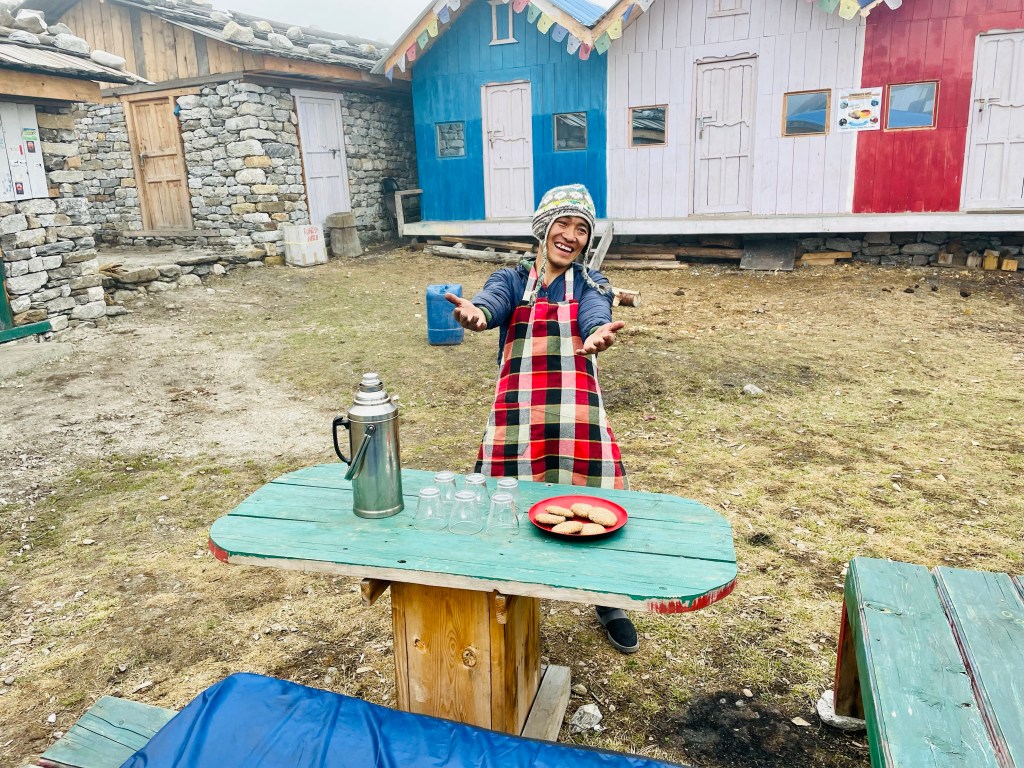
We arrived to Khambachen with another warm welcome from Tsiring. He had passed us on the trail earlier to open the guest house for us. His brother typically runs it but was in Kathmandu with his wife who was expecting. He went ahead and had hot tea and some homemade cookies ready and waiting for us.
The plan was for a rest day and acclimatization hike in Khambachen, which is around 13,500 feet. Sarah had a headache initially at 11,200 feet in Ghunsa. This seems to be the most common symptom when pushing to new altitudes, especially when you stop moving for the day and start to rest. We would be reaching an altitude of 17,000 feet when we visit KBC (Kanchenjunga Basecamp) in 3 days, so taking time on the acclimatization process is crucial at this point. Matt has helped nearly 500 clients through the acclimatization process, and the goal is to not have to take Diamox or any other high altitude meds unless absolutely necessary.
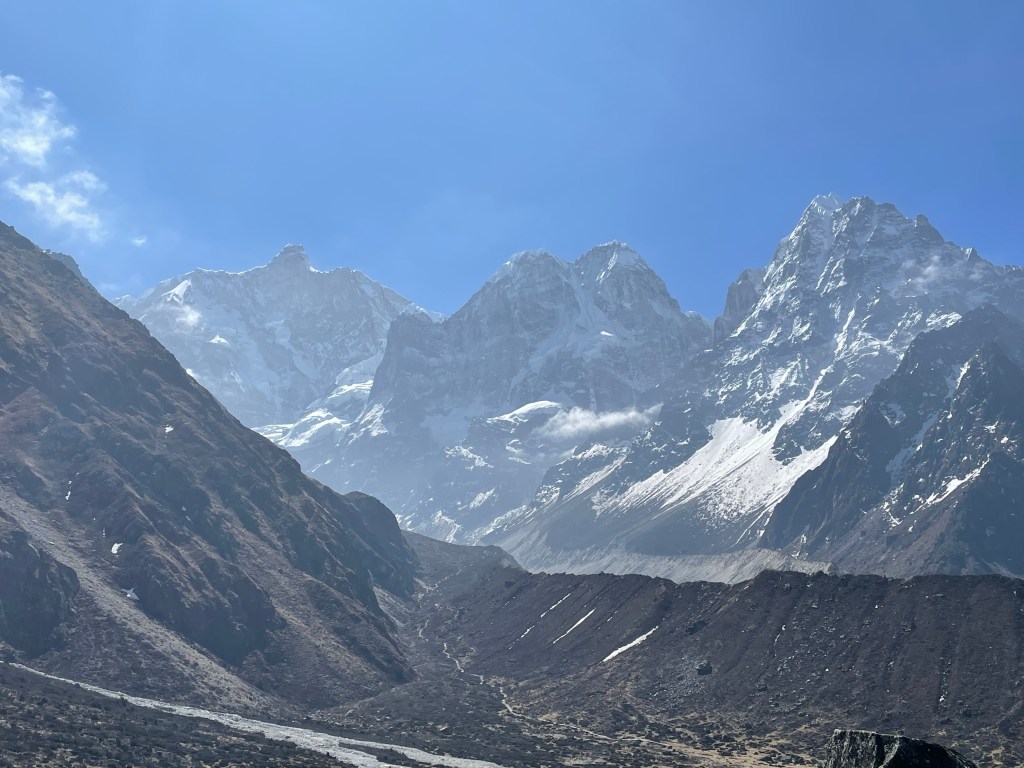

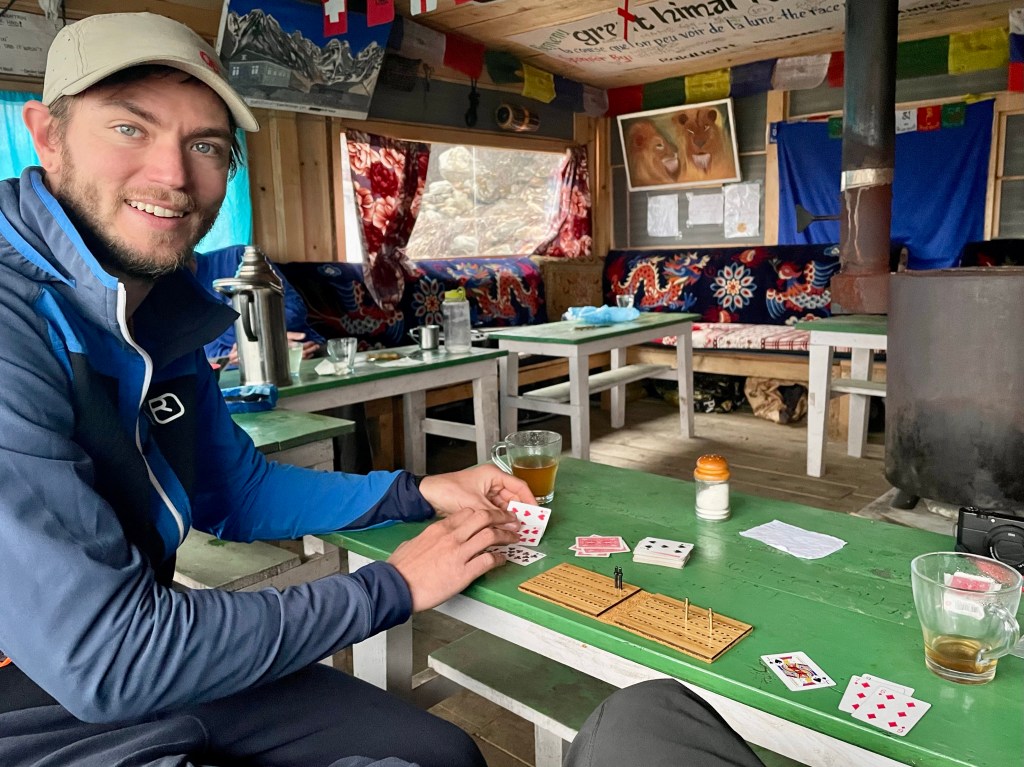
The following day we did the hike to Lonak, the last stop before KBC. We were hiking up 2,200’ along the Ghunsa Khola again, hugging the river between landslides until reaching green pastureland. As we arrived to higher ground, the clouds moved in, but not enough to keep us from seeing our first blue sheep.

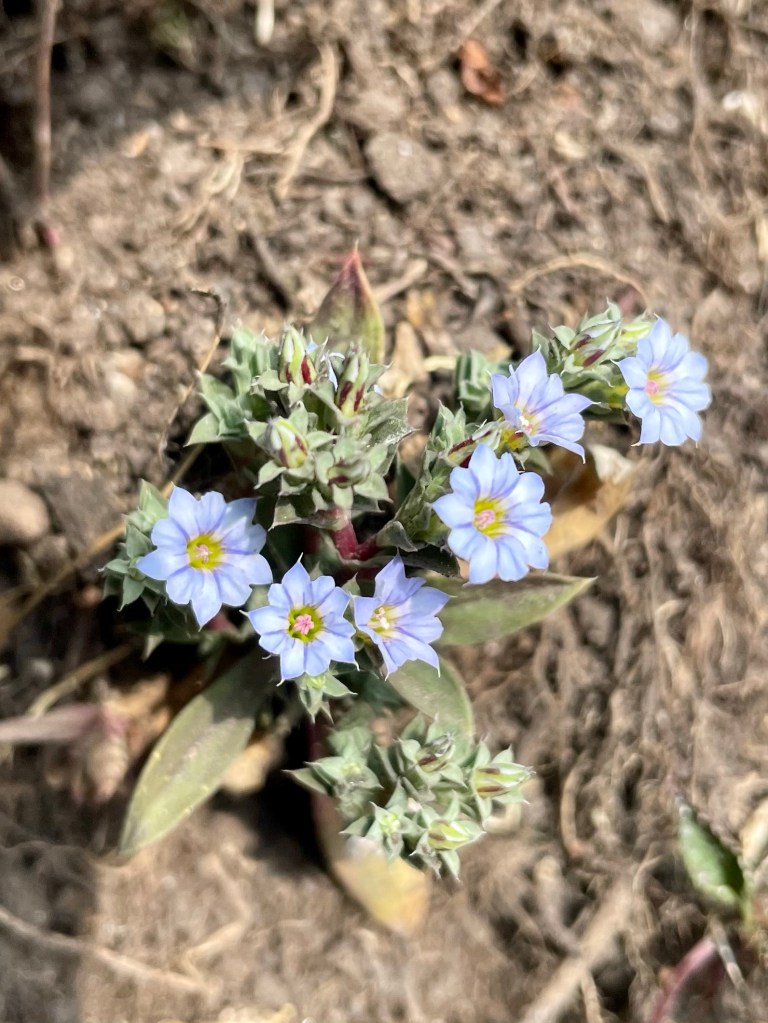
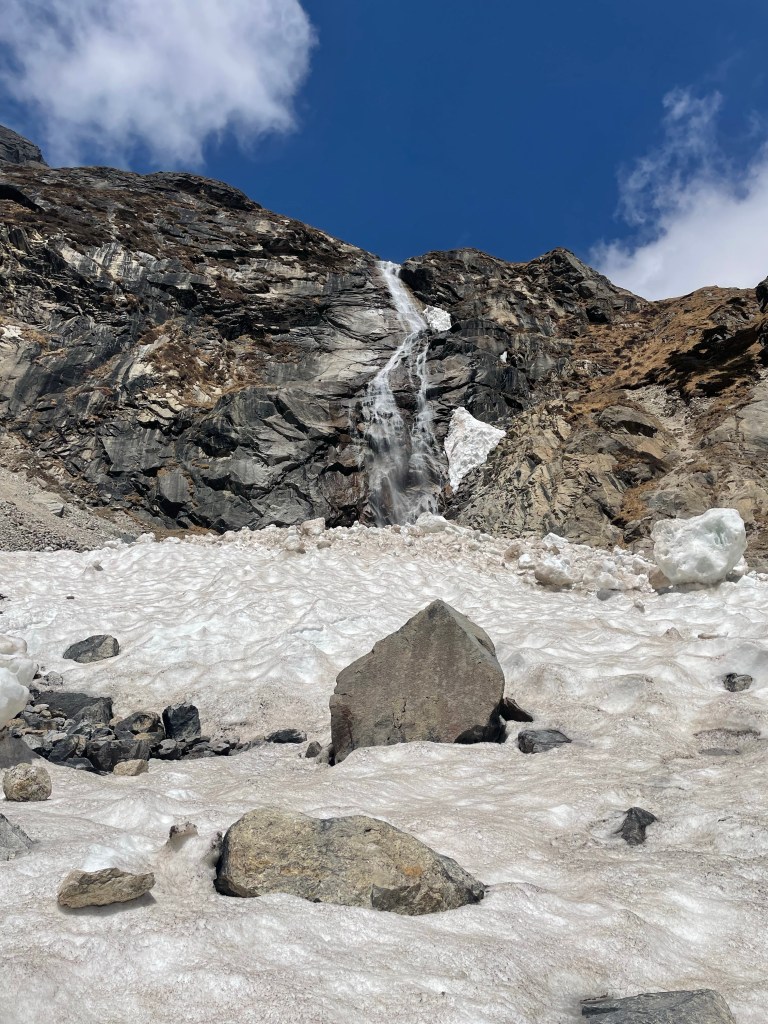
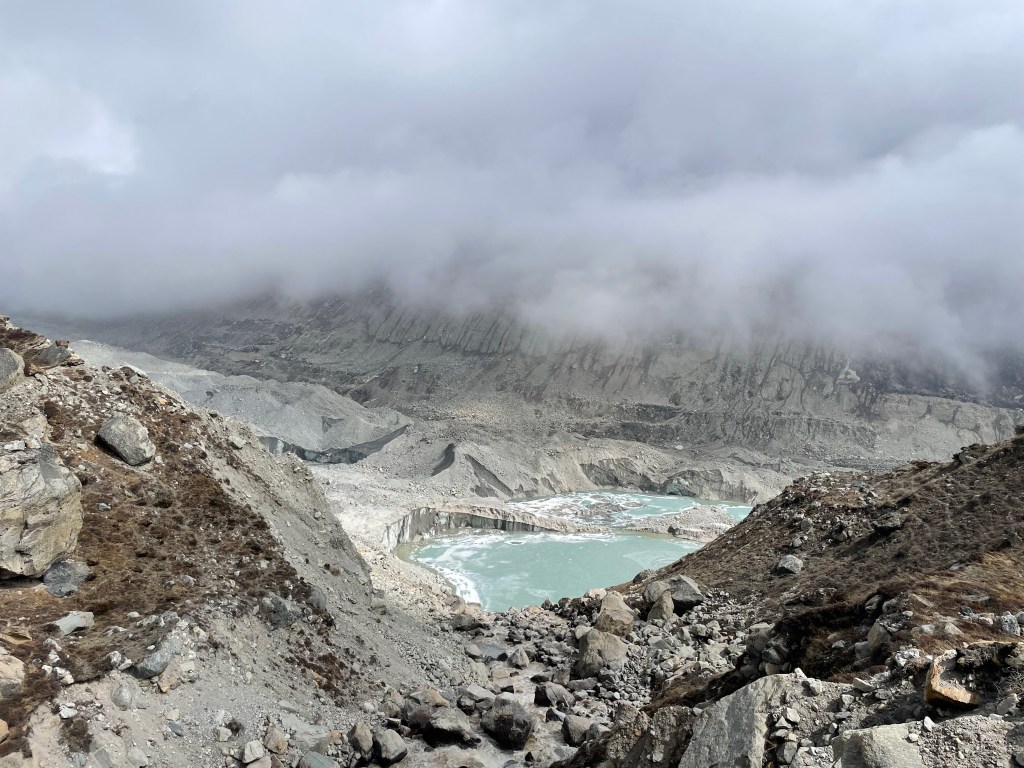
We arrived to the Lonak guest house in the clouds in the late afternoon. Due to the altitude it felt like a very long day. At this point we were both breaking our altitude record every step we took. We quickly set up our tents and went into the warm dining room where the fire was going. 2 Australian mates were enjoying their post hike chowmein. We had met them our first night in Khambachen and it was fun to hear about their experience at KBC. While chatting Mike and the guest house owner ran in to tell us they heard snow leopard. We ran outside to the complete white out. As we sat on the grass, blinded by the clouds we turned our ears in all directions. After several minutes we heard the wining of hungry kids crying to their mama carry over the glacial outwash. They continued off and on for a while.
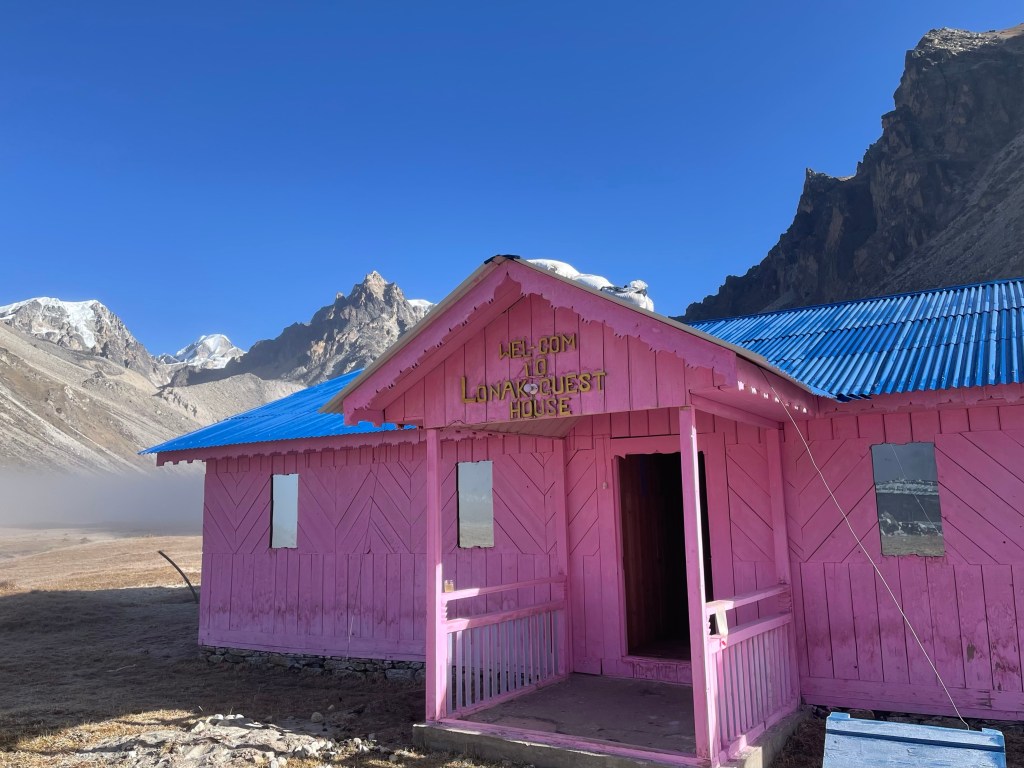
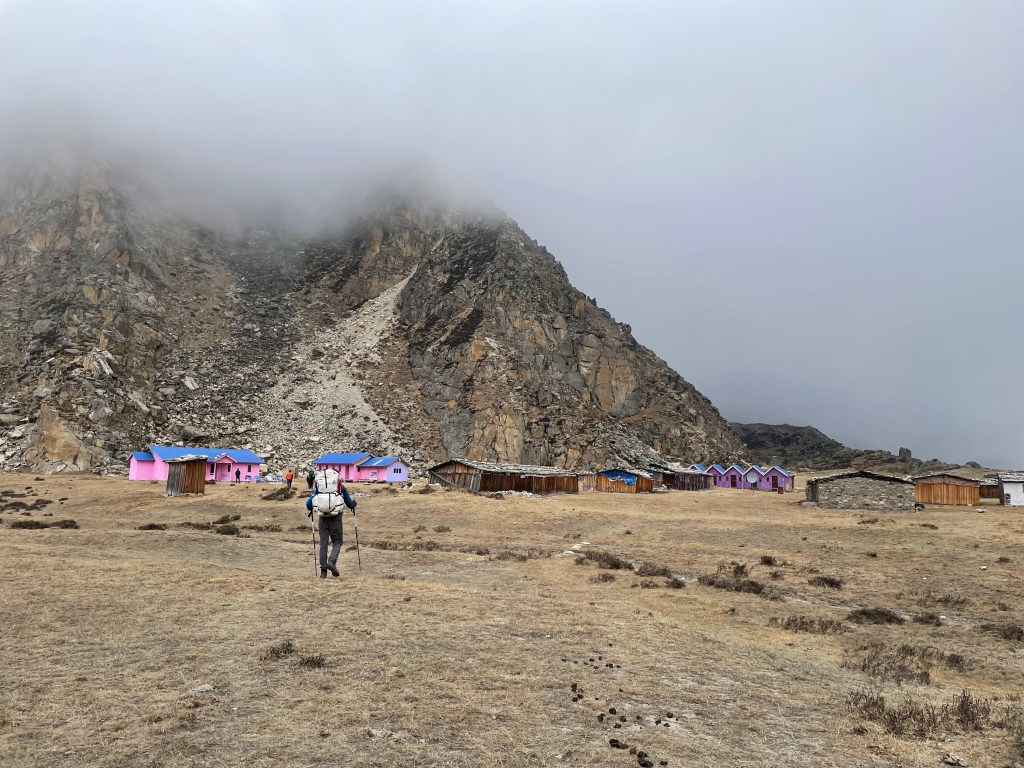
Lonak is another small settlement that was originally just a spot with good pasture for grazing yak. Now that trekkers visit there is a guest house to host for a few months out of the year. The Lonak Guest House is run by Tsiring’s cousin Syrdup (We are likely spelling many of these names wrong). Him and his wife stay there for 2 months during the spring and fall trekking season bringing up supplies by horse.
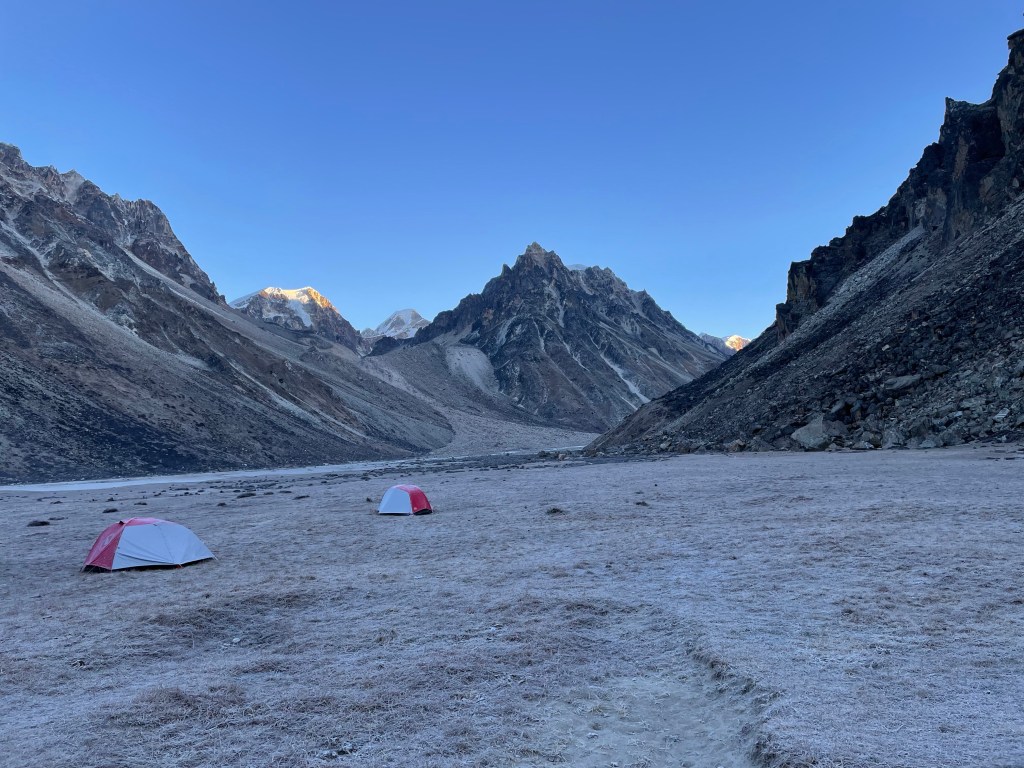
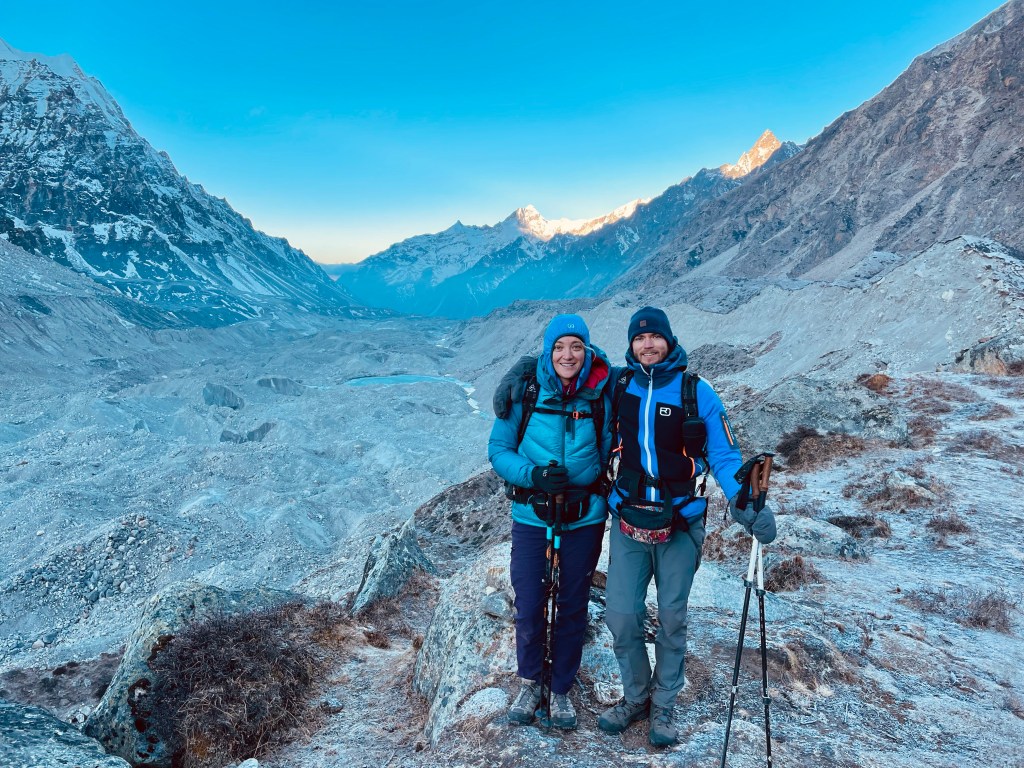
The 10+ mile hike was one of the more challenging hikes being that most of it was above 16,000 feet and reached over 17,000. During a water break at a stream we both developed an intense headache. Neither of us had any symptoms of ataxia or changes to our vision, but the rest of the way to KBC and back it lingered, coming in waves.

Parts of the trail were disrupted by landslides and we had to carefully make our way across steep terrain surrounded by rock fall. We finally made it to Kanchenjunga’s North base camp and had clear views of the 8,000 meter peak, the third highest in the world. This Basecamp is no longer used by climbers since the southern route is the safest and only one being issued permits now.
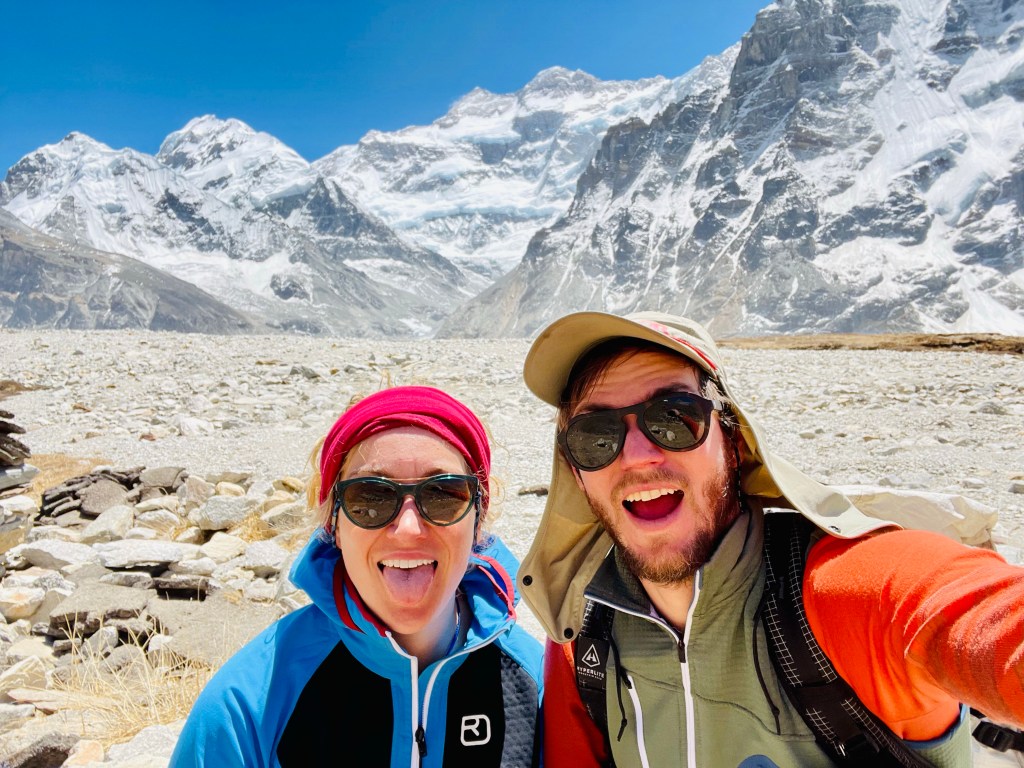
Kanchenjunga means “5 treasures of the snow.” It has 4 ridges and glaciers that spread from the center of the peak. It’s Geology is also unique in that it is the highest granitic formation on earth. Both Everest and K2 composed of sedimentary and metamorphic layers overlying the granite. It was first climbed by Joe Brown in 1955 on an English Expedition. Check out “The Hard Years” Joe Brown’s memoir for an old school climbing read. Love his blue collar climbing life and respectful approach to the mountains. Him and his partner George Band stopped just short of the summit out of respect for the Chogyal people of Sikkim, the country to the East that shares Kanchenjunga with Nepal. It is a tradition that has held on ever since.
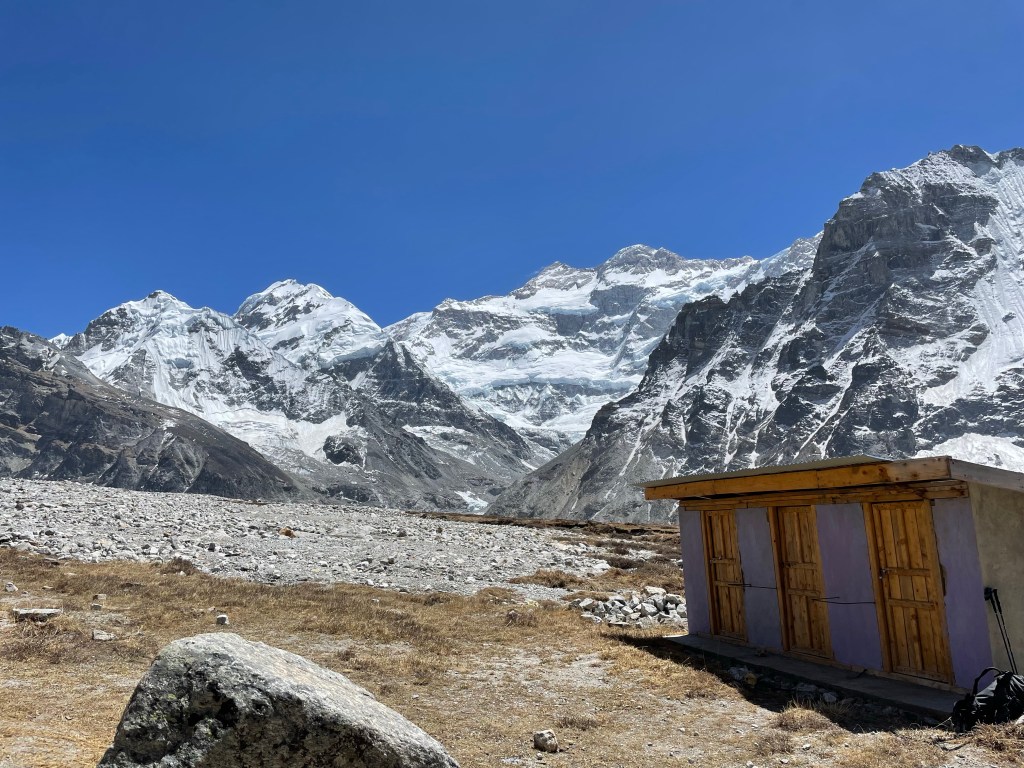
We hiked back to Lonak in the clouds starved for dinner and warmth. The headaches began to dissipate as we reached below 16,000 feet luckily. The group was tired but excited to finally be moving westward on our journey.
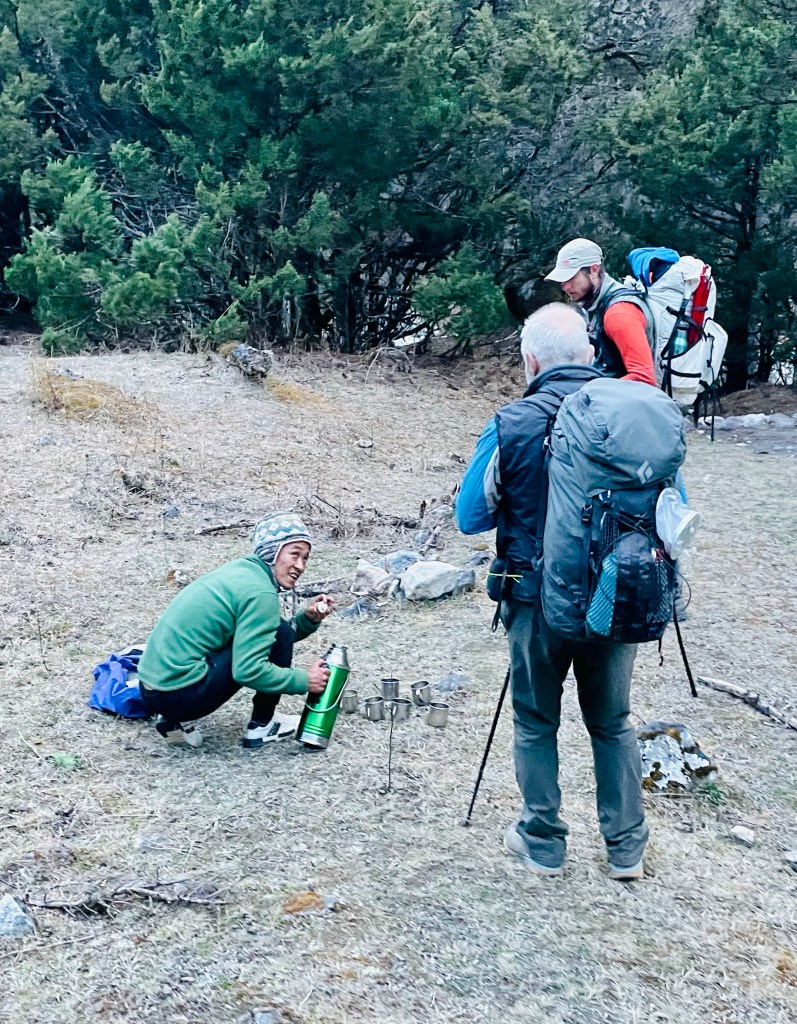
We were slow on our 14 mile hike back down to Ghunsa, so Tsiring, instead of being board waiting, brought us a picnic. We enjoyed his delicious veggie sandwiches by the trail as the sun set.. Then he ran past us as we hiked in the rain and dark to make dinner and start the fire. If you ever wish to visit the Kanchenjunga region you must stay with the Dzonga family guest houses. They are a shining example of true Nepali hospitality.


Thanks for sharing your journey, you guys are so brave. The views are breathtaking!!
BTW – I work with your brother, Andrew. He is super proud of you.
LikeLike